Paizo Top Nav Branding
Welcome, guest! | Sign In | My Account | My Subscriptions | My Downloads | My Wishlists | Shopping Cart   Shopping Cart | Help/FAQ
About Paizo   Messageboards   News   Paizo Blog   Help/FAQ  
Pathfinder Roleplaying Game

Pathfinder Society

Pathfinder Roleplaying Game: Beginner Box

PaizoCon 2012!
Pathfinder Online Technology Demo by Goblinworks Inc. — Kickstarter
1,563
BACKERS
$98,110
PLEDGED
14
DAYS TO GO

Search
Links
Shop
   RSS New Blog Entries Facebook Twitter Email
Novels (74)     Web Fiction (186)    

City of the Fallen Sky Sample Chapter

Wednesday, May 23, 2012

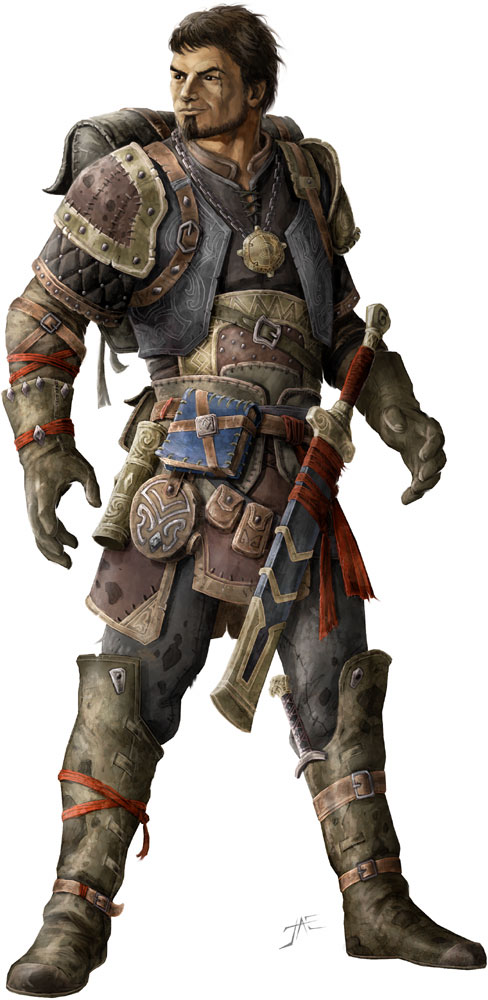
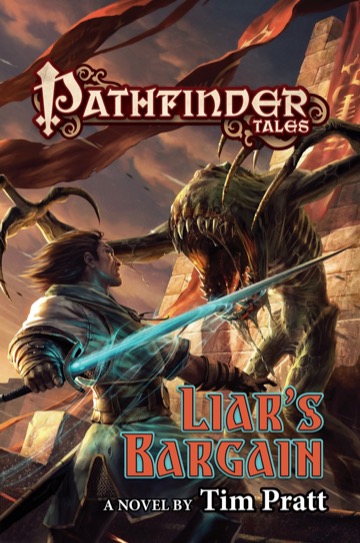
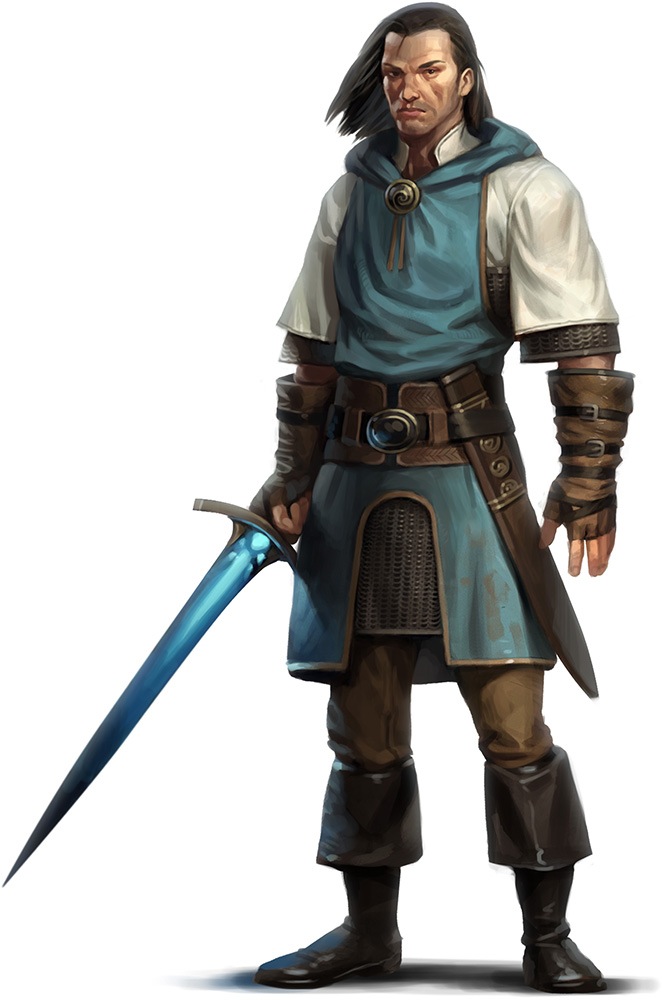
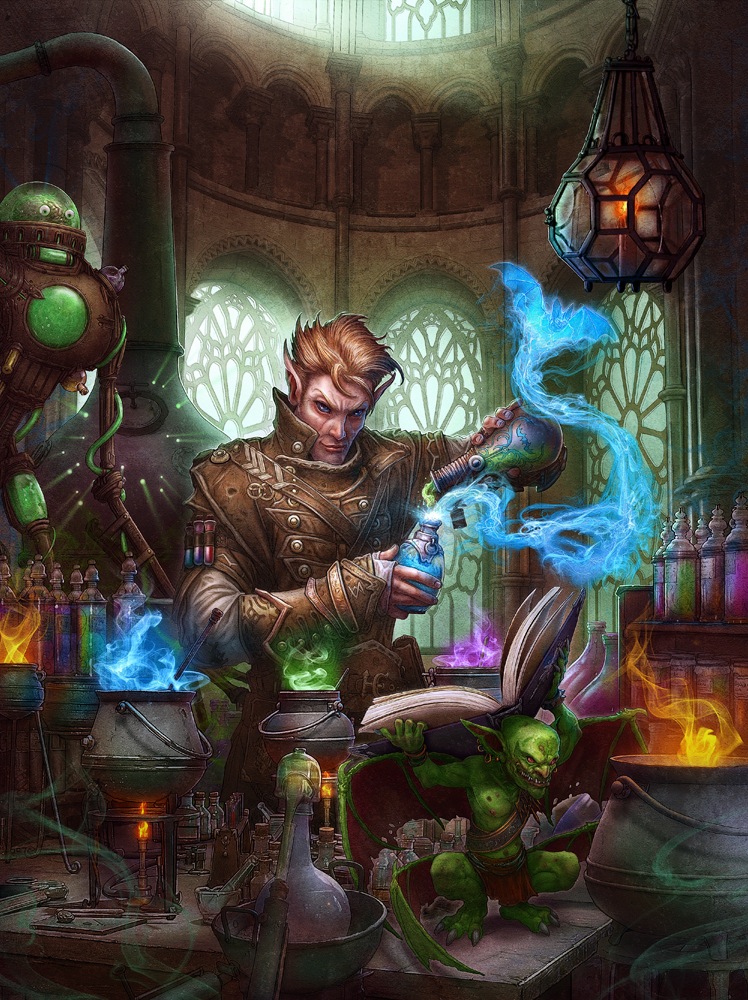
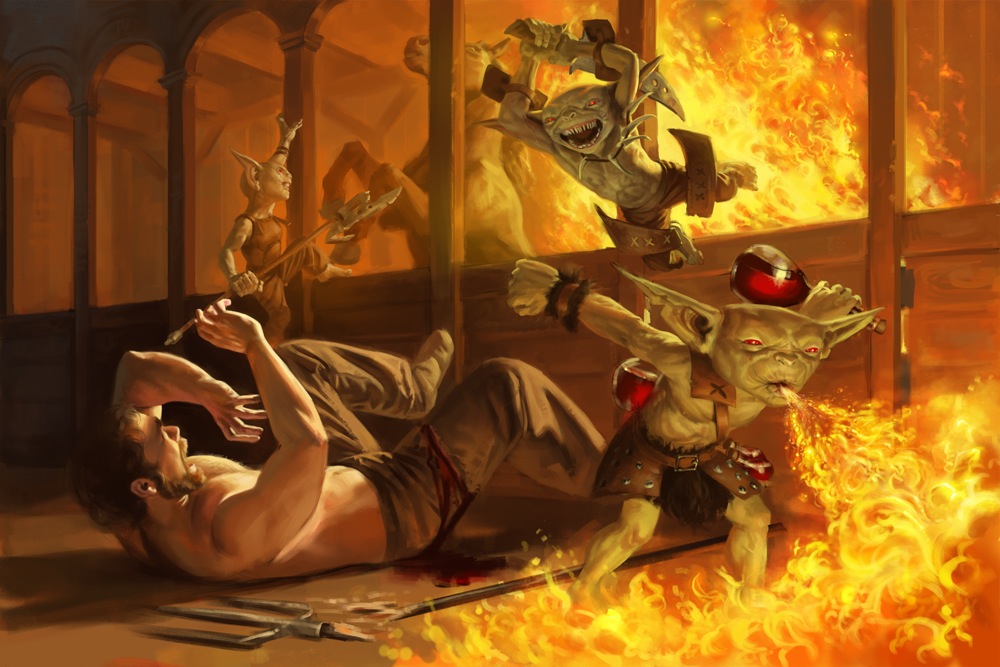
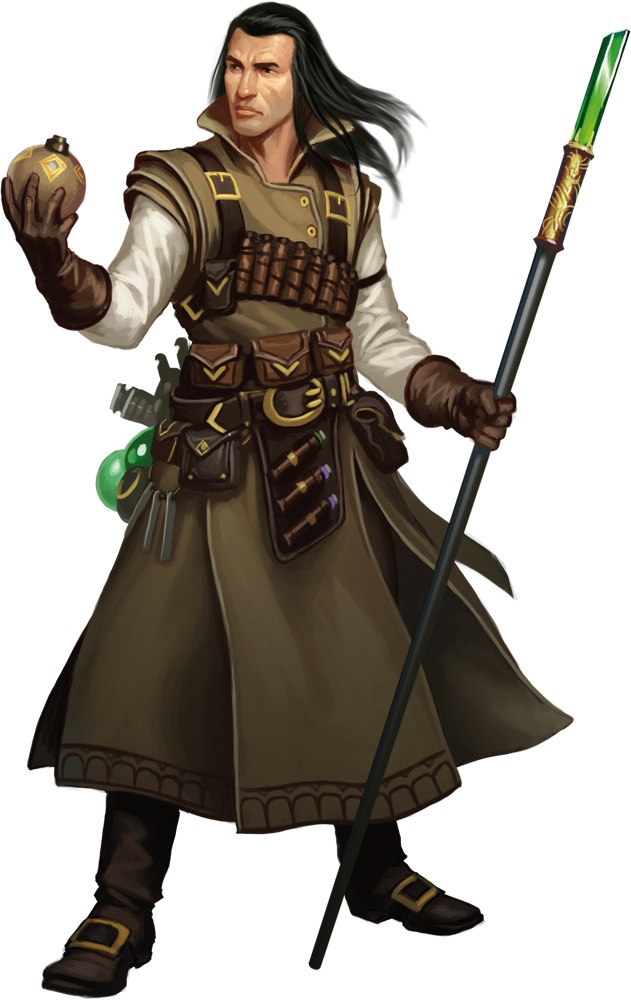
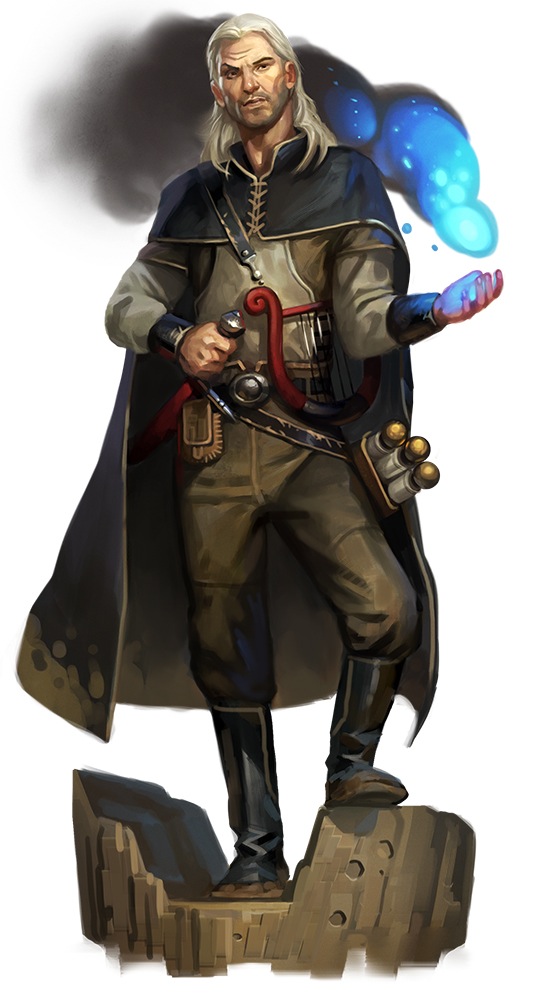
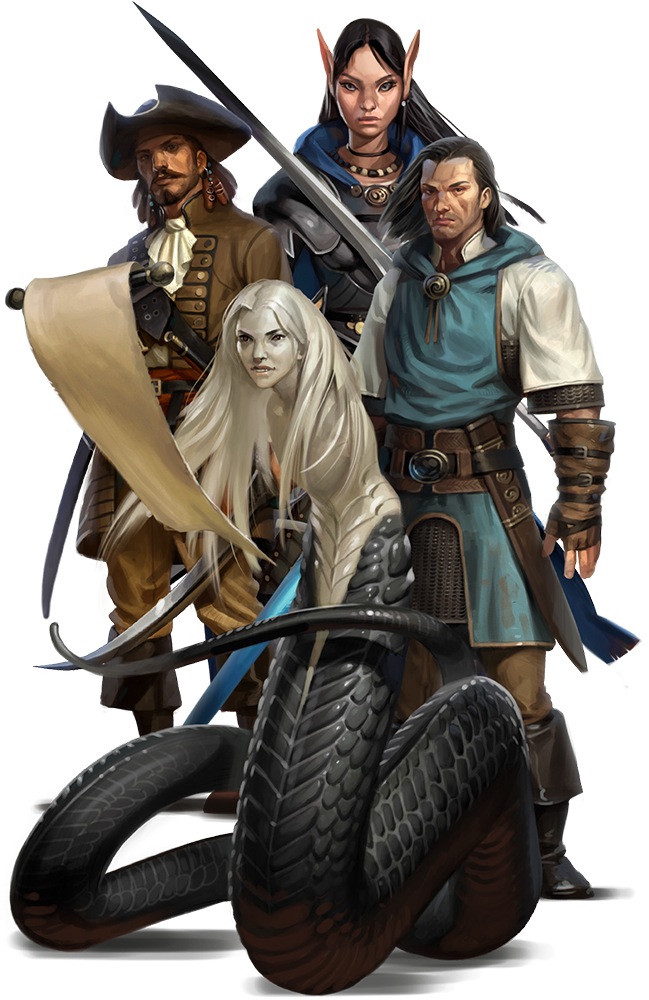
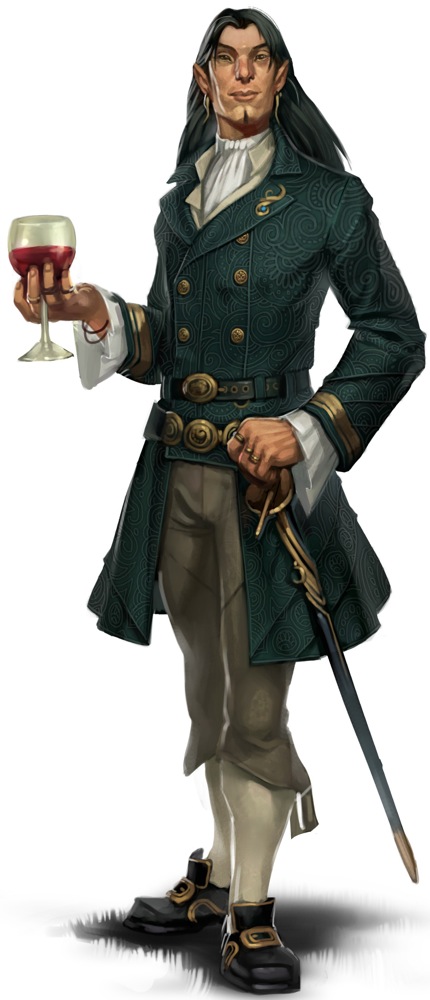
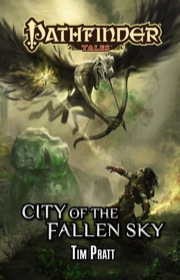
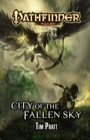
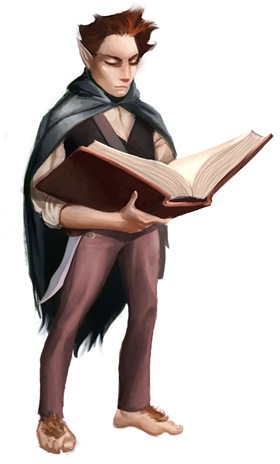
In City of the Fallen Sky, a young alchemist named Alaeron flees an apprenticeship with the dark scholars of Numeria's Technic League, only to find himself in trouble once more as a chance encounter sends him and several reluctant companions into the jungles of the Mwangi Expanse. Tracked by a high-tech assassin, and armed only with his inquisitive nature—and a few mysterious artifacts stolen from the Technic League—Alaeron must find the ruins of a legendary flying city, or face the wrath of a cruel crime lord...

Chapter Five

A Vote of No Confidence

It's necessary if I'm to do the best possible work for you," Alaeron said, speaking quickly enough, he hoped, to stave off violence. "I just need to return to my workshop and get some of my supplies. An alchemist without his tools is nothing more—as you've so recently pointed out—than a man who stinks of sulfur."

"I can have whatever supplies you need brought here," Vadim said. "Just make a list and give it to Skiver."

"No—no, sir, I'm afraid that won't work, I need my formula book at the very least. It holds all the recipes for my potions and ...other items ...and that's something no alchemist would sell. An alchemist's formulas are highly personal and individual, as important to my work as a wizard's spellbooks, and—"

"I can take him," Skiver said. "It would shut him up, at least."

"Are you sure you want to be out on the street, given your current situation?" Vadim said.

Skiver laughed. "No one's looking for me yet. I've got a few days before I need to worry about showing my face. I can babysit the scholar a bit."

"Fine, fine," Vadim said, "I've spent too much time on this already, just deal with it." He pressed the heels of his hands against his temples, and Alaeron felt a brief and ultimately ridiculous stab of sympathy—the old man looked tired now, and clearly had larger problems than this on his mind. "A speculative venture to the ruins of Kho!" Vadim boomed. "What can I be thinking?"

"It's a gamble, right enough," Skiver said. "Most likely it'll come to nothing. But it could pay off big, and the buy-in's right: all it costs you is leaving three shallow graves empty for a while longer. Seems like a decent gamble. And I've always wanted to see the world."

"I'm hardly likely to take gambling advice from you, old friend," Vadim said, clapping Skiver on the shoulder. "Given your current circumstances. Eh?"

Skiver's smile slipped, just slightly, and his eyes narrowed, but only for a moment. "I can slit their throats and dump them by the docks if you're having second thoughts, boss," he said.

"No, no, by all means, set off on your journey, have your adventure. Just bring me back a souvenir. Say, a chest full of treasures." He jerked his thumb at Alaeron and Jaya. "Or else their heads in a sack."

"The perfect gift for the man who has everything," Skiver said, grin at full breadth again.

"Come on, Jaya," Vadim said. "One of my men will show you your brother." She cast a worried glance at Alaeron, and an even more worried one at Skiver, and then followed Vadim out of the room.

When they were gone, Skiver turned his attention to Alaeron. "All right, scholar. Let's go." He led the way out of the storeroom, through a number of narrow hallways paneled in dark wood. Alaeron considered trying to hit his guide over the head and run away. After all, he didn't have a brother locked up in a cage—there was nothing holding him here but a gentleman's agreement, and Vadim had already proven he was no gentleman. But the fact was, he had to go back to his workshop before he could flee more permanently, and Vadim knew where that workshop was, so giving Skiver the slip now wouldn't help him much: there might very well be armed men waiting for him when he arrived home. But once he was at his lab, in possession of his tools, then the equation would change. It should be trivial to incapacitate Skiver and make a run for it.

Certainly, the possibility of seeing the ruins of Kho was tantalizing, and the chance to spend more time with Jaya had its own temptations. She was treacherous and untrustworthy, certainly, but there was much about her Alaeron couldn't begin to understand ...and he loved nothing so much as the chance to strip a mystery bare. So to speak.

But he had to be practical. Such an expedition would be treacherous, necessitating a voyage across the Inner Sea, a trek across the burning sands of Osirion, and then on into the mountains, and once they got there, they were likely to be slaughtered by monsters in the high passes, or murdered by Jaya's savage relatives—assuming they even existed. If their team beat the odds and actually found the ruins of Kho, who knew what sort of horrors would lurk inside? All that knowledge...but, no, Alaeron had already had his adventure, and returned with his hard-won prizes. He should settle down for a quiet chance at study. He just had to escape from his current predicament first.

Skiver unlocked a heavy wooden door that led outside to a stable smelling of fresh hay and old manure. Judging by the sky, it was late afternoon. Alaeron felt adrift in both time and space.


"Skiver is strangely amiable for a cutthroat."

"Thinking of trying to escape?" Skiver said conversationally. "Can't say I blame you. There's never been a fish on a hook that didn't do its damndest to wriggle free. But even if you did get away from me—which you won't—Vadim's got connections everywhere. He's not a man you want to cross, at least not unless you're in a position to make sure he can't cross you back."

"I will take your words under advisement." Alaeron put all the snobbery and superiority at his disposal into his tone.

"No, you won't," Skiver said, almost mournfully. "But that's all right. No one ever does." They passed through another gate—locked, but unguarded—and into a cobbled side street, and Alaeron's mental map oriented itself: they were in the old part of the city, where some of the great houses of the deposed aristocracy had become private residences for wealthy merchants, or else been chopped up into dozens of apartments for poorer sorts. His workshop was off to the east, not an impossible distance, but a longish walk. "I don't suppose Vadim has a carriage we could use," he said. "Only I'm a bit sore from being beaten over the head and tied to a chair."

"Good for you to walk and work the kinks out, then," Skiver said cheerfully, strolling along the gently curving street past the gates of once-stately residences. "You'd best get used to it, anyway. I'd bet we're going places sensible animals like horses won't go near, so we'll be doing a lot of walking. Your soft little feet will have to get toughened up."

"I think you misunderstand me, sir," Alaeron said with icy dignity. "Perhaps Vadim didn't tell you, but I've traveled to Numeria in the far north, and talked my way into the Technic League, and seen the terrible secrets of the Silver Mount—"

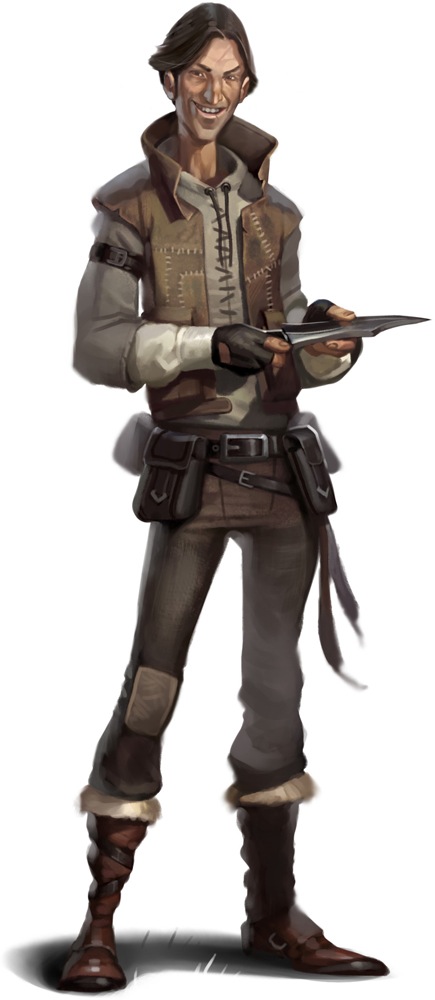
"Oh, Vadim mentioned," Skiver interrupted. "I know what you say you did. But people say all sorts of things. I know a man says he went to Absalom and saw that great cathedral there and someone bet he wouldn't go inside. Now that man, he likes a bit of a gamble, so he couldn't resist. He says he made his way to the center of the cathedral and looked upon the Starstone with his own eyes, that he could have reached out and touched it—but then he decided he didn't want to be a god after all, sounded too much like hard work, so he walked on out again, collected his winnings, and lost it all betting on a pit fight the next day." He gave Alaeron a sly sidelong look. "He says all that. Don't mean it happened. My old mother had a saying for people like him, and for anybody who puts on airs and claims more than they have a right to—‘He's all pointy hat and no magic,' she'd say."

"If you're implying—" Alaeron began.

"Can't say as I blame you. Your back was up against it back there, and no mistake. I'd have said just about anything to keep my thumbs. You just did what you had to do."

"Ah," Alaeron said, hope stirring. "Then would you mind if I, hmm, slipped away? I promise I'd never come within a day's travel of the city—"

Skiver spat on the cobbles. "I said I understood, scholar. I didn't say it was worth my life to get you out of the trouble you got yourself into. No, you'll come along with us. If you're really an alchemist maybe you can at least pour me the occasional drink. Let's get to this laboratory of yours."

They continued walking in silence. Skiver never asked the way to the laboratory, but he kept taking all the right turnings, which meant Vadim and his people were entirely too familiar with the details of Alaeron's life. As they walked, Alaeron looked around the city, trying to memorize every brick and board of its buildings, every twist of its streets, every drifting scent in the air. There was a good chance he'd never see Almas again, and that thought left a hollowness in his chest as echoing as the great chamber he'd discovered in the depths of the Silver Mount.

"Here we are," Skiver said, rapping on the door to Alaeron's workshop. "Guess you'd better open it up."

Alaeron opened the lock, but didn't perform the necessary steps to deactivate the gas trap. It wouldn't kill Skiver, but it would knock him out, and give Alaeron time to gather his things and make his escape before the alarm was raised. "After you," he said, stepping back.

Skiver snorted and drew his long, thin knife. "I don't think so, scholar. Never go through an unknown door first if you can help it. After you." He gestured with his knife.

Alaeron cleared his throat. "Of course. Just, ah, I think I forgot to ..." He hurriedly twisted the lock again, deactivating the trap, while Skiver chuckled behind him.

"What was it?" the man asked. "Crossbow tied to a string?"

"Of course not. Nothing lethal. I don't want dead men in my doorway. Just a trap to release a chemical composition of my own devising."

Skiver shrugged. "Nice try, anyway. But you can still go in first."

Alaeron opened the door and ducked inside. Skiver followed a moment later, eyes taking in every corner of the room, knife in his hand. He slammed the door all the way open, hard, presumably to break the nose of anyone hiding behind it. Satisfied there was no immediate danger, he tucked his knife away, hooked a stool with his foot, dragged it over to one of the dirty windows, and sat down. He licked his thumb and cleared away a little patch of grime on the glass so he could see outside, and alternated between watching Alaeron and watching the street.

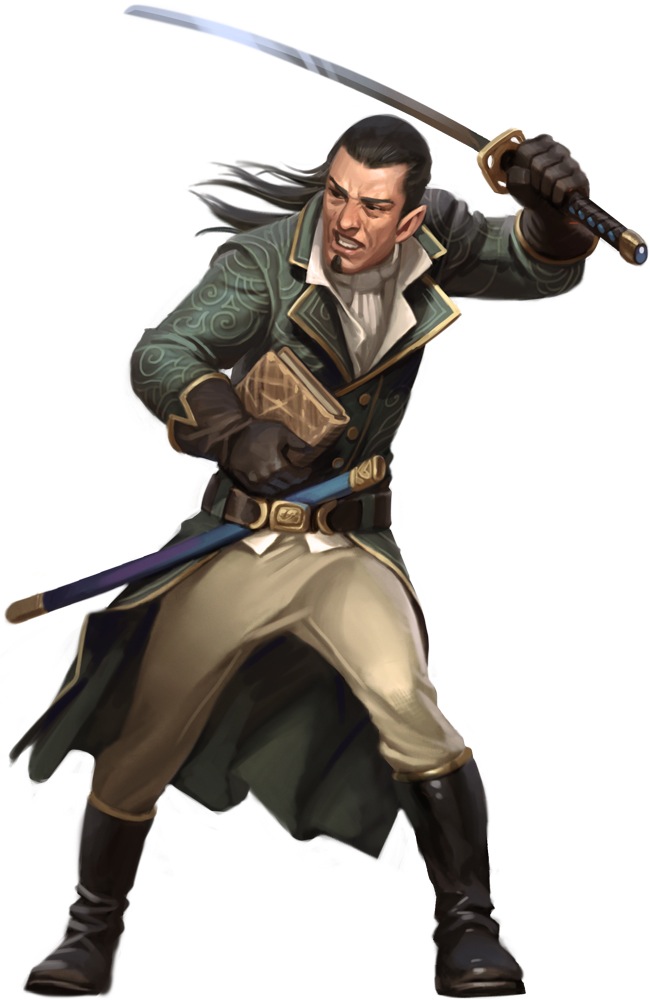
The alchemist's travel pack was already prepared. It was just a matter of tucking in the formula books he'd been using most recently, checking the multitude of pockets in his coat to make sure all the appropriate items were in their proper places—it wouldn't do to reach for a flash-bomb and get a stink-bomb instead—and making sure he hadn't left any overly volatile chemicals sitting too close to their reagents. He might never come back here again, but that didn't mean he wanted his father's laboratory to explode.

There was only one little problem. He needed to get his relics from the Silver Mount. And he didn't especially want Skiver to know he had them. He was well armed with weapons now—better armed than Skiver could imagine, Alaeron was sure—but they didn't do him much good in such enclosed quarters. The laboratory was essentially one large room, and tossing a bomb here would hurt him as much as it would Skiver. Damn it, if only the man had walked into the gas trap—

"Who's this?" Skiver said. "There's a big man in the street, he's walked past three times now. You have an appointment today? Somebody come to buy one of your love potions?"

Alaeron closed his eyes. The Technic League enforcer, Kormak. Almost certainly. "I, ah—"

"He's coming to the door," Skiver said, stepping back from his stool. "You got that trap you laid for me all ready to go?"

Alaeron swore and hurried to the door, attaching delicate wires to carefully placed hooks on the door frame, glancing up at the apparatus bolted to a roof beam. "Get away from the door," Alaeron whispered. "The gas is fairly dense, almost a mist, so it shouldn't drift too far, but we don't want to be close to it." Alaeron scurried to the far corner. Skiver gave him a thoughtful look, then went to the other corner, where Alaeron had hung a curtain to separate his sleeping pallet from the workshop proper. Skiver ducked behind the curtain and out of sight.

Alaeron did a rapid calculation of risk. Skiver was probably watching the door and not Alaeron, who was partially screened from view by a battered wooden cupboard full of reagents anyway. The timing hardly seemed ideal, but when would he have another unobserved moment? Alaeron knelt and lifted up a floorboard near the wall. His father had kept an emergency sack of coin in the little space underneath, once upon a time, but Alaeron used it for more precious things. The hole appeared to be empty, but that was a minor illusion purchased from a wizard, so he reached in anyway and drew out a drawstring bag, no bigger than a wineskin, that clinked gently when it moved. Alaeron took the cloth-wrapped items from inside the bag and secreted them in various pockets of his traveling coat before replacing the board.

The door rattled ominously a few times while Alaeron was retrieving his stolen relics, and then there was a horrible squeal as Kormak broke in, prying the door away from the frame. The door popped open and a shadow loomed, filling the entryway.

The canister attached to the roof beam hissed as one of the pulled wires activated it, spraying a dense greenish mist toward the intruder's face. Kormak reached up with one huge hand and wiped at his cheek, grunted, and then fell forward as suddenly and solidly as a chopped-down tree. Alaeron smiled—he'd never actually seen the trap work before, and it was gratifying to know it behaved as designed. He waited a moment for the mist to dissipate, then stepped toward the Kellid. The gas should render Kormak unconscious for a few hours, at least, which was ample time to go through that clanking coat of his and see what kind of devices the Technic League had armed him with. Why, with luck, Alaeron could find items valuable enough to buy himself out of this problem with Ralen Vadim—or even to overwhelm the old adventurer by force, rescue Jaya, and earn her no doubt plentiful gratitude.

He knelt, reached out for Kormak's coat—

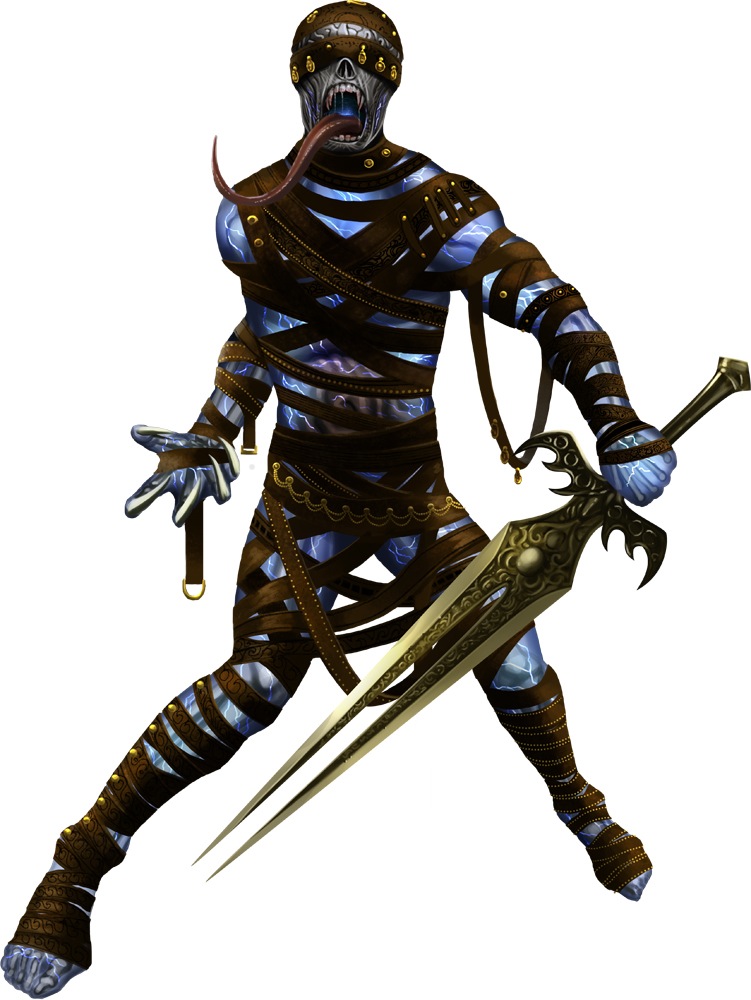
And the Kellid lifted his head, gave Alaeron a smirk full of contempt, and seized the alchemist by the throat. As Alaeron choked and scrabbled hopelessly at the man's fingers—how could mere flesh grip tight as iron?—he noticed flashes of silver, like tiny metal corks, in each of Kormak's nostrils. The Technic League used such filters to traverse some of the more poisonous rooms in the Silver Mount—they allowed the wearer to breathe, more or less, while preventing more noxious substances from entering the body.

"Greetings, runaway," Kormak said, and despite sounding nasal and strange from the nose plugs, there was no mistaking the satisfaction in his voice.

Purchase the whole novel here.

Coming Next Week: A brand new, standalone story featuring Alaeron!

Tim Pratt's writing has won a Hugo Award, a Rhysling Award, and an Emperor Norton Award, as well as been nominated for Nebula, Mythopoeic, World Fantasy, and Stoker Awards. His stories have appeared in anthologies such as The Best American Short Stories and The Year’s Best Fantasy and Horror, as well as two short story collections of his own. He novels include the contemporary fantasies The Strange Adventures of Rangergirl and Briarpatch; the Forgotten Realms novel Venom in Her Veins; and seven books in the Marla Mason urban fantasy series (as T. A. Pratt). He edited the anthology Sympathy for the Devil, and the forthcoming Rags & Bones anthology with Melissa Marr. His books and stories have been translated into French, Czech, Dutch, Russian, Greek, Korean, Spanish, German, and several other languages.

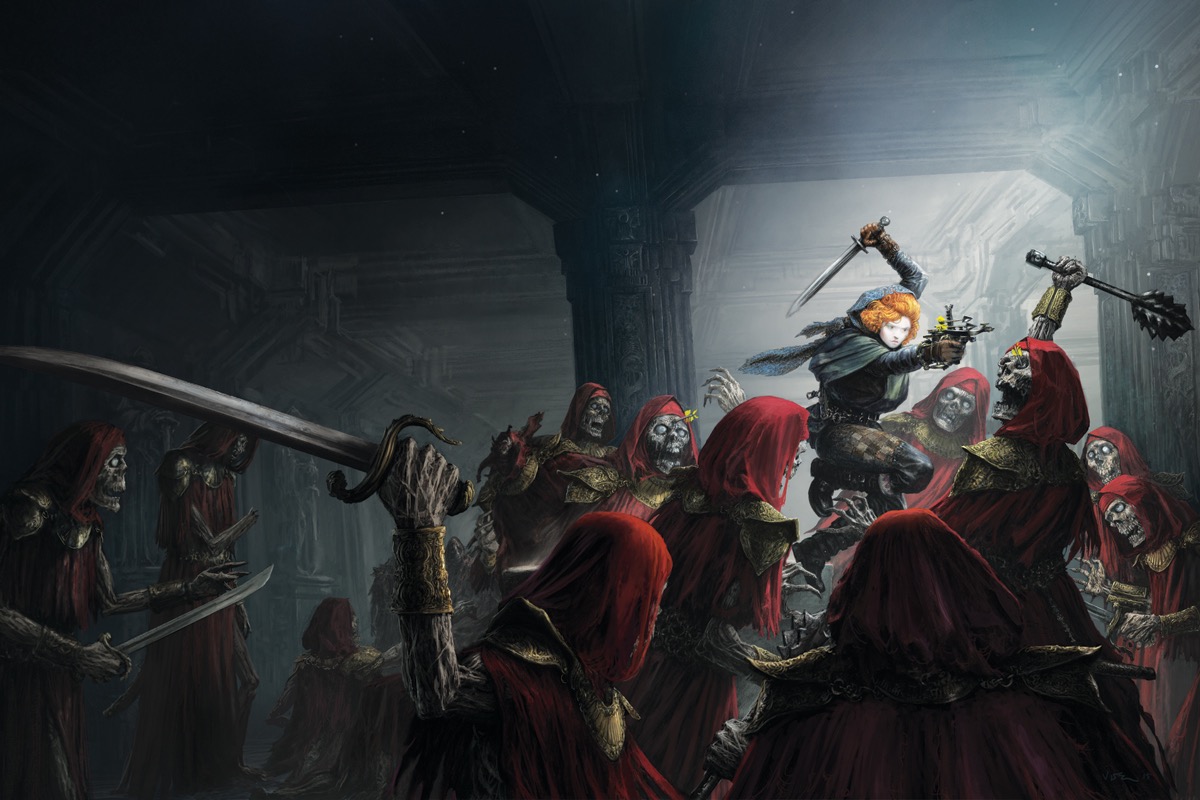
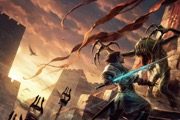
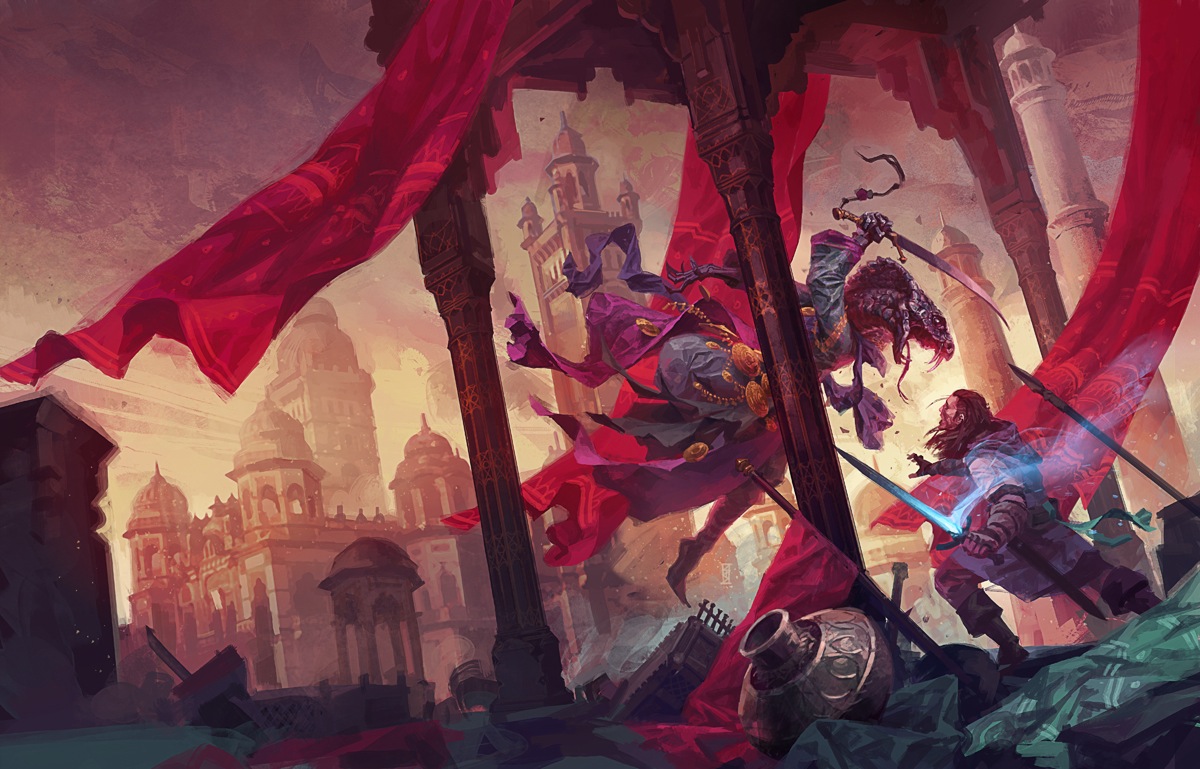
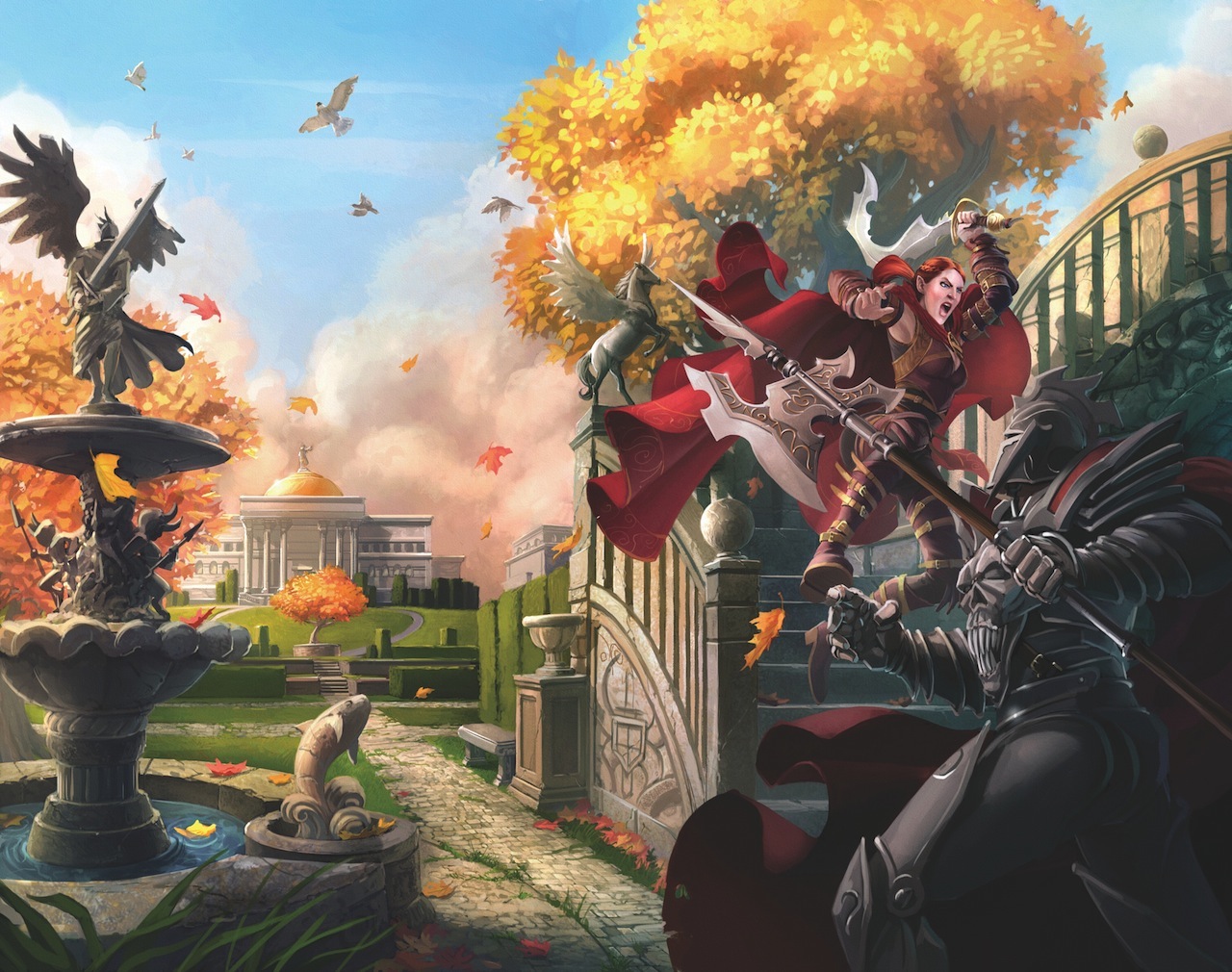
Illustration by Eric Belisle.

More Web Fiction. Link. List this entry. Tags: Eric Belisle, Pathfinder Tales, Tim Pratt
8 comments.
Facebook Twitter Email


Where to Next?

Thursday, May 17, 2012

City of the Fallen Sky, the latest Pathfinder Tales novel, is in our warehouse and on its way to stores and subscribers, offering readers a chance to explore two of the Inner Sea's most fascinating and asked-about settings: the barbarians-and-technology land of Numeria, and the legendary crashed flying city of Kho. Looking back on the other seven books in the line so far, we've been to a lot of great places: Ustalav, the Worldwound, Irrisen—even the Outer Planes. And there's still more coming—I can't wait for people to see Liane Merciel's take on grim Nidal, Robin Laws' depiction of the underhanded politics in Magnimar, or Dave Gross's elven extravaganza in Kyonin. Yet all of it leaves me with a question: with so many choices, where should we take the line next?

That's where you come in. I want to know what parts of Golarion you would like to see a Pathfinder Tales novel or web fiction story about. Are you dying for a book set in Bekzen, or maybe just across the border in Lastwall? Perhaps you want to see more of the River Kingdoms, Jalmeray, or Osirion? Post your suggestions in the comments thread and let me know! Repeats are fine, and while we'd prefer to stay near the Inner Sea, there are no wrong answers—your opinion is your opinion. Remember, we rely on the feedback of readers like you to guide all our projects—and who knows? You might just get that Mammoth Lords novel you've been waiting for...

James Sutter
Fiction Editor

More Paizo Blog. Link. List this entry. Tags: Pathfinder Tales
123 comments.
Facebook Twitter Email


Story Time with Uncle Sutter!

Friday, March 16, 2012

Since everybody’s working around the clock on the Rise of the Runelords Anniversary Edition Hardcover, Wes and I decided it was time that we broke the glass and unleashed Uncle Sutter’s Emergency Storytime Blog!

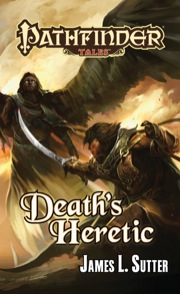
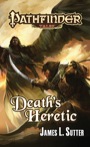
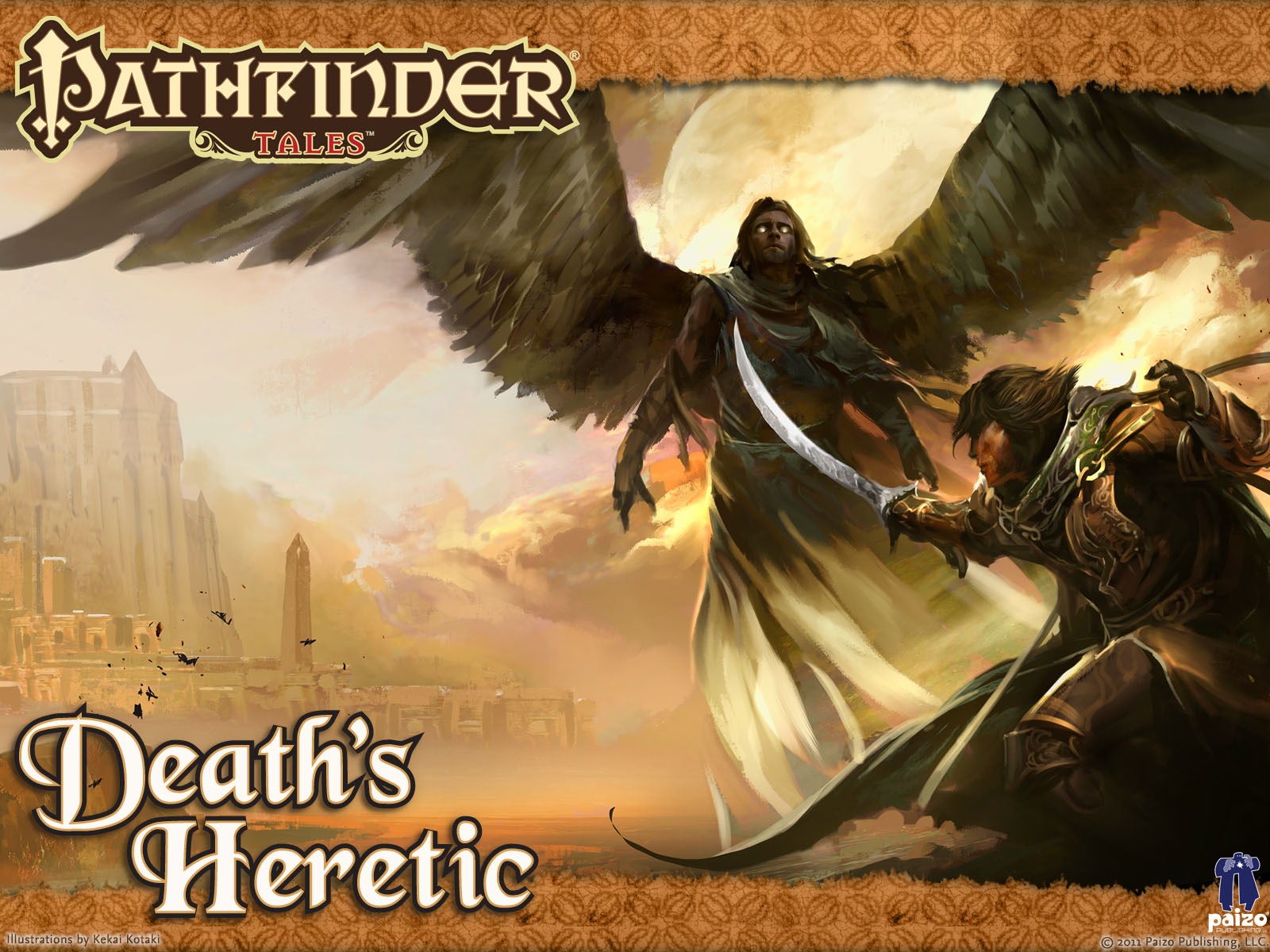
Back in January, we had a reading/launch party for Death’s Heretic at the University of Washington bookstore. It was a ton of fun, and as it happens, Wes used the wonders of modern technology to capture me reading part of the book’s prologue. So if you’re bored at work and want somebody to read fantasy stories to you, bust out your headphones and enjoy! The end of the clip even contains my soon-to-be-patented ghoul voice...


James Sutter
Fiction Editor

More Paizo Blog. Link. List this entry. Tags: Pathfinder Tales
6 comments.
Facebook Twitter Email


Song of the Serpent Sample Chapter

Wednesday, February 22, 2012

by Hugh Matthews

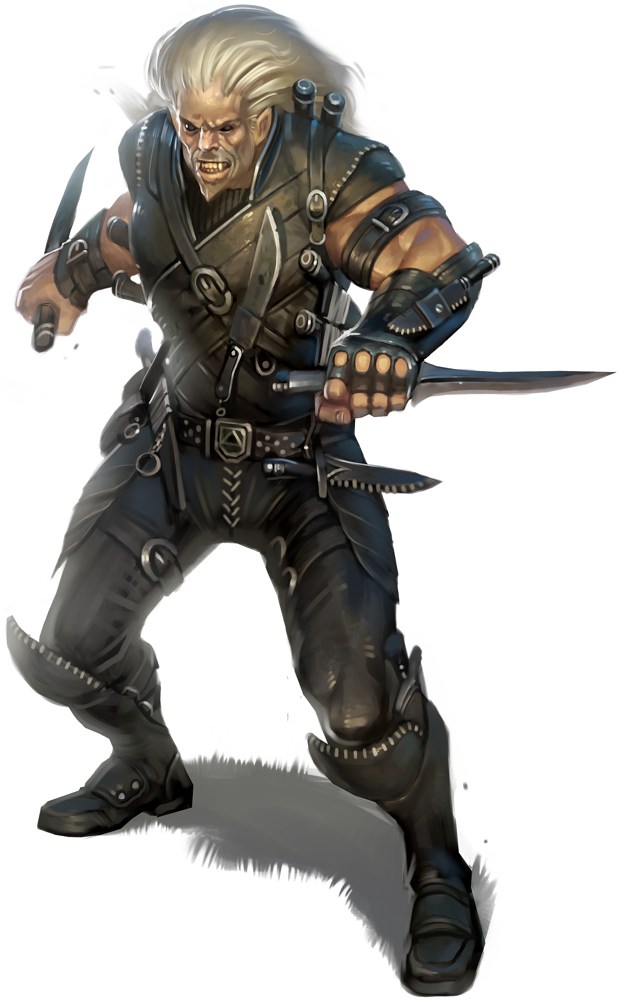
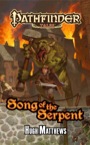
In Song of the Serpent, veteran thief Krunzle the Quick gets caught burgling the house of a powerful Kalistocrat of Druma, and in exchange for his life agrees to attempt a dangerous mission to recover the merchant's runaway daughter. Such things are not so easily done, however, and in this chapter Krunzle has just been captured by the thugs in charge of a thriving mining town...

Chapter Four: A Promising Young Troll

When he awoke this time, he was at least unbound. He was lying on his back on a wooden floor in a dark place. But he knew he was not alone from the hubbub of voices and motion around him. Something startling had happened—no, frightening, he thought as his senses fully reassembled themselves and reported for duty—and a crowd of people were reacting to it by putting as much distance between themselves and the something as their circumstances allowed.

But their circumstances were not liberal; the mob had not gone far away, though the panicky cries and curses suggested they would have liked to. Krunzle also suspected that, given the chance, the unseen melee of forms struggling against each other in the darkness would have welcomed the opportunity to bathe—surely, nobody wanted to reek of filth, sweat, rotten meat, and untreated sores. And over it, a strong stink of charred meat.

His head ached, but at least it was clear. He sat up, and as he did so he heard from behind him the tramping of hard-soled boots on planks, accompanied by a faint light that grew stronger. He turned his head and, seeing vertical stripes of light, realized that they were gaps between the timbers of a heavy door. Someone was approaching the other side, carrying a light.

A rattle of iron keys, then the turning of an unoiled lock, and now the door was pushed in. A big man armed with a club bent to peer under the low lintel of the doorway, extending the oil lamp into the room. "What's all the ruckus?" he said.

He didn't seem to have directed the question at Krunzle, and the thief used the presence of the light to look about him. He was sitting on the floor of a large room, its walls made of squared-off logs. The room contained three or four score men—ragged, filthy, scrofulous-looking men—who were crowded in a group against the far wall, their eyes large in the lamplight.

The eyes were frightened and focused on Krunzle—except he now saw that the mob's collective gaze kept going to something on the floor between him and them. Something man-sized and man-shaped that, when the fellow with the lamp came into the room, casting more illumination on the scene, was revealed to be a man. Or at least most of one. And what was left of him was dead.

The man with the club stepped past the thief and bent to examine the body. Krunzle took the opportunity to rise. He thought about making a break through the open door, but decided he was far too wobbly on his feet. And for all he knew, in the blackness that seemed to be outside this jail—for ragged men, a strong door, and a man with a key and a club all said jail to Krunzle—he'd run straight over the lip of the gorge.

The corpse was that of a heavily muscled man with a scarred face and no hands or forearms. Above where his elbows should have been were charred stumps, still smoking. His eyes were wide open, as was his mouth, creating an impression that his final emotion had been huge and painful surprise.

The jailer made a noise of confirmation, straightened, and poked the club gingerly in Krunzle's direction. "You," he said, "back off. Over in that corner, and stay there." When the traveler raised both hands in a gesture of non-confrontation and did as he was bid, the man with the club pointed at a couple of the ragamuffins and said, "You two, haul this out and dump it in Skanderbrog's trough."

The indicated pair crept forward, took the corpse's ankles, and began to drag it toward the door. "Wait," said the jailer, then stooped to rifle the body's rags, which Krunzle noted were in better condition than any of those worn by the other men in the cell. Having found and pocketed a few items, the man with the club said, "Carry on."

He remained in the room, eyeing Krunzle warily, until the corpse detail returned. Then he pointed the club at the thief again, said, "No more trouble," and left, taking the lamp with him.

Krunzle heard the key turn in the lock again. Before the light went, he had seen rags and sacking on the floor near him. He scooped these into a pile, then lay down. Over on the other side of the room, he heard stirrings and mutterings and a few curses as the crowd of ragged men composed themselves for what remained of the night.

None of them came too near Krunzle, for which the traveler was grateful. Their stench was not to his liking. He raised a hand to carefully waggle his jaw, poked with his tongue at the loosened tooth, and contemplated the general ache in his skull. He had known worse.

He needed sleep. Tomorrow would bring more information about his predicament, and perhaps some means of improving it. His last thought was to wonder again what Skanderbrog was.

∗ ∗ ∗

Krunzle, along with the other slaves, was roused at dawn by the clanging of an iron bar on an iron triangle hung outside the strongroom. The door was flung open by another man with a club, and the slaves roused themselves from where they had slept on the floor and rushed outside. The thief rose and followed.

He found himself on a broad platform made of planks, close to the edge of the gorge. The ragged men were clustered around a big cauldron near the door to the barracks. They'd taken rough wooden bowls and were dipping them into the big pot and slurping the contents. More tough-looking men with cudgels—some of them had coiled whips at their belts—stood around, some of them telling the ragged men to hurry up and finish.

Krunzle went to the pile of bowls, found one that was not too encrusted with dried remnants of previous meals, and moved toward the cauldron. He could not help but notice that those in his path—or even well wide of it—moved out of his way. Even the bruisers seemed chary of coming too close to him.

He dipped the bowl into the stuff in the pot—some kind of pasty gruel afloat with chunks of spoiled vegetables—and brought it to his lips. It tasted like pig swill, the kind given to swine who were not highly prized by their owner. But he reasoned that the day was not likely to offer better nourishment, and he remembered someone saying last night that he would be "moving baskets of ore." That was not work to be undertaken on an empty stomach.

He saw the red-bearded Ulfen who had beaten him at Wartnose's behest come down from the town and speak a word with a big-shouldered guard who looked to be in charge. The thief recognized this one too: he had been one of the men who had come to take him from Room Thirteen. Now Redbeard went back the way he had come and the head guard cast his gaze over the workers, until he found the one he was looking for. "Raimeau!" he called. "You show the new man what to do!"

A gangling young man with long locks of prematurely gray hair got up from where he'd been eating, drained the final few drops of gruel from his bowl, then wiped its wet inner side with a finger to lick off the absolutely last remnants. He tossed the bowl onto the heap of others and came very slowly toward the traveler, his hands extended in a gesture that said he hoped for no trouble.

Krunzle noticed that Raimeau's eyes went from his to the thing around his neck and back again. The traveler put the facts together. To the young man he said, "You have no need to worry about this,"—he moved a hand to indicate Chirk—"as long as you leave it alone."

"Have no fear," said the other. "Seeing what happened to Chenax was instruction enough for me."

"Chenax was the man with no hands?"

"He was, though he had a very hard pair of fists before he met you, and had no qualms about using them."

At that moment, a whistle blew and the slaves moved toward the edge of the platform. "Work?" said the thief.

"Work," said Raimeau. "We'll be hauling baskets of ore from the face up to the crusher. Watch where you put your feet, because there are no railings on the ledge or the scaffolding. One misstep, and you'll be joining Skanderbrog for dinner. Like Chenax is about to do for breakfast."

The thief focused on the immediate. "Are Chenax's shoes still available?" He indicated his stockinged feet. "Mining is no work for the unshod."

"They will be if Skanderbrog hasn't had breakfast yet. He usually doesn't bother to peel his fruit."

∗ ∗ ∗


"So this is a Skanderbrog."

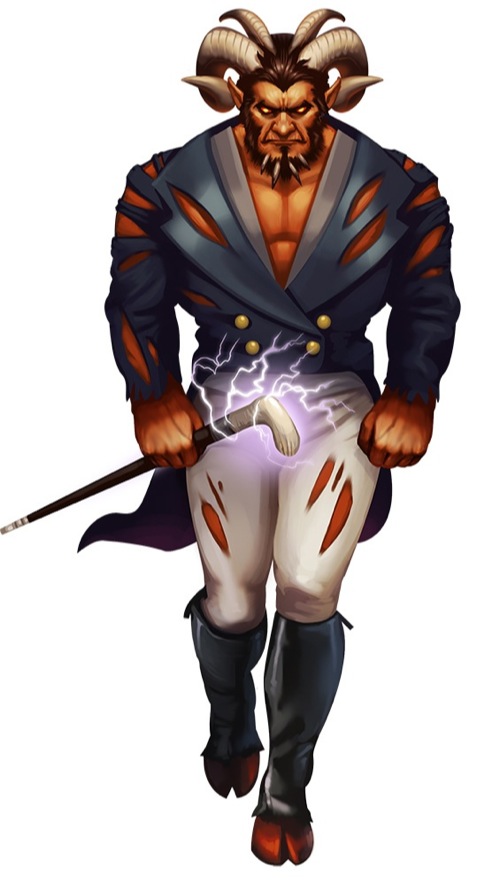
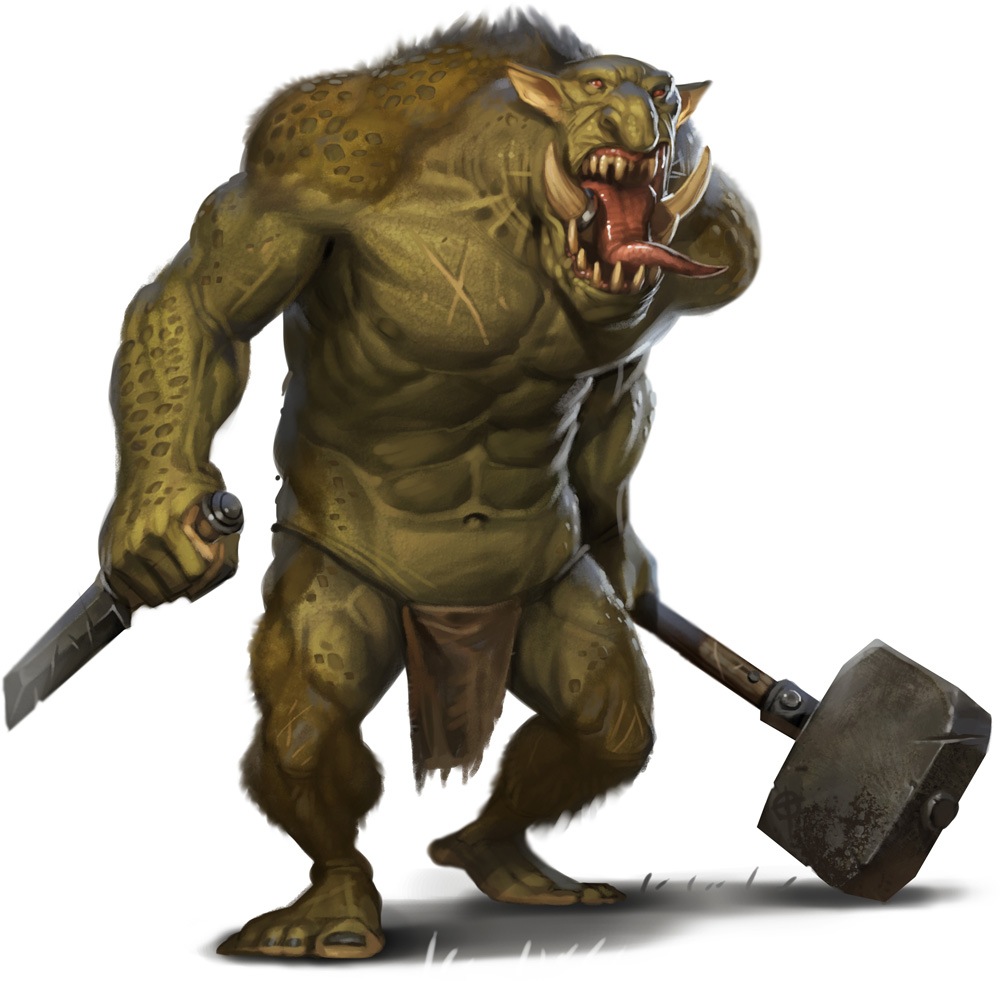
Skanderbrog, it turned out, was a name—a name that had been given to a juvenile male troll by his mother, who after nursing him through childhood and teaching him the rudiments of trollery, had handed young Skanderbrog the forequarter of a deer and sent him down from the mountains to see if he could establish a territory for himself and get on with life. But Skanderbrog had been unable to find a niche that was not already occupied by larger and more experienced trolls. Starving, he had come down to forage on the outskirts of Ulm's Delve. After eating a couple of unsuccessful gold-panners—they made poor meals, being half-starved themselves, living off leaves and roots while striving for the elusive gleam in the pan—he had been trapped in a pit that Wartnose's mage had caused to be dug and lined with charms.

The man with the wart on his nose was, as the thief might have expected, the same Boss Ulm by whose order Ulm's Delve barred "thieves, filchers, bun-passers, vagrants, and holy-fakers." The skeletally thin wizard he employed was Mordach the Prudent, and the red-bearded Ulfen was Brundelaf, the outfit's chief enforcer. He even knew the name of the brawler who had clipped him: Little Fost, he was called—apparently there was a larger version somewhere in the world. The thief thought he would as lief as not be spared the experience of making Big Fost's acquaintance.

Raimeau was both the knowledgeable type and the sort who liked to tell what he knew. As they descended the scaffolding then stepped off the trestle-work to where a broad ledge had been cut in the rock face, he filled Krunzle in on the history of Ulm's Delve. By the time they had wrested a pair of sturdy shoes from the feet of dead, handless Chenax, laid in a broad wooden trough at one end of the ledge, near a cave sealed behind a grillwork of black metal, the thief was well briefed.

Boss Ulm had established himself quite solidly here in the Rumples, as this stretch of hilly country was called. Hearing of the gold strike and the rush of goldbugs into the region, he had come with his henchmen to establish the first saloon, brothel, and hardware emporium—in tents at first, though a sawmill was one of his earliest accomplishments, so that he could put up more enduring structures.

Once the instant town was booming, and Brundelaf and Little Fost and the others had eliminated any doubts as to who was in charge, Ulm had begun to think larger thoughts. He had hired Mordach the Prudent and set him the task of locating the source of the alluvial gold that had the prospectors lining the river's banks, panning and sluicing. The mage had cast his runesticks and questioned a number of subterranean beings he managed to summon and bind. Finally, he had marked a spot halfway up the south side of Starkriven Gorge, as the sheer canyon upriver from the town was called.

Ulm had established a claim to the gorge by the simple expedient of sending his bullyboys to throw out the handful of gold-hunters who were trying to work the gravel beneath the swift-running water at its bottom. He then moved the infant town to the edge of the chasm and began to develop a mine.

Mines require miners. These Ulm acquired by the simplest and least costly of measures: he promulgated several ordinances, signed by himself as de facto Reeve of Ulm's Delve. He knew that gold camps attract more than goldbugs; they attract several categories of persons who are skilled in separating prospectors from their pokes of dust and the occasional nugget. Boss Ulm made many of these activities illegal—the penalty for engaging in such banned enterprises was to be sentenced to an indefinite span of labor in the mine or the sawmill. He soon had a sizable, though resentful, work force.

Ulm had them build a trestle-work of timbers from the gorge's bottom to its top, and cut a wide ledge at the level where the seam of gold within the rock came closest to the rock face. Some of his enslaved card sharps, cutpurses, badger-gamers, and sandbaggers were set to hacking their way through to the gold, while others carried baskets of split rock to the surface, piling up the ore where Ulm had put more of his prisoners—there seemed to be an unending supply—to building him a crushing mill.

In the early days, the work had gone slowly, but the pace speeded up considerably when Mordach was able to bring Skanderbrog—in massive leg fetters of hammered iron—into the picture. Accommodating the troll required extra shoring up of the scaffolding, the cutting into the rock of a cell barred with a thick grill of charmed iron—the cell outside which Chenax waited to make his final contribution to Boss Ulm's wealth—and the manufacture of a huge hammer and chisel scaled to the young monster's size. But the investment was worth it. After a couple of the least-motivated workers were delegated to become troll-fodder, in full view of the rest of the work force, the mine's productivity increased severalfold.

Krunzle was on the ledge with Raimeau, trying on the dead man's shoes—they almost fit—when the whistle blew again. "We should leave here," the other man said. "Skanderbrog's coming out." As he spoke, a creak of metal on metal announced that the iron grillwork covering the opening at the end of the ledge was being winched upward on unseen cables. The thief needed no more encouragement but went quickly back the way they had come.

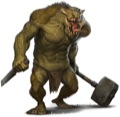
The young troll emerged into the morning light, blinking. Krunzle could see that he was not full grown: his undertusks thrust up no more than a few inches and he was barely twice the thief's height, even allowing for the stooped, bent-kneed stance that was common to his species. But his months of enslavement to Boss Ulm, each day spent swinging a hammer with a head as big as a man's torso to drive a long, thick chisel into resisting rock, had put even more muscle onto Skanderbrog's arms and shoulders than most mature trolls ever achieved. Trolls were generally averse to hard labor, preferring to make their livings by leaping from concealment onto passersby of whatever species. After overwhelming their prey with sudden, massive violence, they would sit down immediately to eat them raw. Trolls actually preferred cooked food, but most were too lazy to bother gathering fuel and going through the process of kindling a fire.

Skanderbrog's attention was drawn to the trough. He picked up Chenax in both his talon-tipped hands and brought his long snout down to sniff the body's charred arm-stumps. He clearly found the scent unpleasant, and delicately pulled Chenax's upper limbs from their sockets, much like a man twisting the wings off a cooked fowl, and threw them into the gorge.

The iron entrance to his cave closed behind him. He ignored it, and hunkered down on his haunches. A single twist of his wrist and Chenax's head popped off in his hand. He tossed the morsel into his mouth and Krunzle heard it crunch between the wide molars. Skanderbrog chewed, it seemed to the traveler, quite thoughtfully for a troll, his gaze moving across the crowd of slaves ranged over the flat and inclined surfaces of the scaffolding. He focused most clearly, however, on Mordach the mage, who had come down from above, along with a crew of torch-bearing men from Boss Ulm's cadre of enforcers.

While Skanderbrog made short work of the rest of Chenax, spitting out a metal belt buckle before swallowing the last of his meal, the men formed a double line of fire across the ledge between the troll and any possibility of his escape up or down the trestle-work. Mordach took up a position behind the twin rows of lit torches, raised his hands skyward, so that his sleeves fell back from his stick-thin arms, and shouted several harsh syllables.

The troll reacted as if he had experienced a sudden toothache. He shook his head, spittle flying from his black lips and prominent bottom tusks, and got to his feet. The look he gave the mage and the torchmen would have rendered Krunzle in instant need of a toilet, preferably one behind a locked and troll-proof door, but the men did not flinch. One or two of them even jeered and made rude noises with their tongues and lips.

Skanderbrog took only three steps, then paused where a sheet of canvas covered something against the gouged rock of the cliff face. He bent and threw back the heavy fabric as if it were the lightest cloth; beneath were his hammer and chisel. Mordach sent another string of syllables his way, and the young troll took up the tools and faced the rock. He set the chisel's edge into a crack, drew back the hammer, and slammed it forward. The collision gave off an almost musical chink, and a chunk of rock separated from the cliff and fell at Skanderbrog's feet. He swiveled, stooped, and bashed the hammer against the lump of stone, smashing it into fragments. Then he turned, straightened, put the chisel back against the wall, and repeated the process.

The torchmen parted enough for Mordach to step through to the fore. The troll eyed him askance but continued to cut rock from the cliff face and reduce it to smaller pieces. The mage's arm moved in a sweeping motion aimed at the ledge, and a rune carved into the nail of his index finger glowed with a light that made Krunzle's eyes ache, even at a distance. A smoking line appeared on the floor of the ledge just short of the growing pile of rock fragments. The troll paused in his work, sniffed at the air above the line, and growled. Then he went back to work.

Mordach and the torch-bearers departed, climbing the scaffolding's steps back up to the town, though not before the wizard favored Krunzle with a considering gaze. When the steps were cleared, the overseers hurried the slaves to form two parallel lines from the ledge up to the top of the gorge. Baskets were passed down from above until every man had one. The thief and his minder were pressed into line, becoming two links in what would become a continuous double chain to move baskets up and down the scaffolding.

Now a slave with a long-handled iron rake stepped up to Skanderbrog's growing pile of broken stone. Gingerly, the man extended the tool and pulled some rock across the line, which had now ceased to smoke but remained plain on the ledge's surface. As the rake's heavy tines grated on the stone, the troll paused in his labors and turned his head slightly toward the sound. Immediately, another slave, whose only function appeared to be to watch Skanderbrog, hissed a warning. The rake man stepped back. But the troll only growled again, then with a grunt, swung the hammer against the chisel head. The first man in the basket chain scooped rock into his basket then passed it to the slave beside him, who passed it in turn to the next man.

And so went the morning. For the first hour, Krunzle was in the upward-moving chain, taking a loaded basket from his left and passing it to his right. It took about half a minute for a basket to be loaded with Skanderbrog's output, so that every thirty seconds he had to bear a load for a few moments. At first, it wasn't hard, but as the minutes piled up, his shoulders and lower back began to ache, and his forearms to cramp. Raimeau was opposite him in the second chain, passing empty baskets downward to where the troll kept making fresh material for them to shift.

After an hour, a whistle blew and the two chains changed jobs. Krunzle welcomed the relief. But all too soon, it seemed, the whistle sounded again, and he was back to the hard life. By now the sun was well up, and the rock face caught and reflected its heat. Sweat ran down the thief's face and chest, soaked his shirt to his back, made his eyes sting with its salt. He reminded himself that he had sworn never to engage in brute labor—a vow he had seldom broken, and then only at the order of a magistrate who could command guardsmen with whips and truncheons to enforce their sentences.

The whistle blew again, and Krunzle was back to passing empty panniers. "Do we get lunch?" he said to Raimeau, working opposite him.

"More gruel," was the answer. The man next to Raimeau made a face. "Sometimes with a cat or a few rats in it."

Krunzle grunted. It was time to find a new occupation. But he was surprised at the idea that emerged from the back of his mind—until he realized that the thought had not been his, but Chirk's.

Are you insane? he thought back at the snake. Even here I am too close to the troll.

But the thought formed: after lunch, the snake wanted him to take the place of the man with the rake.

Why? But in a moment, he knew the reason. Chirk wanted to have a conversation with Skanderbrog. You are insane, Krunzle thought. No one ever benefited from a conversation with a troll, unless it was the troll—a little diversion before dinner.

The word formed in his mind: Nonetheless.

No, returned the thief, and that is final.

But it wasn't. Chirk showed him pictures: Mordach the Prudent dissolving the thief in a vat of acid, then draining it away to retrieve the unharmed bronze serpent from among his smoldering bones; Mordach sliding Krunzle into a blue-flamed furnace, then raking through the ashes for the again-unharmed Chirk; Mordach coating the traveler with a sticky, sweet syrup and staking him down between two great anthills, returning later to—

Enough! said Krunzle. He will do one of these things?

A moment later he knew that Mordach was delayed only because he had not yet decided which of these methodologies would create a maximum reduction of Krunzle with a minimum effect upon the object around his neck. The mage was known, after all, as "the Prudent."

∗ ∗ ∗

Lunch was gruel and rotten pumpkin. Krunzle found a few flakes of gray meat in his, and swallowed them without comment. The work had given him an appetite as well as an acute awareness of several muscle groups that he had always taken for granted. He cataloged his aches and pains and swore to himself that Boss Ulm would one day render up an accounting for each and every one of them.

While they were eating, Mordach the Prudent returned and, with the torchmen to shield him, renewed the strength of the boundary spell he had cast that morning. Then he went back to town, throwing Krunzle a considering gaze as he passed.

The whistle blew and the thief said to Raimeau, "Come, and quickly." They descended the rough wooden steps as lightly as could be allowed by Krunzle's ill-fitting shoes and the prospect of plunging to a deadly battering on the rocks below. By the time the basket lines were reformed, he was standing near the mage's deadline—still visible, though no longer smoldering—with the rake in hand. Raimeau was beside him, wearing a look of deep uncertainty when he wasn't casting fearful sideways glances at the troll, the monster sitting with his back against the wall, glowering at them and the rest of the uncooperative world.

The man who had used the rake before said, "Give me that." To add emphasis, he scooped up a fist-sized rock and cocked his arm.

But it seemed to the traveler that the man did not have the full conviction that the implied threat required. Chirk? he thought.

Instead of an answer from the recesses of his mind, Krunzle saw the man lower his arm. The chunk of rock rattled among others in a basket, and the fellow—and his assistant, though not without a muttered threat to Raimeau—joined the basket chain.

The gray-haired man was regarding the thief with even more trepidation than when they had first met. "What?" said Krunzle, turning to where Skanderbrog was levering himself to his splay-toed feet and taking up his tools again.

"You don't know?" said Raimeau, keeping his voice low.

"Assume I don't." Krunzle raked a pile of rock toward the man whose job it was to fill the baskets.

"The snake," his partner whispered. "It glowed, kind of purple, but when you look at it too long black spots start floating before your eyes. It did that when Chenax tried to take it."

"Oh, that," said Krunzle, "of course. I'm familiar with the effect."

"Get to work!" The shout came from above, where one of Ulm's bullyboys was pushing his way down the steps between the lines of basketmen, and reaching for a whip coiled at his belt. Krunzle turned and began to rake rock.

Skanderbrog hacked at the cliff face as if it were his direst enemy. The muscles of his shoulders and arms bulged and flexed as he swung the hammer that seemed to weigh no more than a switch of willow. Raimeau watched the troll closely, speaking a warning whenever the creature gave over attacking the wall of rock and turned to smash the boulders at his feet into pebbles. For that phase of the operations, the thief and his helper stood well back.

Even so, a flying shard opened Krunzle's cheek. He felt the sting, then a warm trickle making its way down through the dust on his face. The troll looked up from his work, snuffling, his nostrils dilated. He stared at Krunzle, and for a few seconds the traveler knew what it was to be a rabbit undergoing inspection by a fox. Though he was well beyond the mage's line, still he took a step backward.

As he did so, words formed in the back of his mind. He pushed them back where they had come from, saying, I don't think so. One of my longstanding rules is not to draw the attention of man-eating monsters. It has served me well so far and—

A jolt of pain shot up from the base of Krunzle's spine to rattle his skull. He felt an even larger one forming where the first had begun, like a thundercloud boiling up on the horizon.

Well, if you insist, he thought. Ideas began to form in his mind, a strategy for gaining the troll's cooperation. Krunzle watched the sequence of thoughts unravel, then said, in his inner voice, No.

A jolt of pain shot up from his spine again. He spasmed, hissing, so that Raimeau looked at him in alarm. The thief ignored the man and the troll, which had also glanced his way, and said to Chirk, I did not say ‘no' to the project, but only to your approach.

He was surprised to hear a voice, soft and sibilant, speak in his head. It makes sense, came the reply. The creature must hate Ulm and Mordach. A chance to take revenge—

Krunzle cut off the voice. You are collecting crumbs, ignoring the cake.

How so?

Let me show you. He received no response and took the silence for acquiescence. Aloud, he spoke to the troll in a carrying whisper: "Skanderbrog! Do you enjoy your work?"

The creature was back at work on the rock face. Krunzle saw it regarding him from the corner of one eye while the hammer and chisel continued to gouge out chunks of gold-bearing ore. Over the clink of iron on iron, he heard a deep-throated growl. "You mock me?" Skanderbrog said.

"Don't mock him," said Raimeau. A full-body shiver had taken possession of Krunzle's helper. "He doesn't like being mocked."

"I cannot pass the line," said the troll, "but these can." He nudged the pile of broken rocks with the end of the chisel.

"It's true," said Raimeau. "Boss Ulm had a half-orc overseer named Horkak who used to stand just clear of Mordach's line. He would mimic Skanderbrog's labors and make uncomplimentary comparisons. One day, the troll picked up a piece of ore and threw it at him. The boundary spell heated the stone so greatly that it exploded in Horkak's face. He fell into the gorge and broke on the rocks."

"Horkak tasted bad," Skanderbrog said. "Too much gristle." He turned his head to look Krunzle up and down. "You will be more tender."

The thief would have gladly ended the conversation at that point, but Chirk was insistent. "I do not mock," Krunzle said. "I wondered if you had had enough of working for Boss Ulm. If you might want to move on."

Skanderbrog addressed himself to the rock face. "I do not like to work," he said. "But before I was captured, I starved. I ate frogs and dug for worms. I tried to make a place for myself in a cave on the edge of Grunchum's territory, but he drove me away. The same happened when I went into the land of his neighbor, Brugga. Here, at least I eat well and do not sleep on wet leaves."

Krunzle smiled to himself as he raked the cracked ore toward the men who filled the baskets. "Still," he said, "it's no life for a promising young troll."

The hammer rang on the chisel. Another great wedge of rock fell at Skanderbrog's feet. "It is true; I am not content," he said. "But I am resigned to my fate."

Krunzle let a few moments pass, then he said, "What kind of weapon does Grunchum wield? Or Brugga?"

Skanderbrog turned to smash the wedge of gray stone. He cocked his head, remembering. "They are traditionalists," he said, "and favor the long cudgel. They are not particularly adept, but they make up for it in sheer power."

"Do they eat well? As well as you have been eating this past little while?"

It was obviously not a question that had occurred to the troll, if indeed questions ever did. "Now that I think of it," Skanderbrog said, "probably not. The odd deer. Or a bear when they're still in winter sleep."

"And would either of them have developed the kind of muscles that now adorn your upper body?" Krunzle said.

Again, the troll took a long moment while the dull teeth of his mentality engaged the issue. "Grunchum was big-bellied, but his legs were spindly for a troll. Brugga looked as if he had had a good winter. But he's getting long in the tooth."

Krunzle nodded. "So would either of them expect to be confronted by a well-fed, hard-shouldered young challenger armed with an iron-headed hammer? Not to mention a sharp iron spike that he could throw like a spear?"

The troll paused, the hammer poised. He held the chisel out at arm's length and studied it. "I would have to think about that," he said. He set the iron spike into a crevice, and brought the hammer down. Splinters of rock flew.

"You might also think," Krunzle said, "about how comfortable a territory an enterprising troll might make by combining both Grunchum's and Brugga's. You did say they were neighbors?"

Skanderbrog had gone back to cutting more rock from the cliff. He did not answer, but his expression was as thoughtful as his kind could manage.

We'll let it cook for a while, Krunzle told Chirk.

Where did you learn about trolls? the snake said.

I know nothing about trolls in particular, said the traveler, but I know what it is to be young and seeking for a place in an uncooperative world. Don't you?

Chirk was a while in responding. My history, it said at length, is different from yours.

Yet we are both bound to another's service, aren't we?

The snake was even longer in giving an answer, so that the traveler thought he would receive none. Finally, he heard, You should know that I am not as easily gulled as a troll.

Purchase the whole novel here.

Coming Next Week: A brand new, standalone adventure featuring Krunzle!

Hugh Matthews is a pseudonym of critically acclaimed science-fantasy author Matthew Hughes, who is responsible for more than a dozen novels and is often called the "heir apparent" to the legacy of Jack Vance, particularly for his Archonate series. His novel Template was republished by Planet Stories.

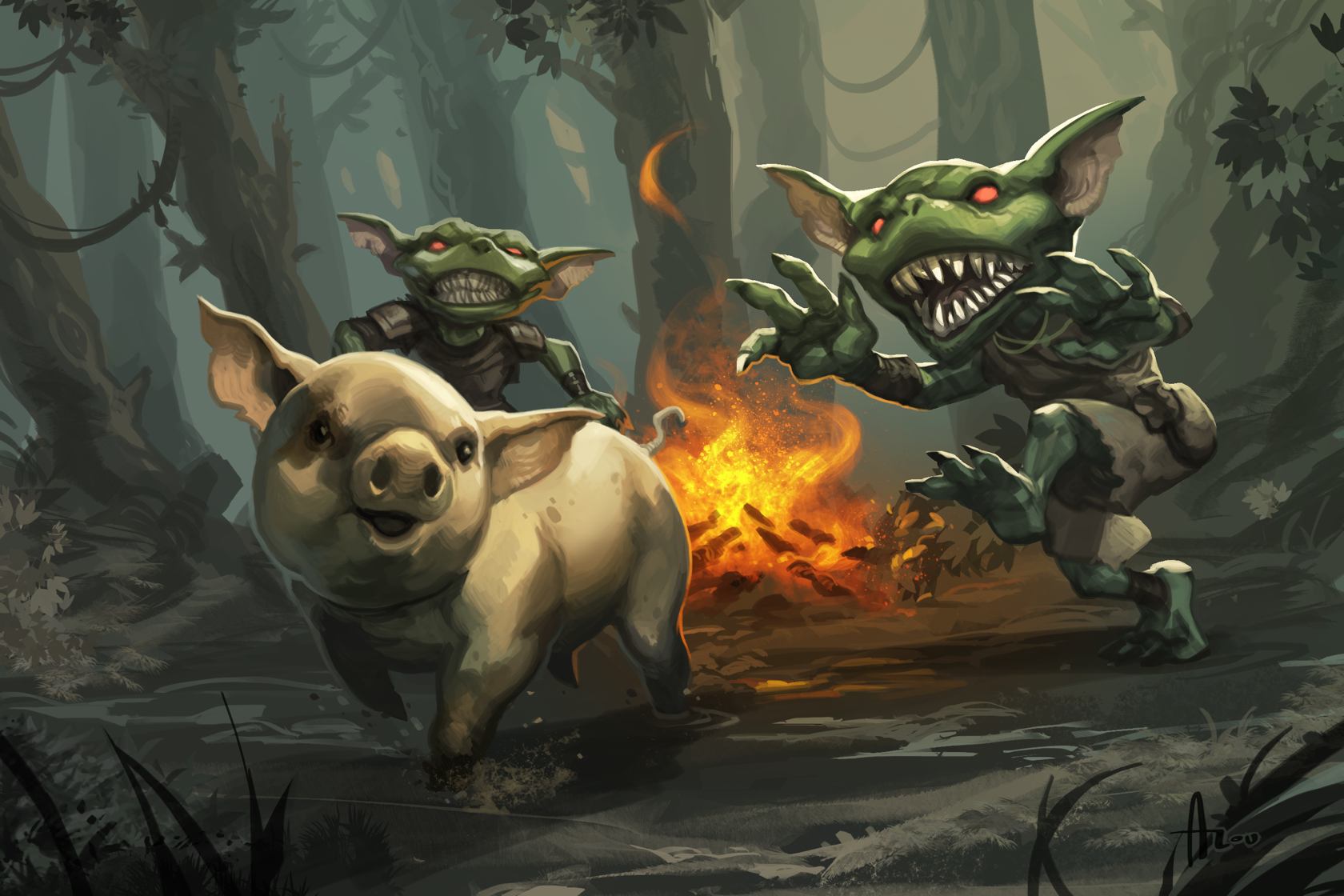
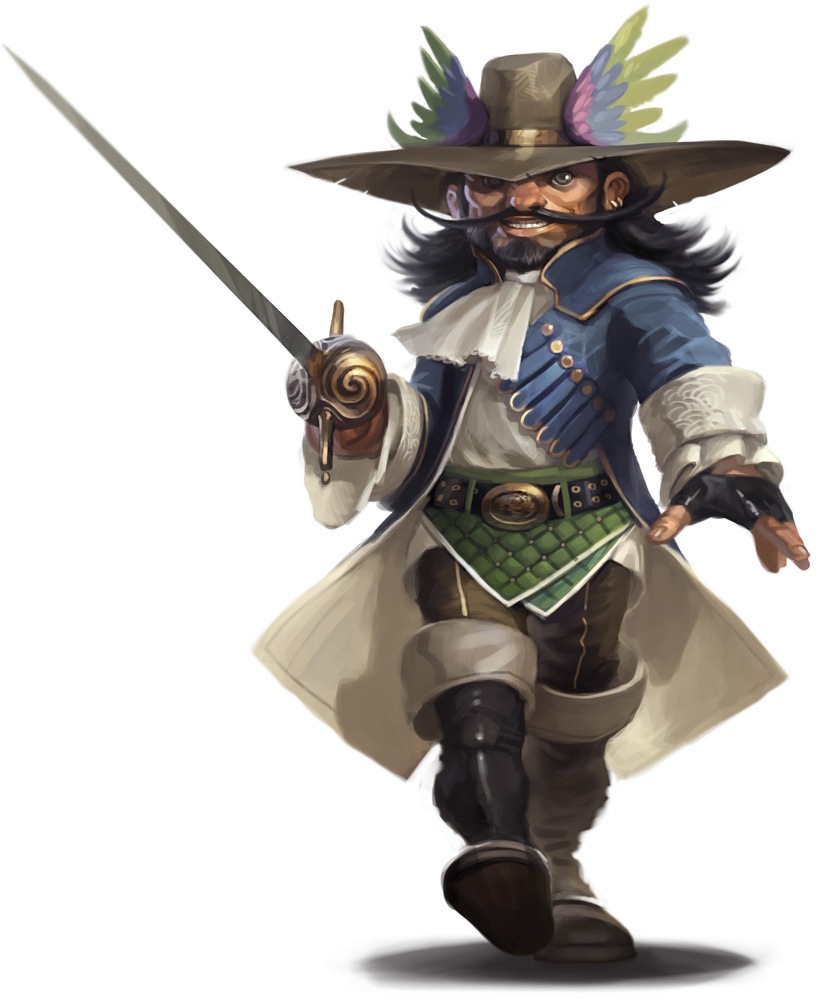
Illustration by Eric Belisle.

More Paizo Blog. Link. List this entry. Tags: Eric Belisle, Hugh Matthews, Pathfinder Tales
7 comments.
Facebook Twitter Email


Fingers of Death—No, Doom!

by Lucien Soulban

Chapter Three: Hands Off

Darvin cursed himself for not thinking, for not realizing how Fife would react. He'd raced halfway across the circular chamber, running for the door, when he realized something was amiss. He couldn't feel Fife's familiar presence, that steady pressure by his side. Darvin turned to see Fife frozen near the collapsed passageway. All around them, from the shadows of the laboratory, a legion of amputated hands rushed forward on blade-sheathed fingers, skittering like spiders in a mad dash for the intruders.

"Spider," Fife said breathlessly as Darvin ran back to him, scooped him up, and dropped the halfling over his shoulder.

"Not spiders!" Darvin said, hoping to cut his friend free from his terror.

"Spider!" Fife yelled, and batted at Darvin's back.

"Ah!" Darvin cried, surprised, and a hand dropped away from his backpack. He booted it away quickly, before it could spring back up onto its fingers.

"Runrunrun!" Fife screamed.

Darvin hesitated. The hands converged on them the same way water flows down the slope, their fingers blurs of galloping motion and the opportunity for escape gone in an instant. Two more hands appeared from the hole through which they'd entered the room.

Darvin leapt into action, taking long strides, hurdling amputated hands that leapt and grabbed for them. He spun this way and that, clumsily avoiding attackers as his companion's weight threatened to topple his balance. Fife protected his back, wildly swinging his bag of notebooks at the hands lunging at them from behind. One such assault thwacked Darvin on the backside.

"Ow!" Darvin yelped. "That was a corner!"

"Run!" Fife replied.

The hands closed in, barely heeding or pausing at the blows that sent them careening back. They outnumbered the pair, and Darvin could only react, not make any real progress. He threw Fife on the high workshop table, breaking vials and scattering jars and books, before leaping atop it himself. The hands scrambled up the sides of the table.

We're surrounded, Darvin realized.

∗∗∗

Fife swung his bag like a mace, shattering glass and dislodging metal fingers that crested the lip of the table. Behind him, Darvin stomped digits and booted away hands, but the crawling horrors possessed a heedless relentlessness. They landed a few feet away on the stone floor, recovered almost instantly, and scrambled back for the table.

"We're dead!" Darvin screamed. "We are so very much dead!"

Fife wanted to respond, but hearing his brother's panic only tightened its grip around his own throat, stopping him from speaking. The hands had them trapped, a dozen feet away from the other door and under the relentless assault of their diminutive foes. This is all my fault. He had dragged them into this misadventure. "I'm sorry," he managed.

A pair of hands grabbed Fife's waist, and before he realized what was happening, Darvin had hoisted him up, toward the wagon-wheel chandelier above their heads. Fife barely had time to grab it before Darvin let go.

"Save yourself!" Darvin said.

The wheel swung on a rusted chain, creaking and groaning. Particles of dust trickled down from the chain's anchor in the ceiling. Fife managed to slip upward through the spokes and atop the wheel before he looked down. The table looked like an island in a relentless sea of moving hands. The smell of rotten eggs and decaying flesh drifted up from the mess.

"Darvin! Climb!" Fife extended his arm down to pull up his brother. Darvin busied himself kicking the hands away, trying to keep track of the table's four sides. His movements grew frantic and wilder as exhaustion weighed more heavily upon him.

When Darvin didn't respond, Fife stretched down and grabbed for his brother in desperation, catching only a handful of the man's long, sandy hair.

"Ah!" Darvin cried, trying to kick the hands, maintain his balance, and not have a halfling-sized fistful of hair torn out by the roots.

"Jump up!" Fife ordered.

"My hair!"

"Damn your hair! Jump!"

One of the amputated hands grabbed Darvin's ankle, and he kicked it away before jumping up. He grabbed the spokes. The wheel creaked, the chain groaned, and the pair swung ponderously to and fro. The hands jumped up on the tabletop and jockeyed for position. A few of them tried springing up to grab Darvin's feet, but he pulled his legs up quickly and threaded them through the spokes.

"Now what?" Darvin asked, whispering and looking at Fife through the gap.

"I have a plan," Fife whispered back.

"Why are we whispering? They don't have ears... do they?" He craned his neck to look back down at the hands.

"Climb up," Fife said, even as something in the ceiling creaked loudly.

"It won't take my weight!" Darvin hissed.

"Exactly," Fife said, grinning. "Now climb!"

∗∗∗

Darvin remained dubious as only an older sibling could. Now atop the wheel, he froze and grimaced as more dust poured through the ceiling bolts and the wood complained beneath them.

They would fall. That much he knew, looking down at the table with all the hands jumping up, trying to grab at them.

"Now what?"

Fife grinned in response and pushed himself up from his belly before thrusting himself down. The chain screeched in complaint and the wheel wobbled.

"Wait!" Darvin said. "What're you—"

Fife pushed again. "Help me!" he said.

Darvin suddenly understood. "The gods save us from your lunacy!" he said, and braced against the ceiling, pressing down against the wheel with his legs.

"Are they tiny gods?" Fife asked.

The chain didn't snap, but instead broke from the ceiling anchors and dropped them, heavy wheel, unspooled chain, and all. The chandelier struck the tabletop with a crash of falling mortar, breaking glass, and the squish-thud-crack of pulped hands. The impact hammered the air from the brothers' lungs.


"What fell force created and compels the bladed hands?"

Hands crawled away, their fingers snapped, small bones exposed. Some lay dead like curled-up spiders. Others rolled away to safety.

"We killed them," Fife whispered, but Darvin pulled him away.

"C'mon! Let's go!"

They bolted for the door even as the surviving hands sprang or wobbled to their digits. Ignoring whatever shock or injury the intruders had meted out, the hands immediately set after them in hot pursuit.

Darvin pulled at the door and sighed gratefully when he realized it wasn't locked. In fact, the passageway angled upward. The two brothers ducked through and Darvin slammed the door shut behind them, laughed despite himself—a desperate, exhausted bark of triumph and relief.

Then he caught Fife's expression. Following his brother's gaze, Darvin looked down and saw the small square at the bottom of the door, crowned by a hinge. Darvin knew he should understand what it meant, but his adrenaline-addled brain wasn't quite up to the challenge.

"What is—?" he began, but Fife interrupted him.

"It's a dog door!" the halfling cried.

That's silly, Darvin thought. "But I didn't see a—"

The first hand barreled through the swinging door, and Fife stamped desperately on it. The door shuddered as multiple thuds struck it, and several hands wedged at the small access as they all struggled to get through next.

Darvin acted, kicking the hinged flap and scattering the hands back into the room. He turned to find Fife no longer kicking the hand in question, but instead jumping up and down with both feet, knees as high as his chest, vigorously stomping the amputated monstrosity into the ground.

"Die, spider!" Fife screamed. "Die, die, die!"

"It's already dead, dead, dead," Darvin said, and grabbed Fife, pulling him along the passageway. The human did pause, however, and stomp heavily on the hand one last time before the pair bolted.

They ran hard, past shadowed corners and down strange passageways. Fife glanced through doorways, almost distracting himself once when he spied ancient tomes lining long bookshelves in one study. Darvin, however, grabbed Fife and pulled him along; he knew well how the halfling's natural curiosity overcame his survival instincts.

Finally, the corridor dead-ended at a doorway, the wood etched with strange arcane patterns of sweeping, curving meridian designs. Darvin glanced back behind them, but the stampede of hands was nowhere to be seen. He raised a foot to kick open the rune-marked door.

"No!" Fife screamed, and tackled Darvin's thigh.

Darvin grabbed the wall for balance and tried to shake his friend loose. "Do you mind?" Darvin asked, calmly.

"You don't know what those markings mean!" Fife said, arms wrapped tight around Darvin's leg. "It could be trapped!"

Darvin sighed. He just wanted to get away from here, from the village, from this entire ordeal as soon as possible. "Why would anyone trap their home?"

"Why would he lop off hands and animate them?" Fife asked, letting go.

"Maybe he couldn't afford a full staff?" Darvin offered.

"The point is, who knows what he was thinking?" Fife said. "Remember the Tale of the Moaning Virgin's Ghost?"

"You mean the one you wrote?"

"Yes."

"Actually," Darvin said, "I've been meaning to talk to you about that one. I don't think you thought the title through."

"Darvin!" Fife said, eyeing the door. "What I mean is, I research my material for authenticity. The wizard in that story trapped the door to keep something inside. It's based on a real spell!"

Darvin thought for a moment. "Alright," he said. "In that story, how did I open that door?"

"You..." To Darvin's satisfaction, Fife hesitated.

"I kicked it open, didn't I?" Darvin demanded.

"Yes," Fife said. "But that was a story. And you got cursed in it."

"Right," Darvin said, and kicked open the door.

The runes splintered under the breaking wood, glowing brightly for a moment before fading from the frame. Fife groaned in worry, but Darvin shoved his way through.

Fresh air swept across them, driving away the pungent, earthy smell of decay and replacing it with the dewy wetness of night and grassy hills and wind-ruffled trees. Moonlight filtered through the branches and the pair pushed forward, thrashing their way through the bush that hid the doorway and its rocky outcropping. The air felt infinitely better than the stink of death behind them.

Darvin collapsed on the grass, staring up at the night sky and laughed gratefully. Fife did not join him. Instead, the halfling peered back through the shrubs, checking the passageway they'd left.

"We lost them," Darvin said. "Stop worrying."

"They're tireless," Fife said thoughtfully. "Single-minded. Why'd they stop?"

"Maybe they can't leave the ruins."

"They've killed local farmers. They go out."

Darvin sighed and struggled to sit up. "Then why, oh great storyteller?"

Fife shook his head. Darvin could tell he didn't know, but the halfling examined their surroundings. Darvin glanced around as well.

They rested on the side of a great hill, one wave in a sea of green rolling dunes that stretched out in all directions. The clouds had rolled away, the face of the moon showing at full light this evening. Even Darvin could see clearly, though he trusted Fife's eyes more in the darkness. He peered into the countryside, noting the green and rocky landscape, this cluster of stones one of many among the companion hills.

Further south, below them, lay the dotted lights of the village, silent and tranquil in the distance. Then something caught Fife's attention and he waved frantically, pointing down the valley.

Between them and the village, the tall grass rustled and small dark things scrambled over the rocks, some slower than others.

"The hands," Fife said, horrified.

Darvin followed the line of movement, projecting their path until his eyes came to rest on the sleepy collection of buildings in the distance.

"We have to go," Fife said. "They're going after the village!"

Coming Next Week: A chance at handy victories and handsome rewards in the final chapter of Lucien Soulban's "Fingers of Death—No, Doom!"

Lucien Soulban is an accomplished fantasy and science fiction author who's written shared world fiction for White Wolf, Wizards of the Coast, Black Library, and more, including the novels Blood In, Blood Out and The Alien Sea. For more information, visit his website at www.luciensoulban.com.

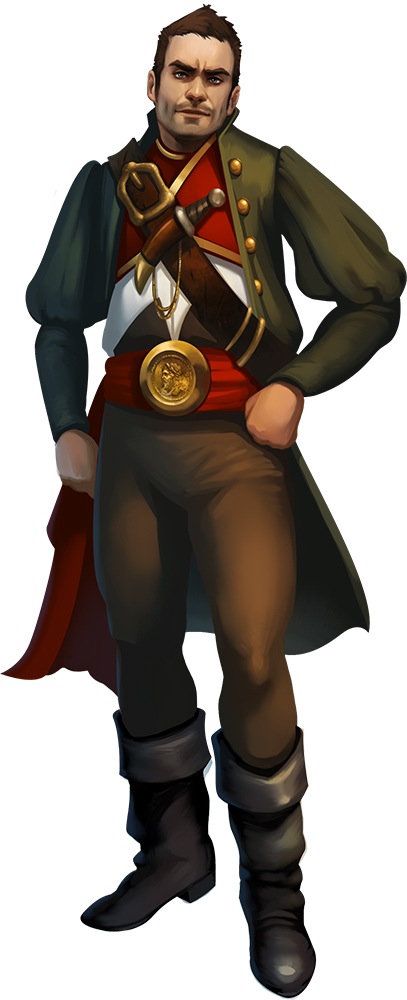
Illustration by Daniel Masso.

More Web Fiction. Link. List this entry. Tags: Daniel Masso, Lucien Soulban, Pathfinder Tales
9 comments.
Facebook Twitter Email


Fingers of Death—No, Doom!

by Lucien Soulban

Chapter Two: Idle Hands

"Ohhh," Fife groaned. He tried moving, but the world refused to comply, spinning underneath him the way it did. His bones ached and his skin felt like someone had rubbed it with the uncomfortable side of a bar of pumice. He opened his eyes and stared up at the sky—specifically, at the distant hole in the ceiling that revealed the wet gray skies of Andoran.

"That's right..." Memories began to fall back into place for the halfling. The desperate townsfolk who bought their fake luck charms. The murder of farmers. The ruined necromancer's manse. And...

"The hand!" Fife sat up from his throne of rubble, looking for the amputated hand that had sheared Darvin's rope and sent them both tumbling through the weakened floor into the darkness below the manse's basement. He saw no sign of the hand in the brick-lined cistern, but dark waters and shadows lapped at the islands of debris and ribs of shattered timber. Darvin lay atop one of the mounds, eyes closed and body utterly still.

"Darvin!" Fife scrambled over to his compatriot. Darvin didn't respond, even after Fife pulled at the lapels of his beaten leather coat. Left with little recourse, Fife drew back his arm and slapped Darvin hard enough for the sound to echo through the cistern.

"OW!" Darvin shrieked, his eyes flying open. Fife, however, did not let go. "Fife! What in—?

"You know those moments in the story when one hero thinks the other dead, begs him not to die and shares some deep personal truth?"

"Vaguely," Darvin said.

"And then it turns out the other one was only faking his injuries?"

"Oh, yeah?" Darvin said, this time a touch sheepishly.

"This is not one of those moments," Fife said, shaking his brother.

Darvin did nothing to stop him. "But I love those moments."

Fife let go of Darvin's coat and stood. "You weren't unconscious."


"Fife is rarely the hero of his own stories."

"I'm hurt you'd think that," Darvin responded, propping himself up on an elbow and cradling his aggrieved cheek.

"Darvin," Fife warned, looking around. They were well and deep under the manse, the walls too sheer to scale. He leapt to another small island to get a look at a nearby passageway.

"I just want to be held!" Darvin called after him.

Fife ignored his brother. "The hand...?" he asked.

"Somewhere up there, no?" Darvin stood and dusted himself off. Fife could tell he was trying to act unworried, but it was still an act.

"Let's hope so," Fife said; a shiver tore through him.

"It's not really a spider, y'know." Darvin said gently.

Fife waved away his friend's concern. They weren't supposed to talk about the incident—before Darvin's mother adopted Fife as her own and the pair became siblings. He had never told Darvin how his own mother died, but his brother knew it involved a... a....

"It's close enough," Fife said, his voice cracking. He sniffed the air, smelling the earthy stench, and pointed down the rounded corridor. "There's a breeze coming from that direction."

"You mean the breeze with the slightly pungent aroma of rotting meat?" Darvin grabbed the collar of Fife's jerkin and spun him in the direction of another corridor. "That's why we're going down the one that doesn't smell like Death's warm armpit"

"Darvin—"

But Darvin made his way, rather awkwardly, along the small islands to the other corridor. He jumped into the cold water at the head of the corridor and tried not to grimace as the brackish liquid sloshed around his waist. "Oh look!" he said. "I can stand here." He grinned back at the halfling.

Fife glanced at the other corridor. Something scrapped against rock with a light echo, the sound dying quickly. Darvin seemed not to notice, but the halfling suddenly doubted the wisdom of his own choice. Fife turned, took a few quick strides, and launched himself onto his brother's back.

"Changed your—" Darvin began.

"I'm keeping the books dry, you oaf," Fife grumbled.

"Of course." Darvin said as they waded into the waterlogged corridor with its irregular bricks.

The corridor eventually ended at a brick wall with a sluice gate at one end and a moss-covered brick platform with a door to the right. The water reeked of stagnation and decaying sewage. The door bulged out, the wood splintered and cracked under weight.

They stood well to the side as Darvin struggled to pull the wedged door open. When it finally gave, it popped with a rumbling force that slammed Darvin into the wall. The stone and wood spine of a collapsed ceiling tumbled out.

The pair examined the landslide a moment, noting the gaps between timber beams and under larger rocks.

"You can crawl through there," Darvin said, pointing to one of the larger rabbit holes.

"What?!" Fife shouted, barely stopping his voice from squeaking. "Why me? It's large enough for you, too."

"Because you're tiny," Darvin announced.

Fife glared at him. "The gods curse you for that."

"Are they tiny gods?" Darvin asked, grinning.

Fife didn't bother bruising his already soiled dignity, and instead removed his backpack, shoving his cloak inside. "Remember, if I die, it'll be on your head."

"It'll be a tiny funeral," Darvin said cheerfully.

The tunnel was small. Not so tight that Fife felt pressed in, but not so wide that his breathing didn't rabbit faster. Darvin would have a hell of a fit inside, and that made Fife smile.

Obstructions jutted out at sharp angles. Fife crawled over and under them, elbow over elbow, pulling and scraping skin, snagging clothing and tearing fabric in small nicks. Every foot deeper into the burrow tightened a fist around his chest, and panicked thoughts butterflied in his head. He stopped, almost gasping, wanting to crawl back out before the tunnel snapped its teeth around him.

He stared ahead and squinted; did the passage open up, or was that the illusion of desperation? Fife wanted to push forward, but as he watched, a shadow moved against shadow, pebbles clattering in its wake.

Something waited for him just past the opening. He froze.

∗∗∗

Darvin considered lighting a torch to see better; Fife had vanished up ahead, the darkness swallowing him up.

"You okay up there?" Darvin shouted down the throat of the tunnel.

"Shh!" came the response.

"You ‘shh!'" Darvin cried back.

"SHHH!" Fife hissed more urgently.

Darvin almost shouted back at his companion, but a splash caught his attention. He spun around as more splashes followed, echoes that danced along the walls of the tunnel and up his spine... then nothing.

Darvin tiptoed to the edge of the platform. The dying ebb of waves lapped against the stone. Something coursed under the water, casting ripples, heading straight for him.

Unbidden, his memory suddenly offered up a crystal-clear image of the severed hand dancing on the fraying rope, finger-blades flickering.

Darvin bolted for the small hole, shoving Fife's bag in first and crawling after it. Rocks and the tips of broken timbers poked and jabbed him. The bag snagged and he struggled to push it forward despite the tearing sound that followed. The tunnel pressed against him, and he wrenched his shoulder pushing himself through.

"Fife!" Darvin shouted.

"Shh!"

"Move!"

"For the love of our mother, shh!" Fife cried back.

"Stop telling me to shush! The hand's behind me!"

"No it's not," Fife shouted, far closer than Darvin would have thought. "It's in front of us."

"Behind!" Darvin insisted. The bag hit resistance, and Darvin looked up at the blackened soles of Fife's feet. Something scampered in the tunnel behind Darvin, and more stones tumbled from their perch. He couldn't see past his own body, however, and opted to push instead.

∗∗∗

Fife felt something press against his feet and almost shrieked in terror. He raised his head to see Darvin shoving his bag—shoving Fife—toward the opening a handful of feet away and the noise that had turned into an impatient clicking, like the tapping of metal fingers.

"No, Darvin!" Fife shouted. He pressed his hands against the rocks and kicked at the bag.

"Stop that, you lout! Something's behind me!"

Before Fife could protest, Darvin gave another shove, sending the halfling toward the hole and pinning his hands under his body, squashed tight against rock.

The mummified hand leapt into the opening, its tensing fingers covered in blades. Fife screamed. Darvin screamed in response, though unlikely for the same reason. Or maybe it was. Fife didn't care.

The hand scampered forward on its fingers, and Fife struggled to free his arms. Darvin pushed him another inch closer. The hand was, for the lack of better measurements, only a handful of feet away.

Fife rolled to his side, pressing his back painfully against the rubble until his arms popped free, his fingers aching and bruised. The hand sprang toward him, fingers propelling it forward. Naturally, Darvin pushed him again, screaming something about the thing at his feet and life having failed his expectations. Fife couldn't reach the dirk at his belt, but in the attempt his hand rubbed against the bamboo quill in his breast pocket. He grabbed it and swung hard, stabbing the amputated hand as it came within an inch of shaving his eyebrows.

Fife stabbed the hand again with the sharp quill, his vision red pinpricks of focus and flushed hot with blood. Suddenly, the lip of the tunnel loomed and he found popping free like a cork, shoved out by a panicking Darvin. He barely had time to roll nimbly away before his human companion came crashing down as well, almost crushing him.

∗∗∗

Darvin pushed to his feet quickly, pulling on his sheathed dagger to defend himself, the stuck weapon flopping uselessly against his leg. The skittering in the tunnel grew louder.

Darvin glanced up just in time to catch a scurry of movement and the gleam of red eyes. It took him a second to register that second part before several large and frightened brown rats tore out of the tunnel, screeching in protest. They ran past Darvin and a prone Fife, who pulled away from the rodents, before scrabbling through cracks in the wall.

"Rats!" Darvin exclaimed, laughing in relief. "All that nonsense for rats!" He noticed the amputated hand, its fingers curled up like the legs of a dead spider. "When did I do that?"

"You?" Fife stood and drew himself up to his full three-foot height. "That was me!"

"Really?" Darvin said. "That sounds more like something I'd do."

"I killed it!" Fife said, then seemed to startle as he realized what he'd said. "Me! I did that! I killed it! I'm the hero of the village." He held his bamboo quill aloft like a champion wielding a blade, or at least a really big turkey leg. "The quill is mightier than the sword!"

"Now that's just silly," Darvin said. "Hyperbole will get you killed. Especially in a sword-versus-quill fight." He looked around the chamber.

The world seemed to slow, dread flowing back into him like cold water into an empty cup. "Fife," Darvin said quietly, "don't turn around."

Of course Fife turned around. As soon as he said it, Darvin realized how foolish the statement was. Turning is precisely the first thing one does when told "don't turn around." It was an inherent contradiction, much like when someone says, "This tastes horrible... here, try it."

They stood in a circular domed chamber, a door against the curve of the opposite wall. In the center rested a huge table with its sides flanked by drawers and the top covered in beakers, jars, books, powder packets, measuring tools, and innumerable other instruments. Above the worktable hung a wood-wheel chandelier crusted in wax.

Twenty tables lined the curving walls, and upon each lay a corpse in some advanced state of decay.

"Darvin," Fife whispered.

Darvin touched his brother's shoulder. "I told you not to turn around." In retrospect, though, Darvin wasn't sure how he expected Fife to continue without turning around.

"No," Fife said, nodding to the bodies; all manacled, Darvin now noticed. And all missing their hands.

"Oh," Darvin said.

And from all the dark places in the room and the large cracks in the floor came a scurrying of movement.

Coming Next Week: Things get further out of hand in Chapter Three of Lucien Soulban's "Fingers of Death—No, Doom!"

Lucien Soulban is an accomplished fantasy and science fiction author who's written shared world fiction for White Wolf, Wizards of the Coast, Black Library, and more, including the novels Blood In, Blood Out and The Alien Sea. For more information, visit his website at www.luciensoulban.com.

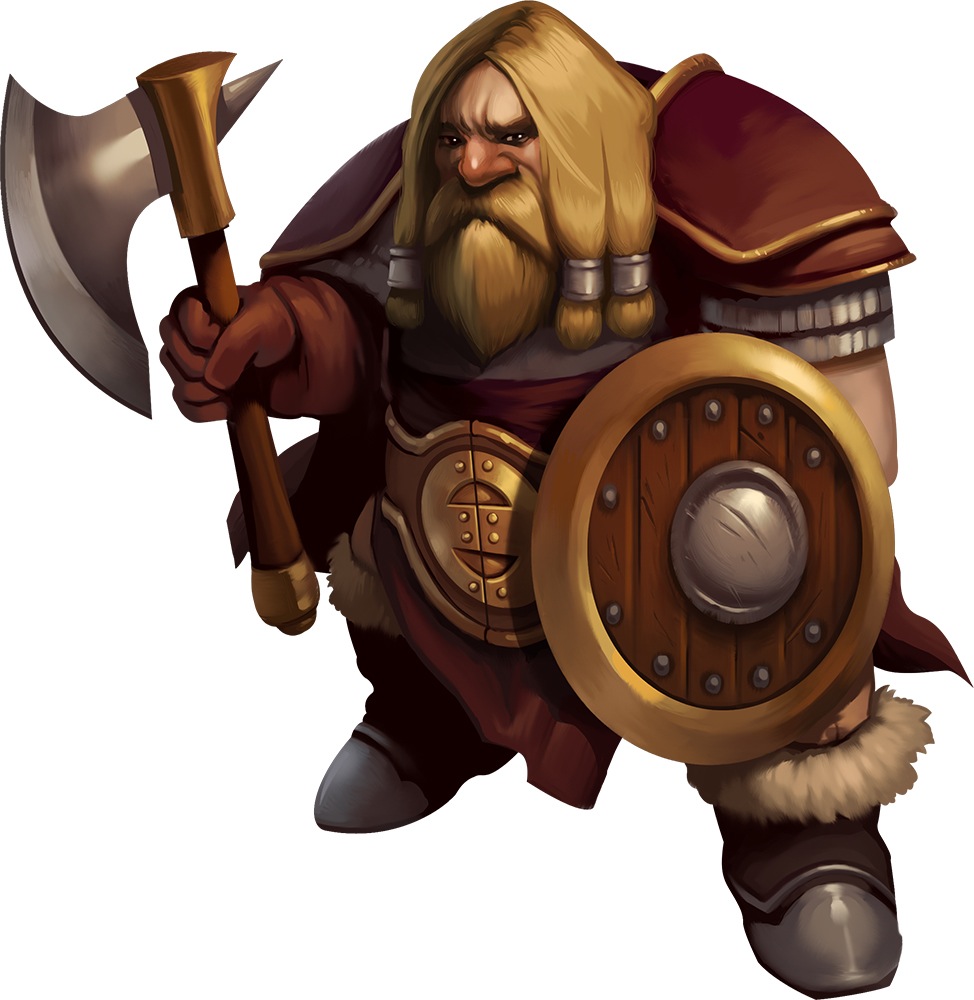
Illustration by Daniel Masso.

More Web Fiction. Link. List this entry. Tags: Daniel Masso, Lucien Soulban, Pathfinder Tales
14 comments.
Facebook Twitter Email


Fingers of Death—No, Doom!

by Lucien Soulban

Chapter One: A Helping Hand

The ancient mechanisms thundered, the giant gears crushing boulder-sized rocks between their iron teeth and spitting out rubble in disdain. Beyond them, the furnaces set into the stone dwarf mouths glowed with Abyssal fury and spewed rivers of molten rock destined for the deeper bowels beneath Darkmoon Vale.

Darvin couldn't concern himself with that, however. To his left, Fife—halfling, adopted brother, and friend—lay unmoving on the giant conveyor belt that ferried him closer to the hungry gears eager to gnash him into bloody pudding. To Darvin's right, however, the beautiful Princess Miranna dangled from a metal chain, her once stunning gown in tatters and hanging only by the curve of her ample hips and shoulders. Inch by inch, the mad, twisted dwarves from beneath Darkmoon Vale, long forgotten by wind and sunlight, cackled monstrously and lowered Miranna closer to the vat of molten ore.

Darvin couldn't save them both, he realized. Or could he? He glanced left at Fife (still unconscious as the belt carried him doomward), then right at Princess Miranna (screaming his name, the vat warming the pads of her naked feet). Then up at the dwarf king, Madbeard IV, who laughed maniacally at his evil cunning, the Necklace of Fortune's Charms with its dozens of luck rings hanging from his neck. Finally, Darvin looked down at his hands, and at the only thing he hadn't yet spent or broken in their quest to uncover the Vale's secrets: a lockpick.

It would have to be enough.

"Too late!" Madbeard IV cried triumphantly, his half-burned face twisted in a sneer, the rings of his necklace jangling. "You cannot save them both!"

Darvin grit his teeth and steeled his jaw. His voice, low and dangerous, sliced through the clamor.

"I'm thirsty," he said.

∗∗∗

"What?" an old man asked, leaning so far forward that he almost spilled from his chair.

"I'm thirsty," Darvin repeated. He smacked his lips as though dismissing a bad taste. "Where's that serving wench?"

Three of the men shouted for another barley stout from the kitchen. Fife pretended to annotate the ledger on his lap, but a sideways glance told him the story. Seven men and two women sat around their table, on the edge of their seats. They eyed the necklace hanging in Darvin's languid grip, a handful of rings all that were left of its charms.

When the black-haired lass appeared from the kitchen carrying a serving tray, they motioned her over impatiently.

She set the drink down, at which point Darvin rolled his eyes. "Damn it all... Fife, old friend, I've forgotten my monies upstairs. Go fetch my purse?"

Fife nodded and jumped down from his large chair.

"This won't take a moment," Darvin said.

"Here," one of the men said, slapping down coin on the serving tray and glancing at the necklace of lucky rings. "Go on with your story. The lockpick?"

Darvin nodded as Fife quietly took his seat again. The halfling tried not to smirk. Darvin had them wrapped around his finger.

It was only when Fife glanced again that he saw the two men seated away from them, in the shadows. Neither appeared to be smiling.

When the evening ended, Fife followed Darvin as he swept into their room. The human collapsed into the hay bed with a groan, his belly distended. "I may have eaten too much," he admitted, draping an arm over his forehead.

"No no," Fife said, closing the door, "you had to eat all that food before it threatened anyone else. You're a hero."

"I am, aren't I?" Darvin said with a chuckle. He jangled the copper necklace, now bereft of its rings. "We need more charms for tomorrow night. I had them eating out of my hand."

"Oh, so you did leave some food?" The halfling sat on the opposite bed and opened a leather-bound book that swallowed his entire lap. "I hadn't noticed."

"Pff. You halflings eat like birds anyway." Darvin glanced over to see if he'd hit a nerve, but Fife pretended to study the page.

"Now... you got the princess's eyes wrong," Fife said. "You called them blue when they're supposed to be sea-green."

"So?"

"It's the reason why Madbeard IV decides to sacrifice her. Because of his promise to the Mage of Conqueror's Bay."

"So!" Darvin said.

Fife sighed. "The waters of Conqueror's Bay are green!"

"Fife," Darvin said, "nobody here's been to Nidal. We haven't been to Nidal—or Darkmoon Vale, or anywhere else for that matter. Nobody's going to notice."

"Authenticity is key. Speaking of which, it's getting harder to keep track of your... embellishments."

"I go with the moment," Darvin said, closing his eyes.

"For example, I never described the princess as a ‘plump sausage.'"

"Some moments are better than others," Darvin said, grinning. "Besides, I grow bored. Have you written something new?"

"I'm working on it," Fife said, flipping through pages. The comment rankled him. Like it was that easy to create something worthwhile.

"You worry too much," Darvin said. He sounded like he couldn't fight the iron weights of sleep any longer.

"Darv... did you notice those two men seated away from everyone else?" Fife asked.

But Darvin was already asleep, and soon Fife was fast dreaming as well.

∗∗∗

It wasn't the two new men in the room that awoke Fife that morning. It was Darvin's deep snort that did the trick. For a moment, the halfling had forgotten where they'd taken shelter, then it slowly bubbled to the surface... the Andoren inn, the food and drink, another community entertained and bilked.

"Hello," Fife said to the seated man. The intruder wore a grey tunic with a thick peppered mustache, and had shoulders wider than Fife was tall.

"Mmm... ‘ello," Darvin muttered back and then turned over. He snored almost immediately.

The human who stood behind the seated one was black haired and balding, his arms thick with equal measures of muscle and fat, his face knotted in a disapproving scowl. Neither man appeared armed; Fife remembered them both from last night as the pair who had watched them from the shadows.

"Darvin, we have guests," Fife said.

"Mmm... are they pretty?" Darvin muttered.

"Give him a moment," Fife said, smiling nervously at the visitors. "His instincts are slow to start, but you'll find none sharper."

"I hope so," the seated man said in a deep voice.

Darvin cheered softly. "Huzzah! Fife's voice has finally broken."

∗∗∗


"For an ordinary merchant, Cullins is exceptionally persuasive."

"You don't look like much," the standing man said. He'd introduced himself as Harvander, Master-at-Arms for the Merchant Cullins. Cullins remained seated, his arms crossed as though daring someone to entertain him and certain they'd fail.

"It helps if people underestimate us," Darvin said, splashing his face with cold water from the rinse bowl. The shock jolted him awake. Fife handed him the washcloth. "Lulls them into a false sense of security."

"I assure you, it's working," Cullins replied.

"Good," Darvin said, deciding to smile at the insult. "How may we be of service?" He already knew these two would be tough to charm or crack.

Harvander paused and stage-whispered in Cullins ear, "I don't think this is a good idea."

Cullins shrugged. "They die, we don't pay them."

"Die?" Fife said.

"Pay?" Darvin said at the same time.

"The village is cursed," Cullins said. "For five years, we suffered under the rule of Malificar—"

"Who names their child Malificar?" Darvin whispered to Fife, but Fife shushed him with a motion.

"He blighted our crops," Cullins continued. "He raised the dead and conducted foul, perverse experiments on our livestock."

Fife elbow-jabbed Darvin in the ribs just as a snarky comment rose to the human's lips.

"We killed him for it," Harvander said flatly. "A year ago, in fact. And we destroyed his manse."

"But the killings didn't stop?" Fife asked.

Darvin noticed the halfling squirming eagerly in his seat, and realized he was in trouble.

"Foolish locals," Harvander replied. "They looted his stead and awoke... something."

"There's been a death every week or two since," Cullins said. "Their throats opened."

Fife smiled up at Darvin. This is fantastic! his expression read, but Darvin tried to look indifferent.

"Over thirty deaths in total," Harvander replied. "All farmers or travelers, their throats slit cleanly."

"We've searched the ruins during the daytime, but at night, nobody dares approach the property." Cullins studied them both and then tossed a leather pouch to Darvin. The pouch clinked when he caught it, and the weight felt solid. "Silver—not a copper piece among them. Yours if you help us."

"If not," Harvander continued. "Well, there's no telling what the hard-working people of this town would do to the liars who sold them cheap trinkets as luck charms."

∗∗∗

Harvander escorted them through the gray drizzle to the ruins of a manse outside of town, then left them to their business.

Only a shell remained of the main building, the wings of the manse upright except for a collapsed roof, the middle of the home burnt and in rubble. A mess of blackened timbers and shattered bricks reached plaintively for the dismal skies.

"We should run," Darvin said.

"They need our help," Fife replied. The halfling poked about with his walking stick, deftly jumping across patches of floor that would have collapsed under a human's weight. Darvin envied him that grace.

"This isn't one of your stories," Darvin warned. He paused near a hole and peered down. Here, a fire-eaten grid of floor beams separated the main floor from the dark pit of the basement.

"This is better!" Fife replied. Grinning madly, he pulled his cloak over his head to ward off the rain, opened a small ledger, and began jotting something down.

"What do you think you're doing?" Darvin asked. He tested one of the beams, but it groaned; Darvin backed away.

"Recording every detail," Fife replied, and then read aloud, "The heroes stood over the black gulf, staring intently into the abyss."

"All the while" Darvin continued, "Fife unaware that his partner was about to kick him over the edge."

"Not in character," Fife responded absently. "Let's go down."

Darvin peered over the edge. "How?"

The halfling looked around, and Darvin followed his gaze over to a debris slope of collapsed bricks, timber, and furniture mounded up on the floor below.

"Follow me," Fife said, slapping the book shut and jumping from beam to beam, seemingly oblivious to their poor state. He reached a broken ledge, the remnant of the floor abutting an exterior wall, and from there jumped down to the slope. From beam to tabletop to broken wall, he reached the plank-floored basement in a series of deft hops, barely disturbing the slope.

"You next!"

"Not on your life, you malnourished hummingbird!" Darvin called down, then quietly cursed the easy grace of halflings. Darvin took looped rope from his bag and secured it to an exposed foundation stone. "You know," he said, "I bought this rope strictly for show." He swung his legs over the side and, inhaling, lowered himself into the darkness. His heart beat harder.

"Hey," Fife chirped, peering at a hole in the floor. "There's a level below this."

Darvin concentrated on his descent. He spun gently and dropped in fits and jerks. He flailed his legs trying to steady himself and quickly found his world spinning even faster around the axle of the rope.

"Darv," Fife said, with concern in his tone.

"I've got this," Darvin said, but the taste of breakfast in his mouth told him perhaps not.

"Darv!" Fife shouted. "Above you! Spider!"

Darvin jerked his head up and saw it: a fist-sized spider descended down the rope.

No, he realized. Not a fist-sized spider, but—

"It's a hand!" Darvin shrieked. "A fist-sized hand!"

Runes marked the amputated hand, the skin gray, wrist terminating at a bronze band. The knuckles were exposed to the bone, and the fingers sheathed in steel blades.

A rock careened through the air, missing the hand. Darvin swung around to find Fife aiming again.

"Don't make it mad!" Darvin screamed.

"How do you make a hand mad?" Fife screamed back.

The hand twirled around the rope once, and then the line creaked. Darvin realized too late that the creature had just cut halfway through the rope with its fingers. Braiding frayed with a snapping sound, and before Darvin could drop down, the rope broke completely.

Darvin fell ten feet, the planks of the basement floor shattering under his weight. Then both he and Fife were falling once more, down into the darkness that yawned below the basement.

Coming Next Week: The further misadventures of Fife and Darvin in Chapter Two of Lucien Soulban's "Fingers of Death—No, Doom!"

Lucien Soulban is an accomplished fantasy and science fiction author who's written shared world fiction for White Wolf, Wizards of the Coast, Black Library, and more, including the novels Blood In, Blood Out and The Alien Sea. For more information, visit his website at www.luciensoulban.com.

Illustration by Daniel Masso.

More Web Fiction. Link. List this entry. Tags: Daniel Masso, Lucien Soulban, Pathfinder Tales
17 comments.
Facebook Twitter Email


The Tales of Two Chronicles

Monday, December 5, 2011

With a continuing effort to strengthen the entire Pathfinder Society program, as well as to continue tying up loose ends, Winter Witch and Death’s Heretic have now been incorporated into the Pathfinder Society.

Because of the differences between reading a novel and playing a game, there are specific rules needed for using sanctioned content from a Pathfinder Tales novel during play and we'll be providing a Chronicle sheet for players to use with their characters. You can download the Chronicle sheets on their respective product pages.

Sanctioned novels you ask? How do you sanction a novel? Because Pathfinder Tales novels are stories first, there is no easy way to sanction items, spells, feats, or other special abilities whole cloth. Therefore, the Chronicle sheets use the following rules.

  1. Only items, feats, boons, or abilities found on the Chronicle sheet are legal for play.
  2. Each player must have a copy of the Chronicle sheet with his or her character at all times.
  3. In order for the Chronicle sheet to be considered legal for play, the player must show to the GM a copy of the Pathfinder Tales novel, either in printed or digital format.
  4. A Chronicle sheet may be applied to each character the player currently has or creates in the future.

GMs are advised to work with players to make the sanctioning of Pathfinder Tales Chronicle sheets easy and fast. As long as the player has a copy of the book, she should be able to use the Chronicle sheet just like any other.

If you would like to learn more about the Pathfinder Tales line, please visit paizo.com or your local bookstore. Other novels in the line include Master of Devils by former Dragon Magazine editor Dave Gross, and Plague of Shadows by Howard Andrew Jones.

Mike Brock
Pathfinder Society Campaign Coordinator

More Paizo Blog. Link. List this entry. Tags: Pathfinder Society, Pathfinder Tales
20 comments.
Facebook Twitter Email


Death's Heretic Sample Chapter

Wednesday, November 23, 2011

by James L. Sutter

In Death's Heretic, Salim Ghadafar is a problem-solver for a church he hates, bound by the death goddess to hunt down those who would rob her of her due. Presented below is the first chapter of the new Pathfinder Tales novel by Paizo Fiction Editor James L. Sutter!

Death always smelled the same.

After all this time, it wasn’t the stink that got to him—the reek of excrement, of putrefying flesh and organs never meant to see daylight. That was expected, easily imaginable by even the greenest killer. No, what stuck with Salim was the insufferable sweetness of it, the fact that behind the stomach-churning stench was the saccharine ghost of fermentation, cloying and coating the insides of his nostrils. It was impossible not to respond to it. Somewhere in the back of his brain, the part that was little more than animal, he knew that smell meant a kill, and that a kill meant success. That part of him wanted to crow, to roll in the filth until it covered him like a badge. On its own, the stink was tolerable. Combined with that sweetness, it made him want to vomit.

The undead had that smell, too. With some it was musty and old, others mixed with the heavy scent of wet earth, and still others—those that walked among the living without notice—so faint that the lightest perfume could cover it. Yet it was always there.

The ghouls had it in abundance, their dry, stretched flesh never quite sure if it wanted to heal or slough off completely. Without looking down, Salim stepped carefully over the nearest corpse and pressed up against the wall, studying the doorway.

He’d killed most of the pack, though not before they’d glutted themselves on the parishioners. It hadn’t been difficult. These weren’t civilized horrors like the monstrous citizens of Nemret Noktoria, but rather the newly risen dead, as naive in their own way as the rural farmers they fed upon. They were strong, and hungry, but knew nothing else. They’d never been hunted. Fear was something they inspired in others, and by the time Salim taught them otherwise, it was too late.

Still, it was the easy prey that surprised you, and there was no point in taking chances. There were still three of them beyond the door, waiting like cornered rats to rend and tear. It would only take one scratch from a poisoned finger-turned-claw to stiffen his limbs and leave him paralyzed, helpless while they fed—or, worse yet, let the infection in their bite spread through his veins like wildfire, burning out his flesh until he became one of them. No, this was no time to get cocky. Taking the ghouls might be easy, but there was no room for error. The execution had to be flawless.

The glow of his torch was barely enough to light the antechamber in which he stood, its flickers seemingly swallowed up by the black void beyond the archway. Fixing that was the first order of business. If they went for his light—and they certainly would—the burns they’d get trying to take it would be nothing compared to the disadvantage his human eyes would be in the tomb’s darkness.

Salim glanced around the crypt, silent save for the crackling of burning pitch. It was humble, little more than a brick-walled pit with steps leading up to the church, but it was this village’s holy of holies. Each of a dozen narrow wall niches held a cloth-wrapped form, most still thick with dust—the ghouls hadn’t bothered feeding on these mummified husks when the church graveyard bore riper, more putrescent fruit. Hands folded, covered with the withered threads of what were once flowers, the honored dead might have continued their dreamless sleep undisturbed, were it not for the two ghoul corpses that fouled the gray stone floor.

They were exactly what he needed. Without a second thought, Salim moved to the nearest niche and took hold of the corpse’s homespun burial shroud. A single pull sent its contents spinning to the floor, leaving Salim holding several yards of cloth, which he promptly put to the torch.

Flame caught the simple embroidery and raced up its edges. As he let the flickering tongues writhe over the sheet, Salim glanced down at its former occupant. A young man, and not recently dead by the look of him—tendons showed through withered flesh, but they still held the sack of bones in the rough shape of a man. The body’s relative cohesion gave Salim an idea, and he set down the torch, wrapped the now merrily blazing cloth around the blade of his sword, then leaned down to scoop up the corpse with his other arm. With the grisly parcel clutched to his chest like a lover, he moved along the wall toward the doorway.

No time like the present. With a flick of his sword, Salim sent the burning shroud sailing into the room, the fabric flapping open to light the sepulcher. Something hissed in the darkness, and he followed the light with his other prize, swinging the corpse around the corner and into the room at shoulder height.

The ruse worked. Thinking Salim had charged in after the blazing blanket, two of the ghouls pounced, dropping from the walls and ceiling to rend the corpse’s brittle flesh. In the second it took them to realize their mistake, the real Salim was among them, sword flashing.

The ghouls’ leathery hide was stronger than human skin, but it still parted easily under the edge of his blade. Salim’s initial thrust caught the first one in the center of its back and slid in smoothly, the flat of the blade kept parallel to the ground to avoid getting stuck between the creature’s ribs. His recovery gave the second ghoul time to face him, but not enough to get its glistening claws up. Salim’s swing didn’t take its head clean off—his sword was light, and that sort of thing was more for storybooks and campfire tales than real battles—but it did the job, sending the creature slumping backward, head lolling to one side on a thin strand of flesh. Salim ignored it, withdrawing to a defensive posture with his back to the wall next to the archway, waiting for the third ghoul’s attack.

It didn’t come. Heartbeat after heartbeat went by as Salim’s eyes darted back and forth, but the expected attack failed to manifest. The room was silent, save for his own heavy breathing. Then the blood pounding in his ears calmed, and he heard a new sound—a low, dry whimpering. Sword at the ready, he stepped forward and kicked the crackling shroud farther into the room.

The third ghoul was curled up in the back of the burial chamber, hunched over into a fetal position in order to pull itself as far as it could into an empty wall niche. It clutched its knees and moaned again as Salim advanced.

“Please,” it whined. Coming from the twisted form, the voice was shockingly human. It strained to shape the words with its grotesquely overlong tongue. “Please don’t kill. I’ll go. No more hunting. No more brothers. Just graves. Please.”

In its fear, the ghoul came closest to resembling the man it had once been. Had the creature’s previous incarnation made a similar plea, as farmer to ghoul? Salim said nothing, but the ghoul nodded anyway. Chin to knee, it curled tighter and closed its eyes.

“Hungry,” it whispered. From behind bruised-black eyelids, a tear welled and slid down the creature’s face. “So hungry.”

This time Salim did respond.

“I understand,” he said.

Then, with both hands, he lifted his sword and brought it down.

In the aftermath, Salim recovered his torch and let the light of it and the blackened, sputtering shroud show him the room in all its meager glory. It was as humble as the outer chamber, but it was clear that the room had been both crypt and funereal preparation chamber. A long stone slab that was almost an altar sat to one end, surrounded by the mundane implements of embalming, while the walls held more spaces for bodies, unlit lanterns, and fine tapestries showing the glory of various gods, from stag-headed Erastil to the Lady of Graves herself. Clearly, these villagers worshiped an array of divine beings, pooling their resources into a single church.

And hedging their bets, Salim thought.

Setting his torch down on the altar, Salim moved over to the baptismal font in the corner and looked down into its shallow basin. The holy water was still clear and unsullied—either the ghouls hadn’t had time to soil it properly, or one of them had accidentally been splashed and the rest had learned to keep their distance. Salim’s eyes, hooded and tired, stared back at him from the water’s reflection. The rest of his face—dark hair, dark skin, and thin, dark beard—all blended together into the chamber’s gloom. The splashes of black ghoul blood didn’t help, either. Balancing his sword along the stone where the font emerged from the wall, he leaned over and splashed his face, then began scrubbing his hands vigorously, setting clouds of black filth blooming like ink through the water.

And not just black, he realized. There was red in the water as well. He glanced quickly down at his robes. Had one of the ghouls managed a lucky scratch without him realizing it? If so, he needed to move quickly to avoid sharing their fate.

But no—he was unharmed. Looking down at the basin, he realized that the blood was welling up from beneath his fingernails, his hands slowly weeping red into the baptismal font. The realization was followed immediately by a telltale tickle on his upper lip.

Oh. Of course. Salim dipped his hands back into the icy water. From behind him came the soft flutter of wings, as of a flock of doves suddenly startled into flight.

“Hello, Salim.”


"Ceyanan has an interesting way of announcing itself."

“Ceyanan.” Salim waited a moment, hands gripping the font’s stone lip, then collected himself and turned.

The angel was floating in the chamber’s center, its toes pointed like a dancer two feet above the floor. The robes that flowed around it in an undetectable breeze were gray against worm-pale skin, and combined with the black hair they made the figure look like a charcoal sketch. Its features were too perfect to be truly beautiful, like a marble statue, and androgynous enough that not even the sheer fabric revealed a gender.

More arresting than all of these were the black-feathered wings that sprang from its back. Even half-folded, they were clearly not normal appendages. More shadow than form, they gave the impression that if they spread, they would not so much unfurl as bloom, the way the ghoul’s filth had expanded in the water of the font. Yet the angel’s floating seemed to have little to do with them, and they remained still, the individual feathers flickering in and out of visibility. It looked around the room.

“I love what you’ve done with the place,” Ceyanan said.

Salim ignored the apparition and instead located a clean patch of sleeve, which he used to wipe his nose, succeeding only in smearing the blood around.

“Is this really necessary?” he asked, gesturing at bloody lips. “Every time?”

The angel laughed, as innocent as a child, and spread its hands.

“Consider it a gift, Salim. What better way to know that you’re still alive?”

Salim let that one pass, but the angel wasn’t finished.

“Besides,” it said, motioning toward the floor, “was that necessary?”

Salim looked down. He was almost standing on the corpse that had acted as his decoy. The young man’s arms and legs, once locked tight in the stately constriction of the dead, were now sacks of shattered bone, flesh tattered by ghoul claws and the rough landing. Salim shrugged.

“He didn’t object,” he said, but he was still careful not to kick the corpse as he stepped over to one of the ornate tapestries and began systematically cleaning his sword. Ghoul blood had already dried along its length, crusting both the shining blade and the twisted, melted-looking hilt with filth.

“They rarely do,” the angel acknowledged. “But that’s neither here nor there. You know that I come bearing tidings.”

“And here I thought this was a purely social visit.” Salim sheathed the blade. “But please, Ceyanan, don’t keep me in suspense—pray tell me what the bitch-goddess wants from me now.” He turned to lock eyes with the angel. “Is there a vampiric orgy in Caliphas that I’m to break up? A mummy that needs unwrapping? Or did someone forget to dig a grave deep enough, and a coyote ran away with some bones?”

The angel frowned.

“You should learn to show proper respect,” it said.

“And you should know by now that I only give it where it’s due.” The mocking politesse was gone now, replaced by a cool, smooth anger. “If your lady wants to win my love, she’s got a long road ahead of her.”

The angel waved its hand as if shooing a fly, refusing to be baited. It was an old game.

“Have it your way,” it said. “You have the opportunity to work great justice in this world, but you’re welcome to see it as an order if it pleases you.”

Salim waited.

Ceyanan sighed. “No undead this time. Rather the opposite, actually—something uniquely suited to your skills. A kidnapping.”

“Kidnapping?” Despite his resentment, Salim couldn’t quite keep the curiosity out of his voice. “That’s hardly my usual fare. Or yours, for that matter. How do I factor in?”

“In this case, the victim is already dead.”

The angel paused a moment to see if Salim would say anything. He didn’t.

“The merchant in question,” Ceyanan continued, “was the target of a routine assassination—nothing special there. But after his death, his soul was stolen from the Boneyard before it could pass on to its final reward. Not destroyed—stolen. The local clerics have been unable to raise the body, and now the kidnappers are offering to sell back the man’s spirit. Naturally, the church is more than a little upset. We’ve already got the local clergy working on the problem, but we’d like you to step in and handle things. You might consider it a nice change of pace.” The angel’s hand swung to encompass the crypt and the already decaying ghouls.

“Makes sense,” Salim said. “Letting a soul go missing hardly reflects well on the church. But why me? And why don’t they just pay the ransom and be done?”

“The situation is in Thuvia.”

Thuvia. The name hit Salim like a blow. That was too close. Far too close. But if the kidnapping were in Thuvia—

“The sun orchid elixir,” he said.

“Precisely.” The angel looked pleased.

“Stealing a soul and selling it back for a shot at immortality. No wonder the Gray Lady’s pissed.”

“Now you understand,” Ceyanan said. “You’ll depart immediately.”

Salim gritted his teeth. “You know I don’t like being that close.”

“As you so eloquently pointed out, winning your affection is not my first priority. Your familiarity with the region and its customs will make you that much more efficient. And you might even enjoy your time there.”

“Not that I have a choice.”

The angel smiled down at him again.

“You did, once.”

Salim opened his mouth to respond, but the angel had already grown transparent, its voice a whisper that receded into the distance.

“Enjoy the desert, Salim.”

Purchase the whole novel here.

Coming Next Week: A brand new, standalone adventure featuring Salim, Ceyanan, and even stranger characters!

James L. Sutter is the Fiction Editor for Paizo Publishing, author of the novel Death's Heretic, and co-creator of the Pathfinder Roleplaying Game campaign setting. His short stories have appeared in such publications as Escape Pod, Starship Sofa, Apex Magazine, and the #1 Amazon bestseller Machine of Death, and his anthology Before They Were Giants pairs the first published stories of SF luminaries with new interviews and writing advice from the authors themselves. In addition, James has written numerous Pathfinder supplements and City of Strangers and Distant Worlds. For more information, check out jameslsutter.com or follow him on Twitter at @jameslsutter.

Illustration by Eric Belisle.

More Paizo Blog. Link. List this entry. Tags: Eric Belisle, James L. Sutter, Pathfinder Tales
9 comments.
Facebook Twitter Email


Pathfinder Tales Author Chats!

Thursday, November 17th, 2011

This Saturday and Monday, the Paizo chat room will be hosting a free-for-all discussion with a smorgasbord of authors from Pathfinder Tales—the novels, the journals, and the web fiction! If you thought last time was fun with just the novel authors, this one's going to be even bigger and crazier, with a ton of authors stopping by to hang out, answer questions, and wax philosophical about whatever they feel like. Unlike an in-person author event, there's no waiting to have your voice heard, so come prepared to toss out your questions and comments and hear our team of all-star authors take them on in a literary free-for-all!

Since we know folks have busy schedules, Master of Ceremonies Dave Gross has set up two sessions. Pick the one that works for you, or drop in for both!

Pathfinder Tales Web Fiction I
Saturday, November 19
12:00 PM PST (20:00 GMT)

Pathfinder Tales Web Fiction II
Monday, November 21
6:00 PM PST (02:00 GMT on 22/11)

See you there!

James Sutter
Fiction Editor

More Paizo Blog. Link. List this entry. Tags: Pathfinder Tales
8 comments.
Facebook Twitter Email


Illustration by Kekai Kotaki. Widescreen version here.

Death's Heretic Wallpapers!

Thursday, November 3rd, 2011

Death’s Heretic, the planes-hopping, soul-stealing new book in the Pathfinder Tales line (and the only one written by yours truly), releases in just three weeks. To help celebrate, Crystal’s used Kekai Kotaki’s awesome cover art to make Death’s Heretic wallpapers.

As I’m sure you can imagine, these will shortly be the backgrounds on every computer I own, and maybe some that I don’t. Wes is currently out of town—perhaps his monitor could use a little sprucing up? Or better yet—he’s always complaining about the glare from his big office windows, so I’m sure he’d prefer to have all that glass covered up by some nice color printouts...

James Sutter
Fiction Editor

More Paizo Blog. Link. List this entry. Tags: James L. Sutter, Kekai Kotaki, Pathfinder Tales, Wallpapers
9 comments.
Facebook Twitter Email


Chronicling a Tale or Two

Tuesday, November 1, 2011

Just a week ago we sanctioned seven new modules for use in Pathfinder Society play. With a continuing effort to strengthen the entire program, as well as to continue tying up lose ends, Prince of Wolves and Master of Devils have now been incorporated into the Pathfinder Society.

Because of the differences between reading a novel and playing a game, there are specific rules needed for using sanctioned content from a Pathfinder Tales novel during play and we'll be providing a Chronicle sheet for players to use with their characters. The Chronicle sheets are available for download on the product page for each novel.

Sanctioned novels you ask? How do you sanction a novel? Because Pathfinder Tales novels are stories first, there is no easy way to sanction items, spells, feats, or other special abilities whole cloth. Therefore, the Chronicle sheets use the following rules.

  1. Only items, feats, boons, or abilities found on the Chronicle sheet are legal for play.
  2. Each player must have a copy of the Chronicle sheet with his or her character at all times.
  3. In order for the Chronicle sheet to be considered legal for play, the player must show to the GM a copy of the Pathfinder Tale novel, either in printed or digital format.
  4. A Chronicle sheet may be applied to each character the player currently has or creates in the future.

GMs are advised to work with players to make the sanctioning of Pathfinder Tales Chronicle sheets easy and fast. As long as the player has a copy of the book, she should be able to use the Chronicle sheet just like any other.

If you would like to learn more about the Pathfinder Tales line, please visit paizo.com/pathfinder/tales or your local bookstore. Other novels in the line include Winter Witch by New York Times best-selling author Elaine Cunningham, and the forthcoming Death’s Heretic by James L. Sutter.

Mike Brock
Pathfinder Society Campaign Coordinator

More Paizo Blog. Link. List this entry. Tags: Pathfinder Society, Pathfinder Tales
31 comments.
Facebook Twitter Email


Pathfinder Fan Fiction Contest Winners!

Thursday, September 15th, 2011

It’s that time again! After many sleepless nights combing through huge snowdrifts of printouts, the good folks over at Pathfinder Chronicler were able to whittle down this year’s entries into the Second Annual Pathfinder Fanfiction Contest to the final five—or rather, due to a tie, the final six:

“Gozreh Provides” by Laura Bowlby
“Bend as the Willow” by Dawn Fischer
“Politics of Hell” by B. R. Bearden
“The Grey Tern” by Andrew Crossett
“Completing the Circle” by Todd Stewart
“Luck's Allegiance” by Alex Lindsay

As has now become tradition, the judges were kind enough to invite me to step in as a guest judge for the last round and cast the deciding vote. All of the candidates did an excellent job—the caliber was truly top-notch, and all six do the fanfic genre proud—but ultimately, only three people could take home the fabulous prizes of $100 in store credit for first place, and $50 each for second and third. And this year’s winners are:

First Place: Andrew Crossett for “The Grey Tern”

Second Place: Todd Stewart for “Completing the Circle”

Third Place: Dawn Fischer for “Bend as the Willow”

Honorable Mention: Though there’s no actual honorable mention prize, I wanted to call out “Luck’s Allegiance” by Alex Lindsay. While the other stories ultimately won on the strength of their writing, Alex really blew me away with his snappy dialogue and sense of adventure.

For a complete list of the Top 20, as well as many more awesome Pathfinder stories, head over to Pathfinder Chronicler. And while we’re on the subject, I want to note that each of the finalists will be appearing in the second Pathfinder Chronicler print anthology. Ted Thompson and the rest of the Chronicler folks really knocked us out last year with their lovingly crafted and high-quality anthology, which included a gorgeous cover by Pathfinder artist Eva Widermann. Well, this year they’ve decided to keep the tradition going with an equally stellar cover from Pathfinder artist Carolina Eade, previewed here for the first time! Both covers are beautiful, and I think I speak for all of us here at Paizo when I say that these are the sorts of things that make us so unbelievably proud of the Pathfinder community. (What’s more, I hear rumors that Ms. Eade will also be providing interior illustrations this year...)

Congratulations to everyone who competed, and I look forward to seeing you all again next year!

James Sutter
Fiction Editor

More Paizo Blog. Link. List this entry. Tags: Community, Contests, Fan Fiction, Pathfinder Chronicler, Pathfinder Tales
29 comments.
Facebook Twitter Email


Gen Con Announcement Recap!

Wednesday, August 10, 2011


ENnie Awards: Product of the Year
(for the Advanced Players Guide)

Whew... another Gen Con over and done with! We had a great time at the show, in no small part due to the incredible support of our fans and customers. You all are the BEST!

In a Gen Con filled with highlights, though, for me one of the most incredible moments came about 15 minutes after the Ennie Awards wrapped up, when we went up to the Pathfinder Society Organized Play room to announce to a room of several hundred gamers that we’d won. The uproar of cheers that filled the room when Erik climbed up on his chair and made that announcement was overwhelming. Pictured is one of those many awards—the trophy for Product of the Year (Advanced Player’s Guide) held up with an enormous room of hundreds of Pathfinder Society GMs and players in the background.

We also made a large number of announcements at Gen Con for products coming out in the months ahead. Most of these announcements can be found here and there on paizo.com, but I thought I’d group them all up here in this post so everyone can find out about them at once.

Pathfinder Roleplaying Game: Coming at the end of the year is Pathfinder Bestiary 3, followed next Spring by the Advanced Race Guide (a big hardcover book that’ll give you new options for ALL of the zero Hit Die races we’ve published to that point, as well as rules for building your own races of any power level), and then next Gen Con with Ultimate Equipment (a hardcover filled to the brim with new toys and magic items for any Pathfinder character).

Pathfinder Adventure Path: At long last, we’ve started the Jade Regent Adventure Path! But once you’re done traveling over the frozen Crown of the World and exploring Tian Xia, be ready next February for some good old-fashioned plundering and mayhem with the pirate-themed Skull & Shackles Adventure Path. And then, next Gen Con, we celebrate five years of Pathfinder and ten years of Paizo by returning to where it all began—the Shattered Star Adventure Path brings it all back to Varisia with a frantic search to be the first to recover and rebuild an ancient Thassilonian artifact—the original Sihedron Symbol—before it’s too late!

Pathfinder Campaign Setting: We sold out of the copies of Inner Sea Magic and Pathfinder Society Field Guide we brought to the convention! Coming in the future in this line is a trip to the north with Lands of the Linnorm Kings, a visit with the daemons and their overlords in Book of the Damned 3: Horsemen of the Apocalypse, our first real excursion into the lands of Tian Xia in the Dragon Empires Gazetteer, and an investigation of ten favorite beasties in Mythological Monsters Revisited. Then, next year, we’ll explore the other planets of Golarion’s solar system in Distant Worlds, look at the big guys in Giants Revisited, look to ancient empires with Lost Kingdoms, explore the pirate and monster infested Isles of the Shackles, and finally take a trip back home with Magnimar: City of Monuments.

Pathfinder Player Companion: After debuting Goblins of Golarion at Gen Con, we’re ready to finish out the three-part exploration of the faiths of the Inner Sea with Faiths of Corruption. Two months later, the Dragon Empires Primer gives players all they need to know to make characters from Tian Xia. And early next year, Pirates of the Inner Sea will finally let you unleash your inner buccaneer!

Pathfinder Modules: We’ll be heading back to Varisia even earlier than Magnimar: City of Monuments and the Shattered Star Adventure Path, though, with Feast of Ravenmoor, a low-level module set in the Varisian hinterlands. Two months later, test your mettle in The Ruby Phoenix Tournament, and then next January find out what our latest RPG Superstar winner, Sam Zeitlin, has in store for you in The Midnight Mirror!

Pathfinder Tales: Dave Gross’s trip into Tian Xia, Master of Devils, launched at Gen Con to great success. Later this year comes Death’s Heretic by Paizo’s own James L. Sutter, followed next year by Hugh Matthews’s Song of the Serpent and Tim Pratt’s City of the Fallen Sky.

Pathfinder Battles: After WizKids releases the initial set of prepainted plastic Pathfinder miniatures of Merisiel, Kyra, Valeros, and Ezren (Pathfinder Beginner Box Heroes, which ties into the upcoming Pathfinder Roleplaying Game Beginner Box), you can look forward first to the 40-miniature set of Heroes and Monsters, to be followed up later next year by the Rise of the Runelords set.

And finally... the announcement that I was the most excited for: a 420-page hardcover compilation of Rise of the Runelords, fully updated to the Pathfinder rules and expanded with new encounters and tons of new artwork, due for release at PaizoCon 5 next June!
James Jacobs
Creative Director

More Paizo Blog. Link. List this entry. Tags: ENnies, Gen Con, Miniatures, Pathfinder Adventure Path, Pathfinder Battles, Pathfinder Campaign Setting, Pathfinder Modules, Pathfinder Player Companion, Pathfinder Roleplaying Game, Pathfinder Tales
35 comments.
Facebook Twitter Email


Second Annual Pathfinder Fan Fiction Contest!

Thursday, June 30th, 2011

Remember last year, when a bunch of up-and-coming authors bit and clawed their way into recognition in the first-ever Pathfinder Fan Fiction Contest? Well, the good folks over at Pathfinder Chronicler are doing it again! Head over to Pathfinder Chronicler for full details, but the short version is that folks interested in writing Pathfinder fan fiction can compete for publication online and in the next Pathfinder Chronicler print anthology, plus three paizo.com gift certificates of $50, $50, and $100! I'll be helping to choose the grand prize winner from among the top five finalists, and while last year's entires were all strong, I'm looking forward to seeing some new names in the mix.

The deadline is quickly approaching, so click here for the contest rules and get writing! Good luck!

James Sutter
Fiction Editor

More Paizo Blog. Link. List this entry. Tags: Fan Fiction, Pathfinder Chronicler, Pathfinder Tales
19 comments.
Facebook Twitter Email


Realms of Adventure: An Interview with Ed Greenwood

Friday, April 22, 2011

As we get closer to PaizoCon we'll be showcasing some interviews with the various guests we'll have at the show. We kick off this series with an interview with Ed Greenwood, one of the most influential people in the RPG industry.

We're incredibly honored to have Ed as our Guest of Honor at PaizoCon 2011. I've been reading Ed's work since I was in Jr. High and reading about, and playing in, the Realms since the grey box debuted in 1987 for 1st Edition. I can't wait to hang out with Ed at PaizoCon this year and a lucky few PaizoCon guests will get the chance to play in a game run by the "Sage of Shadowdale" himself, so keep an eye out for the PaizoCon lottery coming soon.

And without further ado, here's the interview with Ed!

1. Could you tell us a little about yourself and how you started in the industry?

I'm Canadian, was born and raised in what is now Toronto. I have a degree in journalism but have always worked in public libraries, from age 14 onwards (still working in a public library, and I'm 51 now). I have always written fantasy, sf, and other fiction, and started creating the Realms when I was 6 years old (8 years before D&D was created, and 9 years before the wider world saw it). I started reading The Dragon (as it was then called) around issue #8, started writing for it in 1979 (an article on the Divine Right game was my first submission, but wasn't published until issue #34, after two of my D&D monster creations had seen print: the Curst in #30, and the Crawling Claw in #32). I happily buried the editors under submission after submission, and as a result they soon named me a Contributing Editor; some years later, when TSR was looking for a new campaign "world" for the game, they contacted me and purchased the Realms. I have never been on staff at any game company, but have written literally hundreds of novels and short stories, adventures, articles, sourcebooks, and other game products over the years, for all sorts of game systems. I still love creating stuff, and try to do something every day.

2. When did you discover your creative talents?

I've written poetry and lyrics for as long as I can remember (making up new words to songs I heard sung around me when I was a toddler, apparently). As a kid of 3 years old and for the next 6 years—apparently I was one of those "child prodigies"—I apparently often pestered my father by excitedly bringing him various books I'd read in his den and demanding to know "what happened next." He often gravely told me that the author was long dead, and if I wanted sequels I'd have to write them myself.

So I did. They were mostly dreadful, but I kept at it, and have written or co-written around 140 books, thus far. I'm not sure how talented I am, but I am persistent.

3. What inspires you?

Everything. Everything at all. "Life" would be the flippant answer. Pretty sunsets and animals, flirtatious repartee, real-life pratfalls and moments of cleverness, improbable coincidences, rumors, smiles from strangers... you name it.

4. How would you describe your style?

Chameleon 101. Though I like humor and have a weakness for smart-mouthed first person narrators, I try to tailor my style to the project at hand. I've written torrid romances and instruction manuals, pastiches of many different writers, and adopted all sorts of styles. In my game writing, I do try to build nuance, color, and "tone" into my writing that constantly hints at things I don't have sufficient word count to come right out and say. (Which no doubt drives some editors nuts.) So I don't have a distinctive style (though I do have a fairly consistent "voice" for most of my Realms fiction; contrast it with my "Guns of Alkenstar" Pathfinder Tales story).

5. Do you have a favorite story or character?

No. I have literally dozens of favorite stories and characters, which I'm afraid means I don't have lone, specific "favorites" of either. Really.

6. Who are your favorite writers and influences?

Hooboy! Here we go, knowing I'll inevitably miss some...

Living: Guy Gavriel Kay, Terry Pratchett, Spider Robinson, Patricia McKillip, Robin McKinley, Jack Vance, Julian May, Ursula LeGuin, Dana Stabenow, J. V. Jones

Dead: Lord Dunsany, Rudyard Kipling, P. G. Wodehouse, Roger Zelazny, Fritz Leiber, Leslie Charteris, E. E. "Doc" Smith, John Dickson Carr, Ellis Peters, Clark Ashton Smith, J. R. R. Tolkien, H. P. Lovecraft

7. How do you juggle freelance work and life?

They're two separate things?

Seriously, writing/designing is my life. It's why I breathe. I value friendship and camaraderie, books, and creating (both alone and with friends). I live to do these things and enjoy these things, and share them with those I love. (Which is, I suppose, a grand way of saying I dream and make up lies for a living.)

8. Describe yourself in 5 words.

Whimsical, jovial, kind, widely-interested.

9. What's the best thing to happen to you recently?

I've been able to help (in small ways) launch or better the careers of some friends who are going to be great writers. We'll all get to read the results, in years to come. No, I'm not going to name names. My reward will be the reading, the hugs, and laughter together.

10. Any advice for aspiring writers?

Nothing strikingly original.

These, above all: Read, read, read (widely, not just in your chosen field) and write, write, write (you can and will improve your craft, the more you keep at it).

Take all writing advice with a grain of salt, because everyone's slightly different, and what worked for me or for Stephen King might not work for you. However, pay attention to editors and guidelines and formats and the nitty-gritty of daily work, because those who don't are often not heard from again.

And keep at it. Most "overnight successes" have been years in the making. Don't tell me or anyone about the book you're going to write—instead, save your time and breath and sit down and write it. I'm a greedy reader; I want the fruits of your labors, not the signal of your intent to one day undertake them.

Oh, and one more thing: Don't tell me you don't have time to write your great novel or design your new game. I have been writing professionally for 45 years (yes, I got paid for some of the stuff I did when I was six), and during that time went through school and university, held down a full-time job for more than twenty years (including a dozen years of commuting 120 miles to work and 120 miles home, six days a week), have worked part time for more than a decade when I wasn't full time... and "on the side" have managed to write or co-write (and co-writing takes longer) about 140 books (not to mention contributing to dozens more, and turning out hundreds of articles and columns and newspaper stories, poems and a play and script or three). So the "I don't have time" argument cuts little ice with me. I don't expect you to produce 140 books—just impress me with one. To begin with. ;}

Hyrum Savage
Marketing and Organized Play Manager

More Paizo Blog. Link. List this entry. Tags: Ed Greenwood, PaizoCon, Pathfinder Tales
28 comments.
Facebook Twitter Email


Stop flyting, you two!

Friday, March 18, 2011

As you may recall, last month Pathfinder fiction author Kevin Andrew Murphy temporarily lost his mind and wrote us a full heroic crown of sonnets featuring 15 of our iconic characters, then sent it to us as a Valentine's Day present. We posted it on the blog, and folks seemed to enjoy it. Perhaps too much.

Never one to back away from a challenge, Kevin has now written another poem dealing with the Pathfinder iconics and posted it on the messageboards, this time in honor of St. Patrick's Day. The poem—made up of linked limericks—is of a tradition known as "flyting," a very old practice in which two parties exchange over-the-top and often lewd insults in verse. (Think of it as a medieval rap battle.) In this case, the two competitors are Alain and Lem—apparently, nobody told the cavalier that it's unwise to take on a bard in an insult contest.

While things get a bit bawdier than we can post on the blog, those who don't mind a little crudity in their poetry may want to head over to the thread and read it for themselves. Having such a thriving fan fiction community is always fun and flattering, but this... well, this is definitely a new sort of animal!

Kudos to Kevin, and let us all hope they continue to offer internet access in his padded cell....

James Sutter
Fiction Editor

More Paizo Blog. Link. List this entry. Tags: Alain, Bards, Cavaliers, Community, Halflings, Iconics, Kevin Andrew Murphy, Lem, Meet the Iconics, Pathfinder Tales
4 comments.
Facebook Twitter Email


Monte Cook and Pathfinder Tales: Together At Last

Thursday, February 3, 2011

A few weeks ago, it was my honor to introduce Ed Greenwood and his Alkenstar story, talking about how one of the best parts of this job is getting to work with industry superstars who want to add their two cents to Golarion. At the risk of sounding repetitive, I'm going to have to do roughly the same thing this week. Because this week, we started a new story by none other than Mr. Monte Cook.

I'm going to go ahead and presume that Monte needs no introduction, but if the name sounds familiar and you're not sure why, go take a look at the gaming section of your bookshelf. Dark Matter? The d20 Call of Cthulhu book? The Book of Experimental Might? Arcana Unearthed? The third edition of Dungeons & Dragons? Yeah, that's him. As it turns out, in between (literally) game-changing RPG releases, he's also written a couple of novels and a bunch of short stories. And now he's come to show us what he can do for Pathfinder Tales, starting with this week's entry in the free Wednesday web fiction.

Illustration by Carlos Villa

He doesn't waste any time, either. "The Ghosts of Broken Blades" starts out with a bang as we meet Roubris, a somewhat shady character with the apparently unique gift of speaking to souls trapped within the blades of fallen warriors. (Before you ask: yes, we know how that works in game terms, and no, we're not ready to reveal the answer—yet.) For Roubris, it seems only natural to use his ability to make a few coins here and there, "saving" the souls in exchange for a modest fee. Yet something big is about to come into Roubris's life that could change his worldview forever...

Of course, I'd be remiss to launch us into a new story without putting the spotlight on a fabulous new artist who starts illustrating the web fiction this week. Carlos Villa has done an amazing job of bringing Roubris to life in all his shiftless glory, and if you think this is good, just wait until you see next week's cleric of Iomedae....

James Sutter
Fiction Editor

More Paizo Blog. Link. List this entry. Tags: Carlos Villa, Golarion Thursdays, Monte Cook, Pathfinder Tales
11 comments.
Facebook Twitter Email


Room For Improvement

Monday, January 3, 2011

It's a brand new year, and if there's anything the turning of a year is good for—other than spending New Year's Eve partying while dressed like post-apocalyptic air pirates and biosculpted mutants, like Editor Judy and I did—it's taking stock of how far we've come, and how we might do better.

While there's always plenty of room for personal improvement (and no, Wes, I don't need any suggestions on that front), here I'm really thinking about Pathfinder Tales. In the last year—heck, in the last six months—we've come a long way, from just a dream of publishing Pathfinder-related novels to having two excellent books on the shelves, a third off at the printer, and a thriving line of free, serialized short stories and novellas available on the website every week. Not too shabby!

Yet we want more. Not just to publish more novels—because we will—or to find and woo more excellent authors to join our camp—because we are—but to assure both that the books continue to get better, and that they manage to make it into people's hands.

Which is where we turn to you. If you're reading this blog, odds are good that you're one of the hardcore Paizonians, the folks who post on the messageboards, play the games, and read the books. And we want to know what you think. Therefore, if you have a free minute—maybe the kids are down for a nap, or your boss just left for lunch—please post in the comments thread and answer a few Pathfinder Tales questions for us:

1) Is there anything you'd like to see more of or less of from the novels or web fiction?

2) What do you think would help new readers unfamiliar with Pathfinder pick up the novels if they ran across them randomly in a bookstore?

3) Which cover art do you like the best? Why?

4) Are there any fantasy-related book blogs or online communities that you think might enjoy Pathfinder Tales, if only we were to advertise/send review copies/etc?

5) Any other ideas for how we can get more books into readers' hands?

Thanks, and we look forward to hearing what you think!

James Sutter
Fiction Editor

More Paizo Blog. Link. List this entry. Tags: Community, Paizo, Pathfinder Tales
80 comments.
Facebook Twitter Email


Wave Riders and Would-Be Gods

Wednesday, November 3, 2010

In the wake of last week's absent web fiction—an unfortunate necessity, as I was sprinting out the door to a truly excellent World Fantasy Convention in Columbus, Ohio—it's my pleasure to bring things back with a bang, introducing the first chapter of Richard Lee Byers' new story, "Lord of Penance."

Many of you may already be familiar with Richard's work—he's written more than thirty novels, many of them high-profile gaming tie-in books—and I'm proud to say that he's really come up with something special for this one. In "Lord of Penance," Richard brings us the story of Sefu, a member of Absalom's Wave Riders, and his gillman companion Olhas as they struggle against one of the would-be gods of the Ascendant Court in order to save Sefu's seemingly brainwashed sister. But nothing in Absalom is ever quite as simple as it appears, and the two aquatic cavalry men may soon find themselves swimming in the deep end of the pool...

Check out the first installment here, and stay tuned all month as we explore the ins and outs of crime and faith in "Lord of Penance"!

James Sutter
Fiction Editor

More Paizo Blog. Link. List this entry. Tags: Pathfinder Tales, Richard Lee Byers
9 comments.
Facebook Twitter Email


Pathfinder Tales Webfiction Will Return Next Week

Wednesday, October 27, 2010

With our industrious Fiction Editor out sick this week and then whisking his way off to Ohio for the weekend to talk up Pathfinder Tales and Planet Stories at World Fantasy Con, we've decided to postpone posting the opening installment of Richard Lee Byers' awesome new novella, "Lord of Penance," until next Wednesday. I know, I know... it's a downer for all the folks who anxiously wait for the week to roll around to get a new, free slice of Golarion, and I promise you we'll serve you up some Pathfinder Tales next Wednesday.

But there is a silver lining: You can now spend the next week catching up on or delving back into the webfiction we've already published, compliments of the brand-new ebook compilations we've recently made available on both the Paizo webstore and Apple's iBookstore (or just browse through the stories in the Pathfinder Tales archives ).

Cover illustration by Eric BelisleCover illustrations by KyuShik ShinCover illustration by Gerald Lee

Christopher Carey
Editor

More Paizo Blog. Link. List this entry. Tags: Eric Belisle, Gerald Lee, James Sutter, Kyushik Shin, Pathfinder Tales, Richard Lee Byers
4 comments.
Facebook Twitter Email


And the Winner Is...

Monday, October 4, 2010

Last month, it was my privilege to help announce the first-ever Pathfinder Chronicler fanfiction contest! In addition to encouraging everyone who's ever been tempted to write some Pathfinder-based fiction to enter the contest (or join up with the Pathfinder Chronicler and Wayfinder folks, who're rocking the fanfiction year-round), I was also honored to be brought in as the guest judge for the final round of the contest. After combing through almost 70 submissions, the secret brain trust behind Pathfinder Chronicler and Wayfinder presented me with the five stories that they'd chosen as the best of the bunch and asked me to cast the deciding vote.

And you know what? They were all a lot of fun. I knew our community had talent, but I was really blown away by the quality of the submissions. Some were funny—the amorous gnome who collects "bad boy" adventurers, or the famous adventurer-chef of Absalom—while others were deadly serious. I had to sit down and give the issue serious thought, but in the end, it was clear how the dice fell.

The Winner: Neil Spicer for "Rain of Redemption," the story of an Abadarian priestess's loss—and renewal—of faith. Plus ghouls. Lots of ghouls. Neil will receive a $100 paizo.com gift certificate, courtesy of the Pathfinder Chronicler folks, as well as special publication in Wayfinder #4.

The Runners-Up: William Dodds for "A Feast to Remember," a riotous romp through the seedy side of Absalom's restaurant business, and Eric Morton for "Unrequited," the aforementioned story of Princess, a gnome who's eager to prove her unsolicited love for dashing adventurers—by any means necessary. Both will receive $50 gift certificates to paizo.com.

The Finalists: Todd Stewart for "Tea with the Laughing Fiend," a classic, "wake-up-in-Hell"-style nightmare from the man who brought you The Great Beyond, and Maggie Hoyt for "Enchained," a story of the intricacies of genie binding and family politics. All of the "Final Five" winners will be posted in perpetuity on the Pathfinder Chronicler website, along with many other fabulous submissions.

Special Mention: Last but not least, I'd like to throw out a special mention to Katherine Worley, who at thirteen years old produced a truly impressive story of gods, curses, and kobolds in the River Kingdoms. Though she didn't make it into the Final Five this time around, I hope that she—and everyone who participated—is extremely proud, and that you all keep writing.

Thanks to both the Chronicler and Wayfinder folks, and here's to a thriving fanfiction community!

James Sutter
Fiction Editor

More Paizo Blog. Link. List this entry. Tags: Community, Pathfinder Tales
16 comments.
Facebook Twitter Email


Calling All Fanfic Authors!

Tuesday, August 24, 2010

We’ve mentioned it before, but in case you’ve forgotten, the Pathfinder Chronicler fanfiction contest is in full swing! There’s still plenty of time to enter, however, and the winner will still receive the grand prize of a $100 Paizo store gift certificate and publication in Wayfinder, with two runners-up receiving $50 Paizo gift certificates. You've got until September 12th to get your entry in, so why not use that 3-day weekend over Labor Day to whip up a story and send it in? Contest details can be found here.

Why do I bring this up now? Well, in addition to offering a reminder while there's still time to get your submission in, the Pathfinder Chronicler folks were kind enough to interview me recently about judging the contest, writing advice, and all things Pathfinder fiction, so if you're feeling almost up to it but could use a little extra encouragement, hopefully some of my ramblings can be of use.

Good luck, and may the best author win!

James Sutter
Fiction Editor

More Paizo Blog. Link. List this entry. Tags: Community, Pathfinder Tales
22 comments.
Facebook Twitter Email


New Pathfinder Web Fiction!

Wednesday, August 18, 2010

If you're reading this blog on paizo.com, rather than aggregating through some sort of high-tech feed to your personal mobile command unit, or beaming it directly to your personal communications satellite—as one of the last Paizonians without a smart phone, I really have no idea what such things are capable of these days—it's likely you've already seen the little tab just above this that says "Web Fiction." And if you're a fan of freebies, you've probably even checked it out, and already read through the excellent free Pathfinder Tales stories by folks like Dave Gross, Rich Ford, and J. C. Hay.

Yet while the fiction itself is easy to find, it's come to my attention that people might not know that new installments in our free fiction series go live every single Wednesday, with several thousand words of new free content each week! Perhaps even more importantly, I've realized that while we've been slaving away bringing you the stories, we've been totally bereft of a forum in which to tell you about them.

All of which stops today! Going forward, I'm going to make it my mission to announce each new story on this blog as it launches, the better to preview things for you and let you know what's coming down the line. And as it turns out, I couldn't have picked a better time to start. (Well, except for the very beginning, but that's beside the point.)

This week sees the first installment of "Certainty," a new story from up-and-coming fantasy novelist Liane Merciel. The author of The River Kings' Road and its forthcoming sequel, Liane really understands how to bring some grit and realism to a fantasy world. Fortunately for us, she's also a fan of Pathfinder, with a grasp of the history and feel of the setting that's simply astounding. In the new story, Liane follows Ederras, a former paladin of Iomedae who's lost his faith (or at least, his self-righteous conviction), on his journey to the Worldwound to reclaim a sense of right and wrong—or die trying. But it turns out that even in Mendev, light and dark aren't always clear, and the hand that smites the demon might be just as corrupt, in its own fashion, as the demon itself...

Click here to read the first chapter in this new free short story, and don't forget to check back every Wednesday for more adventures on Golarion!

James Sutter
Fiction Editor

More Paizo Blog. Link. List this entry. Tags: Liane Merciel, Pathfinder Tales
4 comments.
Facebook Twitter Email


Gen Con 2010 Promotional Paizo Mini from Reaper Miniatures

Monday, August 16, 2010

Not only did Reaper Miniatures bring miniatures of the six new Advanced Player's Guide iconics to Gen Con, they brought a promotional mini of half-elven venture-captain Varian Jegarre—a Pathfinder of Egorian and protagonist of Dave Gross's Pathfinder Tales novel Prince of Wolves—which con guests got for free if they spent $50 at the Paizo booth. If you couldn't get one at Gen Con, though, don't worry—we'll have some for sale here at paizo.com in the near future.

One really nice thing about this mini (above and beyond the nice sculpt and detailed face) is it's a one-piece mini, which makes it nice for people new to painting minis—there's no assembly required!

Painted miniature by Meg Maples

Sean K Reynolds
Developer and Miniatures Aficionado

More Paizo Blog. Link. List this entry. Tags: Elves, Gen Con, Meg Maples, Miniatures, Pathfinder Tales, Wizards
3 comments.
Facebook Twitter Email


Contract signing

Sat, Aug 7, 2010 at 01:02 PM Pacific

Author Dave Gross and editor James L. Sutter sign a contract for the first Tian Xia Pathfinder Tales novel.

Pierce Watters
Sales Director

More Paizo Blog. Link. List this entry. Tags: Dave Gross, Gen Con, Pathfinder Tales
28 comments.
Facebook Twitter Email


Pathfinder Chronicler Fiction Contest

Tuesday, July 20, 2010

For a long time, the most common question people asked me about Pathfinder fiction was, "So when will we see novels?" Now that we've finally answered that one definitively—in just a few weeks, with the release of Dave Gross's inaugural Pathfinder Tales novel Prince of Wolves—the most common question is, "So how can I submit some Pathfinder fiction?" On that front, there's good news and bad news.

The bad news is that I have no idea. While I'd love to do an open call someday and review submissions in search of completely undiscovered authors, right now everyone around here is editing so hard they're bleeding from the retinas. So I might have to wait quite a while before I can open that particular can of worms.

The good news, however, is that you don't have to wait! As of late last week, the good folks over at Wayfinder and Pathfinder Chronicler have teamed up to bring you the first-ever Pathfinder Fan Fiction Contest. In addition to two runner-up prizes, the grand prize winner will receive one hundred dollars in Paizo gift certificates and have his or her story published in its entirety in Wayfinder and on Pathfinder Chronicler!

Here's how it works: Any author who hasn't been professionally published for their fiction (and if you aren't sure, you're probably eligible!) can submit a story of between 3000 and 4500 words, set in the Pathfinder campaign setting. The carefully selected judges from Wayfinder and Chronicler will narrow the submissions down to the top five stories, which will then be passed on to me. I'll review them blind (meaning without access to the authors' names), and judge the stories according to the same criteria I use when evaluating our professionally commissioned Pathfinder Tales stories. The winner and two runners-up will then be announced on October 1st.

Further details on the contest can be found at www.pathfinderchronicler.net. The contest opens to submissions August 15th, and closes September 12th. So what are you waiting for? Start dusting off those old story ideas or favorite game characters, and steel yourself for a literary battle royal! Many stories will enter, but only one will leave with the grand prize, carried out of the arena on the virtual shoulders of the Pathfinder community.

Do you have what it takes?

James L. Sutter
Fiction Editor

More Paizo Blog. Link. List this entry. Tags: Community, Pathfinder Tales
7 comments.
Facebook Twitter Email


Dave Gross!

Sat, Jun 19, 2010 at 11:31 AM Pacific

Author of the first Pathfinder Tales title, Dave Gross, is here and hobnobbing.

Chris Self
Sales Manager

More Paizo Blog. Link. List this entry. Tags: Dave Gross, PaizoCon, Pathfinder Tales
Sign in to start a discussion.
Facebook Twitter Email


Messageboards

The LGBT Gamer Community Thread., by Samnell

Centaur Siege Bow, by whitewolve202

Is a Pathfinder RPG computer game even possible?, by Maerimydra

Pathfinder "Final Fantasy Tactics", by Deiros

The shooting in Florida, by LilithsThrall

So what does a summoner do?, by Cpt Jason

How to deal with Ring of Blinking, PC uses it continously., by Gauss

Legend of Korra, by Blayde MacRonan

Plot foreshadowing - tips and tricks to share, by Quantum Steve

Let's Talk About Anime, by TriOmegaZero

Online Campaigns

Gamethread : CoT, by HellKnight Armigers

The People's Campaign Team A, by Masao

DM Wellards Jade Regent, by Zaladrel Orain

Call of the Wardens Recruitment, by Eben TheQuiet

Hungry Voodoo's Mines of Zolurket, by Surak Kekmor

Eternal Horizons - Gameplay Thread 3, by GM_Jacob

PH Dungeon's Hyborian Campaign, by P.H. Dungeon

Eternal Horizons - Gameplay Thread 1, by Chuffy

DM_Kudos - Kingmaker Campaign, by Udoeak Duskwalker

GM Blood's Age of Worms (Group 2) Discussion, by Dryn'taka Devilschild

Paizo Blog

Pathfinder Battles Preview: Big Bads (Volume 2),

Advanced Race Guide Art Preview,

City of the Fallen Sky Sample Chapter—Chapter Five,

Advanced Race Guide Preview: Of Dreams and Nightmares—Dreamweaver (Witch),

A Preview of the Grand Convocation,

Open Game License

Store Blog

Cities in Dust!,

Burning Down This Town!,

Never Forget a Modifier Again!,

As Black as the Whispering Tyrant's Heart!,

Large and In Charge!,

Sign up for our weekly store newsletter

News

Jim Zubkavich brings Paizo's "Pathfinder" to Dynamite,

Goblinworks Announces the Pathfinder Online Technology Demo Kickstarter Project,

Giochi Uniti to Publish Pathfinder in Italian,

Mike Welham Named RPG Superstar 2012!,

RPG Superstar Top 4 Pathfinder Module Proposals Now Open for Public Vote,


©2002–2012 Paizo Publishing, LLC®. Need help? Email customer.service@paizo.com or call 425-250-0800 Monday–Friday, 10 AM–5 PM Pacific Time. View our privacy policy. Paizo Publishing, LLC, Paizo, the Paizo golem logo, Pathfinder, the Pathfinder logo, Pathfinder Society, GameMastery, and Planet Stories are registered trademarks of Paizo Publishing, LLC, and Pathfinder Roleplaying Game, Pathfinder Campaign Setting, Pathfinder Adventure Path, Pathfinder Player Companion, Pathfinder Modules, Pathfinder Tales, Pathfinder Battles, Pathfinder Online,PaizoCon, RPG Superstar, The Golem's Got It, Titanic Games, the Titanic logo, and the Planet Stories planet logo are trademarks of Paizo Publishing, LLC. Dungeons & Dragons, Dragon, Dungeon, and Polyhedron are registered trademarks of Wizards of the Coast, Inc., a subsidiary of Hasbro, Inc., and have been used by Paizo Publishing under license. Most product names are trademarks owned or used under license by the companies that publish those products; use of such names without mention of trademark status should not be construed as a challenge to such status.