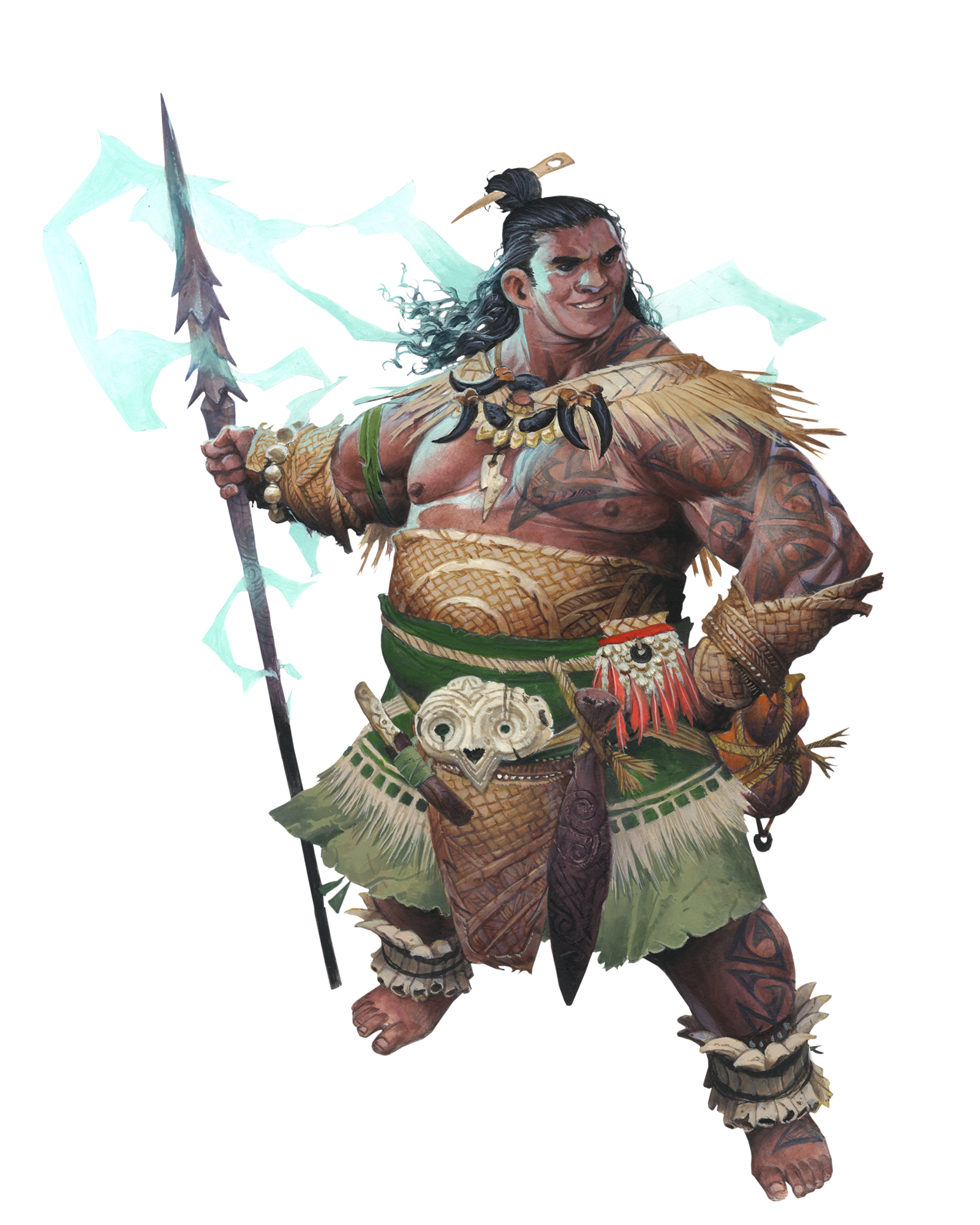
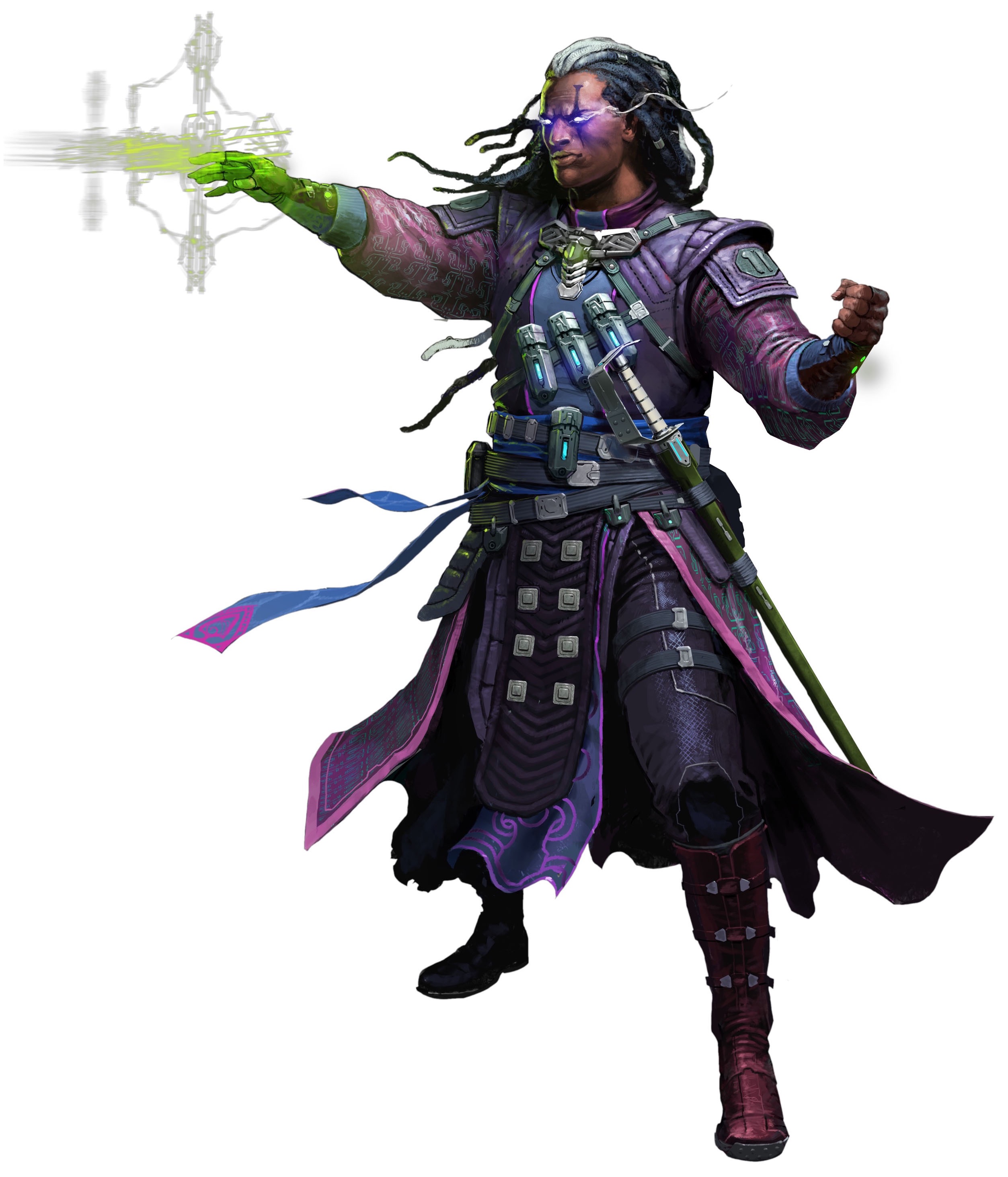
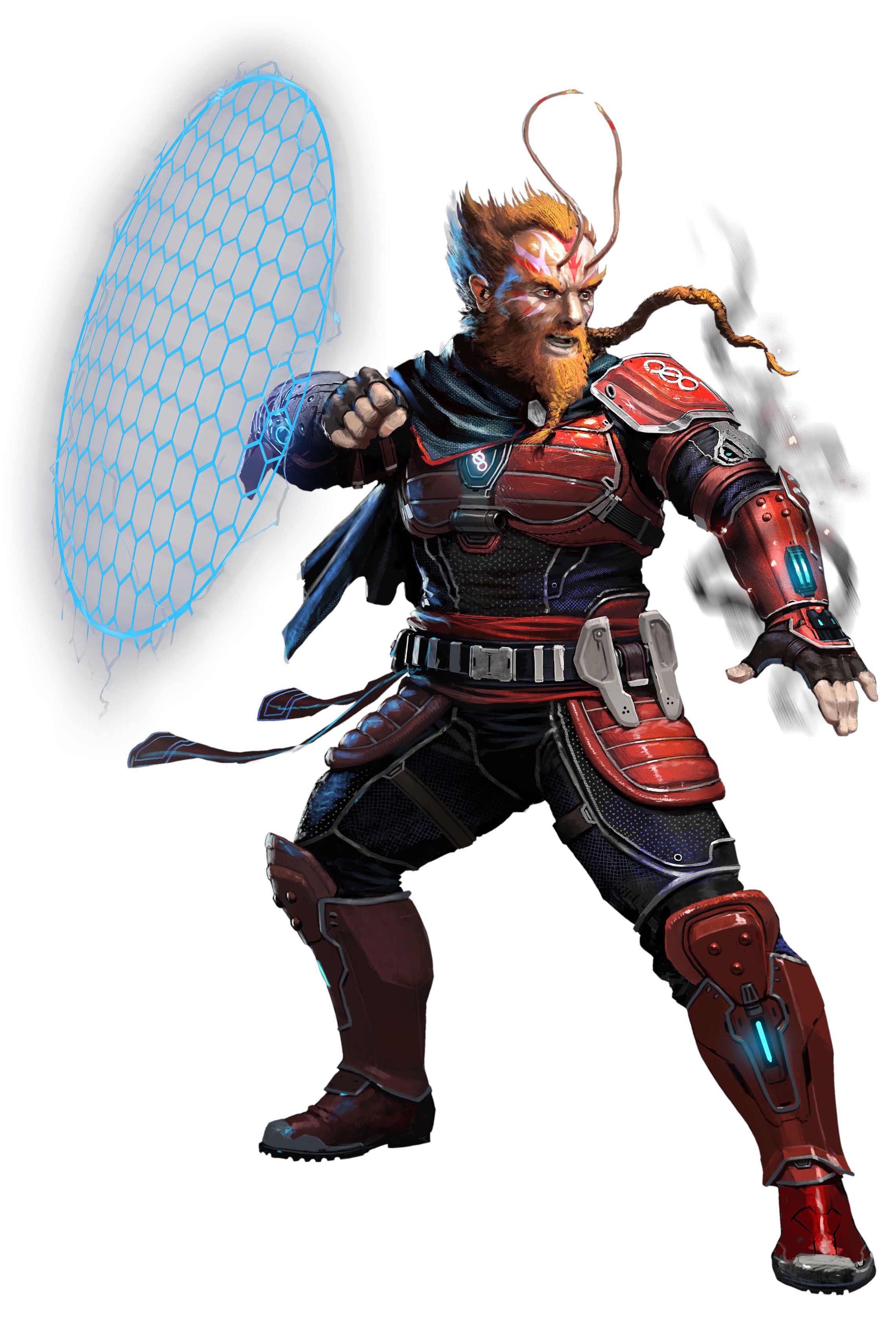
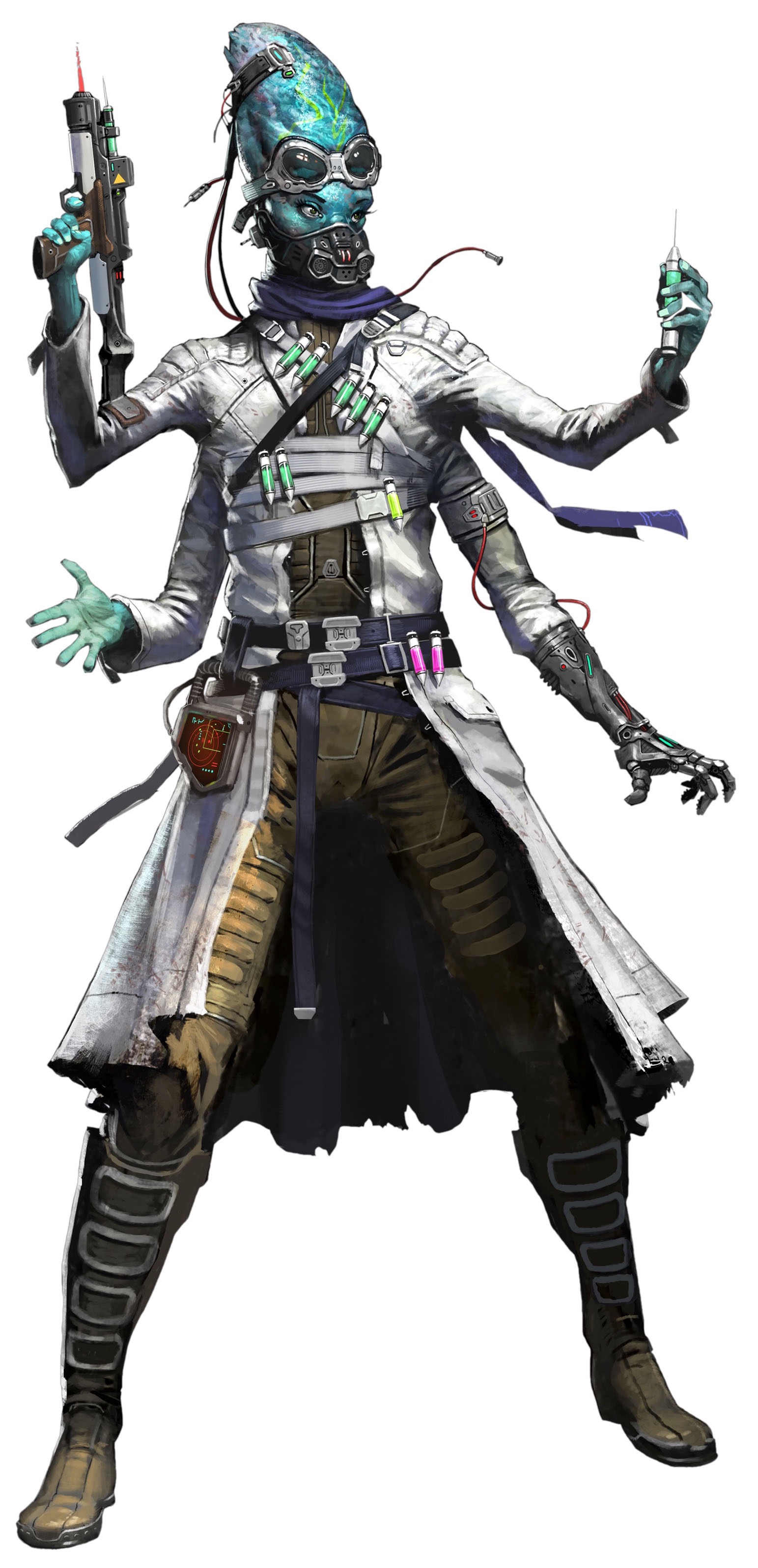
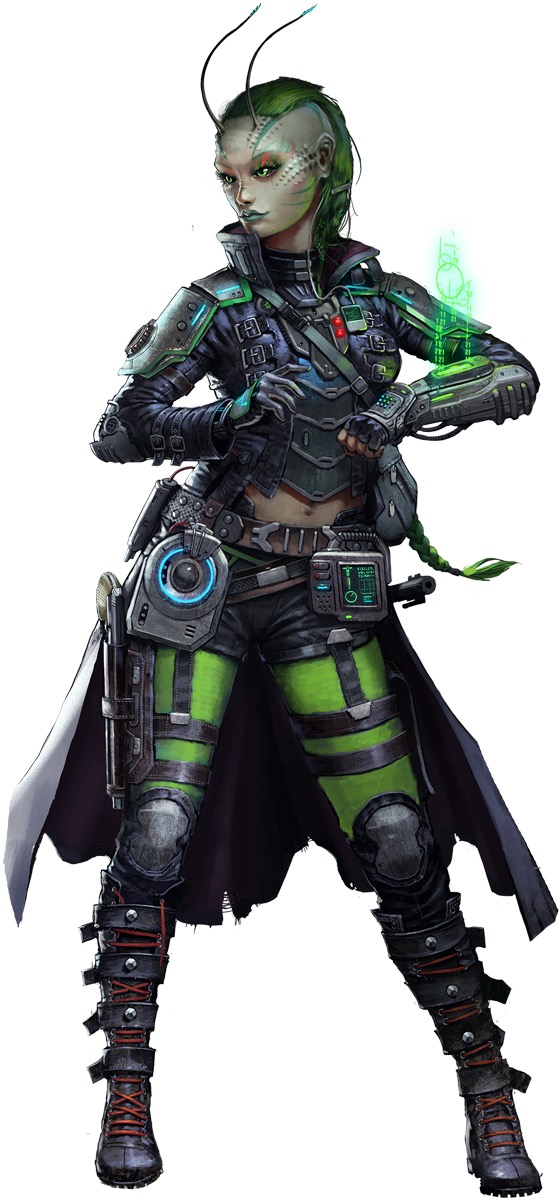
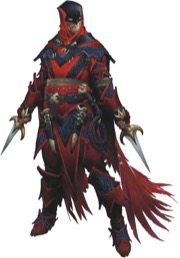
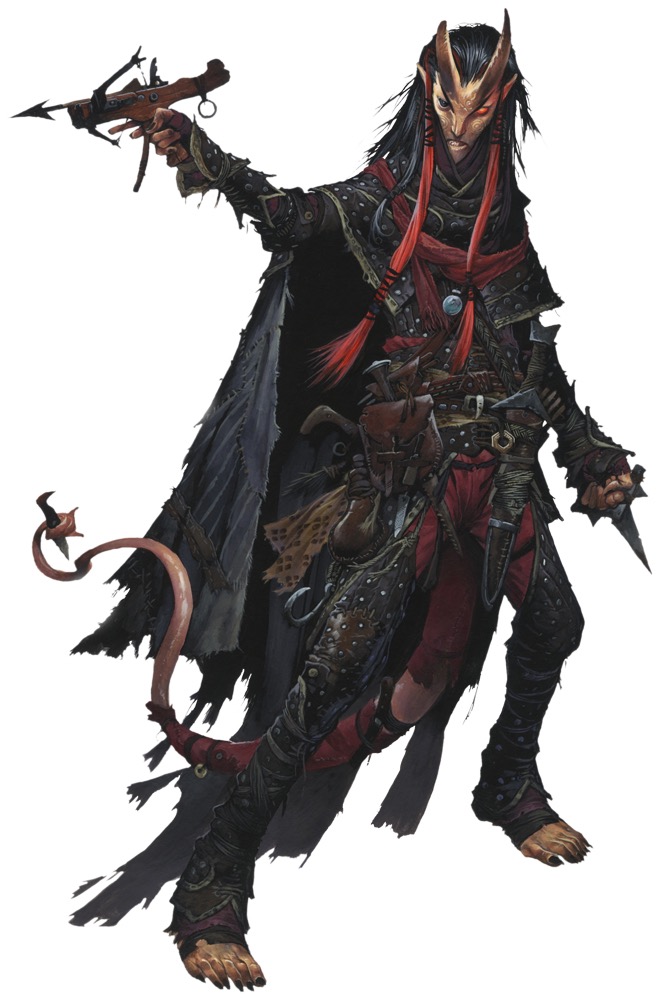
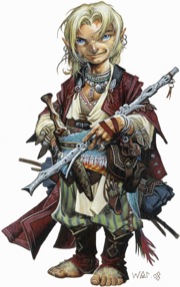
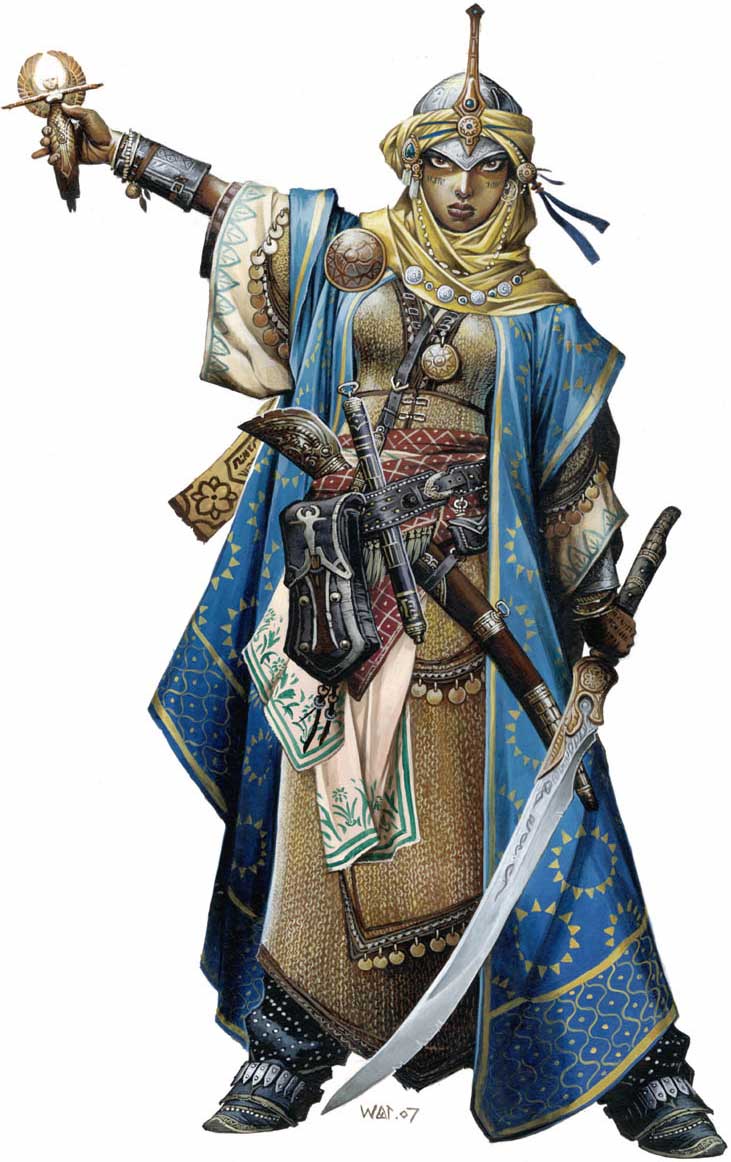
Meet the Iconics: Imrijka Thursday, October 11, 2012 ... Wails regularly echo through the eastern wing of Gravecharge, Pharasma's cathedral in the university city of Lepidstadt. Yet such aren't the breathless screams of the dead that so often ring through the corners of Ustalav, but rather the cries of life. Since its construction, Gravecharge has maintained a clean and well-supervised hospice for sick and orphaned youths. Just as the goddess Pharasma concerns herself with the transition of...
Meet the Iconics: Imrijka
Thursday, October 11, 2012
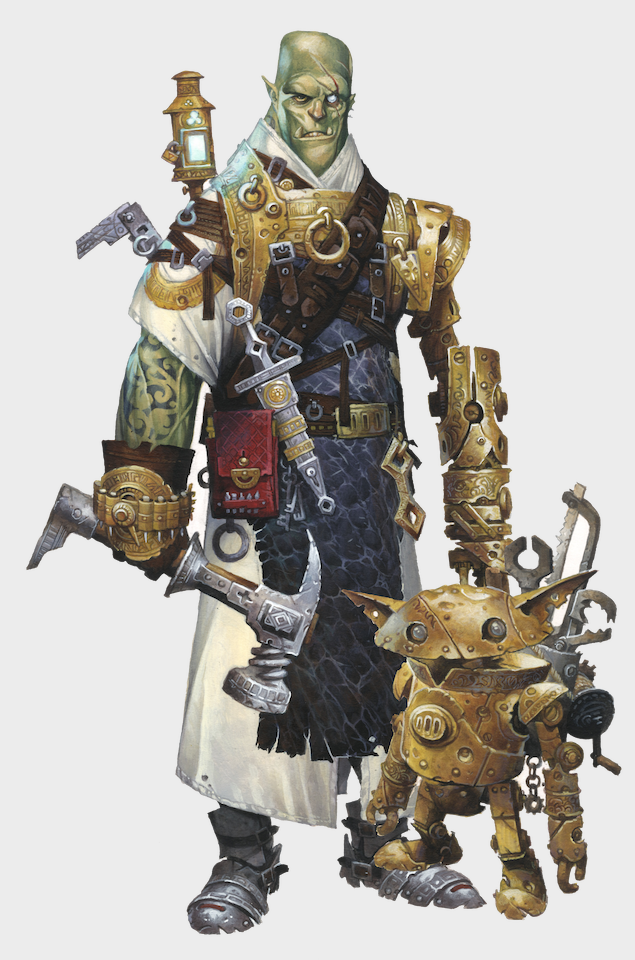
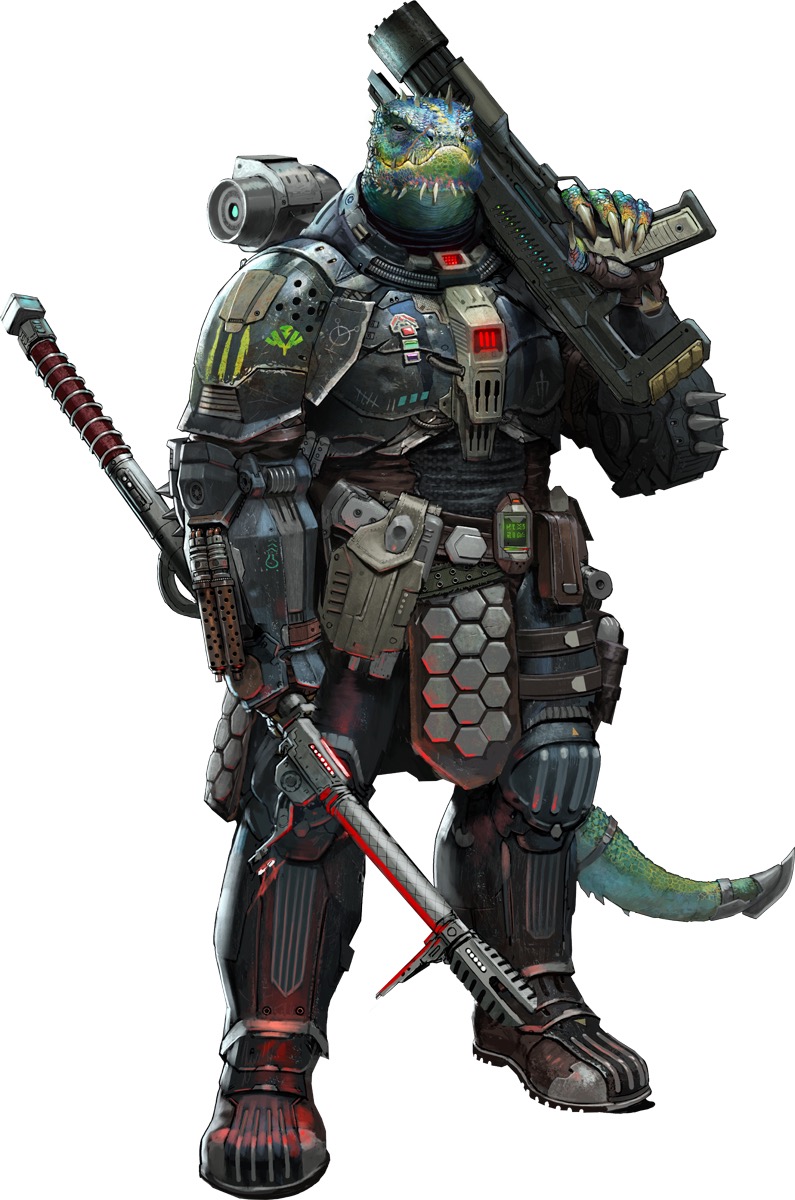
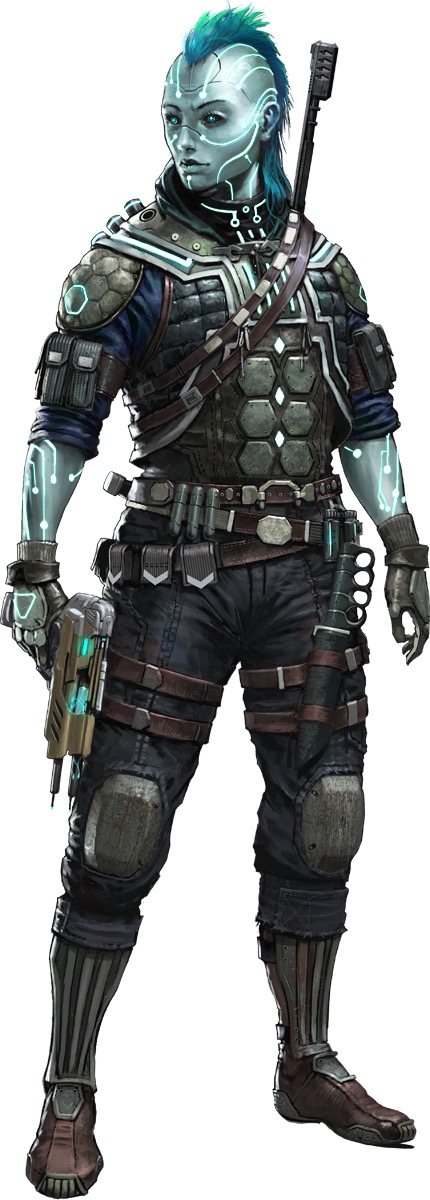
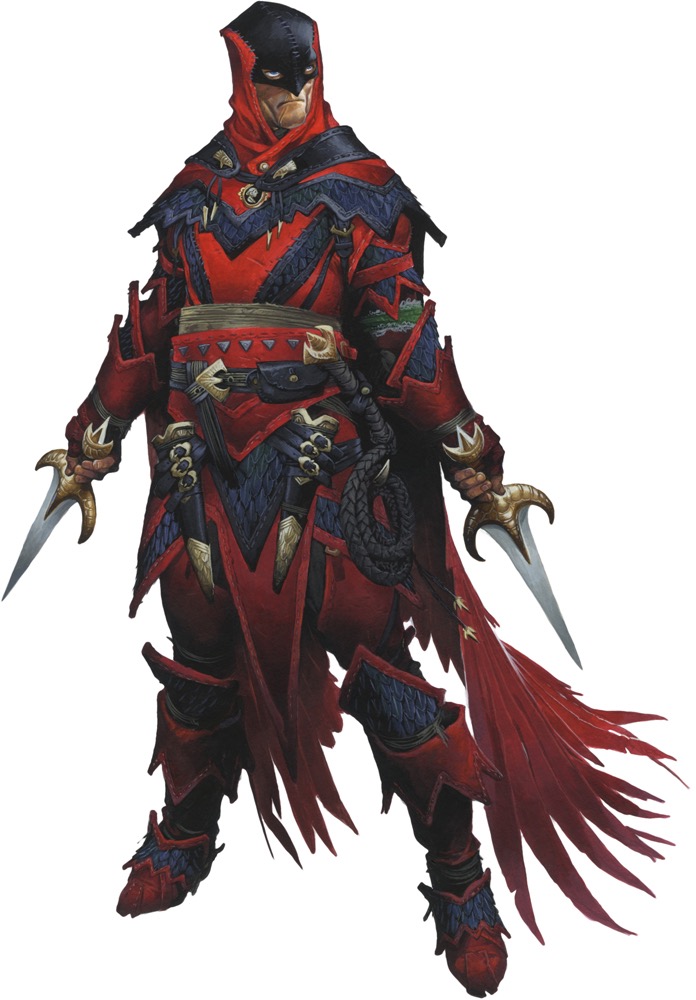
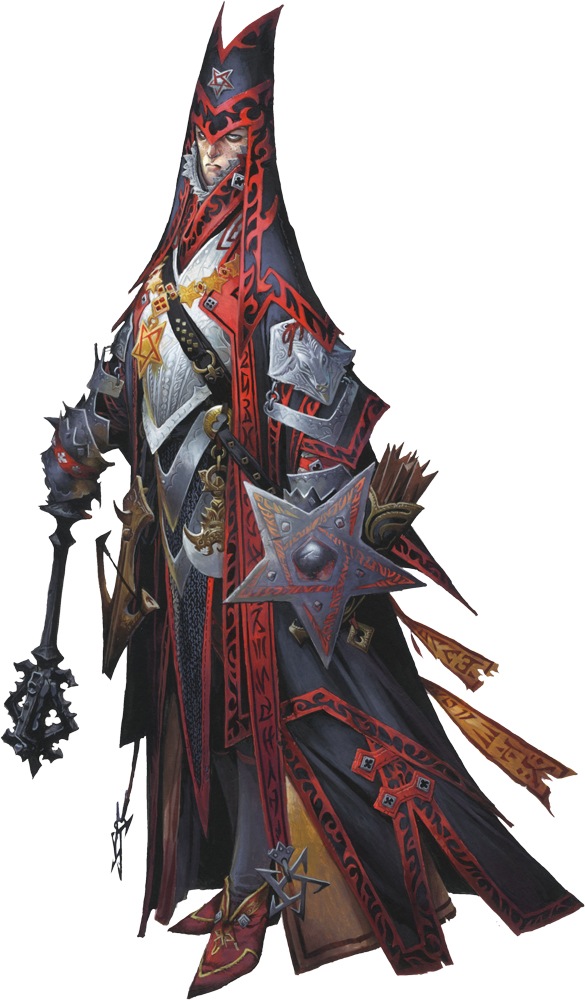
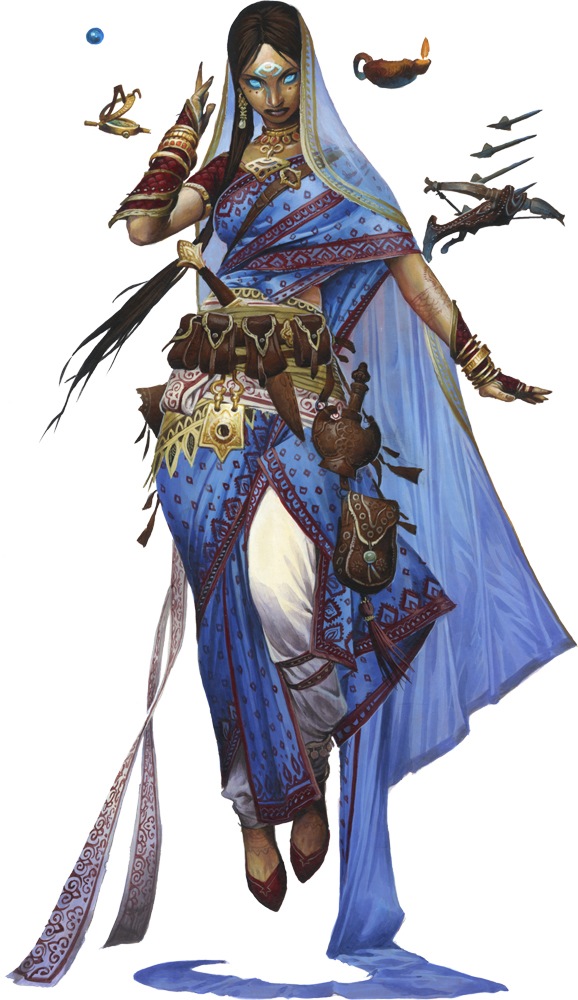
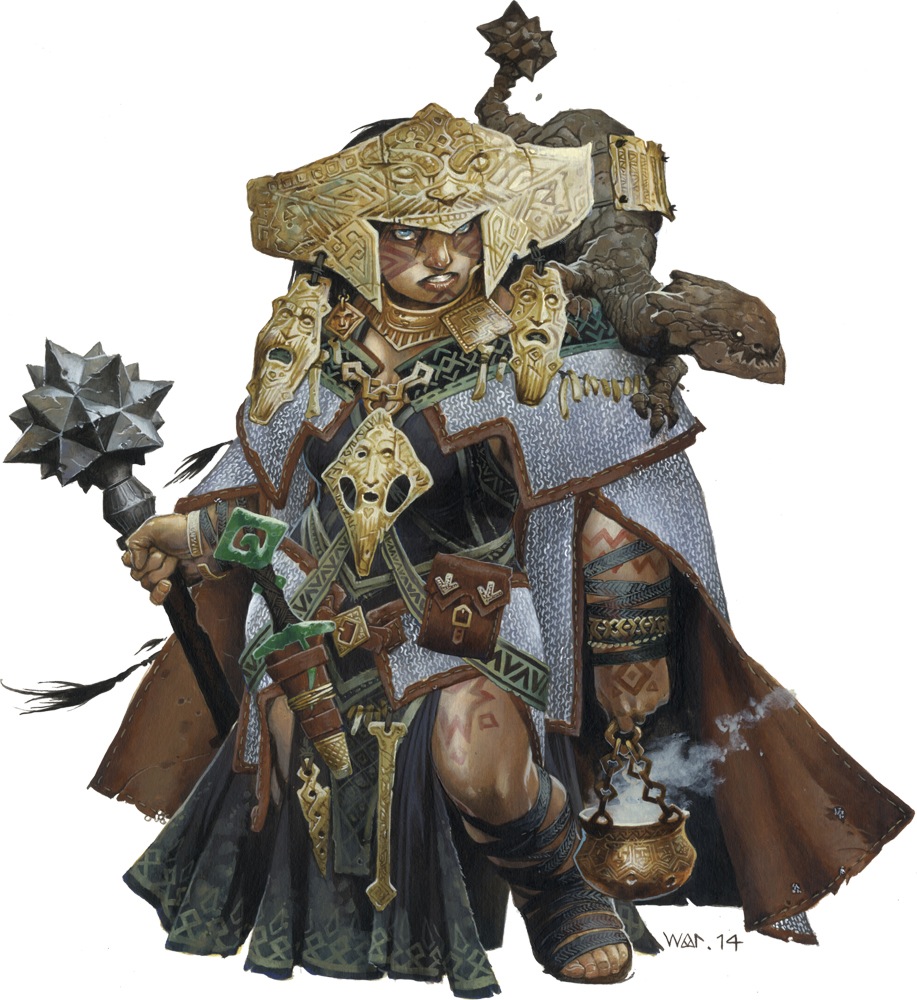
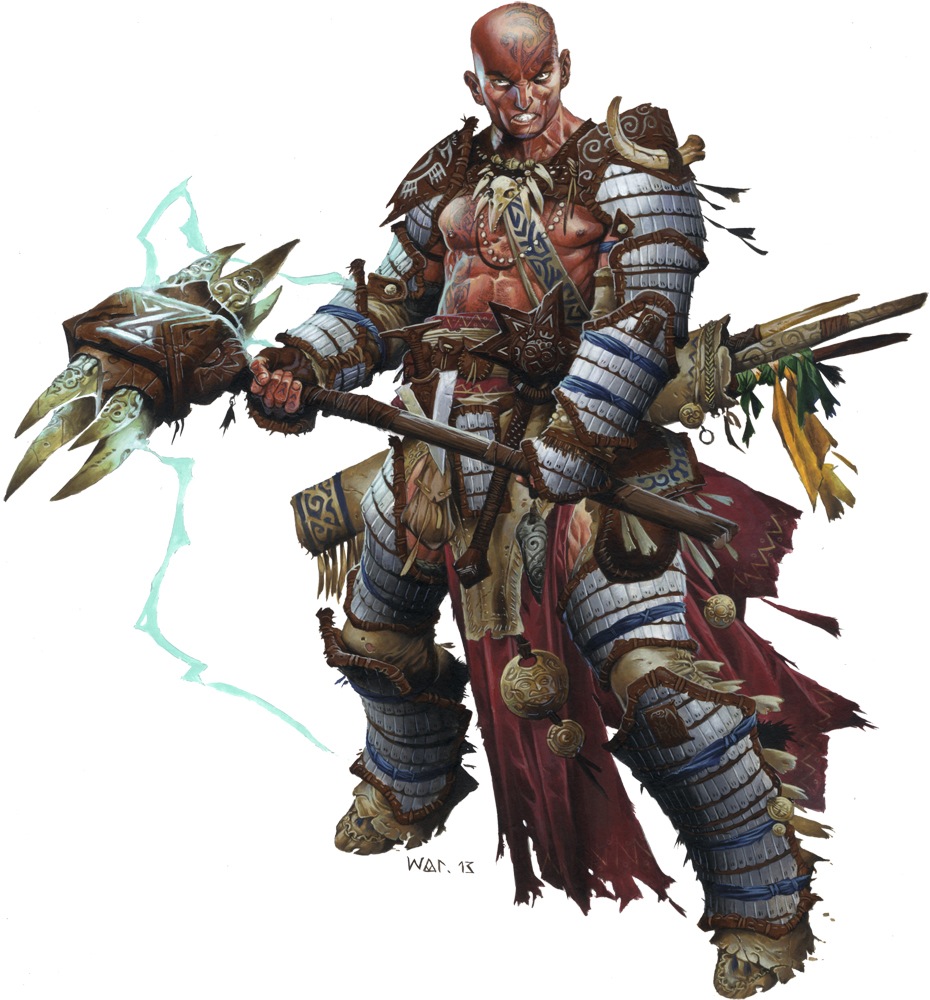
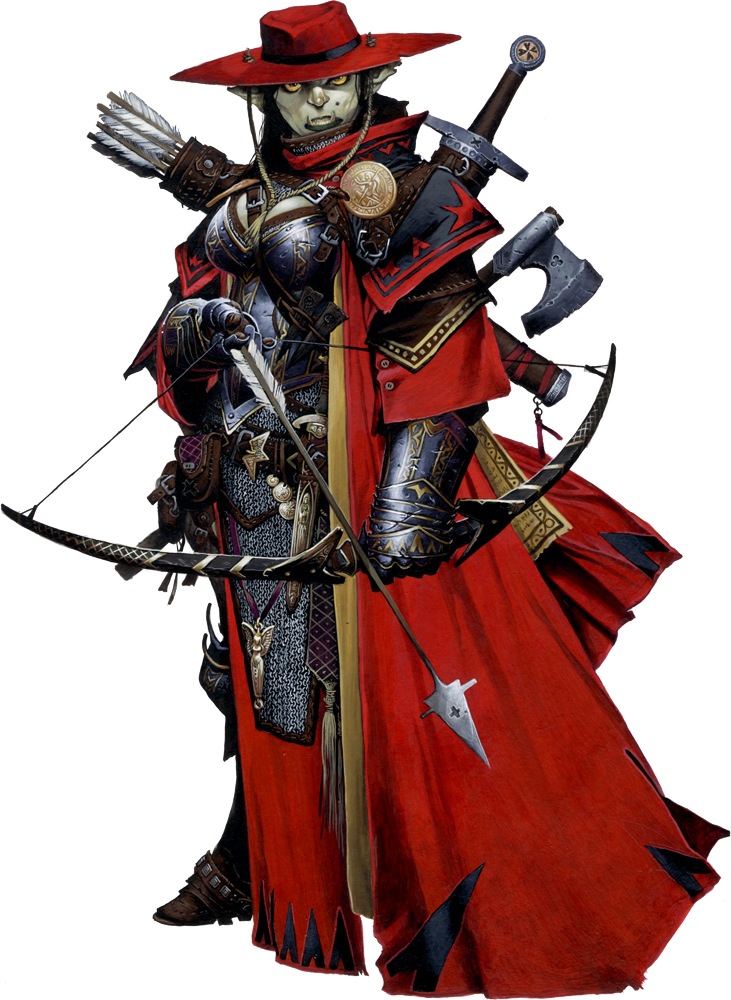
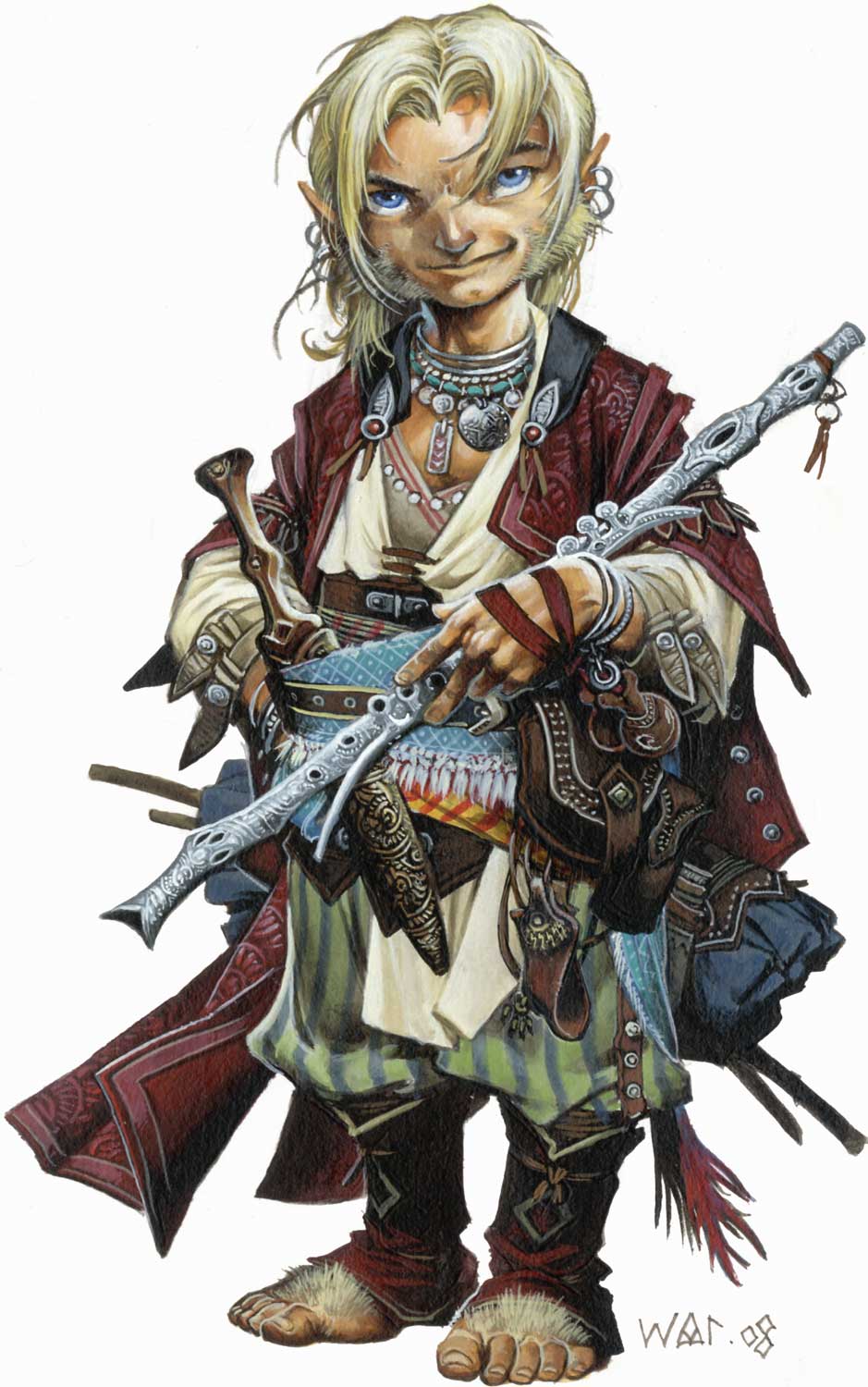
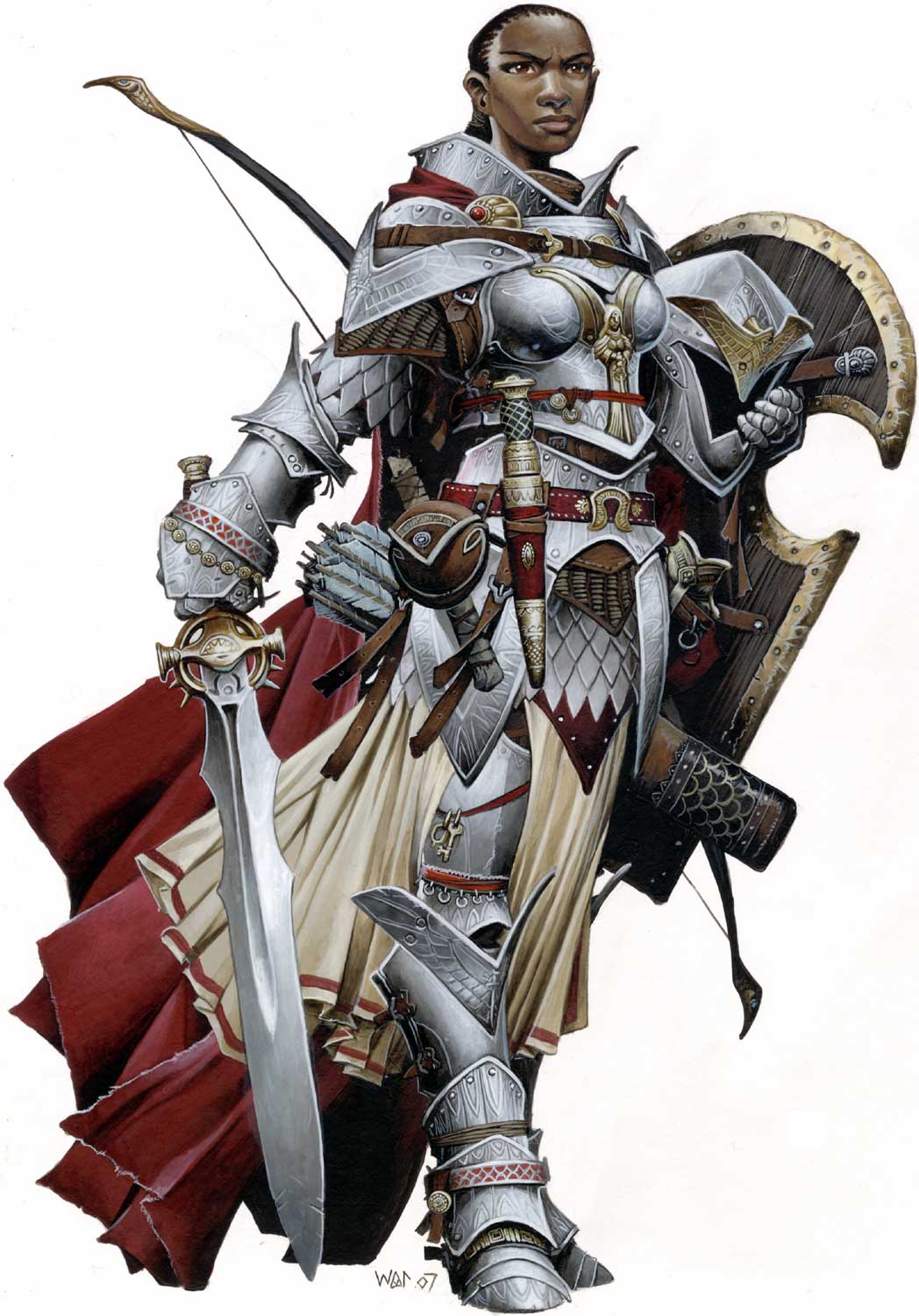
Wails regularly echo through the eastern wing of Gravecharge, Pharasma's cathedral in the university city of Lepidstadt. Yet such aren't the breathless screams of the dead that so often ring through the corners of Ustalav, but rather the cries of life. Since its construction, Gravecharge has maintained a clean and well-supervised hospice for sick and orphaned youths. Just as the goddess Pharasma concerns herself with the transition of life to death, so does she cherish even the most tragic lives.
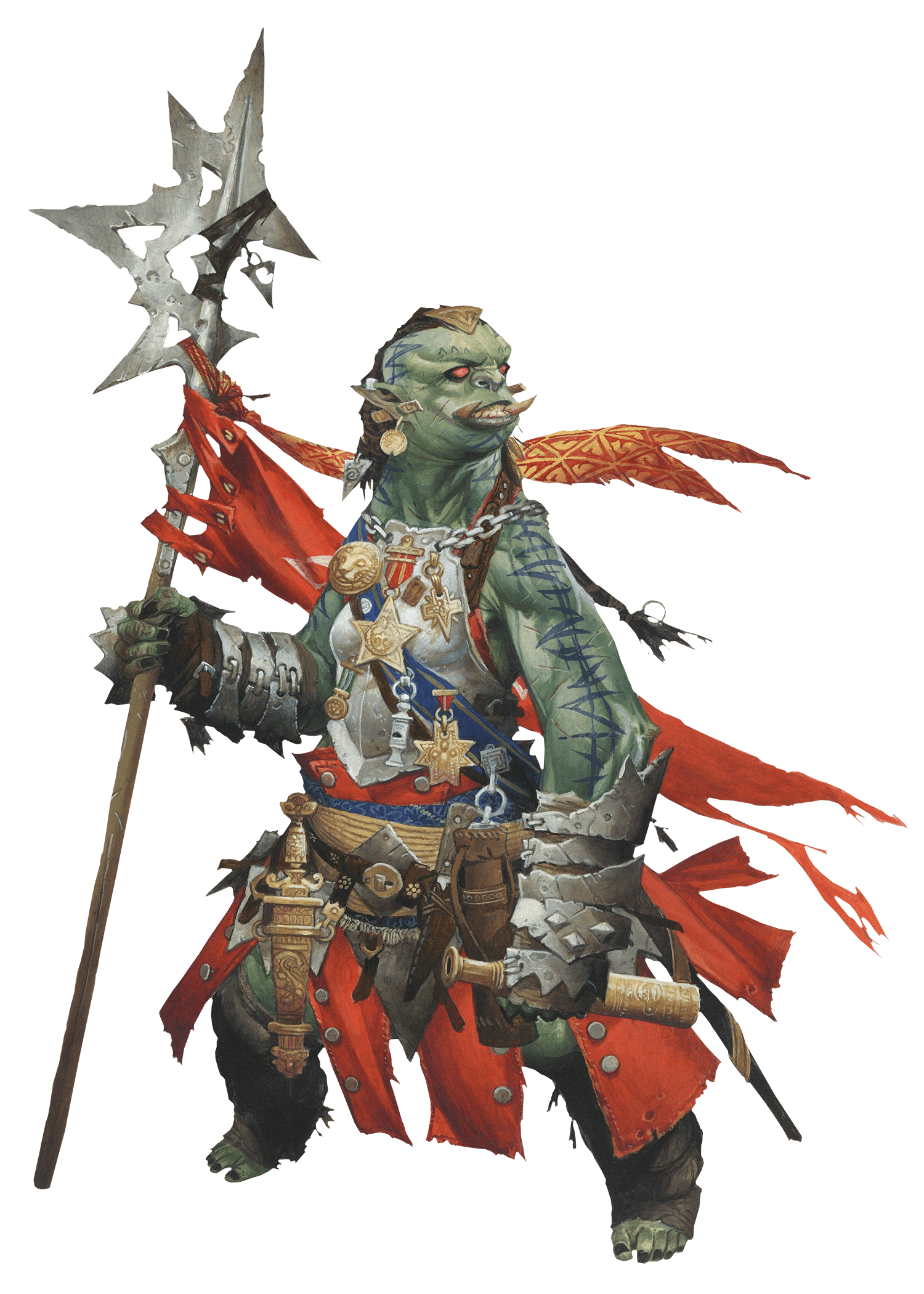
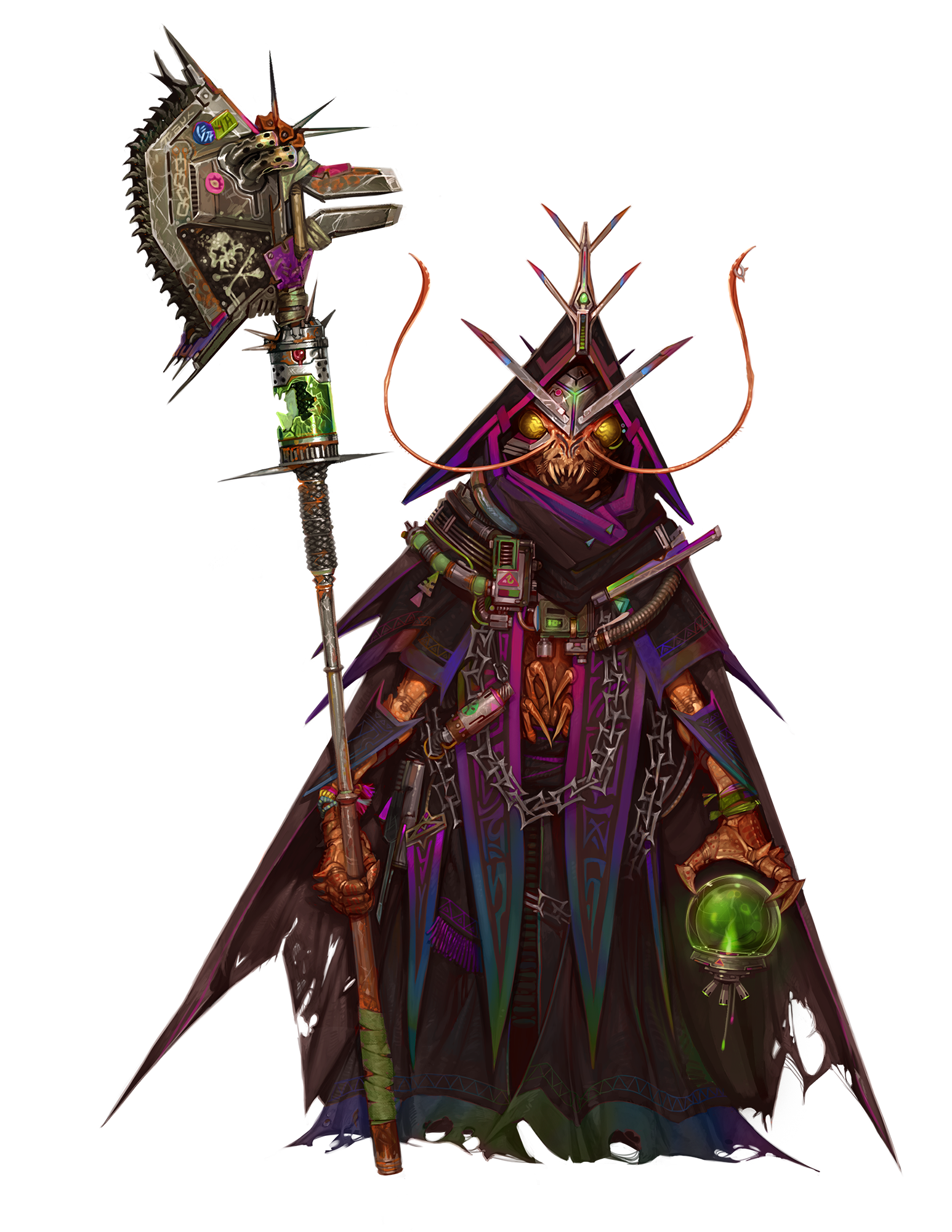
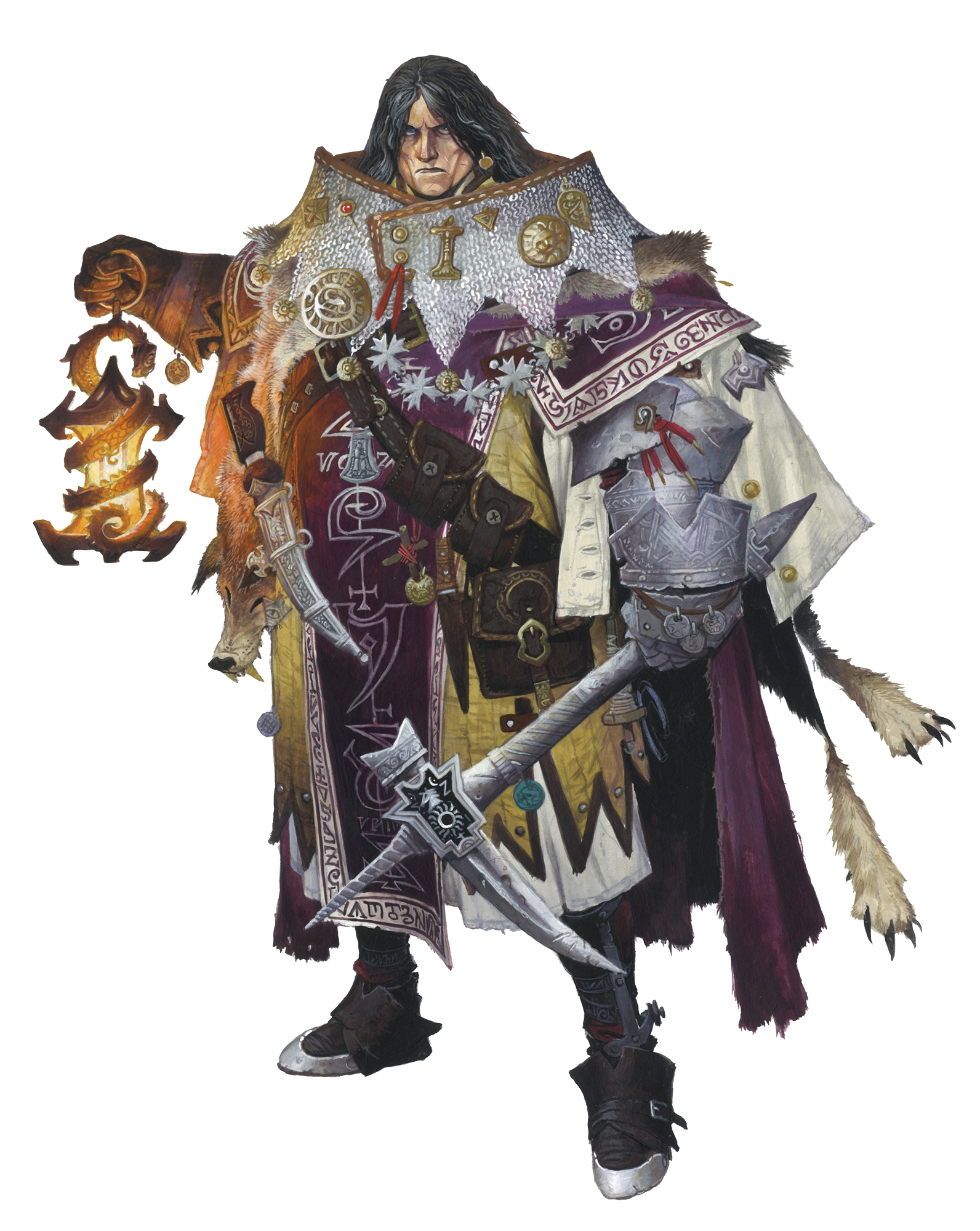
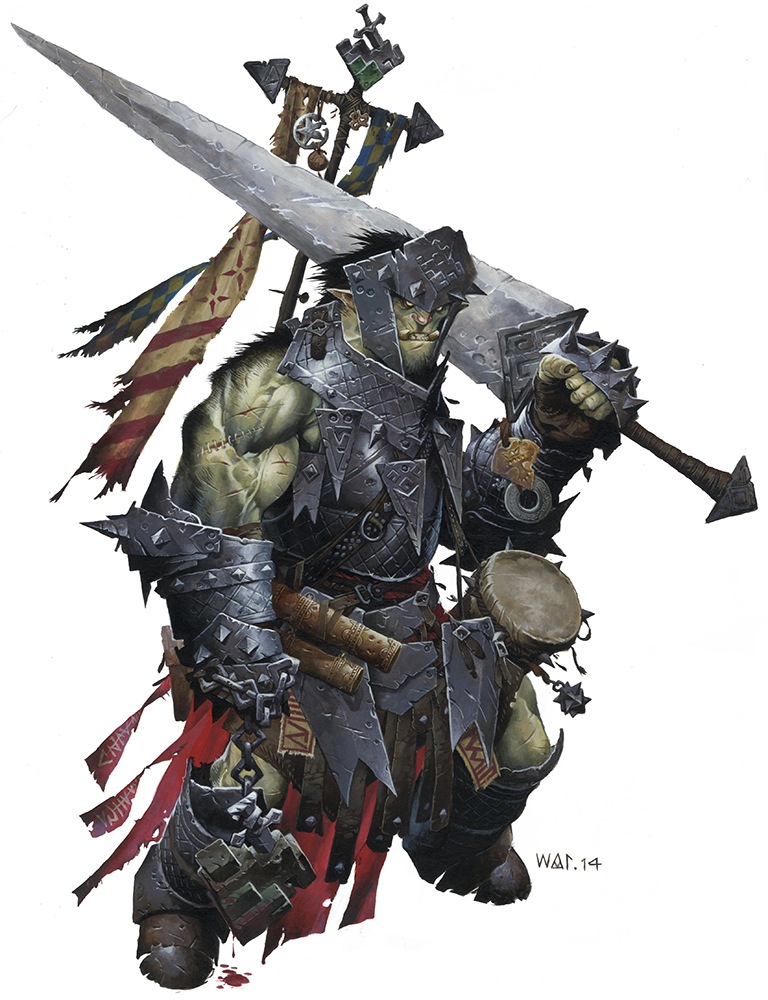
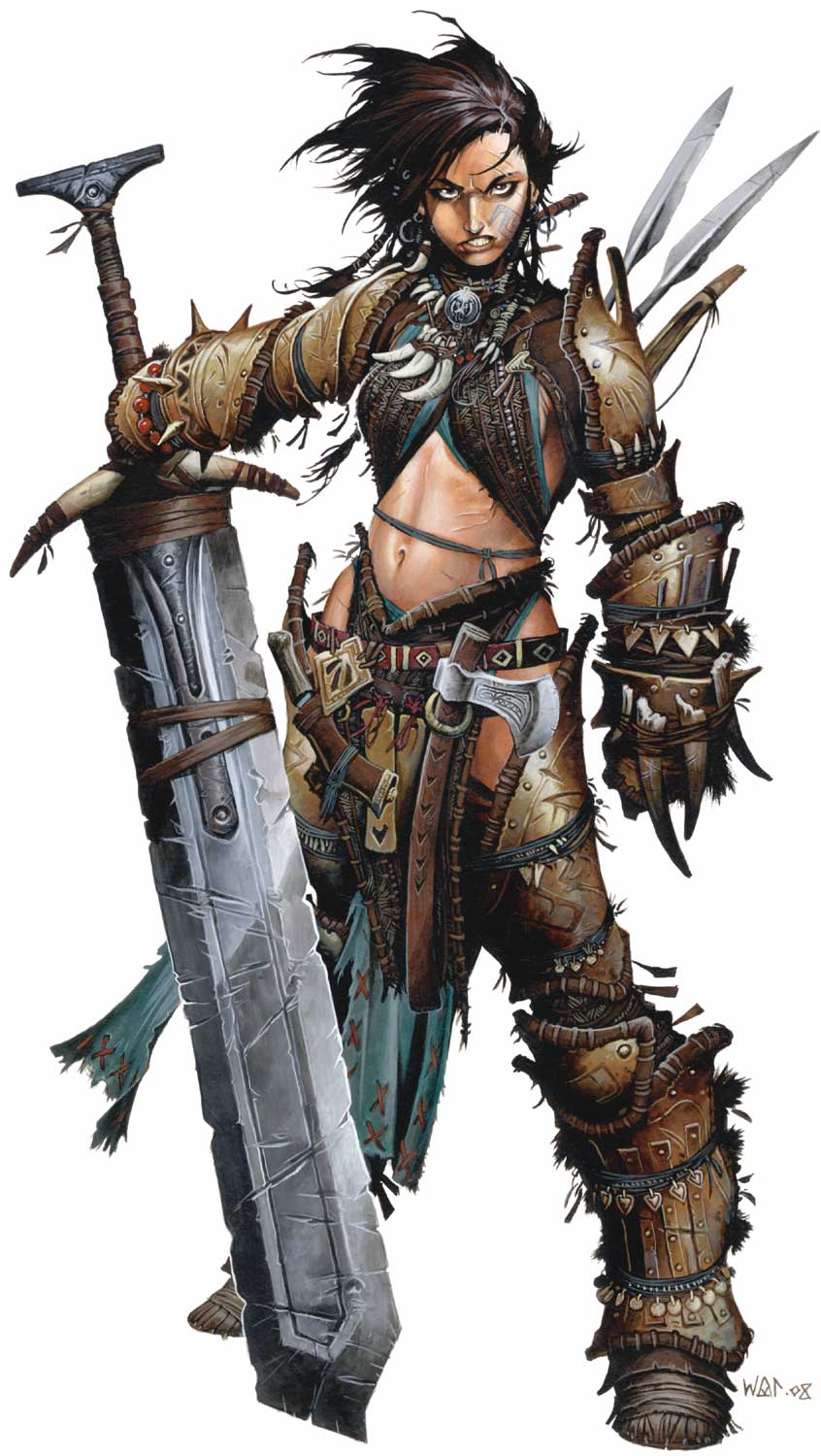
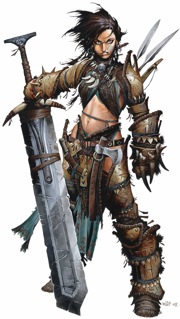
Imrijka came to Gravecharge in the arms of a city watchman, wrapped in a tattered uniform and held at arm's length. The guard claimed his patrol had found "the thing" during their dawn patrol to the Spiral Cromlech, a Kellid ruin overlooking the city that was notorious for ill fortune and mysterious disappearances—but never for mysterious appearances. Hearing a babe bawling amid the moon-bleached standing stones, the guards bold enough to investigate momentarily took her for some stray fiend-child and almost slew her amid the eerie ruins. Identifying her as a half-orc infant did little to stay the hands of those ready to mete out death, but the argument that matters of life and death should be left to Pharasma sheathed the blades of those not truly eager to spill a child's blood—regardless of the color of her skin.
Dubbed Imrijka after Gravecharge's first high priestess, Imrijka Castavelik, the pistachio-skinned girl was cleaned, clothed, and given a place among the cathedral's other orphans. At first she terrified those youths, being larger, stronger, and more vicious in her biting than some children double her age. But only for a time. The priestesses of Pharasma explained the mysteries of their goddess's will and the vastness and variety of her creations, teaching the children that they were blessed to have such a unique new sister. For a time, behind the cathedral's walls, that was even the truth.
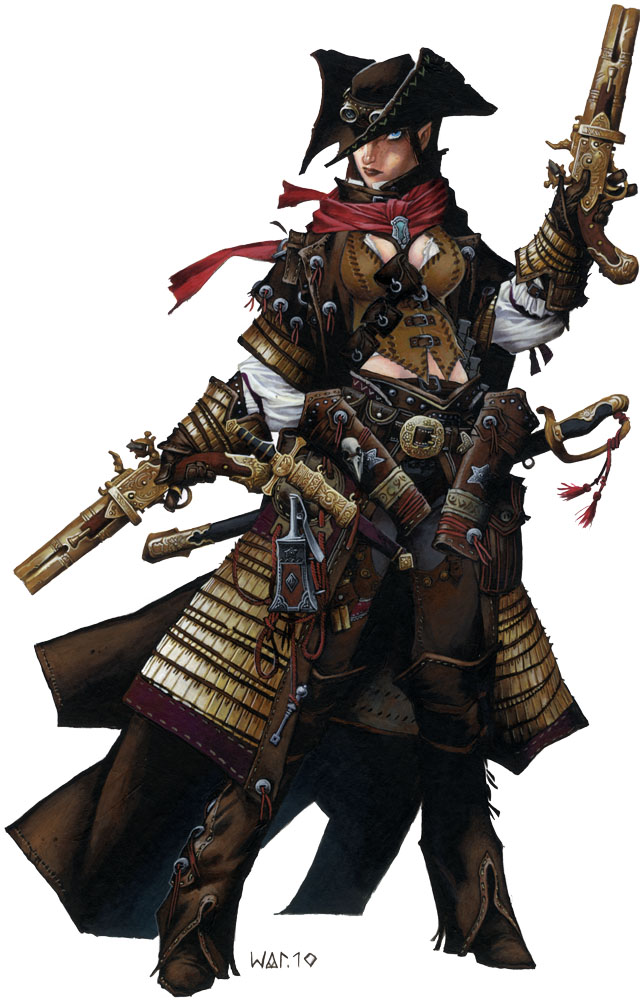
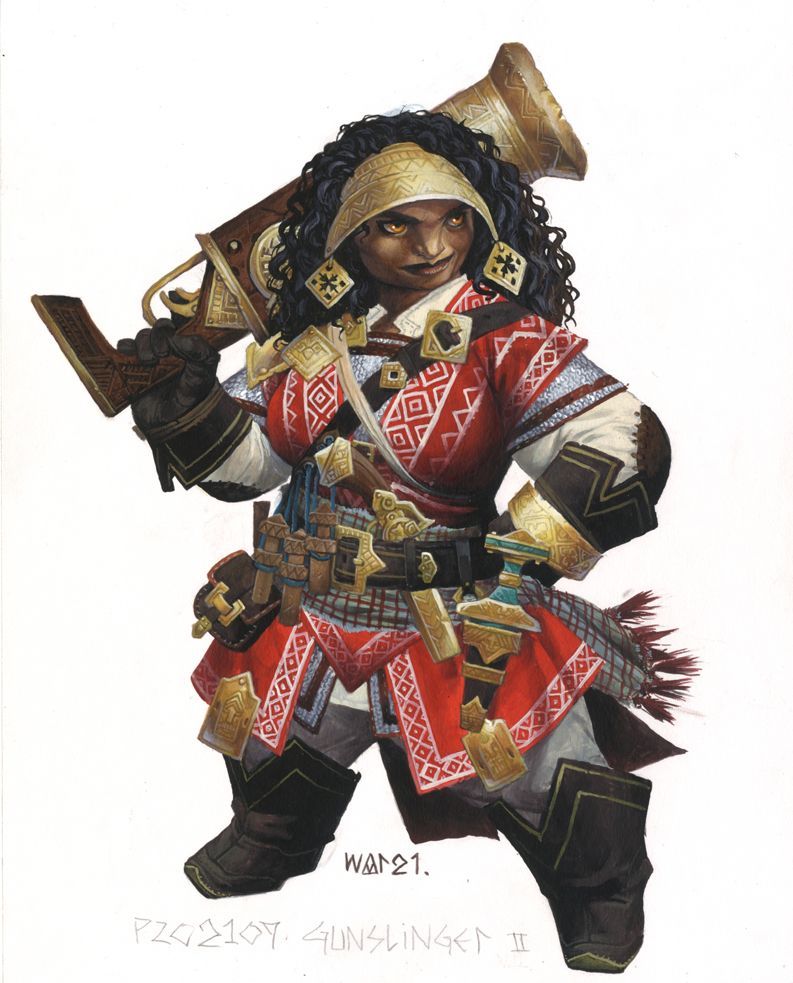
Illstruation by Wayne Reynolds
When she was old enough to understand and be understood, Imrijka reported to the offices of Jarlos Teym, Gravecharge's high exorcist, for the first time. He asked her a great deal about her life, how she felt about her studies, the clergy, the other children, and if there was anything he could do to make things more comfortable for her. A shy girl, Imrijka declined. Subsequent discussions bent toward the future, Imrijka's dreams, her prayers, and her vision for a long life. Finally, though, after months of building a rapport with the girl, Teym asked about her past. But for Imrijka, life began with the cathedral, priestesses, and other orphans. Teym pressed, insisting on answers, even verifying them with magic. After one particularly intense interview, a confused Imrijka finally started asking her own questions: Why did it matter? Why did Teym care? Couldn't what she might be outweigh what she might have been?
Deeming her mature enough to know, Teym explained his tenacity: someone had come to adopt Imrijka. Thrice. Every Kuthona for the past 3 years. First came a man dressed like a count's footman, articulate and with more questions than answers. He left after raising the clergy's suspicions with his too-pointed inquiries about Imrijka. A year later he returned, this time with a human woman of vulpine beauty who claimed to be Imrijka's mother—though her apparent age made that only the barest possibility. It was Teym's own suspicions and skill at discerning lies that kept the strangers from Imrijka, and the unusual pair left with wordless detachment. Finally, only a few months past—days before Teym's first meeting with Imrijka—the two strangers returned, led by a man dressed in white and silver. The bold newcomer spoke as one used to being obeyed and demanded Imrijka be handed over to him. Teym personally denied him, insisting to know what right he had to the girl. A father's right, the man persisted. The high exorcist ordered them out of the cathedral in that instant, but before they obeyed the man in white smiled. "She's not like us," he said, eyes glimmering. "Excellent."
Despite Teym's explanation, Imrijka understood only that her parents had come for her and that the high exorcist had sent them away. She held back both questions and tears, nodding blankly until Teym excused her. But she didn't return to her room. Rather, she exited through the front doors of Gravecharge and out onto the snowy streets—where someone waited.
A man in white sat upon the icy benches of the nearby circle, slowly feeding bits of shredded meat to the crows. Seeing Imrijka enter the plaza through the flurry of sound-deadening snow, he rose and walked toward her. Wary, she approached. In his gloved hand appeared a strange token, a disk etched with barbaric symbols and a figure impaled upon a spear. She reached for it.
A merciless iron arrow shattered the man's hand, sending the strange icon spiraling into the snow. Teym stood across the circle, another arrow nocked in his bent hawthorn bow. Around him whipped the black-edged crimson of Pharasma's inquisitors, woven flames that engulfed any flakes the whirling wind blew against them. "Back, girl," he commanded in a voice Imrijka had never heard him use.
The man in white might have been carved of ice. He had never flinched. Though the icon was knocked away, a tangle of disjoined fingers and bloodless flesh-ribbons remained outstretched toward Imrijka. Her small tusks clattered against her teeth, but she didn't scream.
"Another time, dear," the man whispered, just for her. Then the snow whirled around him. For a moment he seemed to be one with the cold, a blizzard-born prince. Then he was gone, leaving Imrijka cold and frightened—but not alone. High Exorcist Teym's cloak around her was heavy, and warm, and smelled strongly of tobacco and dust—what Imrijka imagined a grandfather should smell like. It didn't smell anything like the man in white.
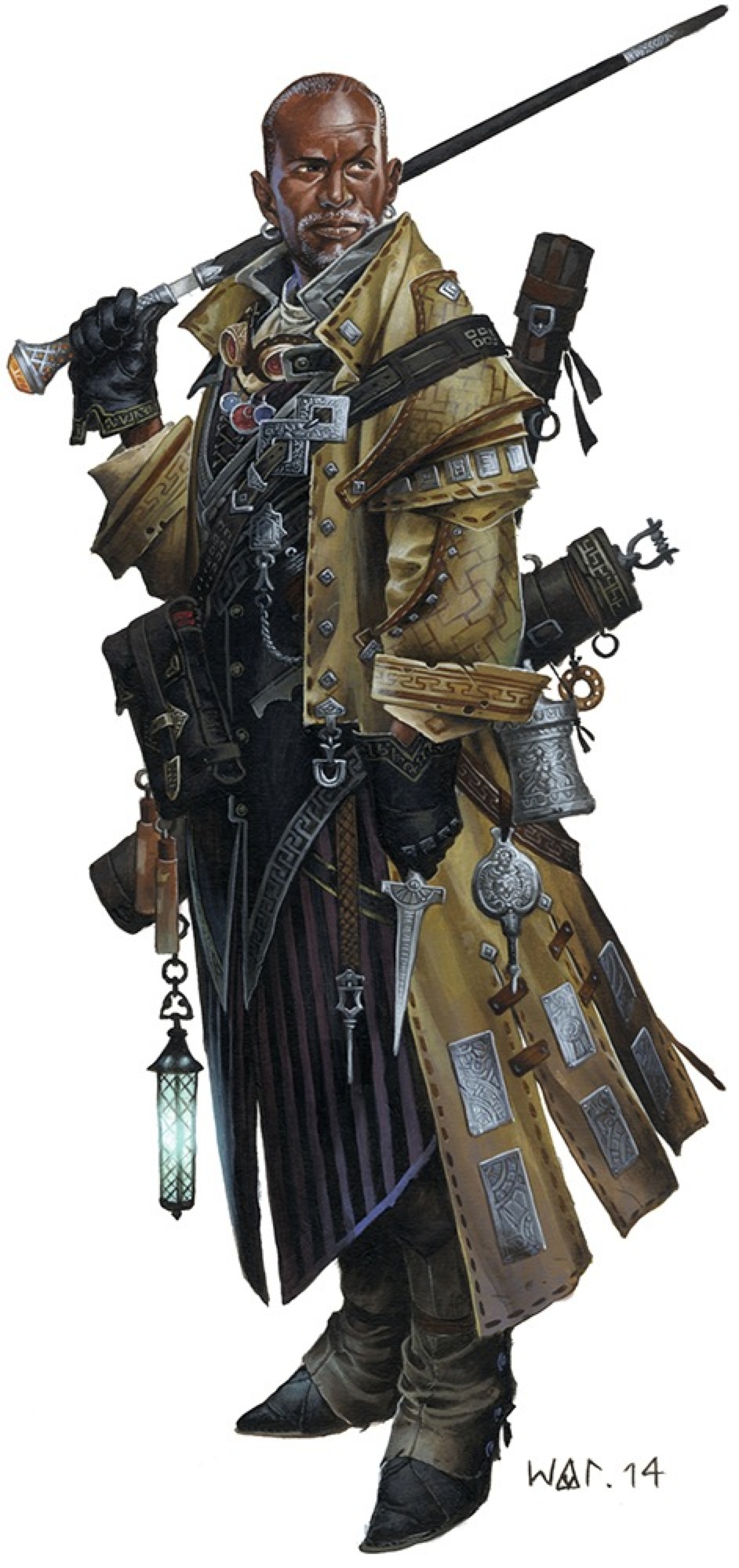
Until Imrijka reached maturity and was fully able to defend herself, she rarely left Gravecharge Cathedral. When finally she did, it was in the crimson and black of an initiate inquisitor of Pharasma's faith. Even after the retirement of High Exorcist Teym, she continued to serve the church and the man she'd adopted as her grandfather, assisting him in his more scholarly pursuits as a consultant on religious antiquities at the University of Lepidstadt. She's traveled much of Ustalav and beyond—guarded an expedition to the boney towers of Kalexcourt, spent a night in the haunted hotel known as House Beumhal, been shouted off the porch of retired monster hunter Ailson Kinder (but not before getting her copy of Hunter's Moon signed), and had numerous other adventures. She regularly returns to Gravecharge, where several of her childhood companions have grown into positions within the church's sphere of influence—including Brel Vhalsik, an argumentative Kellid theologian with whom she shares a complicated relationship. But increasingly her interests and Teym's research send her beyond Ustalav's borders, where she treads with her goddess's blessing, bringing judgment to all who would violate the laws of life and death. In her travels she's faced significant prejudice, but tales of Pharasma's "monster monster-hunter" and Imrijka's ever-present arsenal convince most bigots to keep their fool mouths firmly shut. Through it all, she's never seen the man in white again—at least, not with total confidence, as there have been far too many shadows and half-recognized faces to be sure. She recovered his strange gift on that snowy day and wears the disk openly, hoping that someone someday might recognize it and lead her to some hint of where she came from and who she was. But for now, the future holds far greater promises for Imrijka, and she strides into it boldly, confident in her faith, where she's going, and who she is.
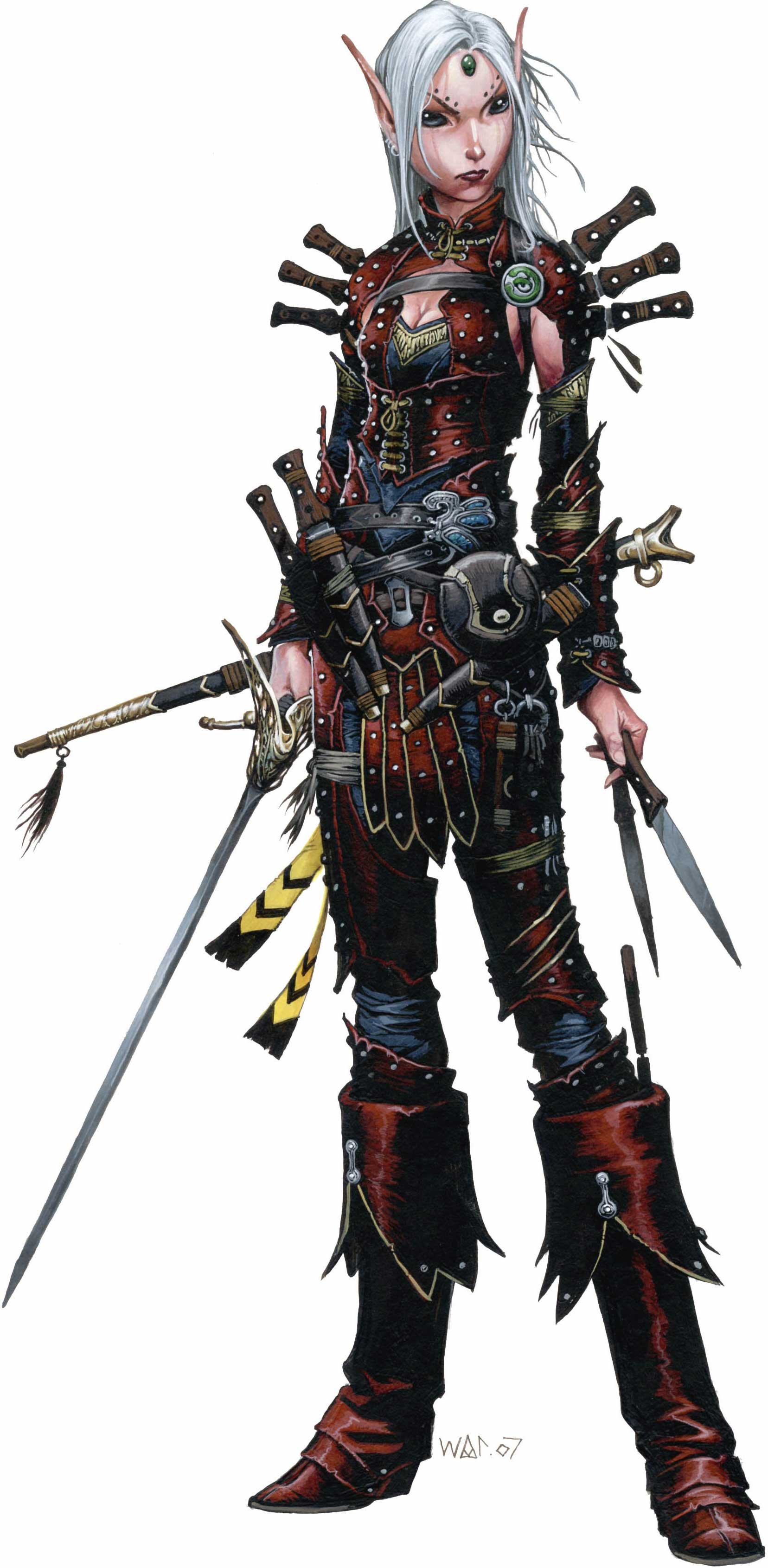
... Meet the Iconics: Feiya Thursday, October 27, 2011 ... Illustration by Wayne ReynoldsBorn in a small village north of Trollheim in the Linnorm Kingdoms, the child who would come to be known as Feiya was the daughter of two Tian merchants from Minkai who had come over the crown of the world to Avistan to start a new life. Travelers by nature, they spent the short northern summers making slow loops through Hagreach and the Thanelands, facilitating trade. What few memories Feiya has of that...
Meet the Iconics: Feiya
Thursday, October 27, 2011
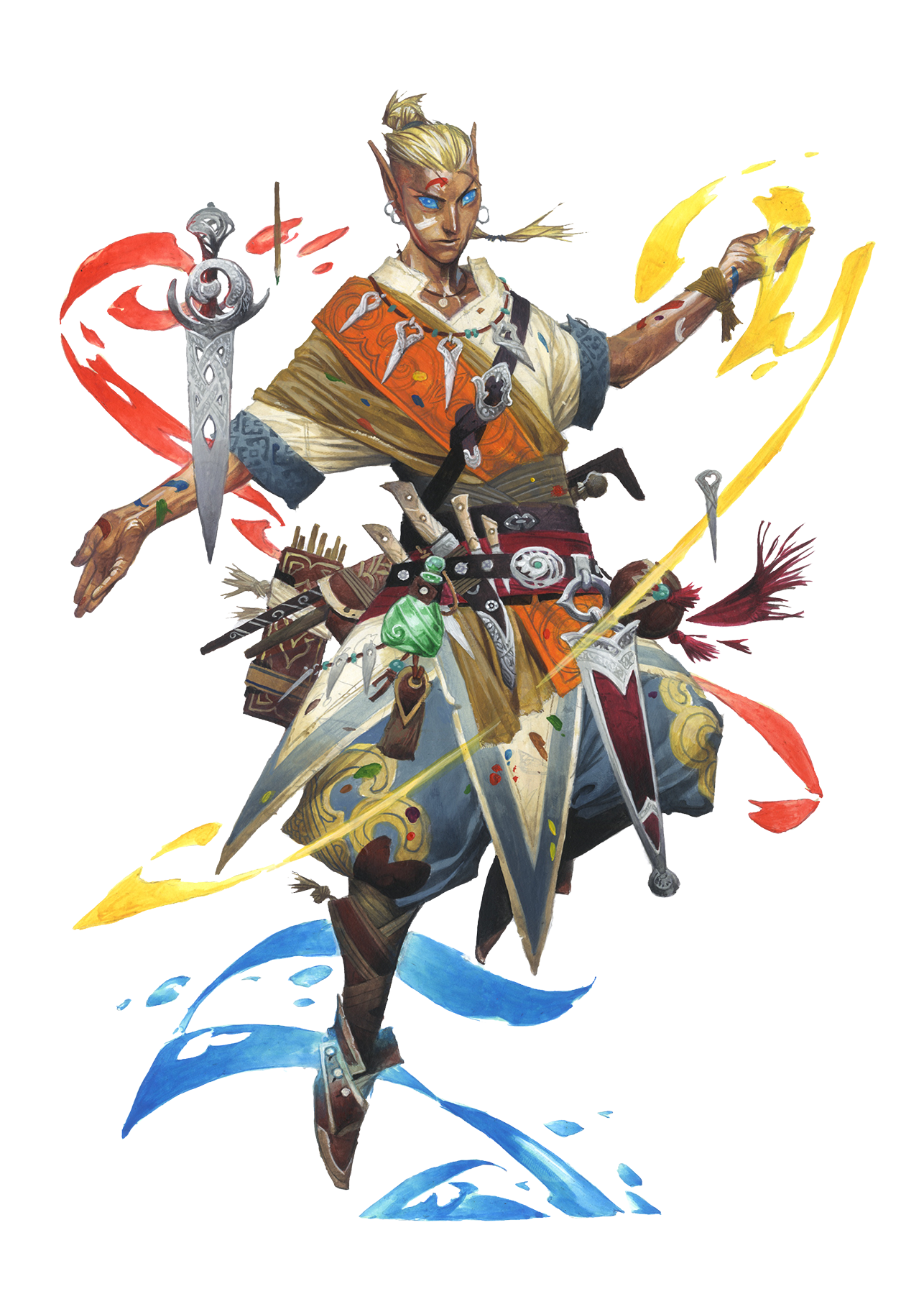
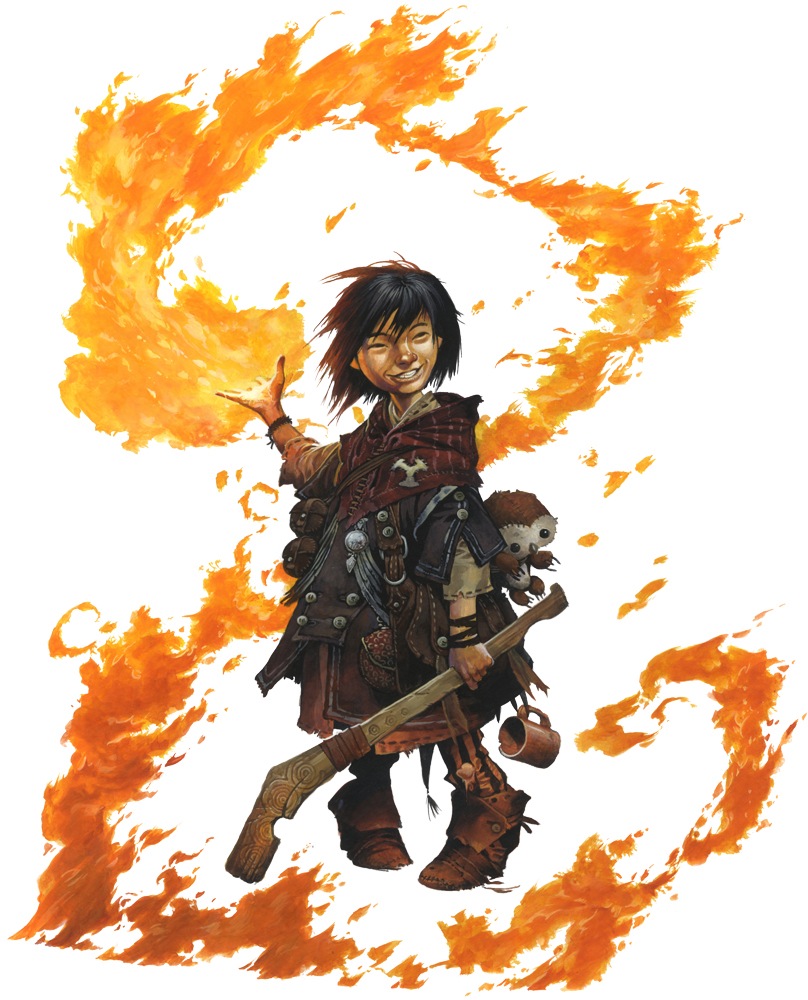
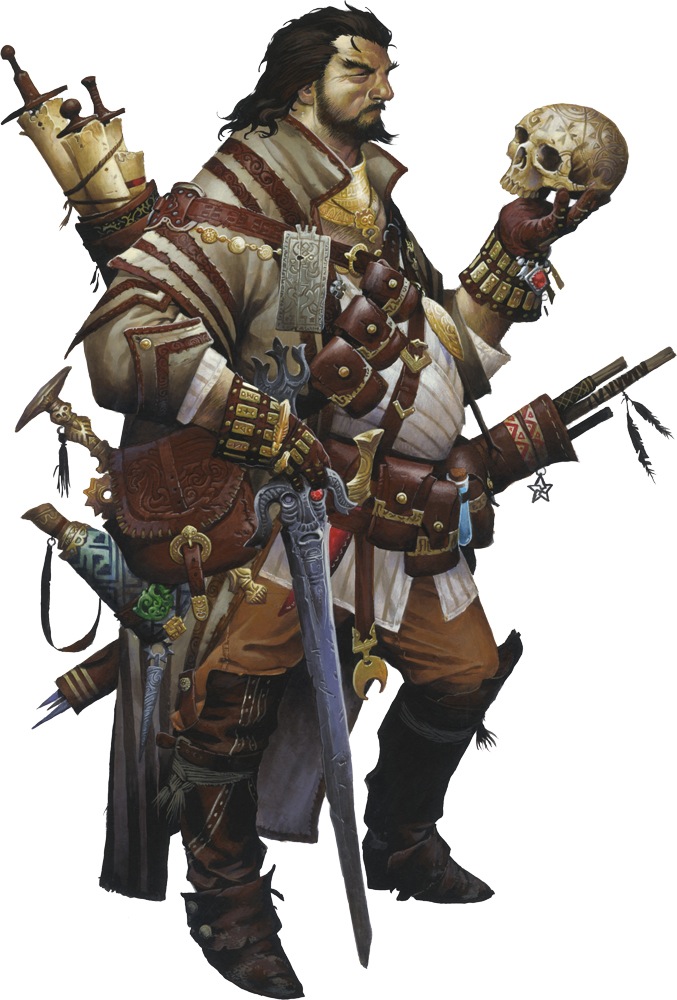
Illustration by Wayne Reynolds
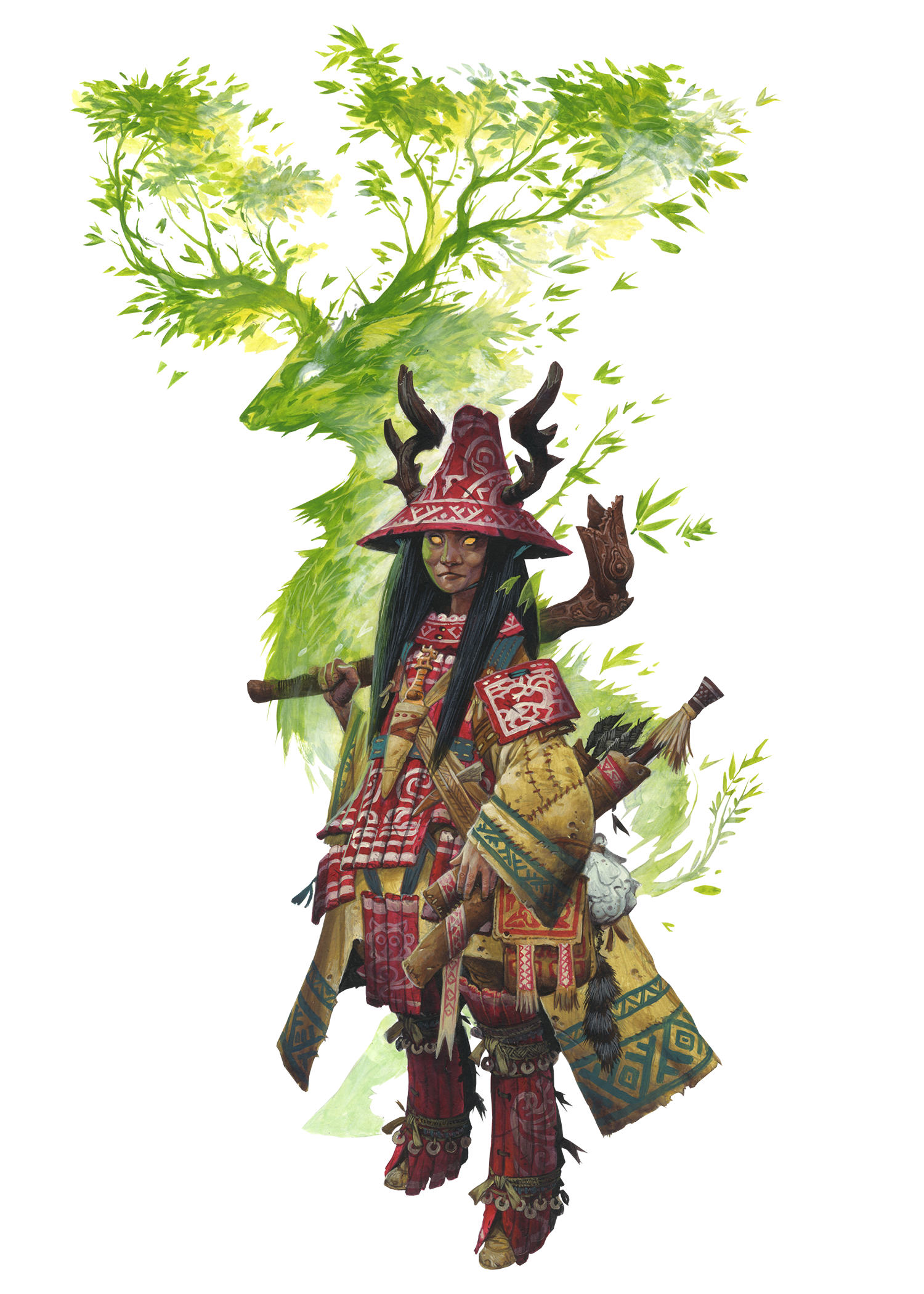
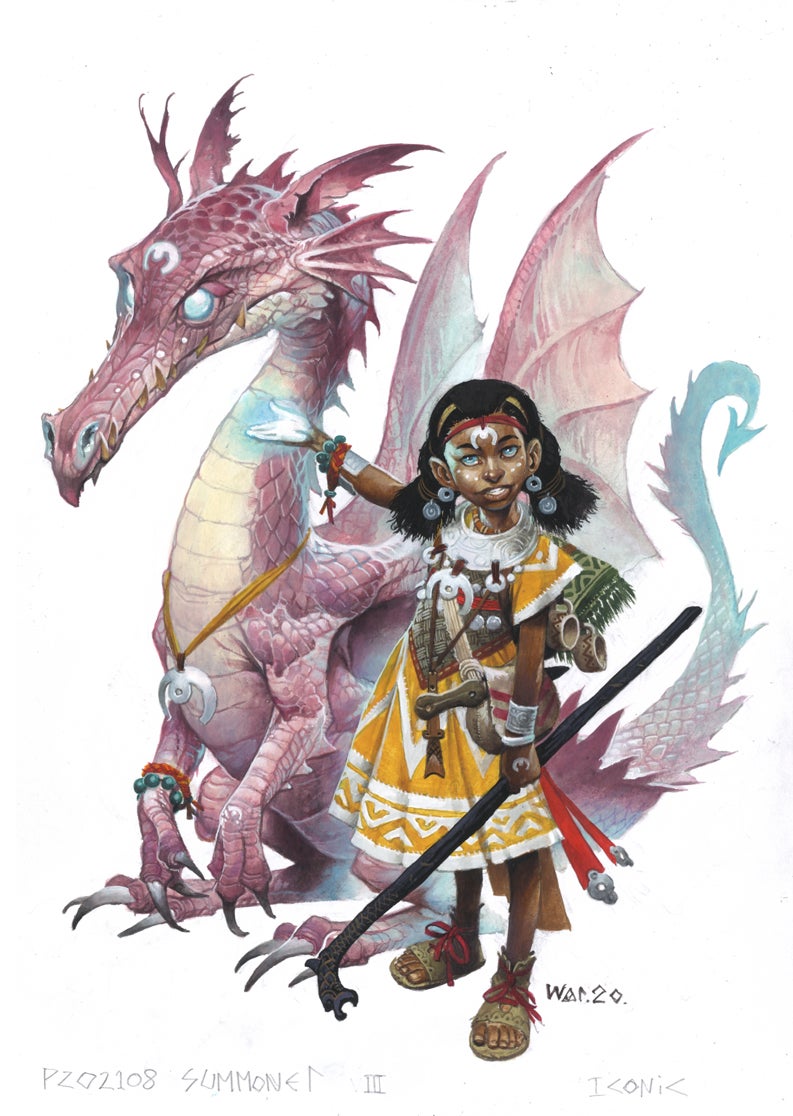
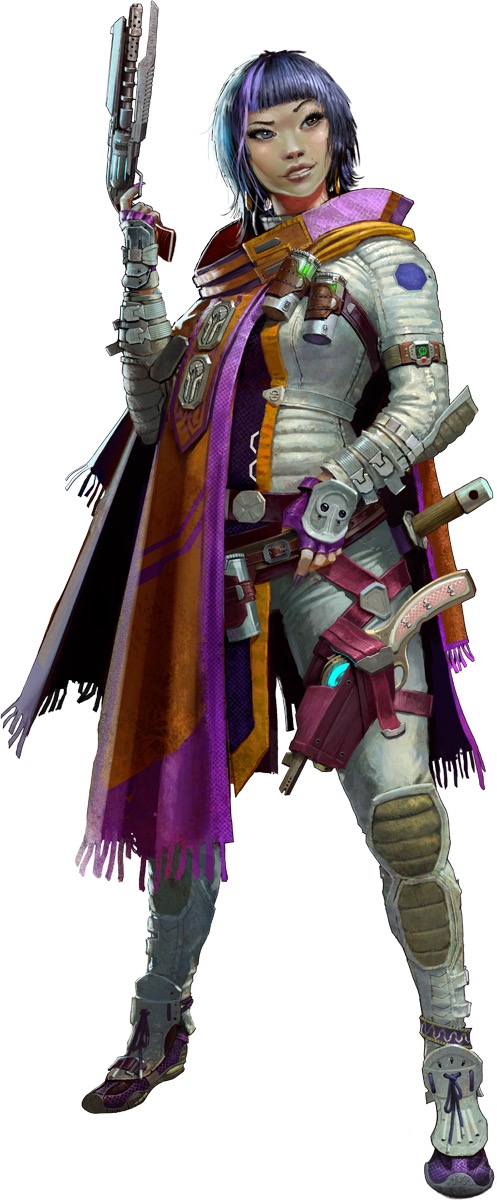
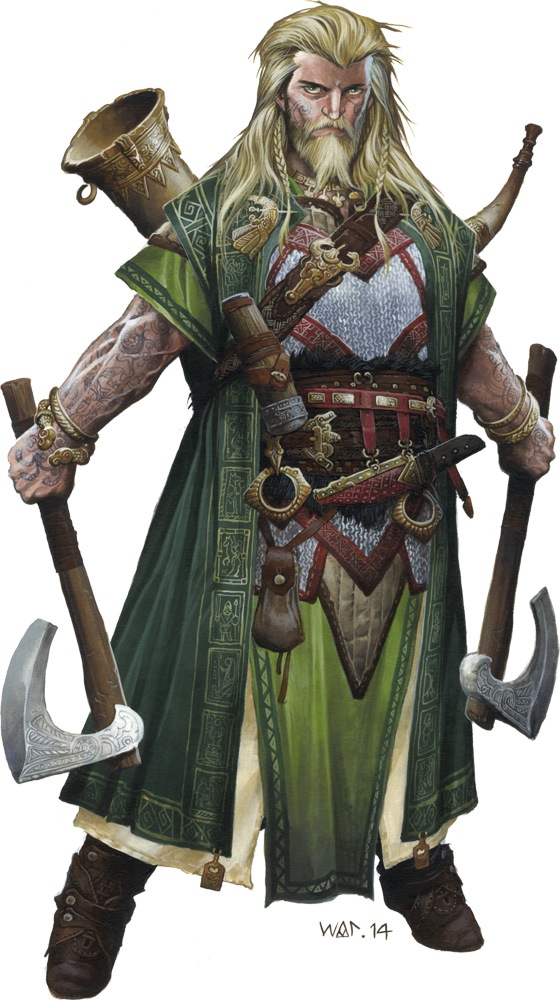
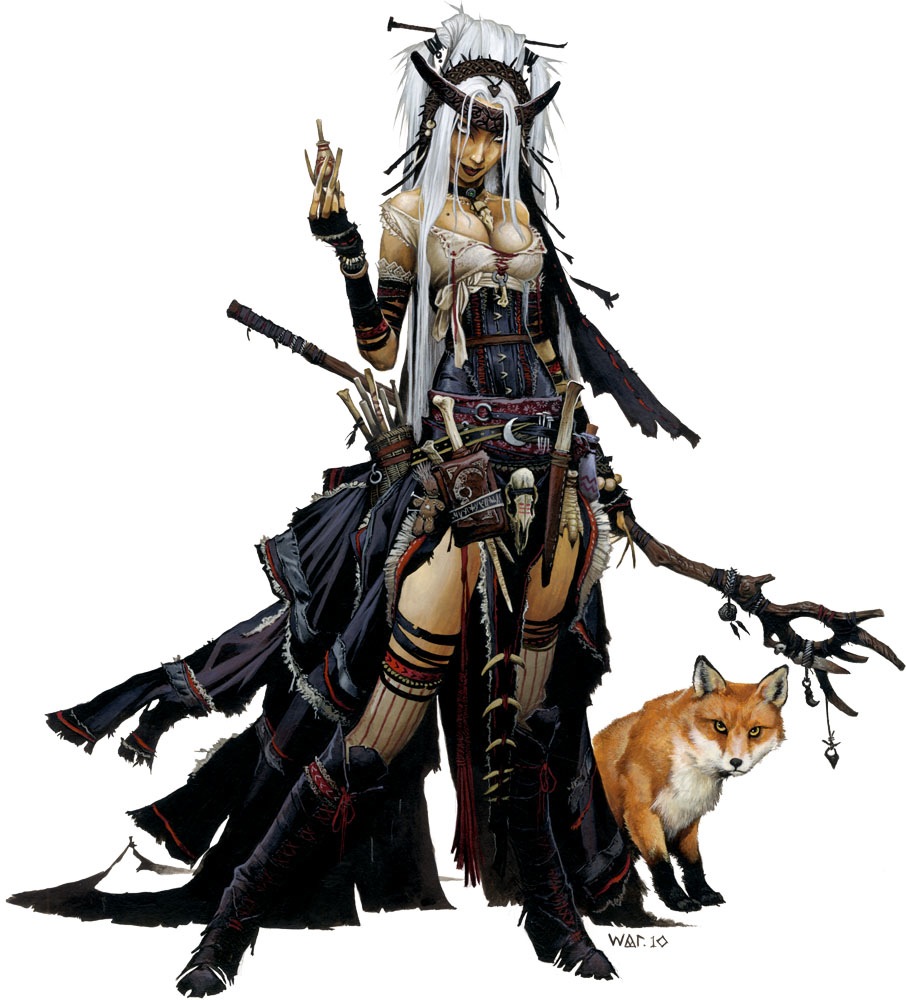
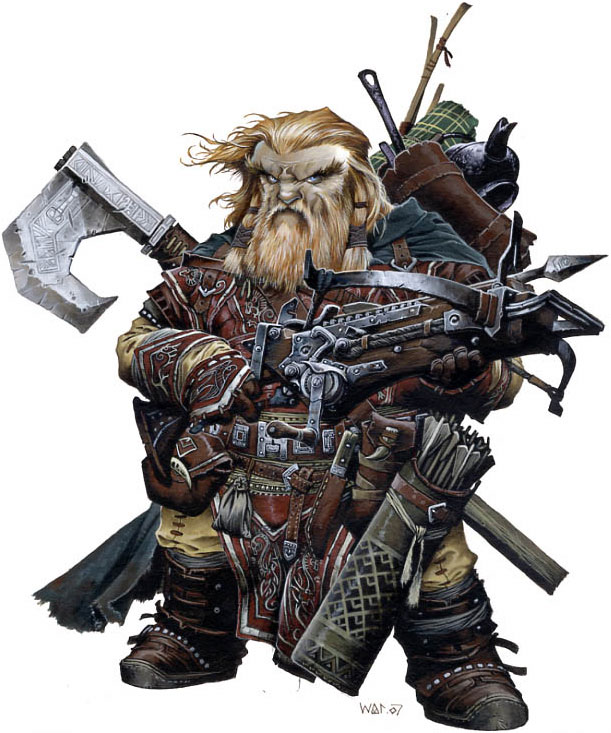
Born in a small village north of Trollheim in the Linnorm Kingdoms, the child who would come to be known as Feiya was the daughter of two Tian merchants from Minkai who had come over the crown of the world to Avistan to start a new life. Travelers by nature, they spent the short northern summers making slow loops through Hagreach and the Thanelands, facilitating trade. What few memories Feiya has of that life are happy ones: the jostling of wagons, the smell of campfires, and wandering alone through fields and forests, marveling as the wildness closed around her.
That happiness came to a sudden halt on the fateful day that brought her to the attention of a recently sundered coven of witches who dwelled on the border with Irrisen. Led by a particularly cruel green hag named Nysima, the coven had lost its youngest member to a squad of Blackravens from Trollheim and was still reeling from its sudden loss of power. They witnessed the child as she skipped away from the caravan stop, following a family of deer deep into the woods, and immediately set upon her.
There’s no telling what cruelties the witches would have visited upon the girl had they not suffered their recent loss. As it was, another, no less horrific, fate awaited young Feiya. The two crones seized the child and whisked her away to the east, their mad cackling drowning out the young girl’s terrified screams. By the time they reached their snow- and thatch-covered huts, they had given the child a new name and were already envisioning the return of their lost powers.
The next twelve years were a blur of pain, terror, and misery as Feiya endured the crones’ sadistic attempts to teach her their dark craft. Alternating between tutelage and torture, the witches frequently let their cruel natures impede their instruction. For while the young girl showed unmistakable promise and aptitude, she also possessed a defiance that only the harshest of punishments could suppress. On numerous occasions, Feiya tried to escape her imprisonment, only to be tracked down and captured after no more than a few hours. The retributions for these failed attempts have scarred her body and mind in ways that no magic can ever heal.
One brisk autumn day, after being beaten for failing to properly brew a batch of poisonous blue whinnis, Feiya was sent off to gather herbs. While harvesting more whinnis root, she spied a fox watching her from atop a large rime-covered rock. Unlike the region’s typical arctic specimens, this creature had a striking red and orange coloration that stood in stark contrast to the endless snow. There was something about the way the creature watched her that beckoned to Feiya. She approached carefully, and was astonished by his calm and focus. As she neared, the fox trotted a small distance away, turned, and gave her a look that was clearly an invitation to follow. This process was repeated again and again, and before she knew it, Feiya was following the fox on another escape attempt.
By sundown, the two witches had realized Feiya’s intentions. Furious, they set off in pursuit, confident that, as with all previous instances, their hunt would be brief. This time, however, Feiya had guidance. The fox led her along trails never before seen by human nor hag, staying always just ahead and out of reach. When she needed nourishment, the fox led her to game and fresh water. When she needed rest, it stood vigil while she slept. In this manner, Feiya was able to elude capture for more than two weeks.
One particularly cold evening, however, Feiya’s luck ran out. With her pursuers hot on her trail and the fox nowhere to be seen, she found herself trapped in a river valley surrounded on three sides by impassable mountains. Feiya could sense the witches closing in, could hear their promises of pain on the chilling wind. She took shelter in a shallow cave behind the waterfall that fed the river, a curious little grotto whose far wall was emblazoned with a crude carving of a butterfly. Like an animal run to ground, Feiya steeled herself for the coming confrontation. She had come too far this time to surrender without a fight. She determined then and there that her days of living under someone else’s yoke were over. She would have her freedom, either in this life or the next.
It was at that moment that the fox reappeared. Only now, there was something different in the way he approached her. He had always shown a preternatural intelligence, but as Feiya stared into his eyes, she saw a consciousness and a determination that would have frightened her had she not come to trust the animal so implicitly. As she watched him, Feiya was startled by a sudden and overwhelming flurry of sensations invading her mind. She sank, dazed, to the cave floor as the feelings slowly crystallized into coherence. Less a voice than a series of emotions, the promise it offered was unmistakable. Feiya said nothing, but her acceptance was as clear as it was quick.
What followed will forever haunt Feiya’s dreams. Raspy promises of pain and suffering rose above the din of the waterfall as the witches drew near to cave mouth. Feiya could see the outlines of their hunched bodies just beyond the blanket of cascading water, but before she could act, another sound arose. It started as a low rumble, then quickly gained volume, drowning out both hags and water and sending tremors through the cave floor. Then the valley erupted with the screeching and roaring of what could only have been a forest’s worth of wild animals, punctured occasionally by the shrill curse of a hag.
Long minutes passed as Feiya stood, too frightened to move. Then, as gradually as it began, the noise subsided until all that remained was the crash of the waterfall. Feiya crouched down behind a rocky outcropping, afraid to leave the shelter of the cave. As the minutes turned into hours, exhaustion claimed her, and, despite her anxiety, she succumbed to a fitful sleep.
When dawn finally arrived, Feiya stepped out from the cave, not quite sure what she was expecting to see. A fresh blanket of snow had covered the land, hiding any clues she might have found concerning the events of the previous night. Yet the feeling of relief was palpable. The fox crept up and paused at her side. She was finally free.
Feiya never discusses the events of that night, nor the particulars of the strange pact she entered into. She may one day try to track down the parents she barely remembers, but for now she is content to roam the world, relishing her freedom, seeking new experiences, and developing her newfound power. Though she desperately desires the company of others, formative years spent away from civilized society have left Feiya lacking in social graces, and her awkwardness often leads to unfortunate misunderstandings. Nevertheless, her inherent good nature tends to win out, and her occasional flares of temper are countered by her steadfast loyalty to her friends. Feiya relishes travel, and having identified the butterfly carving in the waterfall cave as the found-mark of a Desnan priest, she gladly embraces that faith, hoping that her wanderings may cast more light on who she really is—and what entity fosters her magical abilities.
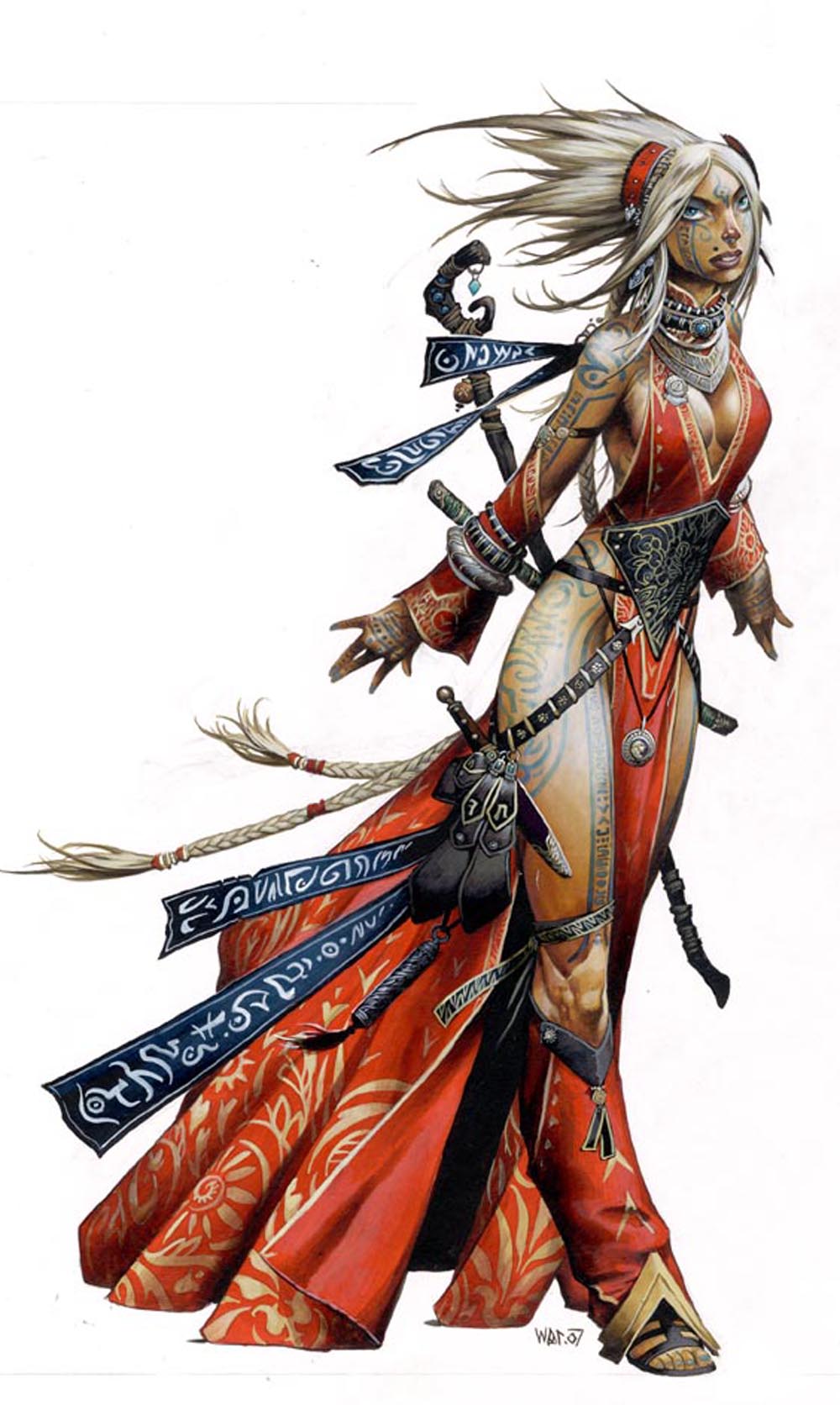
... Meet the Iconics: Reiko August 4, 2011Reiko is the iconic character for the ninja class from Ultimate Combat. To read the story for Hayato, the iconic samurai, or Lirianne, the iconic gunslinger—both classes also featured in Ultimate Combat—click here and here. ... Situated on the western coast of Minkai, Reiko’s home town of White Wave was a quiet fishing village, little more than a collection of shacks and cabins clinging to a steep cliff face overlooking the harbor. Crushed...
Meet the Iconics: Reiko
August 4, 2011
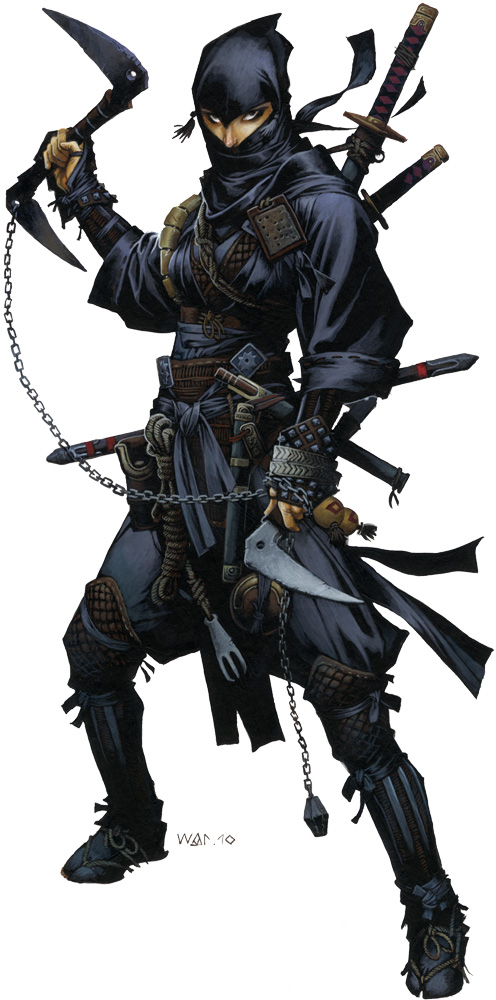
Reiko is the iconic character for the ninja class from Ultimate Combat. To read the story for Hayato, the iconic samurai, or Lirianne, the iconic gunslinger—both classes also featured in Ultimate Combat—click here and here.
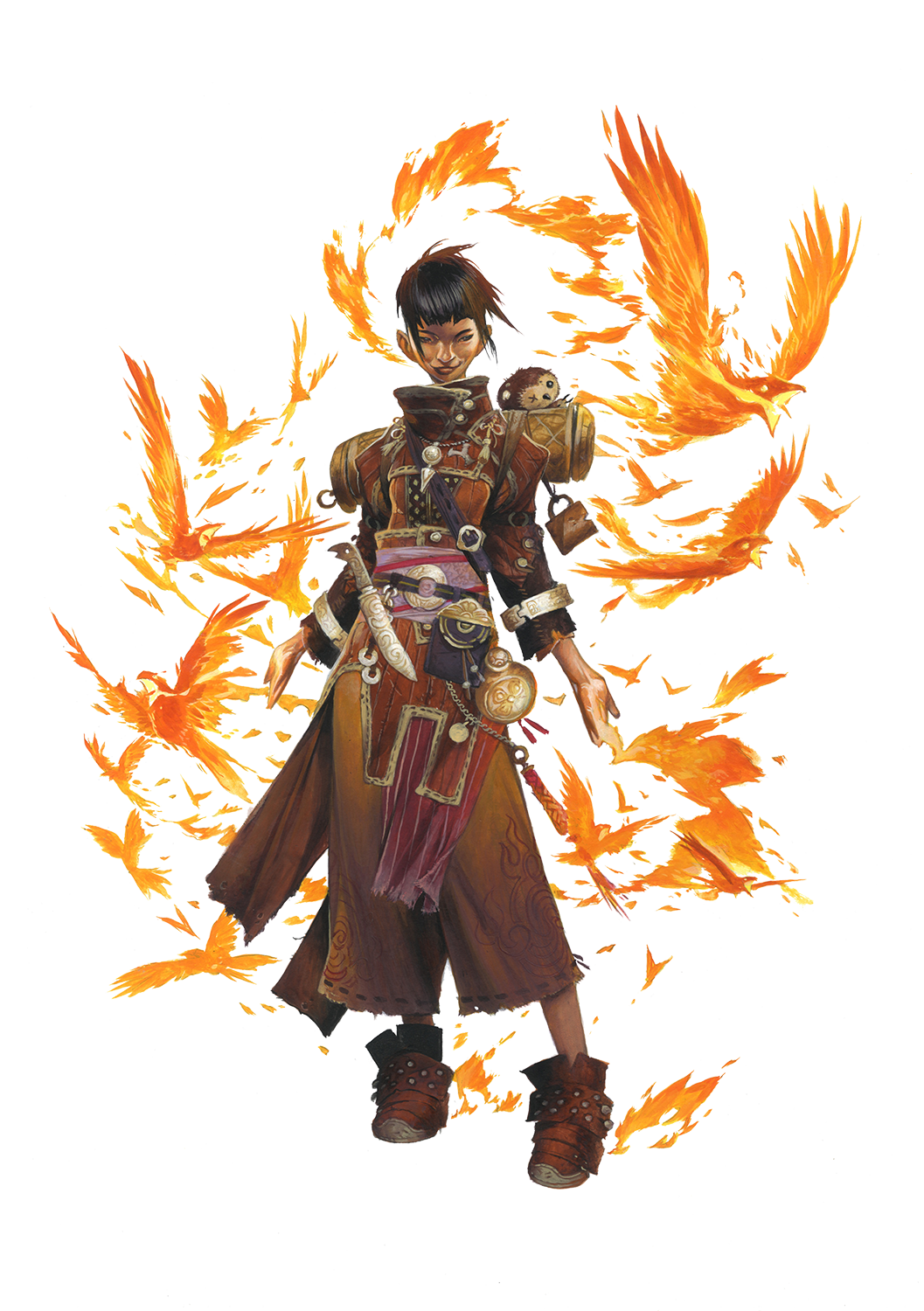
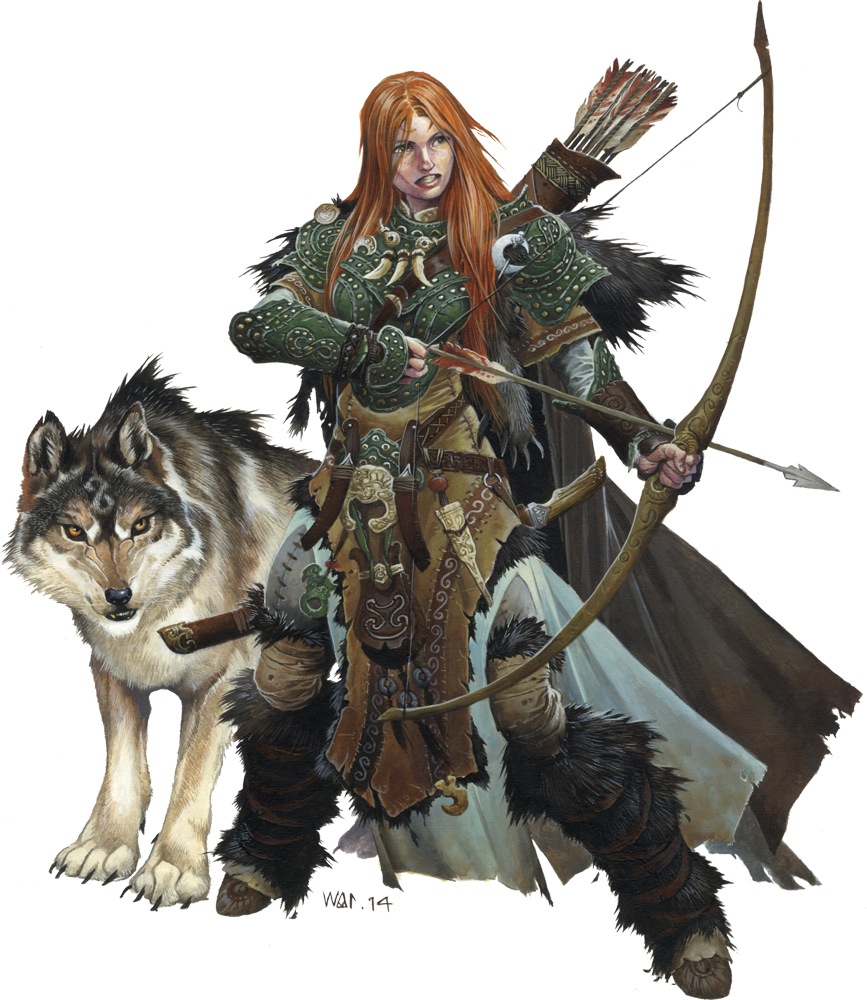
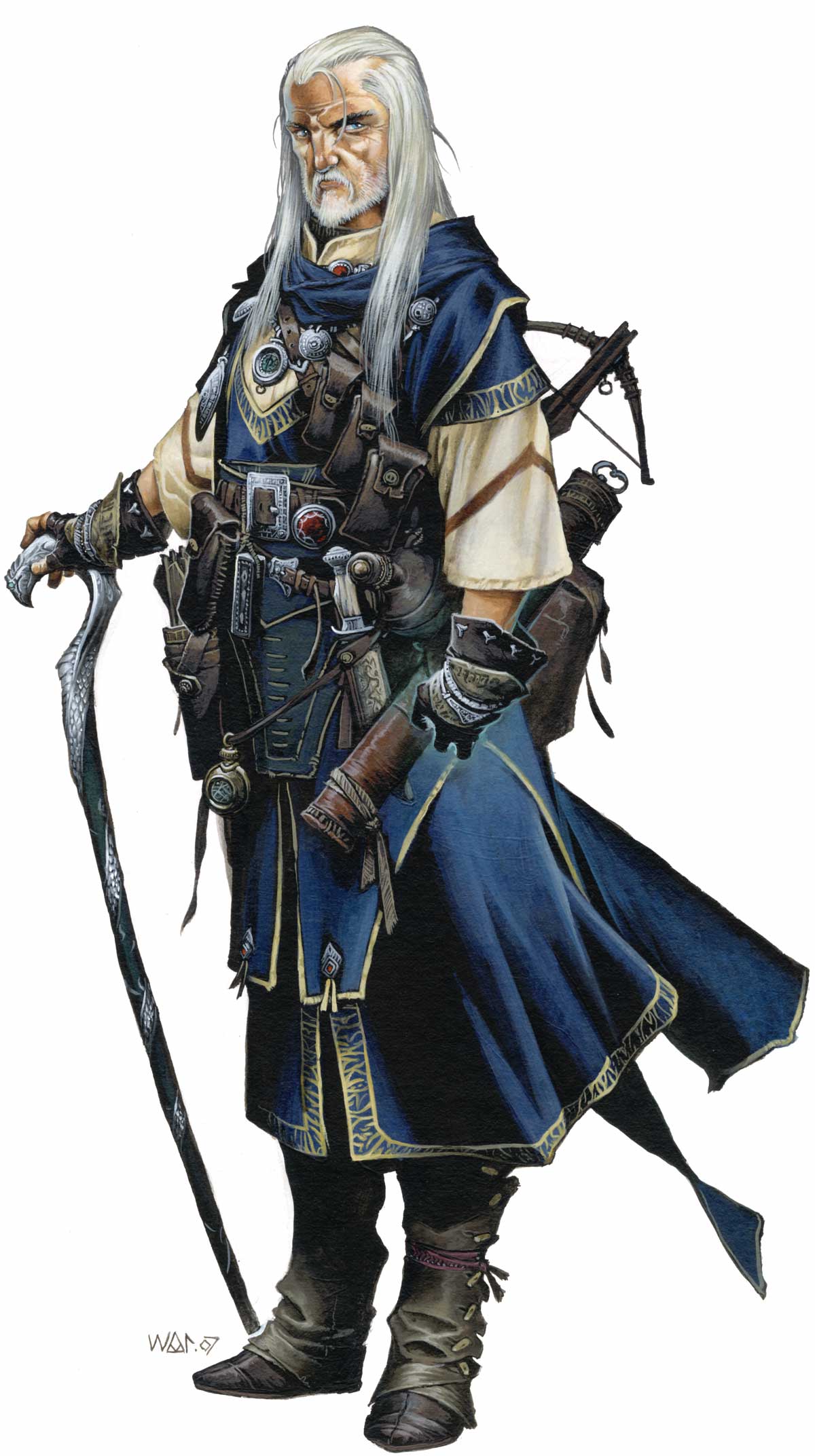
Situated on the western coast of Minkai, Reiko’s home town of White Wave was a quiet fishing village, little more than a collection of shacks and cabins clinging to a steep cliff face overlooking the harbor. Crushed under oppressive humidity in the summer, the air thick with clouds of stinging flies and gnats, and subject to dangerous storms in the winter, White Wave had little to offer any lord, and thus little was demanded of it.
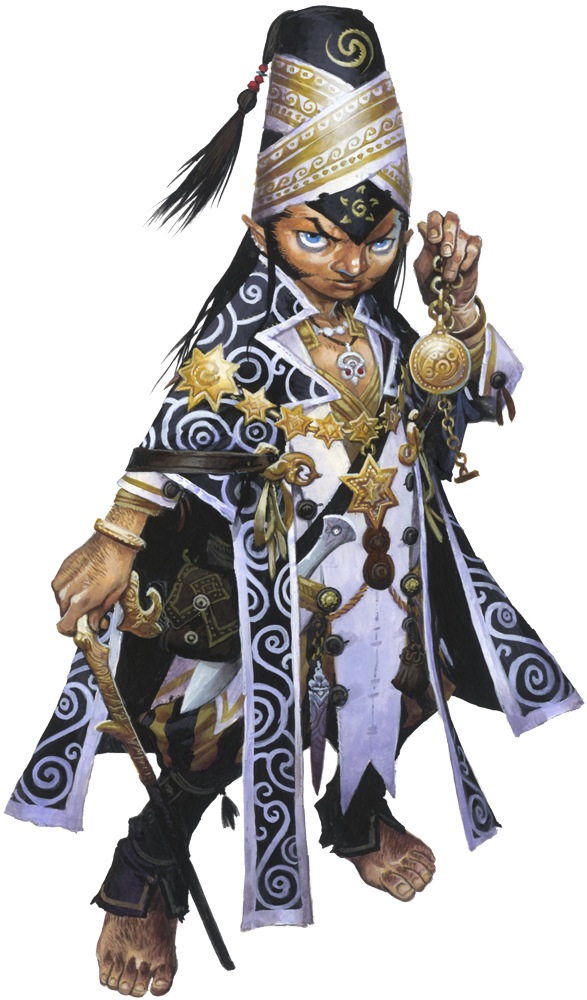
Illustration by Wayne Reynolds
All that changed when Reiko was twelve. Due to bureaucratic disputes and shifting borders between noble fiefdoms, White Wave fell under the control of a new lord—Entobe Hisashi—and this one had grand plans for the holding. The sea cliffs would be the perfect place for a new shrine, a series of shining towers that would please the gods and bring favor upon the Entobe family for generations. An ambitious project, it would take many hands to complete. And Lord Entobe knew precisely where to find them.
When Reiko thinks of her childhood, she no longer remembers searching through tide pools, or climbing high up the dangerous cliff walls to the sounds of her mother’s laughter and her father’s anxious scolding. Instead, she remembers the smell and taste of rock dust in her mouth, her fingernails smashed and bleeding from hauling rocks. She remembers the long hours of toil in the cruelly hot sun, carrying water for the townsfolk forced to cut stone in the quarry, their fishing dories left to rot in the harbor. Yet most of all, she remembers the faces of her parents growing steadily leaner as they made her take their rations of rice and soup.
For many months, the people toiled. Lord Entobe’s enforcers brooked no laziness—as they deemed it when the old or young keeled over from exhaustion—and punishments were severe. The village’s tiny graveyard filled quickly, and soon bodies began to wash up on the shore as townsfolk too exhausted to dig graves cast their deceased loved ones into the sea.
And then, seemingly overnight, the gods turned against the project. Shortly after dusk one night, three of the five tower foundations collapsed, killing one of the crueler taskmasters. Though it meant months more work, the people secretly took joy in the irony, and that joy sustained them as they began to clear away rubble and rebuild. Yet strange things kept happening to the necessary supplies. Tools were broken. Timbers rotted. Stone turned brittle, and rope frayed and snapped. Guards died in mysterious ways, always seemingly accidental. The fury and fear of the overseers and the architects was a wonder to behold, and the common folk secretly toasted whatever kami were responsible.
Only one house did not share in the amusement. Though they said nothing to her, Reiko could tell that her parents were tense, and the arguments that came through her walls after they thought she was asleep ran late into the night. And then one painfully hot summer evening, unable to sleep despite her exhaustion, Reiko left her room and found a black-clad figure crawling through a second-story window.
Before Reiko could scream, the figure was at her side, hand covering her mouth. And then the tight-fitting black cowl was removed, and Reiko was looking into the solemn eyes of her mother.
After that night, many things changed. Reiko learned that her mother was no shepherd girl from the inland fields, as she had always been told, but had instead grown up in the mountains as part of a clan of ninja, a deadly but honorable band of assassins and spies with a history going back hundreds of years. On the run after an ill-fated ambush, she hid out in the tiny village and fell in love with a simple fisherman—Reiko’s father. Despite her husband’s concern and disapproval, Reiko’s mother began to teach their daughter some of the secrets of the clan. Though she flatly refused to take Reiko on any of the solitary raids with which she plagued Entobe’s people, the two spent many hours together in the darkness, climbing the cliffs of White Wave, practicing with the swords her mother kept hidden in their rafters, and moving silently across rooftops and ship rigging. Reiko proved a capable student, and at last there was something to look forward to after days of backbreaking labor.
And then Reiko’s mother went too far. Caught in the act of sabotaging a stone-hauling cart, she killed several of the overseers before escaping back to their home. Immediately she hid her gear in the midden and put an end to her and Reiko’s midnight activities. But it was too late.
Furious, Lord Entobe himself came to the site, arriving in a grand procession of warriors, spellcasters—and investigators. The afternoon after his arrival, he halted construction and ordered the townsfolk to assemble. Reiko and her mother—both assigned to the task of serving tea to the guards for the day—stood at the back of the crowd, watching Entobe take the makeshift stage that had been erected in his honor.
Addressing the crowd, Entobe announced that the person behind the attacks had been discovered, and that the treachery in their midst would be ending. Then he held up a familiar object—the black mask belonging to Reiko’s mother, still damp and stained from the trash heap.
That was when the guards parted ranks to reveal Reiko’s father, bound at wrists and ankles. There was no mistaking the gash across his throat, nor the red stain trailing down his shirt.
Reiko shrieked and rushed forward, but her mother caught her shoulder and spun her around. Their eyes met.
“Run, little spider,” her mother said. Then a hidden blade dropped from her sleeve into her hand, and she leapt for the mob of guards on the stage.
Reiko ran. Using all the skills her mother had taught her, she slipped out of the village and away down the cliffs, evading Entobe’s guards and dogs. For days she ran along the sea’s edge, keeping to the stones at low tide to leave no prints or scent trails, until she was sure that she was far from Entobe’s holdings. Then she turned east, into the mountains, in search of her mother’s clan.
In the end, she found them—yet not in the way she expected. For Entobe had also uncovered her mother’s clan allegiance, and in a fit of pique had hired them to hunt down any remaining members of her family. One again, Reiko found herself on the run. And this time she didn’t stop until she was far, far to the west, on the shores of a strange land called Avistan.
Today, Reiko is a grown woman. Cool and aloof, quick with a cutting remark or withering glare, she’s nevertheless managed to get along for nearly ten years in a land where Minkai itself is a legend, and ninja are little more than exotic fairy tales. Though she’s studied with the most capable thieves and assassins in the region, Reiko has yet to find the carefully codified engagements of honor and subtlety that her mother spoke of, and grows tired of Avistan’s seemingly endless collection of brute highwaymen and lowbrow killers. Still, the lack of corrupt lords like Entobe in places like Andoran—her new nation of choice—is a small comfort, and she’s heard whispers that a secret branch of the Eagle Knights may be exactly what she’s looking for. Regardless of whether such rumors pan out, and despite a decade on foreign soil, Reiko still views her time around the Inner Sea as a training exercise. Someday soon, she’ll retrace her steps back to Minkai. And when she does, both the Entobe family and her mother’s traitorous clan will finally learn the magnitude of their mistake.
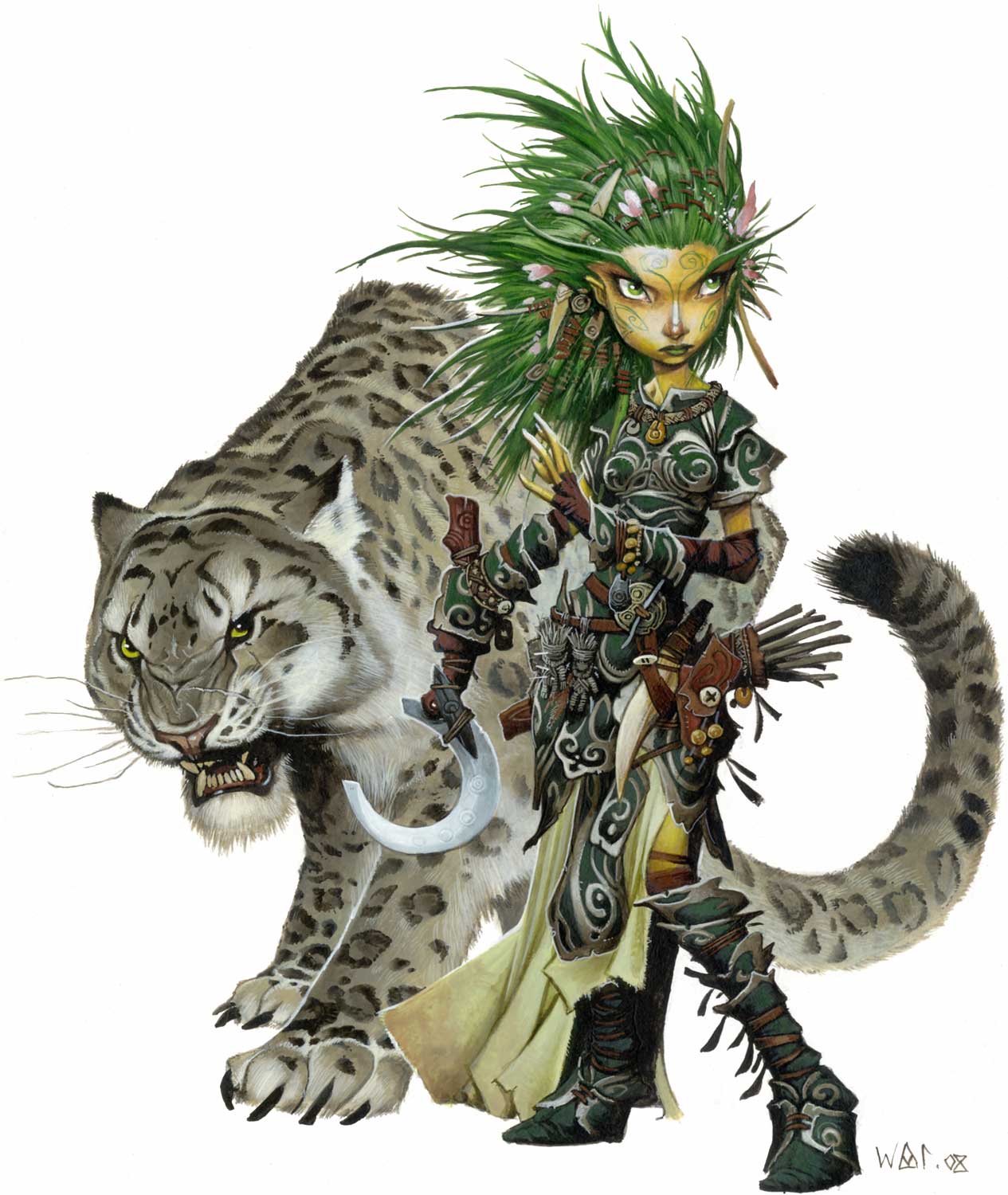
Meet the Iconics: Lirianne Thursday, July 28th, 2011Lirianne is the iconic character for the gunslinger class from Ultimate Combat. To read the story for Hayato, the iconic samurai—another class featured in Ultimate Combat—click here. ... Shieldmarshal Dahmok's greatest failing was teaching his middle daughter to read. After the loss of their mother, a lively but capricious elven explorer who viewed ten years and three children as a fling, he had hoped to rear homebody children....
Meet the Iconics: Lirianne
Thursday, July 28th, 2011
Lirianne is the iconic character for the gunslinger class from Ultimate Combat. To read the story for Hayato, the iconic samurai—another class featured in Ultimate Combat—click here.
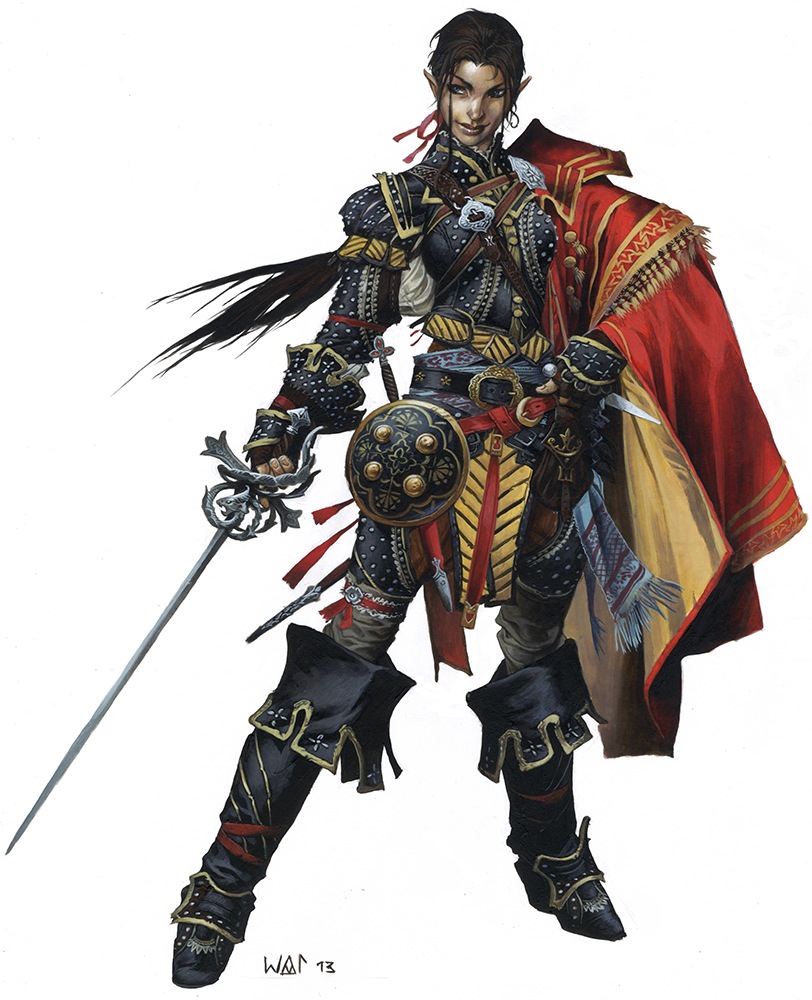
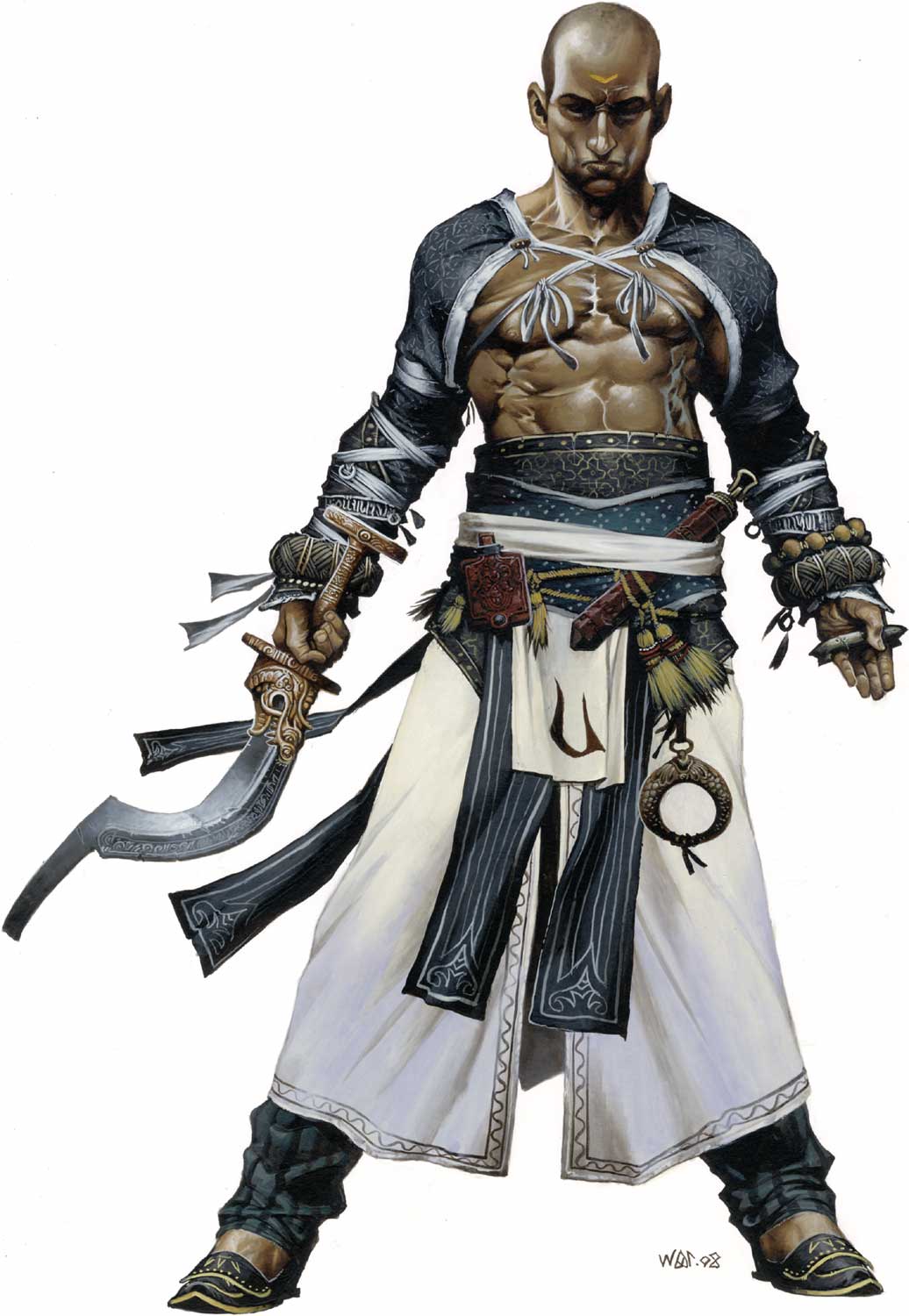
Shieldmarshal Dahmok's greatest failing was teaching his middle daughter to read. After the loss of their mother, a lively but capricious elven explorer who viewed ten years and three children as a "fling," he had hoped to rear homebody children. Even with their halfblood status stretching the years he spent with his treasured children, the old marshal shuddered at the knowledge that one was already slipping away.
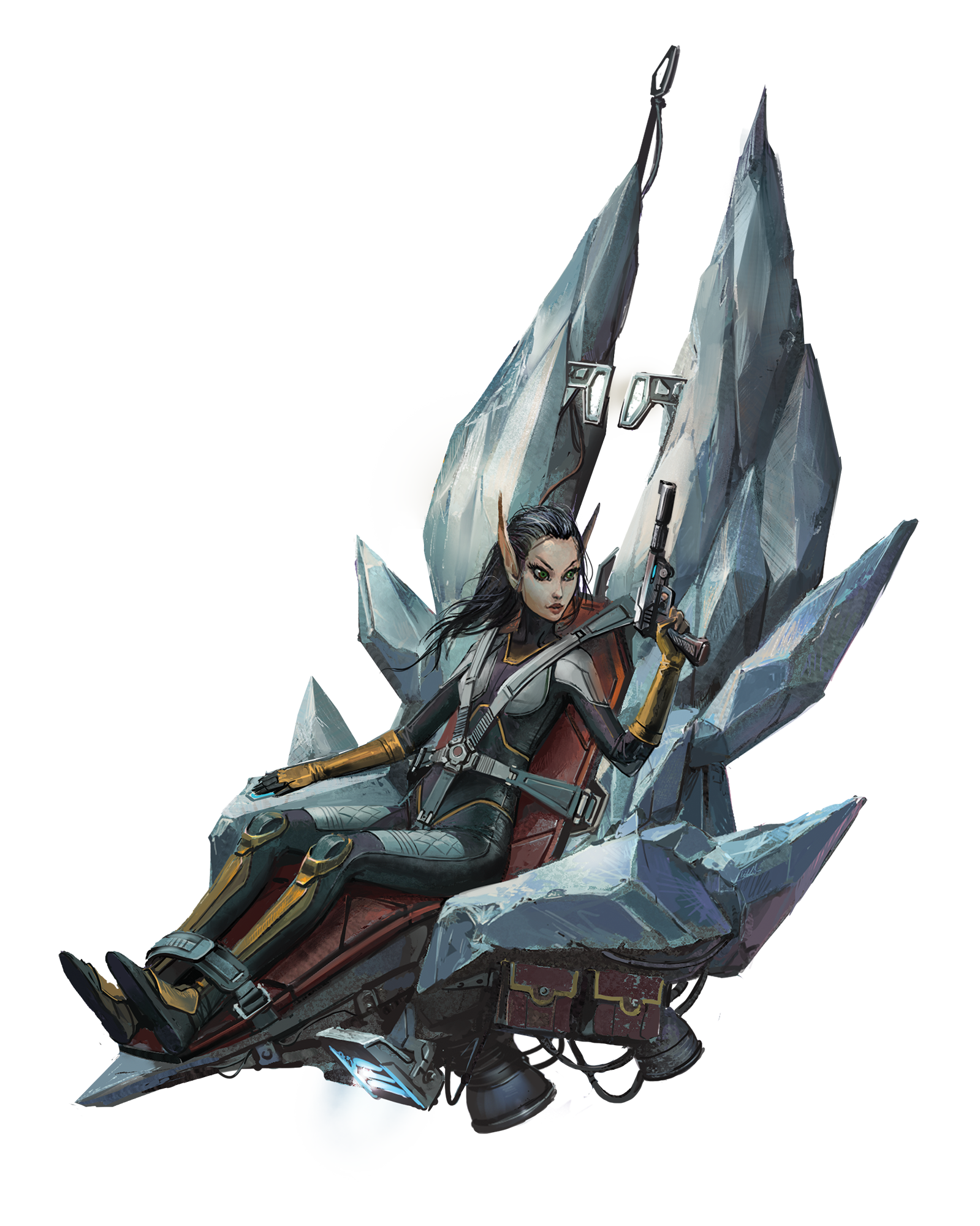
Illustration by Wayne Reynolds
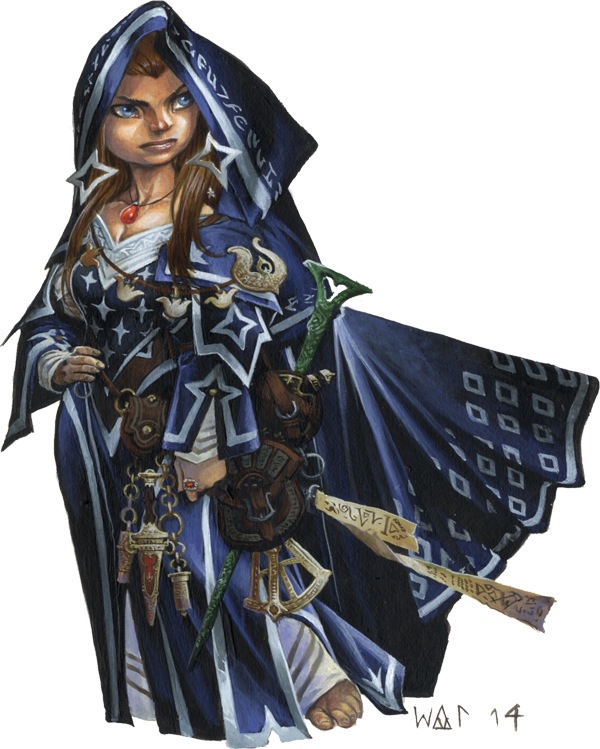
While older Suzeressa took to the practical household arts and younger Milliceene pursued a love of natural sciences, middle-born Lirianne lost herself for hours at a time in tales of shining knights, devious fairies, and mighty dragons—all subjects absent from her homeland of Alkenstar. Raised among bricks, smoke, and bureaucracy, the young half-elf dreamed of the life of adventure and fantasy promised by the collection of fairy tales left by her absent mother and her own ever-growing library of penny dreadfuls. Naturally, she aspired to follow in her father's footsteps and become a shieldmarshal, protecting Alkenstar from the hostile giants and hideous mutations of the Mana Wastes. Preferring to keep his little girl safe at home, Dahmok calmly explained she could never become a shieldmarshal, running with the first excuse he could come up with—that her beloved long hair would become entangled in firearm mechanisms. To his surprise, he awoke the next morning to discover Lirianne grinning like a fool, with her long tresses roughly chopped, eagerly packed and ready to follow him to work.
For twenty years, the little half-elf pushed herself to meet ever more insane requirements laid down by her aging father. Schoolmates nicknamed her "the Phantom" as she vanished often to practice her quick draw or memorize technical volumes. Tutors and governesses thought her adle-brained as she sat staring, redrawing engineer's schematics in her mind rather than follow her lessons. Even before she was old enough to entertain her first romance, she had mastered the construction and firing of a rifle, and could reckon complex trajectories by eye alone.
An old man and long since retired by the time his daughter reached womanhood, Dahmok could no longer forbid her entry into the shieldmarshals. But the old patriot's influence lived on in his successors, and to honor his service they assigned Lirianne to a quiet domestic position, safeguarding farming settlements along the secure Alkenstar-Martel road. Ten years of her life passed rounding up drunks and mediating water rights, eating away at her passion for adventure in ways her father's disapproval never could. Her childhood dreams eventually forgotten, Lirianne's steely eyes dulled with the tarnish of a thousand mundane details.
It was kismet when a storm of wild magic blew off the Spellscar Desert, past Alkenstar, and into her jurisdiction. The rampant arcane energy, fallout from centuries of wizard warfare, warped space and time around it. The magical swells lashed out, reshaping hillsides, boiling sand into glass, and calling forth bizarre creatures from the dawn of history. The only marshal at hand, Lirianne leapt into service. As townsfolk huddled in their cellars and buildings crumbled into twisted forms of misbegotten wood and bone, a bolt of green lightning lashed out, striking the half-elf even as she confronted the storm's abominations.
Lirianne awoke soaking and half-drowned on distant shores. The bizarre country was flush with thick forests and green hills—plant life like she'd never seen. Wandering inland, she soon encountered a lumber caravan beset by malicious fey. In a heartbeat, a childhood's worth of stories welled up inside her, and she rushed into battle with a passion long since forgotten. The grateful caravan loaded her with all the supplies and information she could manage, confirming that her inexplicable odyssey had deposited her cleanly in the midst of those same shining knights, devious fairies, and mighty dragons who had occupied so much of her youth.
Now a wanderer in the strange land of Avistan, Lirianne struggles to balance her resurgence of childhood wonder and adult dedication to justice, all while confronting her long-ignored elven blood. While thoughts of family and the familiar industrial life of Alkenstar occasionally tug at her roaming heart, sights remain unseen and people remain unsaved, and Lirianne will be damned if she'll fail in either.
Meet the Iconics: Hayato Wednesday, March 30th, 2011Honor is strength. It is a maxim that Nakayama Hayato has known since birth, and one whose barbs he still feels deep in his flesh. Yet Hayato also knows a deeper truth: that just as a sword must bend to avoid breaking, so too must honor. And the more rigid the steel, the easier it shatters. ... Illustration by Wayne Reynolds Hayato was born a retainer on the estate of Lord Nakayama Hitoshi, just a few days' ride from the great city of Oda in...
Meet the Iconics: Hayato
Wednesday, March 30th, 2011
Honor is strength. It is a maxim that Nakayama Hayato has known since birth, and one whose barbs he still feels deep in his flesh. Yet Hayato also knows a deeper truth: that just as a sword must bend to avoid breaking, so too must honor. And the more rigid the steel, the easier it shatters.
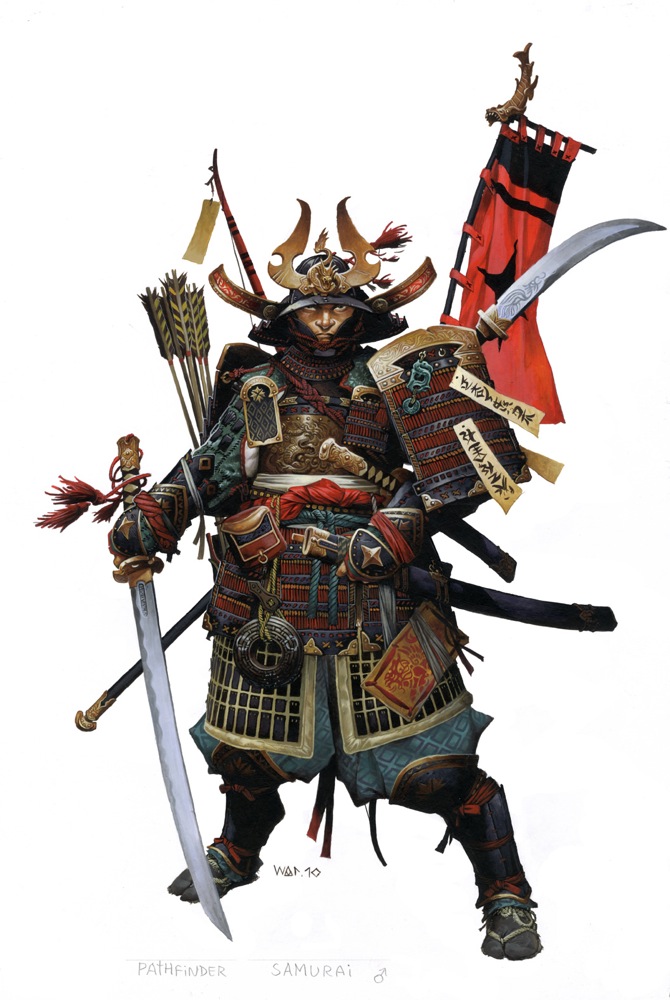
Illustration by Wayne Reynolds
Hayato was born a retainer on the estate of Lord Nakayama Hitoshi, just a few days' ride from the great city of Oda in Minkai. The son of the chief falconer and his wife, Hayato—whose name means "falcon"—quickly proved just as proficient with the dangerous birds as his father, emulating their proud and fierce natures.
It was while accompanying his father on one of Lord Nakayama's hawking outings that he first came to the lord's attention. At eight years old, Hayato was assigned the honor of being the personal attendant to the lord's son, Masao, assisting the privileged child with his falcon. All went well until the noble son, still new to the sport, mishandled his bird and nearly lost an eye for his trouble. The furious lordling prepared to kill the falcon then and there, but Hayato interceded, explaining the boy's error. Enraged even further, Masao began beating Hayato, drawing the attention of the rest of the hunting party. Though Hayato bowed low and accepted the savage blows of his master, he neither cried out nor begged for mercy. When Masao finally tired, Lord Nakayama himself addressed the bloody servant child, asking him why he had been so bold as to correct his superior. Without faltering, Hayato bowed to the lord and said simply, "Because it was the truth."
From that point on, Lord Nakayama took the young Hayato under his wing, frequently assigning him duties within the manor house, engaging him as a companion for his son, and seeing to his education in matters both martial and intellectual. In time, Hayato grew to become a powerful warrior, rising to the position of head samurai of the Nakayama holdings. When Masao died in a drunken duel at the age of twenty, thus depriving Lord Nakayama of an official heir, the bereaved lord began to look more and more to Hayato as a son, even allowing him to take the family name.
Yet Masao's death was only the beginning of the Nakayama family's misfortune. It was shortly after this episode that the Nakayama estate was visited by Kaneka Yoshiro, a traveling lord and government official with a position high in the Imperial Court. With considerably more prestige and official sway than Nakayama, Kaneka was received with full honors—yet it quickly became apparent that the guest was interested in more than just hospitality. Within a few days, Kaneka's cunning insults, lewd advances toward Nakayama's wife, and barely concealed challenges to Nakayama himself left Hayato's lord with no choice. Honor forbade him from allowing the slights to stand unanswered, yet challenging a governmental superior was as good as a death sentence.
In the end, honor won out, just as Kaneka knew it would. Nakayama challenged Kaneka to a duel, and was quickly slain by the talented swordsman. In recompense for the "insult" Kaneka had suffered, the Imperial Court allotted all the Nakayama holdings to Kaneka. Nakayama's widow, faced with the prospect of a dishonored existence among peasants, had no choice but to accept Kaneka's proposal of marriage if she wanted to retain her position.
Though the Nakayama samurai were bound by direct order of the court to honor their new arrangement—and plied with substantial gifts by their new master—Hayato saw the theft for what it was. Several nights later, having watched Kaneka's celebrating guards drink themselves into unconsciousness, Hayato crept into his former master's bedchamber and confronted the usurper even as he lay sleeping with his new wife. Though Kaneka screamed for his retainers, in the end it became clear that his only option was to fight. Taking up the sword that Hayato tossed onto the bed, Kaneka did everything he could to kill the samurai quickly, yet Hayato would not be denied his revenge. At last, bleeding from several terrible wounds, Hayato succeeded in getting past the noble's guard, ending his short-lived dominion over the Nakayama estate in a fine spray of blood.
As Kaneka fell to the floor, pink froth spilling from his lips, Hayato dropped his sword and knelt beside it. Knowing that to attack any lord in this manner—let alone the man the government considered his rightful master—would bring sure execution, he drew his tanto and prepared to die with his honor intact.
A hand on his shoulder stayed his blade. When Hayato looked up, he beheld Lady Nakayama—now Lady Kaneka—in her dressing gown, its yellow silk stained with the blood of her most recent husband. With tears in her eyes, she thanked Hayato for avenging Lord Nakayama and returning the estate to her control. Yet with her next breath, she condemned him forever. Taking his hand in her own—an undreamed-of show of affection and familiarity—the noblewoman forbade Hayato from taking his own life. Instead, she snuck him out of the manor and into a carriage bound for Oda, with only a string of coins, his armor, and a command to live as best he could. When the morning sun rose, it found Hayato on a caravan traveling north, bound for the icy reaches of the Crown of the World and from there on to the mysterious lands of the Inner Sea.
Now in his mid-thirties, Hayato is a hard man who keeps to himself. Though he has long since learned to speak Taldane, he remains terse by nature, feeling that everyone in his new home speaks too much but says too little. He operates as a fearless and talented mercenary—or ronin, as he terms it—for those whose cause seem righteous, yet refuses to bow to anyone regardless of status, saying only that he has had his fill of masters. Hayato is loyal to those few friends who can get past his stone-faced demeanor, yet remains secretly tortured by his conflicting senses of honor. To continue living as a masterless samurai—let alone one who has committed a great crime—is shameful, yet to deny Lady Nakayama's command would be equally shameful. With no clear answer, Hayato has temporarily shelved the problem. Yet deep in his heart, he harbors a secret hope: that perhaps one day he might raise an army of champions and take it back over the Crown of the World, rooting out the corrupt politicians of his homeland and restoring the honor of himself, his adopted family, and the samurai code he was born to uphold.
James Sutter
Fiction Editor
NOTE: Artist Wayne Reynolds and Paizo Publishing will be auctioning off the original art for Hayato, with all auction proceeds being donated to the Red Cross to help Japan recover from the earthquake and tsunami—check this blog tomorrow for details on how you can help!
Stop flyting, you two! Friday, March 18, 2011 As you may recall, last month Pathfinder fiction author Kevin Andrew Murphy temporarily lost his mind and wrote us a full heroic crown of sonnets featuring 15 of our iconic characters, then sent it to us as a Valentine's Day present. We posted it on the blog, and folks seemed to enjoy it. Perhaps too much. ... Never one to back away from a challenge, Kevin has now written another poem dealing with the Pathfinder iconics and posted it on the...
Stop flyting, you two!
Friday, March 18, 2011
As you may recall, last month Pathfinder fiction author Kevin Andrew Murphy temporarily lost his mind and wrote us a full heroic crown of sonnets featuring 15 of our iconic characters, then sent it to us as a Valentine's Day present. We posted it on the blog, and folks seemed to enjoy it. Perhaps too much.
Never one to back away from a challenge, Kevin has now written another poem dealing with the Pathfinder iconics and posted it on the messageboards, this time in honor of St. Patrick's Day. The poem—made up of linked limericks—is of a tradition known as "flyting," a very old practice in which two parties exchange over-the-top and often lewd insults in verse. (Think of it as a medieval rap battle.) In this case, the two competitors are Alain and Lem—apparently, nobody told the cavalier that it's unwise to take on a bard in an insult contest.
While things get a bit bawdier than we can post on the blog, those who don't mind a little crudity in their poetry may want to head over to the thread and read it for themselves. Having such a thriving fan fiction community is always fun and flattering, but this... well, this is definitely a new sort of animal!
Kudos to Kevin, and let us all hope they continue to offer internet access in his padded cell....
Iconic Love Monday, February 14, 2011For some of us, Valentine's Day is just another day. We go to work, come home, maybe hang out with our significant others a bit or send the kids off to the sitter for a rare night out. For other people, however, Valentine's Day carries more significance, and flat-out demands acknowledgement. They see it as an excuse to truly cut loose, to go all-out with the romance and treat it like a real holiday. ... And then, apparently, there's a third type of person:...
Iconic Love
Monday, February 14, 2011
For some of us, Valentine's Day is just another day. We go to work, come home, maybe hang out with our significant others a bit or send the kids off to the sitter for a rare night out. For other people, however, Valentine's Day carries more significance, and flat-out demands acknowledgement. They see it as an excuse to truly cut loose, to go all-out with the romance and treat it like a real holiday.
And then, apparently, there's a third type of person: the type for whom Valentine's Day means a chance to go totally insane. Such appears to be the case with Pathfinder Tales author Kevin Andrew Murphy. How else can you explain the fact that he chose the occasion to, without any prompting or warning, write us an entire heroic crown of sonnets immortalizing the iconic characters' backgrounds in prose. (For those of you who've forgotten your 400-level literature classes, a "heroic crown of sonnets" is a specialized form of poetry in which you have 14 sonnets, each linked by their first and last lines, plus a fifteenth which is made up exclusively of the previous sonnets' linking lines, in order. Needless to say, it's incredibly difficult to do well.)
I'd say more, but I'm still processing the whole thing, so I think it's better to just post the sonnets in their entirety. Happy Valentine's Day!
The Fifteen Loves of Golarion
A Heroic Crown of Sonnets for Valentine's Day 2011
by Kevin Andrew Murphy
1. Alain, the Cavalier, "For Love of Glory" I am the one who lives to tell the tale.
The victor is the braggart of his fame,
The first to know the glory of his name
But not the last. The bards now all regale
The common folk with ballads of my deeds,
The battles won by force of my prowess,
The ransomed kings who've bowed to my duress,
And Donahan, the noblest of steeds.
Sometimes I think he is my only friend.
The men I ride with? Those I can replace.
The maids I bed? Each just a pretty face.
Yet Donahan is mine till journey's end.
If he falls first, then part of me is dead.
I've said the words that needed to be said.
2. Alahazra, the Oracle, "For Love of Truth" I've said the words that needed to be said,
For Truth is blind, and I am blind in truth.
My clouded eyes see little but forsooth
My inner eye sees clearly. I have read
The fates of men with but the barest glance.
I know the future as I know the past,
Which seeds will sprout and which of them will last,
For Destiny leaves nothing up to Chance.
It was not Chance that burned me with its fire.
The simoom's breath is but the Wind of Fate
That claimed me with its Flame. I now relate
The Fate of Love, if that is your desire:
All present loves become in days ahead
Mementos kept in memory of the dead.
3. Seelah, the Paladin, "For Love of Those Now Gone" Mementos kept in memory of the dead,
Reminders of what nothing can restore.
The wingéd helm that dead Acemi wore
Now hides my face and my unworthy head.
I feel its weight: part guilt, part gift, part theft.
Part love. She saw and yet forgave her thief,
The child who stole her helm. Ergo, my grief.
Acemi is still dead and I am left.
I have no words to say in my defense.
I know my deeds. I must have faith in grace
So now I wear her helm and take her place.
What Iomedae learned: Inheritance,
A gift of trust from those you must not fail
Now silent in the realm beyond the pale.
4. Harsk, the Ranger, "For Love of Solitude" Now silent in the realm beyond the pale,
My brother lies–and those who took his life.
I ended theirs with crossbow quarrel and knife.
The giants dead, now I alone prevail.
My kin who dwell below with bended backs
To toil at the forge or in the mines,
Or worshiping our gods at dwarven shrines,
Have my regard, and yet my brother's axe
Is all I bear away from whence I hail.
A hunter's life is love of solitude.
A Spartan camp, a pot of tea fresh-brewed
Will keep him more alert than mugs of ale.
My quarry's tracks are runes left for the sage.
I know the letters written on this page.
5. Ezren, the Wizard, "For Love of Scholarship" I know the letters written on this page,
My father charged with some impiety
Against our god, some awful blasphemy
Too dire for words, and nothing can assuage
The gossips' tongues, for rumor needs no proof.
And Abadar? The merchant god cares not
Who prospers or who fails nor what is bought.
The Golden One stays in his Vault, aloof.
I spent my youth to clear my father's name,
In quest to save the business that he built,
But in the end I only proved his guilt.
Now scholarship's the only love I claim.
Yet law for arcane law can be exchanged.
Old orders sometimes must be rearranged.
6. Sajan, the Monk, "For Love of a Sister" "Old orders sometimes must be rearranged."
So said the monks when taking twin from twin.
My sister Sajni's gone. I should begin
Describing how we came to be estranged.
We were conceived. Our lives were intertwined
Like threads of web and woof strung on a loom,
So were our limbs locked in our mother's womb.
Though born as two, we're more when we're combined.
We trained with temple swords and so time passed
Till at twelve years we each were sent away
And battle woes lost her to Jalmeray.
I left, deserting all I knew, my caste,
To seek my sister. Far too far I've ranged.
I've changed some facts which never should be changed.
7. Damiel, the Alchemist, "For Love of Change" I've changed some facts which never should be changed
And yet that is the goal of alchemy:
Quicksilver shifting, mutability.
The philosophic art just seems deranged
To those too dull to grasp aetheric heights
Or dream of fixing one's perfected form,
Not living with the dull and banal norm.
You reach out when the stars are in your sights,
Yet what you grasp may be the fulgent dark
For nightmares ride as well between the stars.
Like Shelyn's smile can hide Zon-Kuthon's scars,
The bright quicksilver sea conceals a shark,
And from the left the villain steps onstage
To let men feel the battle fury's rage.
8. Amiri, the Barbarian, "For Love of Oneself" To let men feel the battle fury's rage,
The Six Bears tribesmen donned the skins of bears
They'd taken from our totems in their lairs.
Each boy was sent to do it at an age.
We girls were told to sit inside and spin,
Awaiting a barbarian's return.
This never was a name that women earn.
I brought a she-bear's hide back to my kin.
The time came that a warband of my clan
All dared me to bring back a giant's blade.
When I returned, they mocked me as a maid.
The blood rage came. I slew them to a man.
That bastard blade I bear with me. Beware
To taste the kiss of malice and despair.
9. Seltyiel, the Magus, "For Lack of Love" To taste the kiss of malice and despair,
One needn't know the touch of love or hope–
At very least, not of an equal scope–
And pain is seldom more than one can bear,
And when it is? Well, there is always death.
My mother died the moment I was born.
My sister's cries, those spared my life that morn.
I often think she should have saved her breath.
Sioria, oh how could you divine
The babe you saved would still be here alive
Or on a feast of wormwood one could thrive.
I'll kill your father once I first kill mine.
Foul Lairsaph was a fool to teach his spawn
To walk the road with weapons sheathed or drawn....
10. Valeros, the Fighter, "For Love of Adventure" To walk the road with weapons sheathed or drawn
Is how a sellsword passes most his days.
That much at least is truthful in bards' lays.
The rest? Well yes, there is a need for brawn–
The same goes for an ox that pulls a plow–
But when your sword-arm makes some villain yield,
That's better than some plowshare in a field.
At least it's more exciting anyhow.
One day I may retire to a farm,
Grow beans and beets or brew a bit of beer,
But now I love my freedom and I hear
A distant village sounding the alarm.
If there's adventure calling, I'll be gone
To greet the hope that rises with the dawn.
11. Kyra, the Cleric, "For Love of Hope" To greet the hope that rises with the dawn,
The Crown of Our Beloved Sarenrae
Who cast the Beast below to Asmodae,
Is how a priestess prays for I'm Her pawn.
Whate'er the Dawnflower wishes I will do.
When bandits burned my village and Her shrine,
That's when I saw the face of the divine.
Through streaming tears the sun shone and I knew
The Everlight had filled me with Her power
To heal the sick and ailing with Her light
And cleanse those past redemption of their blight
By scimitar, like Dawn's Eternal Flower.
One day I'll join my goddess in the air
To live a life of joy and forswear care.
12. Merisiel, the Rogue, "For Love of Freedom" To live a life of joy and forswear care
Is what I always felt the world should be.
See something that you like? Then take it. Free!
If you don't like your lot, then folk should share.
They call it thievery, who gives a fig?
My knives can teach their tongues to be polite,
And while some think I could be more contrite
It's not like they're not working the same gig.
This knife I got from some Azlanti queen.
This one? From Galt. Belonged to some coquette
And these? From Geb. But most I just forget.
I only care if I can keep them keen.
You make life up like some bard's folderol.
I sing the songs that rise up from my soul.
13. Seoni, the Sorcerer, "For Love of Magic" I sing the songs that rise up from my soul
And write the runes appearing in my dreams.
The ones I walk with talk about my "schemes,"
If schemes they are, or just an unknown goal.
I'd like to say I like just who I am,
Yet who can say just who they are? Not I.
Or what I am, or how I am, or why.
That statement just might be my epigram.
I only know when spells wish to be wrought,
The way they say that love pulls at the heart.
Just so I feel the call of arcane art.
It springs to mind like any other thought.
I'd work alone, but I lack that control
For love and friendship are what make one whole.
14. Lini, the Druid, "For Love of a True Companion" "For love and friendship are what make one whole."
So spake the norn who whispered in the wood.
She vanished but her fey advice is good
And with it I can talk to mouse or mole.
The purest love is love you get from beasts.
My friend Droogami taught me this is true.
It's something though that I already knew.
I never bought the nonsense from the priests
About the love of gods as the most pure.
Who can believe a love you never see?
My love is for the leopard next to me
And she for me and that's what shall endure.
She's great and strong where I am small and frail.
I am the one who lives to tell the tale.
15. Lem, the Bard, "For Love of Happy Endings" I am the one who lives to tell the tale.
I've said the words that needed to be said,
Mementos kept in memory of the dead
Now silent in the realm beyond the pale.
I know the letters written on this page.
Old orders sometimes must be rearranged.
I've changed some facts which never should be changed
To let men feel the battle fury's rage,
To taste the kiss of malice and despair,
To walk the road with weapons sheathed or drawn,
To greet the hope that rises with the dawn,
To live a life of joy and forswear care.
I sing the songs that rise up from my soul
For love and friendship are what make one whole.
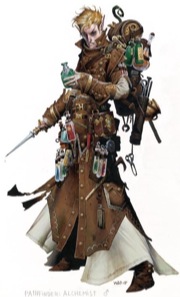
Meet the Iconics: Damiel Tuesday, August 3, 2010Flayleaf may ease your mind. Pesh may invigorate your humors. Yet as any sage and scholar can tell you, knowledge is the most addictive drug. And once the quest for learning has its hooks into you—once your eyes have been opened—there’s no tearing free. ... Illustration by Wayne Reynolds Damiel Morgethai was born, as so many elves are, in the nation of Kyonin. One of innumerable scions of the prestigious Morgethai family, he grew up...
Meet the Iconics: Damiel
Tuesday, August 3, 2010
Flayleaf may ease your mind. Pesh may invigorate your humors. Yet as any sage and scholar can tell you, knowledge is the most addictive drug. And once the quest for learning has its hooks into you—once your eyes have been opened—there’s no tearing free.
Illustration by Wayne Reynolds
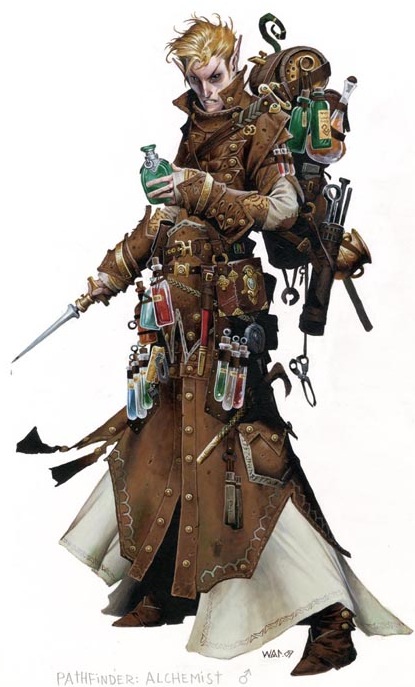
Damiel Morgethai was born, as so many elves are, in the nation of Kyonin. One of innumerable scions of the prestigious Morgethai family, he grew up in the picturesque town of Riverspire, where the southwestern border of Kyonin’s great forest gives way to fertile, rolling plains. When finally old enough to pursue a trade, the exceedingly precocious young elf was loaded up with what funds his family could spare and packed off to the shining capital of Iadara, to study alchemy under several of the art’s great masters. And it was here that the trouble started.
Damiel took to alchemy immediately, reveling in the idea of transmutation—the changing of one thing into another, by means chemical or arcane. “Alchemy,” he was fond of proclaiming to his friends, “is pure magic, even when it isn’t.” Within a few short years, the brilliant and studious Damiel had learned enough from his instructors that they set him loose to pursue his own studies, becoming advisors and respected colleagues rather than true masters.
Yet he had learned more than just strange formulae in Iadara. As cheerful and innocent as it seemed on the surface, Damiel’s obsession with what he called “the Change” went beyond the simple curatives of an apothecary, beyond even the magical and explosive concoctions of those alchemists trained for battle. In his eternal quest to understand his theories better, Damiel gave himself literally to his studies, and began to use his concoctions on his own flesh, striving to unlock the full potential of his body. What emerged from those long, sleepless nights was someone new. Someone dangerous.
Officially, Damiel’s banishment from Kyonin was the result of plagiarizing another alchemist’s discoveries, or perhaps siring an illegitimate son with an embarrassed noble. The documents don’t speak of the way his former friends noticed the change in his eyes, which became increasingly wild as lack of sleep and increasing amounts of “invigorating aether” took their toll. They don’t note the sudden rash of crimes in the districts he frequented, daring thefts and capricious arson. And they certainly don’t mention the young woman found in the alley behind his apartment, her face burned near away in an ultimately successful attempt to hide her identity—and the identity of her killer. In truth, the later would be difficult to decipher anyway, as even the killer himself might have trouble recognizing the monster that would take a girl’s life simply for seeing something she shouldn’t.
For Damiel was no longer the man that he once was. In his thirst for ever-greater secrets, he had unlocked enormous potential—strange tinctures that quickened his movements to a blur, or twisted his constitution to survive any poison or malady. Yet while he gained ever-increasing control over the vagaries of his flesh, these discoveries took their toll on his mind. He fell deep into addiction, deeper than even the aether he was so fond of could match. He would lose himself to the Change, only to wake from a maddened stupor and find that he’d done terrible things. And worse, that he no longer cared.
Exiled from his homeland, Damiel wandered for many years, slowly learning to control and live with his addictions. Gone were the blackouts, the uncontrolled and senseless violence. In their place grew a hard and haunted-eyed young man, handsome save for his wild look and the puckered scars along his veins. Seeking to peddle his secret knowledge, he traveled to Daggermark in the River Kingdoms, joining up with that city’s Poisoners’ Guild. For a time, his unique concoctions made him a minor celebrity in certain circles. But as the months passed, Damiel’s control over his base nature slipped, and the old lust for the beautiful chaos of unconscious (and unconscionable) action took over, loosing the beast of the Change to walk the streets. In the end, the Poisoners’ Guild took terminal offense to Damiel’s “exploits,” and though the elf argued hard that his deviant handiwork—being unpaid—was none of the guild’s concern, he was forced to go his own way once again.
Today, Damiel has grown further, into a man of two minds. The first—the greatest remaining shadow of the Damiel Morgethai That Was—truly repents for the arbitrary and senseless suffering he’s caused, and attempts to keep his darker urges in check. The second is that man brought forth by the Change, the mad and capricious soul that holds all other creatures in contempt, and exists only to feel the heat of the explosion on his face or see the shifting colors of poisoned flesh. This latter comes forth primarily in combat, where Damiel’s potions push his body faster than it has any right to move, flitting through the fray to fling corrosive ash or nick warriors so delicately with his poisoned injection-blade that many don’t know they’ve been cut until they find themselves unable to breathe. Though Damiel no longer gives his vile tendencies full rein, and carries himself well in social situations, most who look into those bagged and bloodshot eyes quickly understand the truth of his nature: unbalanced, unstable, unpredictable—and totally indispensable in a fight, which is why he still manages to fall in with other adventurers from time to time. And as he continues to mature, some of them even survive his companionship.
Meet the Iconics: Alain Friday, July 23, 2010Deference and respect are the privileges of noble birth. Few know this better than the man who calls himself Alain, yet equally well does he know that such things are not always freely given where they are due. And in those cases, it's the burden of the nobly born to correct the error, and to take by force that which is their right. ... Alain was born in Taldor with the proverbial silver spoon in his mouth, son of a wealthy but relatively minor...
Meet the Iconics: Alain
Friday, July 23, 2010
Deference and respect are the privileges of noble birth. Few know this better than the man who calls himself Alain, yet equally well does he know that such things are not always freely given where they are due. And in those cases, it's the burden of the nobly born to correct the error, and to take by force that which is their right.
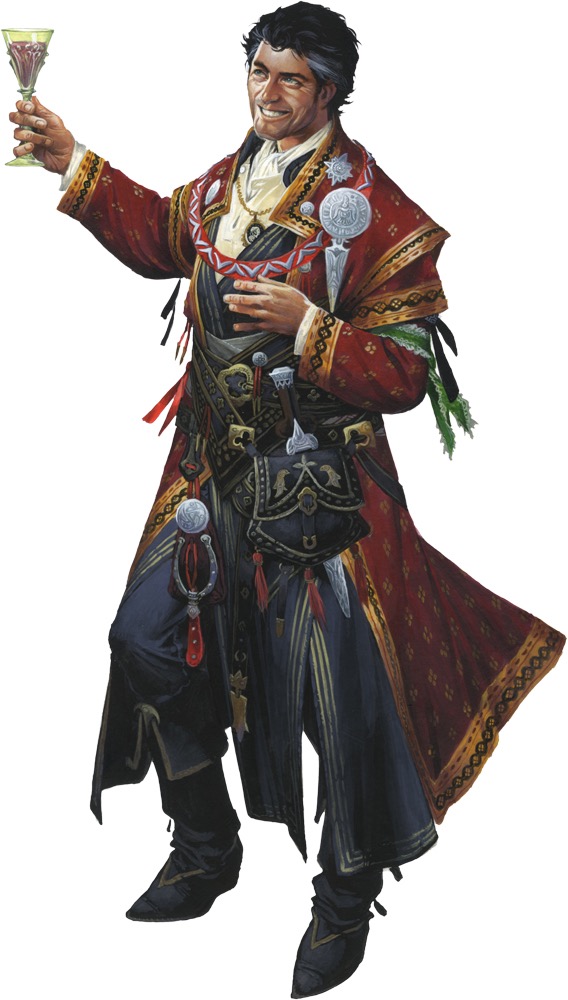
Alain was born in Taldor with the proverbial silver spoon in his mouth, son of a wealthy but relatively minor noble house. As a boy, he showed remarkable affinity for both physical activities—especially the martial pursuits—and the ins and outs of courtly etiquette and intrigue. Though both traits made him the quite popular with the peerage—especially the young ladies of the court, necessitating more than one woman being shuffled off to a nunnery on a nine-month "vacation"—Alain's wealth and natural abilities also gave him an excessively healthy sense of self-importance, sometimes getting him into trouble that would have crippled a man of lower station. By the time Alain's father realized that the cane-scarred whipping boy might not be the most effective means of corralling his youngest son, Alain was already near grown, and thoroughly convinced of his own competence in all things.
Though Alain regularly dismissed such noble studies as literature and linguistics—"If the elves want to speak, let them learn a man's language"—he could never get enough of bards' tales of battle and bloodshed, often keeping the minstrels at his favorite taverns playing late into the night. Excel as he might at the joust or the ritualized combat of the nobility, he longed for the primal exultation of war, where his mastery over his fellow men would not just be avowed or lauded, but proved undeniably by the blood on his sword, as clear as the red-dripping talons of an eagle. He had the nobility of society. Now he wanted the nobility of nature.
Illustration by Wayne Reynolds
Unfortunately for Alain, any serious clash of arms lay far beyond the borders of his father's expansive holdings, and neither his father nor his two elder brothers showed the slightest desire to sustain a blood feud with another house. All three men attempted to turn Alain to knighthood, a socially safe and proper outlet for his bloodlust, yet the idea of serving as a squire for any length of time—of letting someone else give him orders!—was unthinkable to young Alain. At last, when he could stand it no longer, the young scion gathered what funds and personal affects he could carry and declared himself a sellsword, setting off for the "crimson poetry of the fray."
True warfare has little in common with heroic ballads, and few who see its raw and naked face come back unchanged. Certainly this was true for Alain. Yet where some men learn wisdom in the wrack, at last understanding the price of a life and the senseless ease with which it's taken, Alain learned something else. In the clash of spears and the screams of horses, the man who had been a trumped-up merchant's son became an elemental force of destruction, cutting down swaths of men who were never his enemies, but merely his opponents. Though he became rich in his own right off of the heavy purses his patrons heaped upon him, Alain cared only for what the rewards represented: that here was a man whose worth was proven, in fire and iron.
Today, Alain wanders as he wills, taking commissions when they suit his fancy and embarking on his own expeditions when they don't. Thanks to his prowess on the battlefield, warriors are often drawn to fight at his side, and to Alain's secret surprise he's developed quite a knack for leading them, issuing gruff and decisive commands. These companions are almost always cohorts rather than friends—though Alain does a fine job of managing his troops and urging them on to ever-greater feats, long experience has taught him that soldiers are a short-lived lot, and hence he sheds few tears when it's time to pay the butcher's bill.
As much as his life revolves around the battlefield, Alain still retains the social graces that made him so popular (for better or worse) in the courts of his upbringing. If greeting another warrior or potential client, he may introduce himself as simply Alain, comporting himself with a calculated aloofness designed to increase others' opinions of his abilities. Where an attractive lady is concerned, however, his rough edges immediately smooth, and many are the highborn women who've fallen prey to the "rogue knight" calling himself Alain Germande, Third Son of House Germande, Bearer of the Shielding Spear—and any other honorifics that strike his fancy.
In truth, whether leading soldiers in a suicidal charge or booting serving girls out of his bed in the morning, Alain cares little about the people around him. More than money, love, or lust, Alain cares about his reputation, and strives with every encounter to increase his own legend, whether as scoundrel or saint. Perhaps the only creature he truly values is his horse, Donahan. Exceedingly well trained, and having accompanied Alain for longer than any of his human compatriots, Donahan represents everything Alain looks for in a partner: absolute loyalty, absolute trust—and absolute obedience.
Meet the Iconics: Valeros Wednesday, June 30, 2010Over the last few years, we've made a habit of writing up introductions to our iconic characters, offering insight into who they are, where they come from, and their motives for adventuring. Just last week we presented our oracle, Alahazra, as the first of the new iconics from the base classes in the Pathfinder RPG Advanced Player's Guide. Yet as we did so, we realized that we'd forgotten someone very important: our iconic fighter, Valeros!...
Meet the Iconics: Valeros
Wednesday, June 30, 2010
Over the last few years, we've made a habit of writing up introductions to our iconic characters, offering insight into who they are, where they come from, and their motives for adventuring. Just last week we presented our oracle, Alahazra, as the first of the new iconics from the base classes in the Pathfinder RPG Advanced Player's Guide. Yet as we did so, we realized that we'd forgotten someone very important: our iconic fighter, Valeros! Whereas the other characters all got elaborate write-ups, poor Valeros was first into the fray (as always) and got barely a paragraph before we went on to ramble about the new RPG. And if there's anything Valeros hates, it's being ignored. So now, at long last, Pathfinder's first fighting man gets his due.
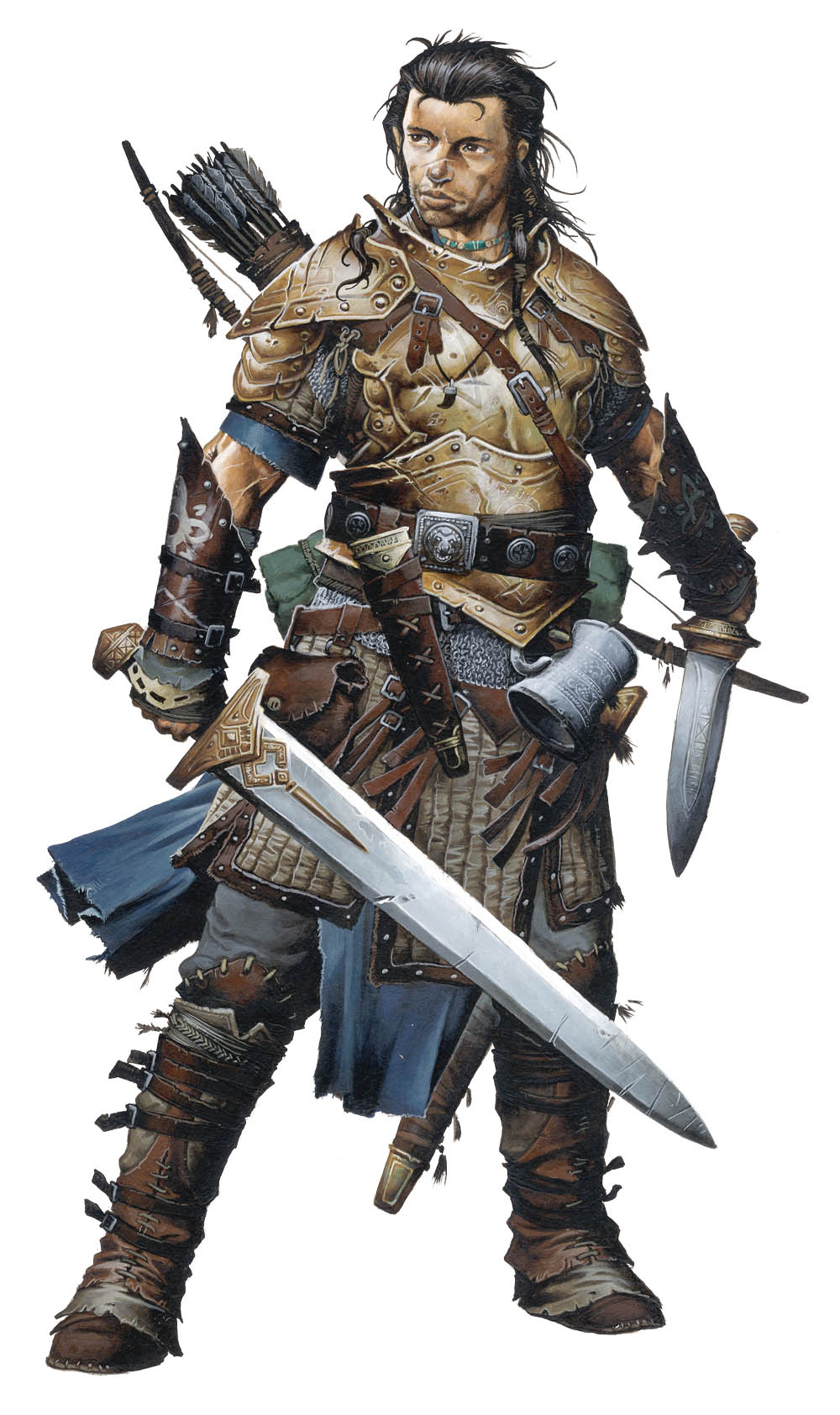
Valeros was born on a quiet farm in Andoran, where he grew up listening to the tales of traveling merchants soldiers and dreaming of adventure and exploration. Though this longing only increased as he grew older, so too did the demands of helping his aging parents run the farm, and slowly but surely the mounting responsibilities of agricultural life quashed any possibility of travel or seeing the world. Finally, just a month before a marriage of convenience to a local farmer's daughter could lock him into place (but not before he'd sampled a few of the joys of married life), Valeros came to the realization that the door to a storybook life of adventure was at last closing for good. Seized by a sudden, desperate need for a larger life than cattle and corn, Valeros packed quietly and left in the middle of the night with no more than a change of clothes, some pilfered food, and an old axe handle to discourage any ruffians who might seek to divest him of either. It was to become a theme that would follow him for the rest of his life.
In the years since, Valeros has come a long way from the wide-eyed young man who sought only the joy of exploration (and maybe a pretty, worldly girl or three to regale with his stories). Life on the road, it seems, is much harder than the bards' tales, and adult Valeros has the scars to prove it. Discovering himself to be a deft hand with a sword, Valeros quickly fell in with the rough-and-tumble mercenary crowd, there learning the dirtier, grittier facts of warfare. Though none could deny his prowess with a blade (or better yet, two), Valeros's association with various mercenary groups never seemed to last for long. There was his time as a guard for the Aspis Consortium, which ended when certain shipments kept coming in light under Valeros's watch (never mind that the exploited locals were dying for lack of grain, and only needed a little to make it through the winter). Then there was the stint as a freelance bounty hunter, during which Valeros discovered that it's a lot easier to hunt down escaped murderers than it is to haul in a young woman on the run from a loveless marriage. And of course, there was the infamous incident with the Band of the Mauler, to which Valeros will only say that he was positive their leader had been crushed under that cave-in, or else he never would have touched the man's wife.
In the end, after acting as hired muscle for dozens of different employers, Valeros finally realized that the only way to keep from getting blamed for things which weren't his fault—not really—was to go into business for himself as an adventurer, traveling with those who properly appreciated him and letting those who didn't fall by the wayside. And if some of those companions happen to be pretty women, such as a certain Varisian sorcerer or elven rogue, all the better.
While admittedly not the best at following orders, Valeros is an extremely talented two-blade fighter, easily earning his keep in any group through the tenacity and absolute fearlessness—some might say thoughtlessness—with which he flings himself into combat. Despite his reputation as a bruiser and scofflaw, Valeros has picked up a fair bit of education here and there during his travels, and can even read (something his "respectable" parents never learned to do). A worshiper of Cayden Cailean—the only god who properly understands the need for freedom in the common man's existence—Valeros takes an easy-come, easy-go approach to life, wealth, and relationships. Though a fan of fine weapons and creature comforts, the only object he's never without is the tankard on his belt (for you never know when someone might offer you a drink). Noble at heart, and fiercely loyal to those few who manage the considerable feat of establishing themselves in his affections, Valeros nevertheless hides such sentiments under a jaded and crass demeanor, frequently observing that there's nothing better than "an evening of hard drinking and soft company."
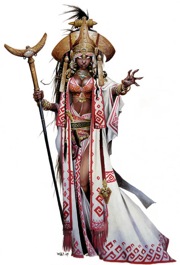
Meet the Iconics: Alahazra Wednesday, June 23, 2010Only those who refuse to see truth are truly blind. Such is the verdict of Alahazra, bride of the sun and prophet of the burning sands. Alahazra was born in a small Rahadoumi town east of Manaket, one of the many way stations on the caravan route known as the Path of Salt, which leads from Azir all the way to distant Sothis and takes its name from the waves of the Inner Sea and the dried tears of the slave chains that march along it. The...
Meet the Iconics: Alahazra
Wednesday, June 23, 2010
Only those who refuse to see truth are truly blind. Such is the verdict of Alahazra, bride of the sun and prophet of the burning sands.
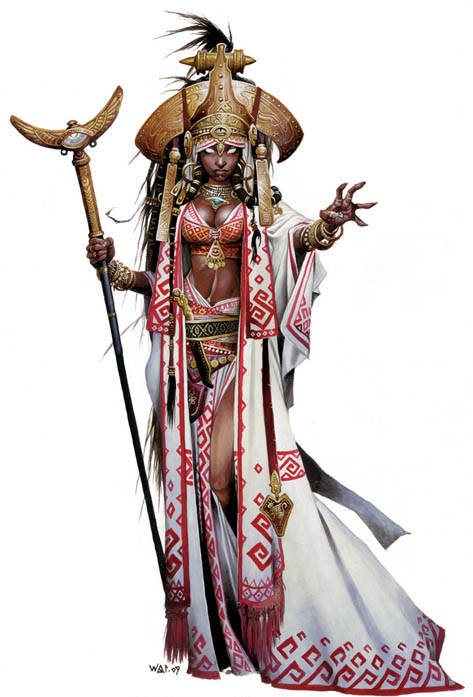
Alahazra was born in a small Rahadoumi town east of Manaket, one of the many way stations on the caravan route known as the Path of Salt, which leads from Azir all the way to distant Sothis and takes its name from the waves of the Inner Sea and the dried tears of the slave chains that march along it. The daughter of a wealthy and widowed wainwright, Alahazra wanted for nothing, growing up with the best tutors money could buy, all the time being groomed for a potentially lucrative marriage, or perhaps even induction into the Occularium, Manaket's prestigious wizard's college.
All of that changed on the morning when sixteen-year-old Alahazra woke to find herself suddenly and inexplicably blind, her eyes clouded by a white mist that gave her only vague outlines of her surroundings. Beside himself with grief, her father called in the best healers to be found in the godless land, only to discover that the situation was worse than he could have imagined. For when the bards with the healing touch reached out to the fevered child, they were suddenly cast back by a blast of flames that burned the girl's sickbed but left her magically unharmed. Yet even this might have been bearable, had the fleeing bards not revealed the rest of their discovery: that the girl's flames bore no hint of sorcery or arcana. Though Alahazra's staunchly atheist father could scarcely believe it, his proper Rahadoumi household harbored a burgeoning cleric.
Illustration by Wayne Reynolds
Confronted by her enraged father and frightened by the new abilities that she felt burning inside her skin, Alahazra protested her innocence loud and long, but to no avail. Sickened by what he saw as a betrayal of both his trust and his national pride, Alahazra's father did his daughter a final kindness and cast her out with no more than the clothes on her back, instructing her to run before the Pure Legion arrived to take her into custody—and let her gods be her new family, for she no longer had one in Rahadoum.
Blind, weak, and weeping with frustration and rage, Alahazra stumbled southeast into the desert, seeking what meager shade and water the badlands had to offer. For days she wandered, seeking only to put distance between herself and any pursuers who might still seek revenge for her presumed heresy, until at last she collapsed in the lee of a dune, dehydrated and dying.
It was there, staring up through milky cataracts at the burning ball of the sun and letting the wind slowly bury her in the hot sand of the dunes, that Alahazra had her first revelation. Behind those ruined eyes, a vision of debilitating color suddenly exploded. In it, Alahazra saw herself not as she was, but as she one day would be—strong, proud, and fierce. In that moment, Alahazra understood that she was more than just a girl. She was a force of the desert—a voice of sun, sand, and flame—and she would bring its truth to the people, whether they were ready for it or not. Baking slowly in the hot coals of the great Garundi desert, Alahazra came to know herself, and in doing so first harnessed the magical flames that had been building inside her.
With the aid of her newfound abilities, Alahazra moved steadily east, crossing into Thuvia and following the Path of Salt until she finally came to rest in Osirion. There she roamed as she willed through the great cities and barren plains, offering wisdom and healing to the righteous and cleansing fire to the wicked. In time, her notoriety grew, offering her passage into higher social circles, and it's whispered that she made consorts and admirers of several powerful men, possibly even entering the court of the Ruby Prince. Alahazra herself, however, speaks little of her past. For her, only the future is a concern, and her duty is to defend it as best she can, with a clarity of vision that disdains sight.
Now a grown woman, and still attractive enough to turn the heads of slaves and rich men alike, Alahazra is kind but distant, often letting conversation drop in favor of taking in the sounds and smells of her environment. When she does speak, in her low, throaty voice, her words have the weight of command. Alahazra has little patience for fools (most notably those who let money or pride blind them to truth and justice), yet also has a soft spot for orphans, and in her own stern way often sees herself as the mother to her adventuring companions. Though she maintains that she has never worshiped a god—the cornerstone of her bitterness toward both her father and her homeland—she has come to respect a wide variety of deities, whom she refers to as "powerful and strategic allies." And while her detractors might call her cold, in battle Alahazra's burning rage—especially toward injustice and intolerance—still comes roiling out in a wall of divine flame.
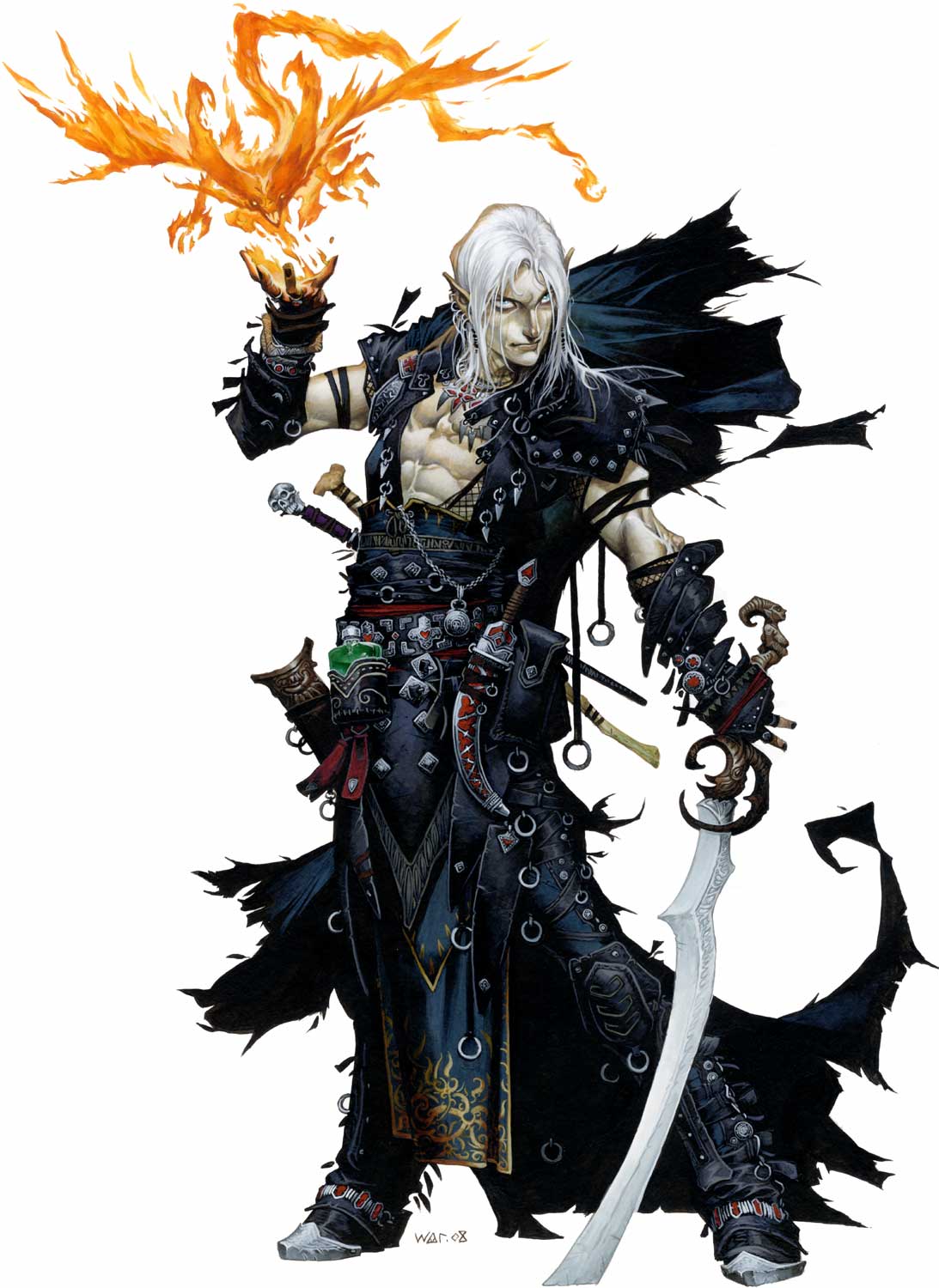
Meet The Iconics: Seltyiel Monday, May 26, 2008Born from a dead mother amid screams and disgrace, this sickly half-elf would never have survived had he fallen into his stepfather's waiting arms. In a cruel trick of fate, his half-sister's tears stole the infant Seltyiel's chance for a mercifully short life. ... The bastard son of the duped Lady Phiaura Bhrostra and the brigand-sorcerer Lairsaph—the so-called Feign Prince of Cheliax's Whisperwood—Seltyiel was never meant to...
Meet The Iconics: Seltyiel
Monday, May 26, 2008
Born from a dead mother amid screams and disgrace, this sickly half-elf would never have survived had he fallen into his stepfather's waiting arms. In a cruel trick of fate, his half-sister's tears stole the infant Seltyiel's chance for a mercifully short life.
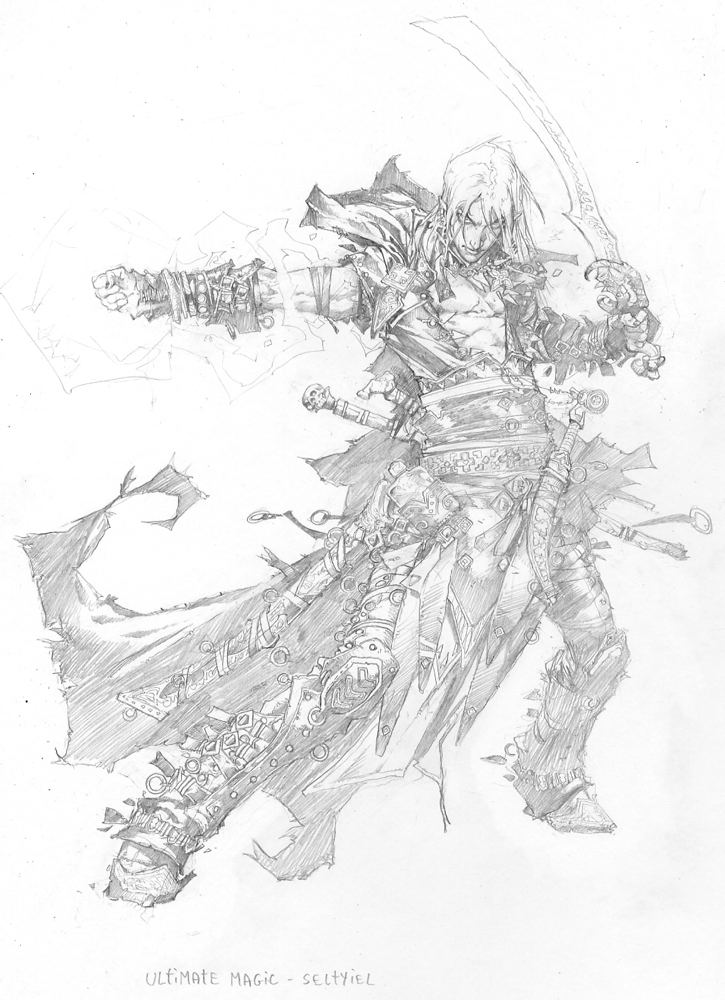
The bastard son of the duped Lady Phiaura Bhrostra and the brigand-sorcerer Lairsaph—the so-called Feign Prince of Cheliax's Whisperwood—Seltyiel was never meant to survive. Through guile and illusion, the half-elf was conceived as a living disgrace to the sonless Bhrostra family—stern, martial-minded traditionalists who had long hunted the woodland bandits. The tragedy of his wife's death in childbirth, compounded by the dashed promise of a male heir, nearly drove Lord Ghran Bhrostra mad, and only his daughter's sobs stayed the lord's blade. For the next 12 years, a continuing river of tears ensured the young bastard's life.
Raised by his sister Sioria, young Seltyiel lived a humiliating fiction. In words, he was Lirt, an adopted waif who lived in the light of the Bhrostras' boundless charity. In the truths whispered from servant to mocking lord, though, he was living proof of Lord Bhrostra's failure as a husband, a lord, and a man. Keenly aware of his family's disgrace, Lord Bhrostra frequently reminded his wife's son of his loathing with beatings and broken bones.
Two weeks before Seltyiel's 13th birthday, with the bedridden youth already nursing a thrice-broken arm, a drunk and enraged Lord Bhrostra rampaged into the bastard's attic room. The boy could scarcely fight against the burly lord and took a fierce beating before reflexively lashing out. Catching the unsuspecting lord below the waist, the boy's blow sent Lord Bhrostra stumbling backward and tumbling down the steep attic stairs. Seltyiel stared down at his stepfather's unconscious body in terror. Without a word to his sister, the bloodied and crippled half-elf fled into the Whisperwood that night.
For days, the boy wandered the forest, soaked by rain, slashed by vipervines, chased by a boar, and pushed to the brink of starvation. As his continued merciless fortune would have it, though, three scowling brigands found the youth. Terrified, Seltyiel repeated the name he'd heard Lord Bhrostra curse a thousand times over: Lairsaph. Bemused, the scoundrels dragged the boy to his father.
Lairsaph laughed for nearly an hour after discovering that Lord Bhrostra had actually raised his whelp, and in cruel amusement welcomed his son into his camp. The Feign Prince gave the boy the name Seltyiel—a corruption of the elven word for malicious humor—and turned his mind to finding a use for the youth. In the weeks following his son's arrival, the sorcerer made several cruel attempts to coax forth some evidence of the boy's inborn arcane ability. Despite his efforts, though, it swiftly became apparent that his son possessed none of the brigand lord's sorcerous blood. Disgusted, Lairsaph dismissed Seltyiel, relinquishing him to the ranks of his craven, sycophantic followers.
For the next decade, Seltyiel scraped out a life among the thieves of the Whisperwood. Pale, morose, and slight of frame, he suffered endless abuses at the hands of his father's gang, and as Lairsaph and his men grew rich off brigandry and violent raids, the half-elf performed menial tasks and scavenged from scraps. Gradually, though, as the boy grew into a young man, he cultivated a quiet intellect and began collecting the objects his father and his men discarded—typically the letters, ledgers, and books of the merchants they preyed upon. Slowly he taught himself to read, first Taldane, then other languages. As he neared his 20th birthday, he made his greatest discovery amid a treasure-stripped caravan wagon: a tattered tome, a book of simple magic. Seltyiel became obsessed. For years, the bastard read the tome over and over, learning its runes, memorizing its symbols, and gaining some measure of control over the cantrips within.
In the half-elf's 23rd year, Lairsaph and his men made a daring robbery, stealing a fully-loaded taxwagon headed back to Egorian from the Majestrix's eastern holdings. Although cunning, the brigand lord was unprepared for the infernal queen's swift reprisal and the skill of her hunters. A half-legion of Chelish soldiers led by an Order of the Rack Hellknight tracked Lairsaph to his hidden camp and turned an evening's debauchery into a night of fire and blood. The swift attack scattered the Feign Prince's men, making them easy pickings for the merciless soldiers. In a blur of shouts and slashing blades, Seltyiel found himself fleeing—to his shock—at his father's side. Through the night, war hounds and the tenacious Hellknight pursued the father and son. Lairsaph exhausted every spell he could conjure attempting to stymie the ironclad hunter, but still the infernal knight came. Finally, knowing his capture would mean a lengthy torture followed by a dramatic execution, Lairsaph turned to his son, drew him close, and, with the butt of his spear, shattered Seltyiel's kneecap.
Knowing only that the criminals of the Whisperwood were led by an elf, the Magistrix's men drug Seltyiel back to Egorian in chains. For weeks, the half-elf suffered constant tortures and arcane assaults to his mind. Gradually, though, his captors accepted that he was not the brigand lord Lairsaph, but merely the Feign Prince's dupe. Dismissed as just another bandit, he was thrown into a dank Chelish dungeon and, for nearly 5 years, left to rot.
During Seltyiel's imprisonment, the whispers came. Seemingly drifting from the darkness in the depths of his reeking cell, they were a cool balm to the fires of his angry wounds and smoldering hatred. They reminded him of his fear, his violent youth, his loathing, and betrayal. They also told him much: tales of magic more ancient than the gods, paths to lost treasures with feckless guardians, and the names of beings who could teach him secrets unknown to men. For long years he listened, and his soul turned to steel. If he was to ever have anything, he would have to take it himself. He would have riches and influence like Lord Bhrosta. He would have respect and fear like Lairsaph. He would have revenge.
In 4707, Seltyiel was released. Cold and determined, he walked from Egorian to Westcrown, murdering two thieves met along the way with arcane fire. Using their twice-stolen coin he bought passage on a ship with no clue as to its destination. He would kill his fathers, he would have revenge—but first, he would have power.
Seltyiel debuts as a pregenerated character in volume 13 of Pathfinder.
... Meet the Iconics: Lini Monday, April 14, 2008In her many explorations and journeys, Lini encountered numerous large animal predators, with whom she seemed to possess a certain affinity. More than once, Lini's traveling companions or enclave came under threat from some great bear or razor-clawed cat, but with a series of soothing noises and precise motions Lini always tamed the beast and sent it on its way. ... Lini's success at calming animals came to an end one day when a snow leopard...
Meet the Iconics: Lini
Monday, April 14, 2008
In her many explorations and journeys, Lini encountered numerous large animal predators, with whom she seemed to possess a certain affinity. More than once, Lini's traveling companions or enclave came under threat from some great bear or razor-clawed cat, but with a series of soothing noises and precise motions Lini always tamed the beast and sent it on its way.
Lini's success at calming animals came to an end one day when a snow leopard bound out of the trees and pinned her to the ground before she could react. Her friends scattered, leaving Lini alone to face the beast. Although fascinated by the cat's power and speed, and appreciative of its beauty, Lini trembled under its massive paw and tears leaked from her eyes. She knew she faced her doom, and she found it cruelly ironic how death came to claim her.
Yet the leopard did not strike.
"Your friends have abandoned you," a calm feminine voice intoned out of Lini's sight. "Despite the times you saved them, they left you to die." Although Lini could not see the woman, Lini knew of the Norn of the forest and suspected she was one of them.
"Please help me," Lini whispered, her chest struggling to rise under the great cat's crushing paw.
"You do not need my help, little one. You need hers."
Lini looked at the snow leopard, deep into its eyes. She saw neither hunger or malice. Still struggling just to breathe, Lini stared into the great cat's eyes and asked, "Will you help me?"
Inexplicably, the snow leopard lifted its paw from Lini's chest. A coughing fit then overcame the small gnome, and when she finally recovered she looked around her. The snow leopard was gone and Lini saw no sign of the Norn. She looked around frantically, suddenly alone and scared. A small gnome in a large world.
"Come back," Lini cried. "Don't go! Please don't go. Don't leave me alone." She sank to her knees, tears afresh on her face, until she heard the sound of approaching footsteps.
The snow leopard had returned. With the delicateness of a mother tending to her cubs, the great cat licked gently at Lini's face, whisking away her tears. Lini threw her arms around the leopard's neck. "You are my friend, aren't you? I will call you Droogami. That is what we call good friends."
Lini looked down then and picked up a stick from the forest floor before clambering up the cat's side to perch on its back.
"Let us go, then, Droogami. We have no need for this place."
In the years since her departure from the Lands of the Linnorm Kings, Lini has collected more than a dozen sticks—one from each forest or wood she visits. In her resting time after long days of travel, she sits at Droogami's side and peels the bark from the sticks, smoothing and polishing them incessantly.
Lini debuts as a pregenerated character in volume 13 of Pathfinder.
... Meet the Iconics: Amiri Monday, March 31, 2008 There are a million ways to die in the Realm of the Mammoth Lords. The natives of this brutal land are the nomadic Kellids, and they have made the best of this primal world. Amiri is one of these barbarians. Although she was blessed with a combination of independence and brawn, Amiri's childhood remained one of constant challenge. To the people of her tribe, the Six Bears, brawn and bravery were not ideal characteristics for a woman to have....
Meet the Iconics: Amiri
Monday, March 31, 2008
There are a million ways to die in the Realm of the Mammoth Lords. The natives of this brutal land are the nomadic Kellids, and they have made the best of this primal world. Amiri is one of these barbarians. Although she was blessed with a combination of independence and brawn, Amiri's childhood remained one of constant challenge. To the people of her tribe, the Six Bears, brawn and bravery were not ideal characteristics for a woman to have. To the Six Bears, a woman's role was simple—raise children, tend to the sick, and forge bonds with other tribes. Women were resources. When a tribe wished to form an alliance, they would send gifts of meat, furs, treasure, and daughters. Amiri didn't see herself as livestock, and every chance she got, she tried to one-up her brothers and cousins. When a hunter went out and caught a caribou for the tribe, she would go out and catch two. When a party of orc raiders stumbled into their hunting grounds and a tribal hero killed four, she took it upon herself to kill six. Her constant sense of competition made her few friends—her brothers were both intimidated by her ferocity and enthralled by her beauty, while her sisters knew that each time she went against tradition, they would all be punished.
When Amiri finally came of age, her reputation had spread beyond the Six Bears. The other tribes took to calling her the "Soft Chieftain" of the Six Bears, a name that humiliated her almost as much as it did her kin, inferring that they were weak for allowing one of their women to grow so independent and strong. None of the other tribes wanted any part of her—her continued presence among the Six Bears caused much strife between once friendly tribes, and so the elders determined that there was but one choice—Amiri had to die. The only problem was the commonly held belief that murder of one's kin was the greatest taboo and the surest path to Hell.
The opportunity to be rid of their troublesome sister rose soon enough, when word came of a tribe of frost giants who had been sighted in the nearby mountains. The elders organized a warband to scout the mountains and to drive back the giants, and they made sure that Amiri was included in the band. Shocked but proud to have finally been chosen, Amiri didn't notice how the elders smiled at her eagerness to be on her way. The elders knew that Amiri's sense of competition would swiftly get her in over her head, and in secret tasked the rest of the hunters to goad her into just such a situation.
The warband headed up into the Kodar foothills, and it wasn't long before they found evidence of giants. One morning, the leader of the band rushed into camp, waving a dagger the size of a man's arm over his head. The warrior claimed to have single-handedly slain a giant and to have taken his dagger, and the others in the band congratulated him on his skill and bravery. Amiri took the bait, and announced that she would return by sundown with an even greater weapon. She could have no way of knowing that the dagger was part of the deception—that the warband had brought it with them as a prop to incite her into a foolish plan.
What the warband themselves didn't anticipate was that Amiri would find a frost giant. After wandering the mountains, she came to an immense body at the foot of a cliff—the giant had fallen to his death weeks before, and at his side lay his immense bastard sword. Although Amiri knew that she had not killed the giant, she also knew that all she needed was his sword as proof—certainly her kin wouldn't think to dispute her claim with such a grand trophy. Yet when she returned to the place she had left her kin, she found the camp empty. Concerned, worried that they had fallen victim to the region's dangers, she tracked them, catching up with the warband halfway back to the tribal camp. As she approached the camp, though, she realized something was amiss—they were talking of her, and they were laughing.
Creeping unseen to the edge of the camp, she realized that she had been duped. She heard her kin mocking her ways, of how she had fallen for their ruse, and how even now she was likely cooking in a giant's stewpot. That they seemed grateful and so at ease with her death was not what enraged Amiri. It was the proof that her own people thought of her as a fool that did it. Eyes blazing, Amiri stepped into the camp and held her new sword out, proclaiming that even now she had bested them. The other warriors, shocked to see her alive, quickly fell back to laughter, pointing out that she could hardly wield such an ungainly weapon. Her fury growing, Amiri hefted the weapon and tried to adopt a menacing pose, but the weapon's size threw her off balance and she toppled over, much to the other barbarian's growing amusement.
It was enough. With a roar, Amiri leapt back to her feet. Her rage filled her body, clouded her vision, stole over her soul. Two of the barbarians had been decapitated by her immense sword before they realized that death had come. The battle was swift and brutal, with Amiri not noticing the blows that landed on her, simply stepping from one traitor to the next and cutting them down.
When her rage finally subsided, Amiri realized what she had done. She knew that the hunters had certainly deserved their fates, but they were still kin. That her reasons for murdering them were, to her, valid didn't change the ties of blood. She knew that she had cut those ties, and so she turned her back on the remains, trusting that they would be discovered by another hunting party soon enough. As she headed west into the lands of Irrisen and the unknown reaches beyond, her heart was for the first time free—no longer was her future tied to traditions that would constrain her. She has come to value her oversized sword, and even though she can only truly wield it properly when her blood rage takes her, it has become as much a part of her as her fierce independence or her fiery heart. She no longer sees herself as a member of the Six Bears, but never speaks of the circumstances that forced her to flee her homeland. Some things are better left unsaid.
... Meet the Iconics: Sajan Monday, March 3rd, 2008Birthed to parents of the padaprajna caste of warriors in beautiful Vudra, Sajan Gadadvara and his twin sister Sajni learned to hold a temple sword before they could walk. Strict padaprajna discipline forged a tight bond between the twins, who spent even their infrequent times of rest together, practicing the latest martial techniques taught to them. On their twelfth birthday, the twins were forcefully separated: Sajan went to live with the...
Meet the Iconics: Sajan
Monday, March 3rd, 2008
Birthed to parents of the padaprajna caste of warriors in beautiful Vudra, Sajan Gadadvara and his twin sister Sajni learned to hold a temple sword before they could walk. Strict padaprajna discipline forged a tight bond between the twins, who spent even their infrequent times of rest together, practicing the latest martial techniques taught to them. On their twelfth birthday, the twins were forcefully separated: Sajan went to live with the fighting men of the ghana padaprajna, while Sajni joined the battling women of the sastra padaprajna. Despite their separation, the twins continued to meet when they could, sparring and joking as they had in their childhoods.
As the insightful narrative of the Vigrahin Patitraka states, "A warrior's life is to war." Thus it was that Sajan's lord embroiled himself in a conflict with a neighbor. Most of the army fielded by Sajan's lord consisted of conscripts wielding tools of their trades, while the valuable padaprajna watched the battle in reserve. The warriors deduced quickly that they stood on the losing side, but they were duty-bound to fight to the death when instructed. Instead, their lord stole from them the glory of battle-death when he sued for peace after his conscripts fled the field. As part of his surrender, the lord gave over half of his sastra padapranja—including young Sajni.
Distraught, Sajan returned to his barracks in tears (for which he received severe beatings from his own father), and vowed that night to be reunited with his sister. Several weeks passed before he found his opportunity for escape. He fled into the countryside and slipped stealthily into the city of Sumadhadra, through whose gates Sajan watched his sister pass. After several days of clumsily seeking information on his sister, he finally discovered that all the traded sastra padapranja were loaded onto ships bound for distant Jalmeray.
Sajan quickly hired himself as a guard aboard a ship bound for the far-away island, and several months later he found himself on its heavily guarded docks. Within a week, Sajan uncovered the fates of most of the sastra padapranja, who worked as guards and courtiers for the island's thakur. Sajni was not among them. More weeks passed before Sajan learned that his sister had, like him, signed on as a guard aboard a trading ship—hers bound for a place called Absalom.
The desperate young padapranja gained passage to Absalom and, upon arrival, stared in wonder at its size and splendor. It seemed to him that the strange western barbarians he found himself among were incapable of a place so grand. By the time he found his bearings and rejoined his search, however, he found himself without leads, for the sheer size that so impressed him also made finding his sister nearly impossible.
Sajan knows he cannot return to Vudra, for the padapranja there would execute him as a deserter. He cares not for his home country, however, and continues to seek out any clue that might point him toward his sister.
... Meet the Iconics: Lem Tuesday, January 22, 2008 Although Lem was raised in the lap of luxury, his childhood was anything but comfortable. He had the unfortunate luck to be born into slavery, to a mother indentured to one of Cheliax's countless noble families. Lem was sold a half dozen times to different nobles before he reached the age of two. Such is the fate of most of Cheliax's halflings (often called slips by that nation's citizens). Halflings are much valued as slaves in Cheliax...
Meet the Iconics: Lem
Tuesday, January 22, 2008
Although Lem was raised in the lap of luxury, his childhood was anything but comfortable. He had the unfortunate luck to be born into slavery, to a mother indentured to one of Cheliax's countless noble families. Lem was sold a half dozen times to different nobles before he reached the age of two. Such is the fate of most of Cheliax's halflings (often called "slips" by that nation's citizens). Halflings are much valued as slaves in Cheliax since they take up less room and since their inborn optimism ironically stunts escape urges. Halflings born into slavery in Cheliax are prone to think of their lot in life as "lucky." They are fond of saying, "At least we aren't living in the gutter or starving!"
Nevertheless, halflings who rankle at the concept of enslavement do appear. Halflings like Lem. Growing up a slave in the devil-haunted empire of Cheliax exposed Lem to a shocking range of decadence and debauchery. He learned from a young age how to say what his superiors wanted to hear, and as he grew older, these skills often secured him less onerous jobs. While his kin toiled in basement washrooms or tended hellhound stables, Lem was taught to play the flute so he could entertain at family gatherings. Yet Lem was not blind to the discomfort of his brothers and sisters, and when he learned that a dozen of his kin were to be sacrificed to a devil as an offering to seal a new trade contract, Lem knew the time to act had come. Taking advantage of his increased mobility in the manor, it was a relatively simple trick to light a few fires in secret corners and then ensure that all of his halfling kin were safe in the slave's quarters. The manor burnt quickly, but Lem was shocked to see his kin rush back to the manor in a hopeless attempt to aid in extinguishing the flames. As the place burnt to the ground, and the halflings bemoaned their fate and the loss of their shelter, Lem slipped away into the night, bitter and distraught over this unexpected turn of events.
Lem left Cheliax by stowing away on a merchant vessel and never looked back. He rarely speaks of his childhood today, but one can see its effects in his high disdain for law and order, and his intolerance for cruelty. Always quick to side with the underdog, Lem has learned that his most powerful traits are his optimism and sense of humor—virtues that almost make up for his small stature and impulsive nature. Lem's reasons for traveling with his current companions vary upon the day and his mood, but he certainly values their strengths—and the never-ending supply of comedy material their antics provide him.
Meet the Iconics: Seelah Monday, December 17, 2007Although still viewed by many theologians and traditionalists as a newcomer to the world's faiths, Iomedae the Inheritor seems poised for greatness among the divine. Certainly her numerous orders of paladins have risen swiftly to take on the vaunted role of paragon in many societies. Evangelical in their exuberance to spread word of her wisdom, Iomedae's missionaries were pivotal in the defense during the fabled Siege of Solku. They sacrificed...
Meet the Iconics: Seelah
Monday, December 17, 2007
Although still viewed by many theologians and traditionalists as a newcomer to the world's faiths, Iomedae the Inheritor seems poised for greatness among the divine. Certainly her numerous orders of paladins have risen swiftly to take on the vaunted role of paragon in many societies. Evangelical in their exuberance to spread word of her wisdom, Iomedae's missionaries were pivotal in the defense during the fabled Siege of Solku. They sacrificed their lives saving the town from gnoll slavers, and although none of them survived the siege, their presence lived on. Particularly in the eyes of young Seelah.
Seelah's family came to the walled town of Solku as pilgrims fleeing the atrocities of distant Geb to the distant south. Unfortunately, they traded one peril for another, and within months of their settling in Solku, the gnolls of White Canyon began their infamous pillaging. Seelah's parents were slain in the first of these raids, leaving her orphaned at the age of 14 in a strange town. She did what she must to survive on the city streets, pickpocketing and bullying and even hiring herself out as a mercenary. When a group of Iomedae's knights arrived to defend Solku, Seelah was immediately taken with their beautiful, shining armor, and within an hour she had stolen a particularly fine mithral helm with a golden bird upon its brow. Yet then, something strange happened—Seelah became overwhelmed with guilt at her theft. For days, she agonized over the act, trying (and failing) several times to pawn the helm. During the Battle of Red Hail, Seelah realized that one of the bravest knights, a woman named Acemi with hair in long braids, fought the battle without her helm. This was the woman's undoing—in holding Solku's gates, she took a mortal wound to the skull from a gnoll's flail. The woman's heroism carried the day, but that evening she died of her wound.
Wracked with guilt, Seelah approached Acemi's body as her companions prepared for her pyre. They watched silently as Seelah placed the stolen helm over the dead woman's head, and then climbed onto the pyre aside her to join her in death. The paladins were moved beyond words—they had known from the start that Seelah had stolen the helm, but Acemi had forbidden her brothers and sisters from collecting it, hoping that the helm would bring the desperate orphan enough money to survive for another few months. The knights of Iomedae took Seelah in that night. Although she has come to terms with Acemi's death, Seelah still regrets the theft that ironically brought her into Iomedae's arms. She originally came to Iomedae out of guilt, but in the past several years, that guilt has transformed into a powerful love and faith in the Inheritor.
The young paladin wears her hair in Acemi's style and is trained in the use of the longsword. In so doing, she hopes to carry on the good work that Acemi might have done had she not fallen at the Battle of Red Hail. It's the least she feels she can do to make up for a death that she allowed to happen.
... Meet the Iconics: Harsk Tuesday, November 20, 2007Not all dwarves are meant for the mines. As a young dwarf, Harsk spent every spare moment outdoors under the wide skies of southeastern Varisia, particularly at night beneath the stars, where his keen vision made him a hunter without compare. While generally uninterested in his family's traditional smithing, he still inherited enough of their tinkering ability to construct his own crossbow, a heavy, highly accurate weapon that few others...
Meet the Iconics: Harsk
Tuesday, November 20, 2007
Not all dwarves are meant for the mines. As a young dwarf, Harsk spent every spare moment outdoors under the wide skies of southeastern Varisia, particularly at night beneath the stars, where his keen vision made him a hunter without compare. While generally uninterested in his family's traditional smithing, he still inherited enough of their tinkering ability to construct his own crossbow, a heavy, highly accurate weapon that few others are able to wind. Eschewing the company of his fellows, few things made Harsk happier than crouching in a tree stand with his bow, listening to the wind through the forest leaves and waiting for deer or larger prey to wander by.
That all changed twenty years ago, when his elder brother, a fine captain named Sigur, led a dwarven war band from Janderhoff against a small party of giants that had descended from the Mindspin Mountains to raid and pillage. Out of affection, Sigur offered his less-experienced sibling the chance to come and prove himself as Sigur's chief scout and second-in-command. Calm and peaceful by nature, Harsk turned him down, failing to see the honor his brother was doing him until several days after the company had departed. Traveling light and fast, Harsk caught up with his brother quickly—but not quickly enough. Misjudging the size and skill of the raiding party, Sigur led his band into an ambush, where it was slaughtered to the last dwarf.
With his brother's blood still fresh on his hands, Harsk went mad with rage. That night, he stalked through the giants' camp like a vengeful wraith, slaughtering giant after giant with his crossbow before melting back into the forest, only to reappear elsewhere and take another victim. When the last giant was left gurgling in the dust, Harsk took up his brother's axe and slipped off into the trees, vowing to forever be the voice of justice in the wild places, to keep balance and prevent the sacrifices of noble men like his brother.
Harsk, like many of his kind, is gruff and taciturn, but there ends most of his connection to dwarven society. Something of a loner, he prefers to spend his time outdoors, communing with nature, though he occasionally travels alongside others whose goals match his own. Uninterested in the beer and ale that so characterize dwarves in the minds of human society, Harsk instead drinks pot after pot of strong tea to keep his senses sharp. While he never lets his brother's axe out of his sight, he wields it only as a last resort, knowing that his true skills lie in the hunt and striking from darkness.
Meet the Iconics: Ezren Friday, October 26, 2007 For many adventurers, wanderlust strikes at a young age when minds are impressionable and the urge to escape the doldrums of homelife become too much to resist. In other cases, there's never a choice at all—being raised on the streets leaves few other options available for those who do not wish to become criminals. Rarest are those who come to adventuring late in life.This was Ezren's path to adventure. Born to a successful spice merchant...
Meet the Iconics: Ezren
Friday, October 26, 2007
For many adventurers, wanderlust strikes at a young age when minds are impressionable and the urge to escape the doldrums of homelife become too much to resist. In other cases, there's never a choice at all—being raised on the streets leaves few other options available for those who do not wish to become criminals. Rarest are those who come to adventuring late in life.
This was Ezren's path to adventure. Born to a successful spice merchant in one of Absalom's more affluent districts, Ezren's childhood was pleasantly safe. As the fourth of six siblings, he never knew the responsibility implicit in being the eldest (and therefore the one expected to carry on father's trade) or the freedom of being the youngest. He enjoyed the comforts of a well-to-do family, lived in a neighborhood relatively safe from crime, and seemed poised for a life of mediocrity.
That changed when his father was taken away, charged with heresy by the church of Abadar. The charges were too spurious to stick, and while his father escaped excommunication, the damage had been done—his father's business fell to pieces. Shocked, dismayed, and convinced that his father was innocent, Ezren abandoned his future and spent his adult life trying to repair his father's ruined reputation. So when Ezren finally uncovered irrefutable proof of his father's guilt, and he realized he'd wasted his life on a lie, he turned his evidence over to the church and said goodbye to his home, his family, and his life.
At the age of 42, Ezren is full aware that he's missed his adulthood, yet at the same time he looks forward to discovering the world, and making a difference for a cause that he believes in. His dissatisfaction with family, religion, and government left him precious little to trust but his own intellect—in fighting for his father's redemption, he had become a gifted researcher, scholar, and intellectual. Lacking the spry limbs of youth, the trust in religion, the strong arm of the soldier, or the way with words of the politician, Ezren felt he had but one option open. He traveled to tarnished Oppara, capital of Taldor and one of the oldest cities of the continent of Avistan, hoping to join one of several prestigious schools of wizardry. Yet time and time again, he was turned away due to his age. No wizard seemed to want an apprentice who, in many cases, was older than them. So Ezren was forced to strike out on his own once again.
Over the next decade, as he traveled Avistan, Ezren studied where he could, picking up tricks of the wizard's trade here and there. The combination of arcane study mixed with his worldly first-hand experiences have given him an edge over young wizards fresh out of apprenticeship and eager to make names for themselves. Ezren knows about the many ways the world can trick and betray you, but now he's finally begun to master the art of magic, giving him the tools to fight back.
Ezren is scheduled to make his debut as a pregenerated character in volume 7 of Pathfinder and in GameMastery module U2: Hangman's Noose.
... Meet the Iconics: Kyra Monday, July 30, 2007The priests of Sarenrae lead double lives. Known to her faithful as the Dawnflower, the Healing Flame, and the Everlight, she teaches temperance and patience in all things. Compassion and peace are her greatest virtues, and if enemies of the faith can be redeemed, they should be. Yet there are those who have no interest in redemption, who glory in slaughter and death. From the remorseless evil of the undead and fiends to the cruelties born in...
Meet the Iconics: Kyra
Monday, July 30, 2007
The priests of Sarenrae lead double lives. Known to her faithful as the Dawnflower, the Healing Flame, and the Everlight, she teaches temperance and patience in all things. Compassion and peace are her greatest virtues, and if enemies of the faith can be redeemed, they should be. Yet there are those who have no interest in redemption, who glory in slaughter and death. From the remorseless evil of the undead and fiends to the cruelties born in the hearts of mortals, Sarenrae's doctrines preach swift justice delivered by the scimitar's edge. To this end, she expects her faithful to be skilled at swordplay, both as a form of martial arts promoting centering of mind and body, and so that when they do enter battle, their foes do not suffer any longer than necessary.
Her priests are often categorized into these two camps—those who favor redemption as a method to defeat the enemy, and those who favor the blade. Kyra is certainly one of the latter. Born in a small farming town to loving parents, Kyra grew up in the shadow of one of the Dawnflower's shrines. She was taken at a young age with the beauty of the shrine's stained glass, and the grace of the three priestesses who practiced swordplay on the nearby hill each dawn as they offered their morning prayers. When bandits attacked her small town, Kyra watched as the priestesses did their best to reason with them—and when that came to naught, to end them before they could do more damage. Unfortunately, the bandits were too strong, and the village burned. Kyra was one of the few survivors, and on the smoking ruins of the shrine she swore her life and sword arm to Sarenrae, swore to protect those who could not protect themselves and to not spare the blade when the time for redemption passes.
Possessed of a fierce will and pride in her faith and skills with the scimitar, Kyra has traveled far since her trial by fire. She lost her family and home that fateful day, yet where another might be consumed by anger and a thirst for revenge, Kyra has found peace in the Everlight, and in the belief that, if she can prevent even one death at evil hands, her own losses will not have been in vain.
... Meet the Iconics: Merisiel Monday, July 23, 2007The elves have a name for elven children unfortunate enough to be born and raised in human society—the Forlorn. In a few rare cases, these foundlings or orphaned elves find loving homes with humans, although the fact that, over the course of their childhood, one-time playmates become their effective guardians and foster parents results in a strangely skewed sense of the self. Most Forlorn aren't as fortunate—they live on the...
Meet the Iconics: Merisiel
Monday, July 23, 2007
The elves have a name for elven children unfortunate enough to be born and raised in human society—the Forlorn. In a few rare cases, these foundlings or orphaned elves find loving homes with humans, although the fact that, over the course of their childhood, one-time playmates become their effective guardians and foster parents results in a strangely skewed sense of the self. Most Forlorn aren't as fortunate—they live on the streets as almost eternal urchins, watching alone as their companions age and move on to greater things.
Merisiel is one of the Forlorn, only now emerging from decades spent as a child of the streets into a young adult ready to make her own way in life. A master at stowing away on ships, she's called dozens of cities home, leaving one for another when her companions outgrew her or she outlived them. Life has been hard for Merisiel, made more so by the fact that she's always found it difficult to master skills that come easily to her companions. Never the sharpest knife in the drawer, as the saying goes, Merisiel has learned to make up for this by carrying at least a dozen of them on her person. When things go wrong with her carefully laid plans (as they almost always seem to do), the knives come out and what needs to be done gets done. To date, Merisiel hasn't met a problem that can't, in one way or another, be solved with daggers.
Merisiel's life experiences have taught her to enjoy things to their fullest as they occur—it's impossible to tell when the good times might end. She's open and expressive with her thoughts and emotions, and while she's always on the move and working on her latest batch of plots for easy money, in the end it comes down to being faster than everyone else—either on her feet, or with her beloved blades.
She wouldn't have it any other way.
Merisiel, along with the rest of the first four iconics, makes her debut as a pregenerated character in volume 1 of Pathfinder and D1: Crown of the Kobold King.
Click the image for a larger version of Wayne Reynolds' stunning portrait.
Meet the Iconics: Seoni Thursday, May 10, 2007Back by popular demand,...
Meet the Iconics: Seoni Thursday, May 10, 2007Back by popular demand, the second in our line of Wayne-Reynolds-designed iconic characters is the beautiful and mysterious sorceress Seoni. ... Unlike the barbarians-gone-native on the eastern plateau or the colonial Chelliaxian immigrants of the south, Seoni is a native Varisian, a nomadic race whose closest real-world cultural analogue is the Romani. Or at least, she's mostly Varisian—as might be apparent from her otherworldly grace,...
Meet the Iconics: Seoni
Thursday, May 10, 2007
Back by popular demand, the second in our line of Wayne-Reynolds-designed iconic characters is the beautiful and mysterious sorceress Seoni.
Unlike the barbarians-gone-native on the eastern plateau or the colonial Chelliaxian immigrants of the south, Seoni is a native Varisian, a nomadic race whose closest real-world cultural analogue is the Romani. Or at least, she's mostly Varisian—as might be apparent from her otherworldly grace, there's something not quite human in her ancestry. Though she doesn't have any hard facts, Seoni herself has picked up on some of this, and is constantly pushed to search deeper into the mysteries of her heritage by strange dreams that she doesn't understand.
More than just ornamentation, Seoni's runic tattoos play a large role in her personality. Coming from a people where tattoo magic maintains a strong following, hers are simultaneously a manifestation of her power and a tool to aid in her castings. The sheer number adorning her skin, as well as the similar patterns woven into her clothes, are a mark of status among her tribe, though many of the so-called "civilized" residents of Varisia look upon such body modification with distaste.
Despite being a consummate adventurer, Seoni is something of an enigma to her compatriots. Quietly neutral on most matters, bound by codes and mandates that she rarely feels compelled to explain, the sorceress keeps her emotions tightly bottled. Extremely detail oriented—what the more pugnacious members of her party call a "control freak"—Seoni is a careful and meticulous planner, a schemer who frequently finds herself frustrated by the improvised plans of her more impulsive companions. Despite all of this, Seoni has stuck by her comrades through numerous tight spots, a fact that continues to amaze and confuse Valeros, who wonders loudly (although not altogether unappreciatively) about "the witch and her schemes."
As with so many things, however, if Seoni understands her motivations, she's keeping that knowledge to herself.
Meet the Iconics: Valeros Monday, May 7, 2007One of the many lessons...
Meet the Iconics: Valeros Monday, May 7, 2007One of the many lessons we've learned in our tour with Dragon and Dungeon is that people like iconic characters. A lot. It seems like every day a new thread pops up on our messageboards wanting to know more about the ill-fated Abelard the paladin, the tiefling fighter, or James Jacobs's notorious Tyralandi Scrimm. As such, when we sat down to develop the iconics for Pathfinder, we knew going into it that what we came up with needed to be more than...
Meet the Iconics: Valeros
Monday, May 7, 2007
One of the many lessons we've learned in our tour with Dragon and Dungeon is that people like iconic characters. A lot. It seems like every day a new thread pops up on our messageboards wanting to know more about the ill-fated Abelard the paladin, the tiefling fighter, or James Jacobs's notorious Tyralandi Scrimm. As such, when we sat down to develop the iconics for Pathfinder, we knew going into it that what we came up with needed to be more than just easy art reference. These iconics needed to live up their name and represent our world, our ethos, and our whole idea of what gaming is about. Fortunately, with Wayne Reynolds onboard to design the visual elements, we knew that what we received would blow our socks off—which it has.
Along with representing our game world, however, these iconics pull double-duty as pregenerated characters in Pathfinder and the GameMastery Modules. Each adventure will be accompanied by four of our iconics, statted up to the appropriate level and ready for you to sit down and start playing with a minimum of effort.
So without further ado, I'd like to introduce the first of our iconics: Valeros, a male human fighter who will be making his first appearance at second level in D1: Crown of the Kobold King.. While a fan of two-handed fighting using his longsword and shortsword, his true favorite tool is the tankard attached to his belt. Despite the devil-may-care attitude implicit in his pose (and hair), he's actually got a strong moral streak that keeps him neutral good... a quality that he feels is directly responsible for the mass of nicks and scars covering his face and gear.