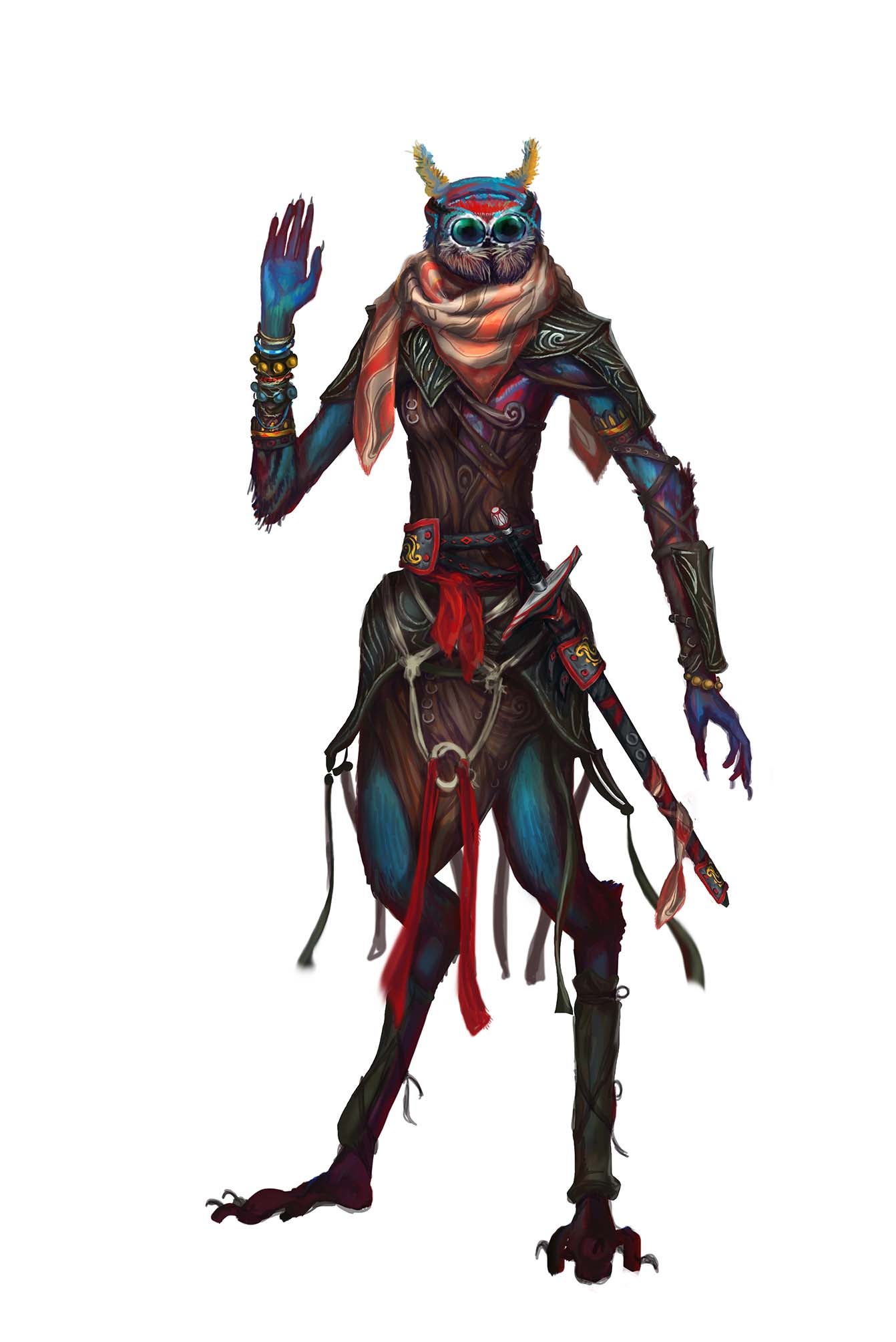
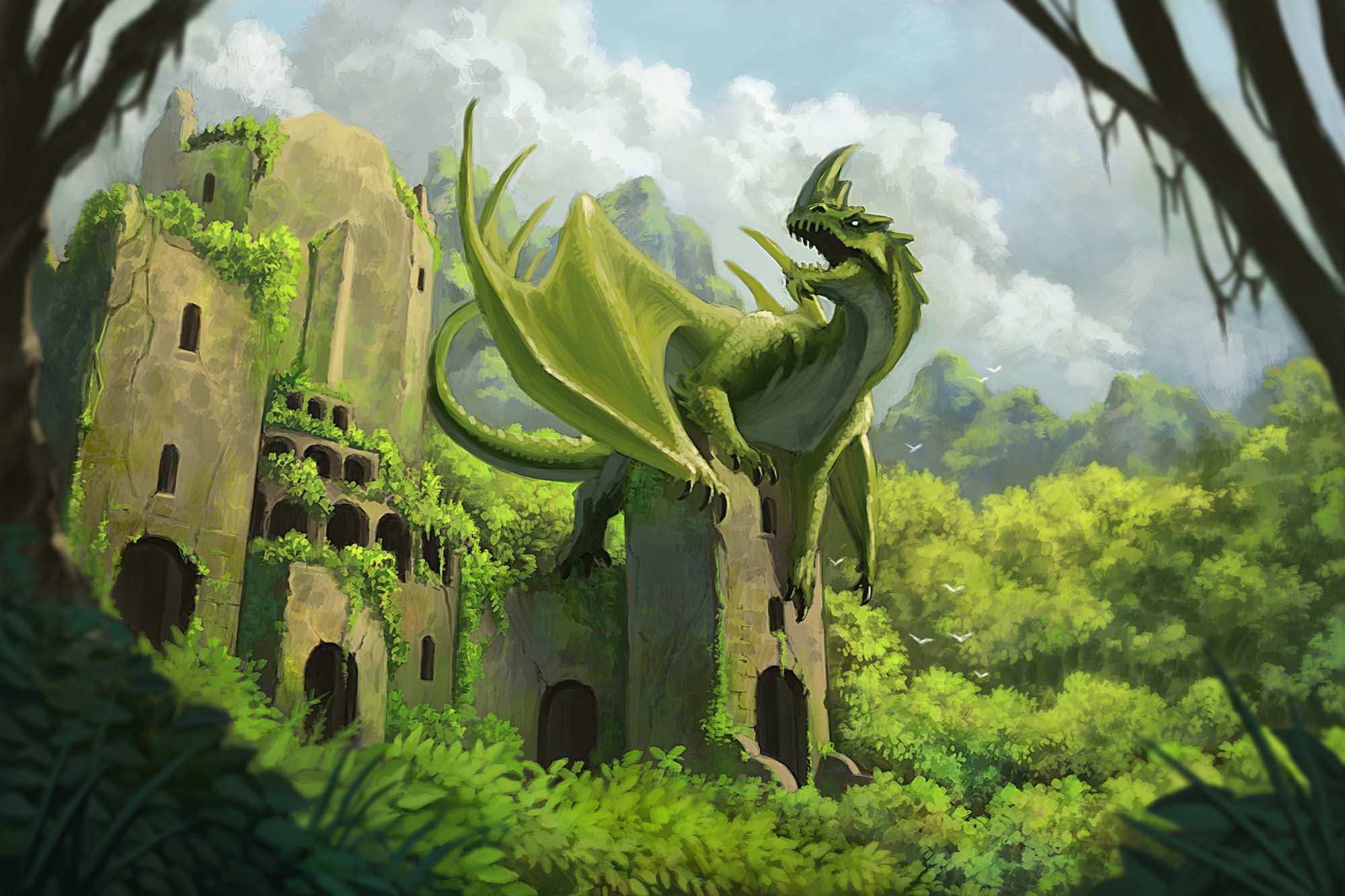
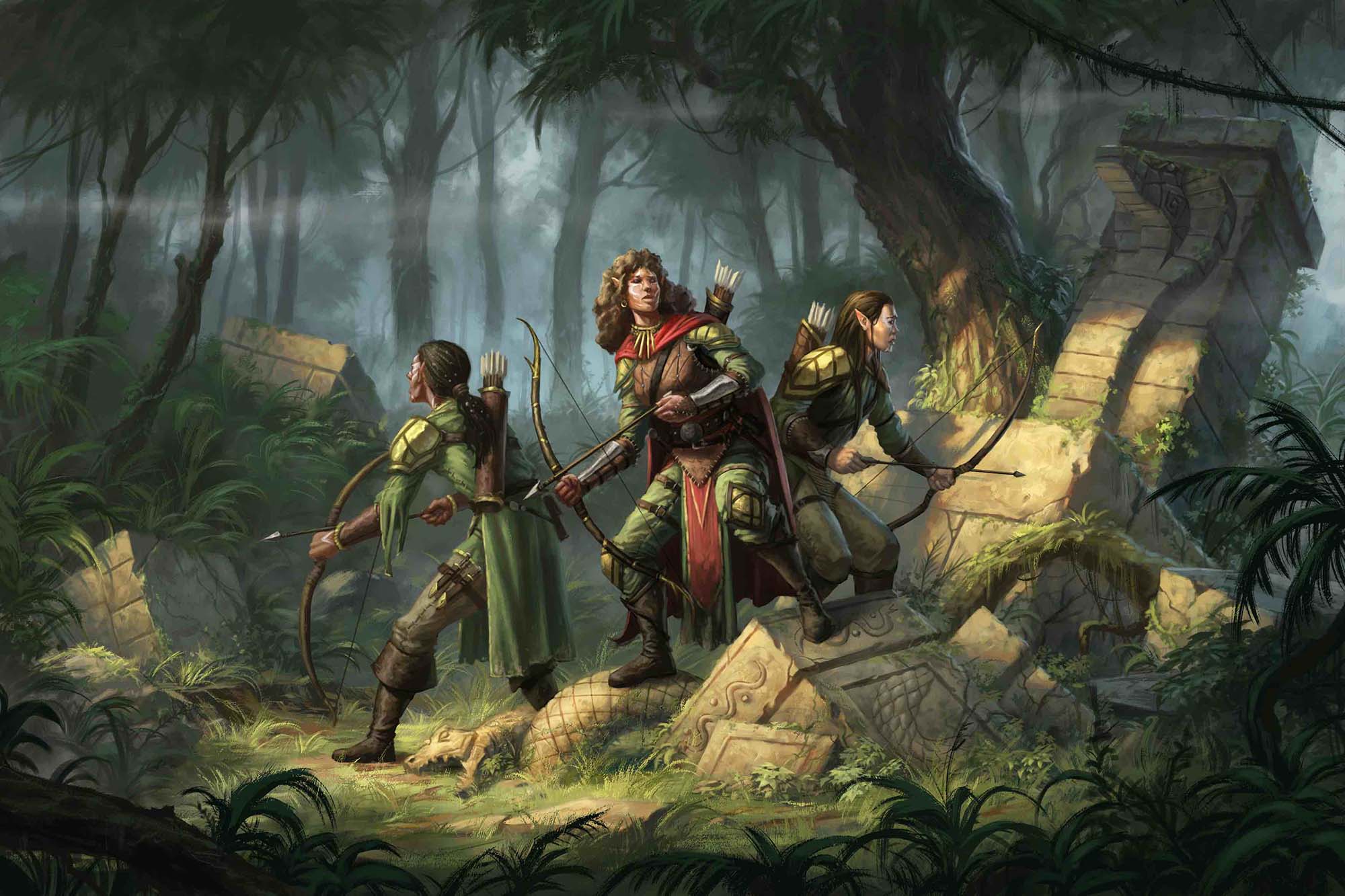
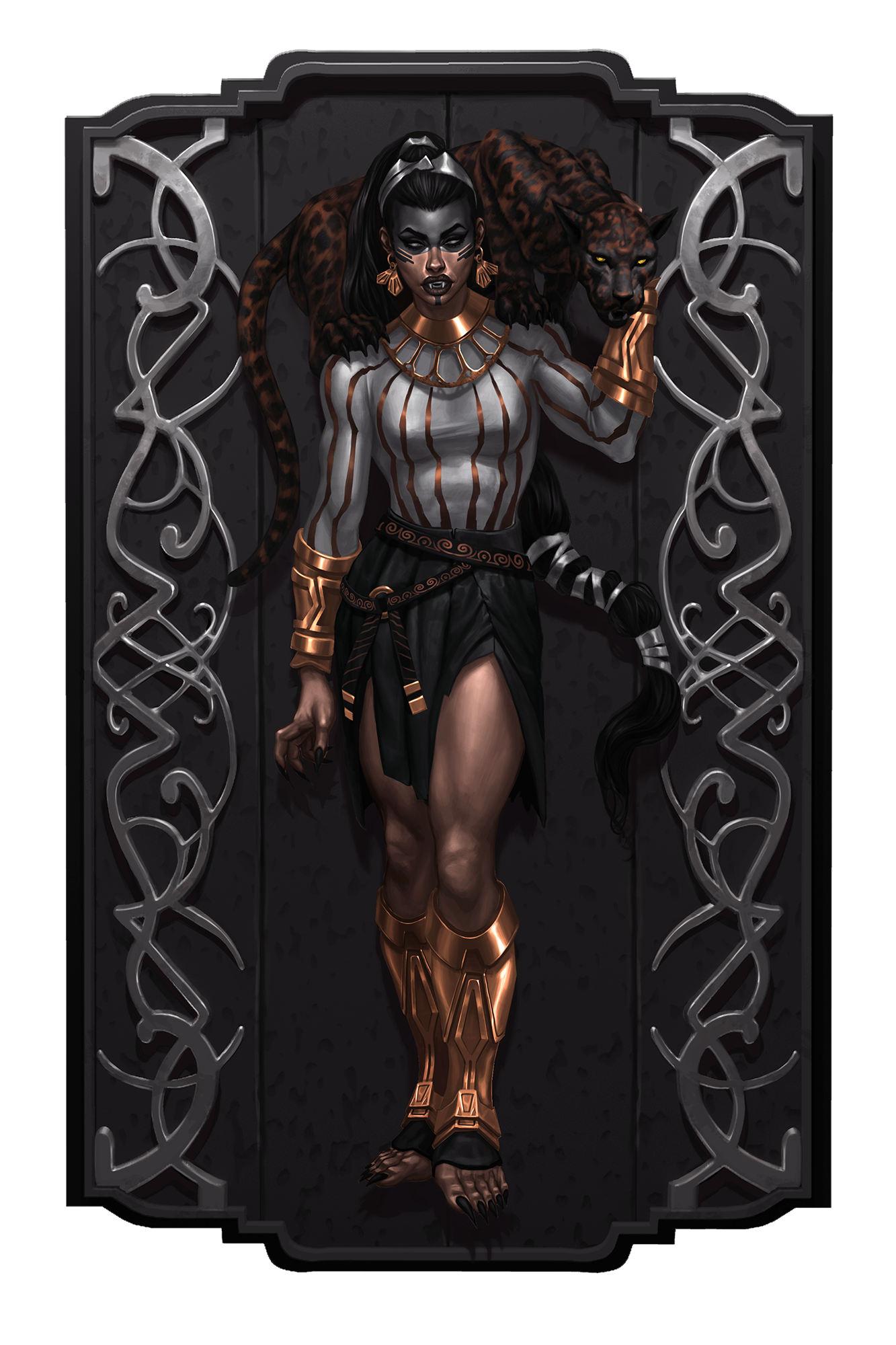
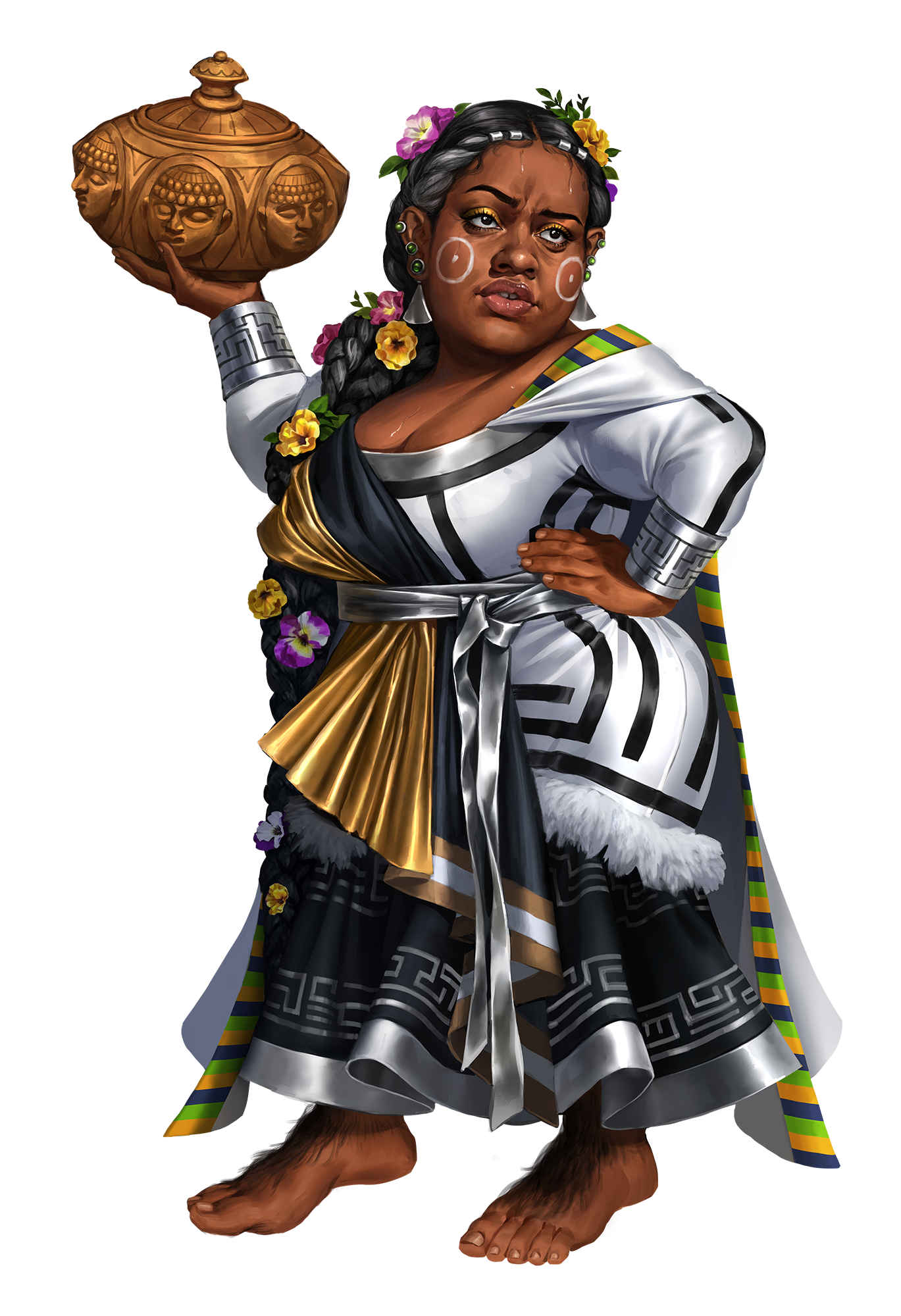
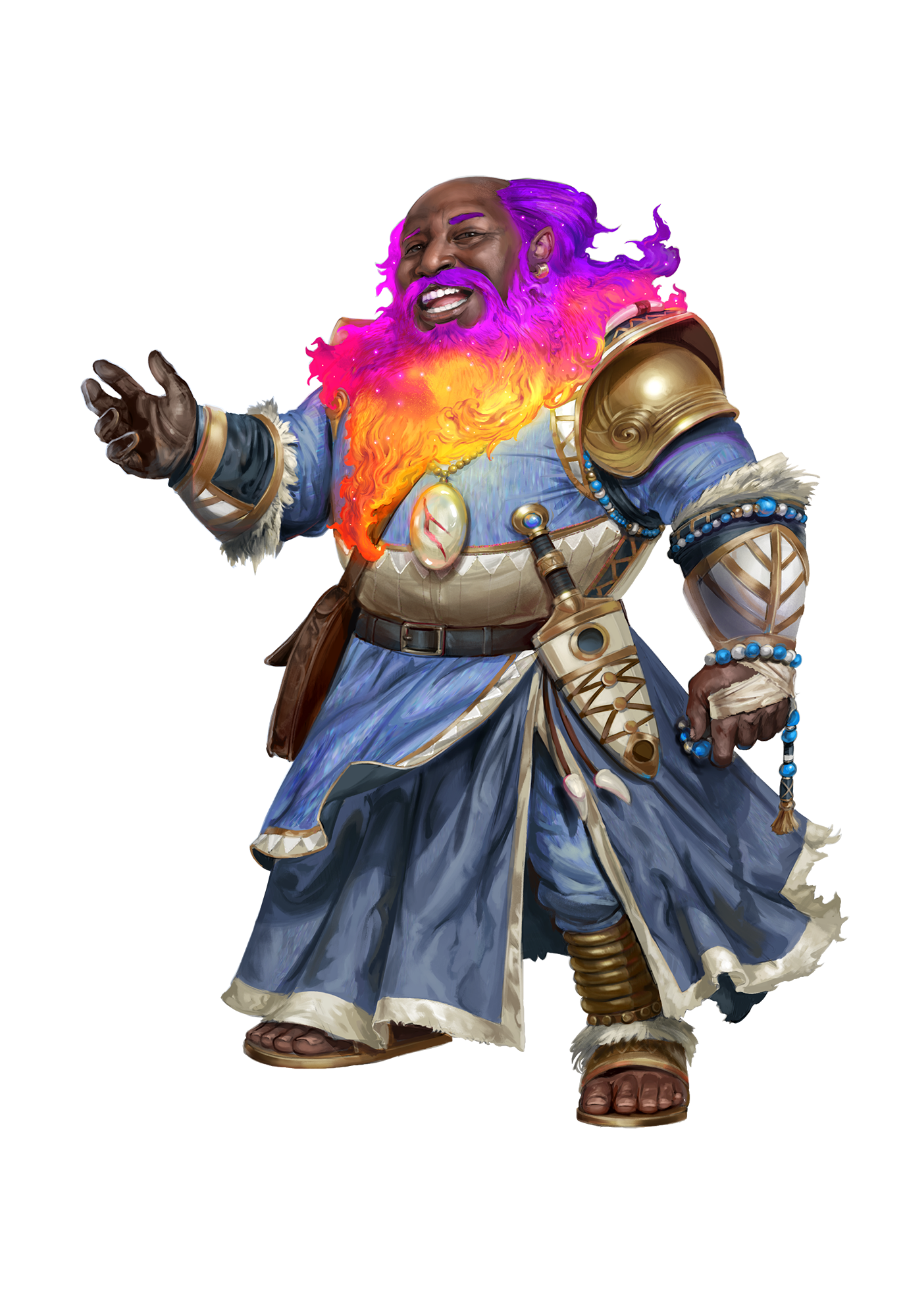
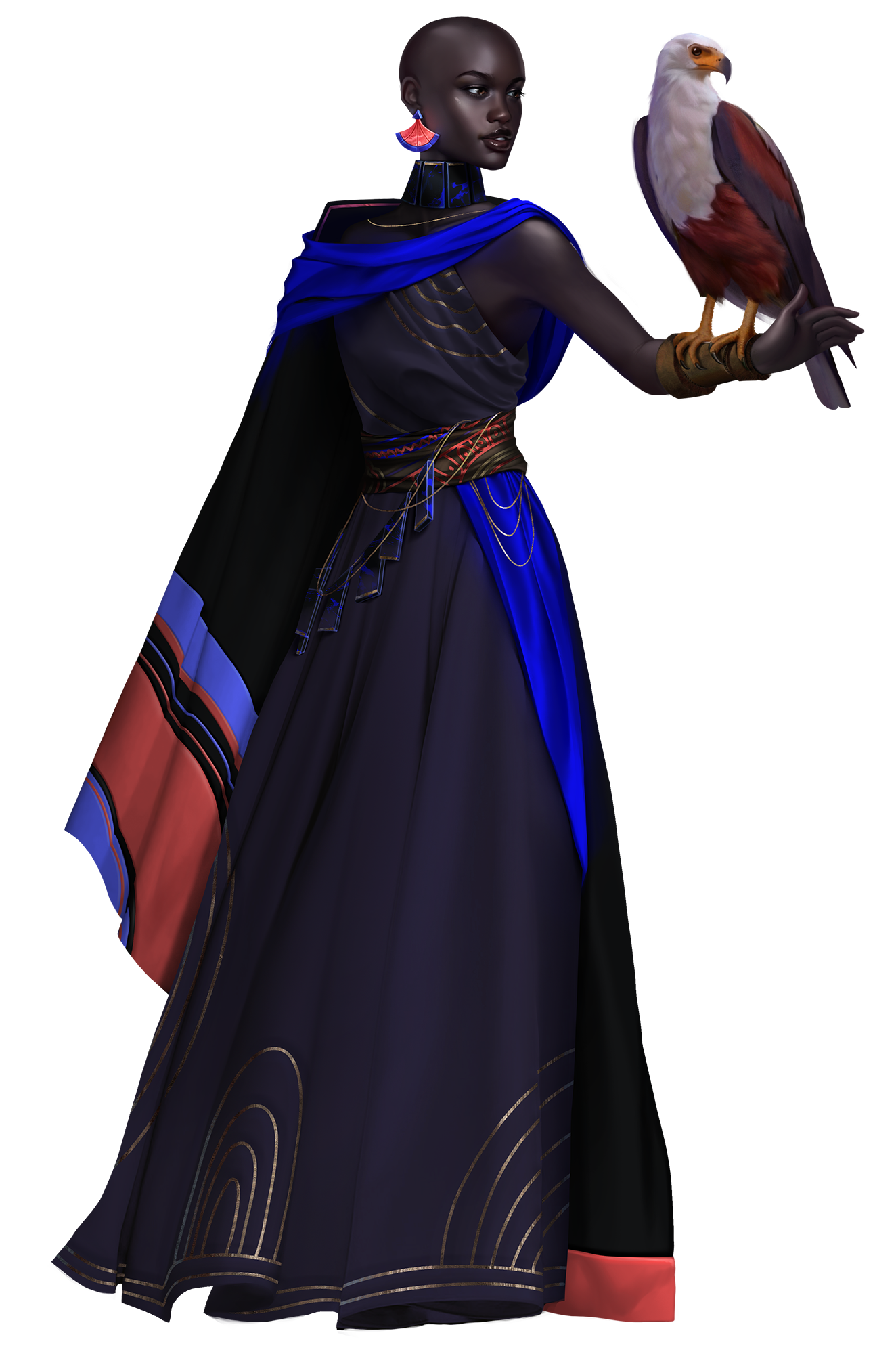
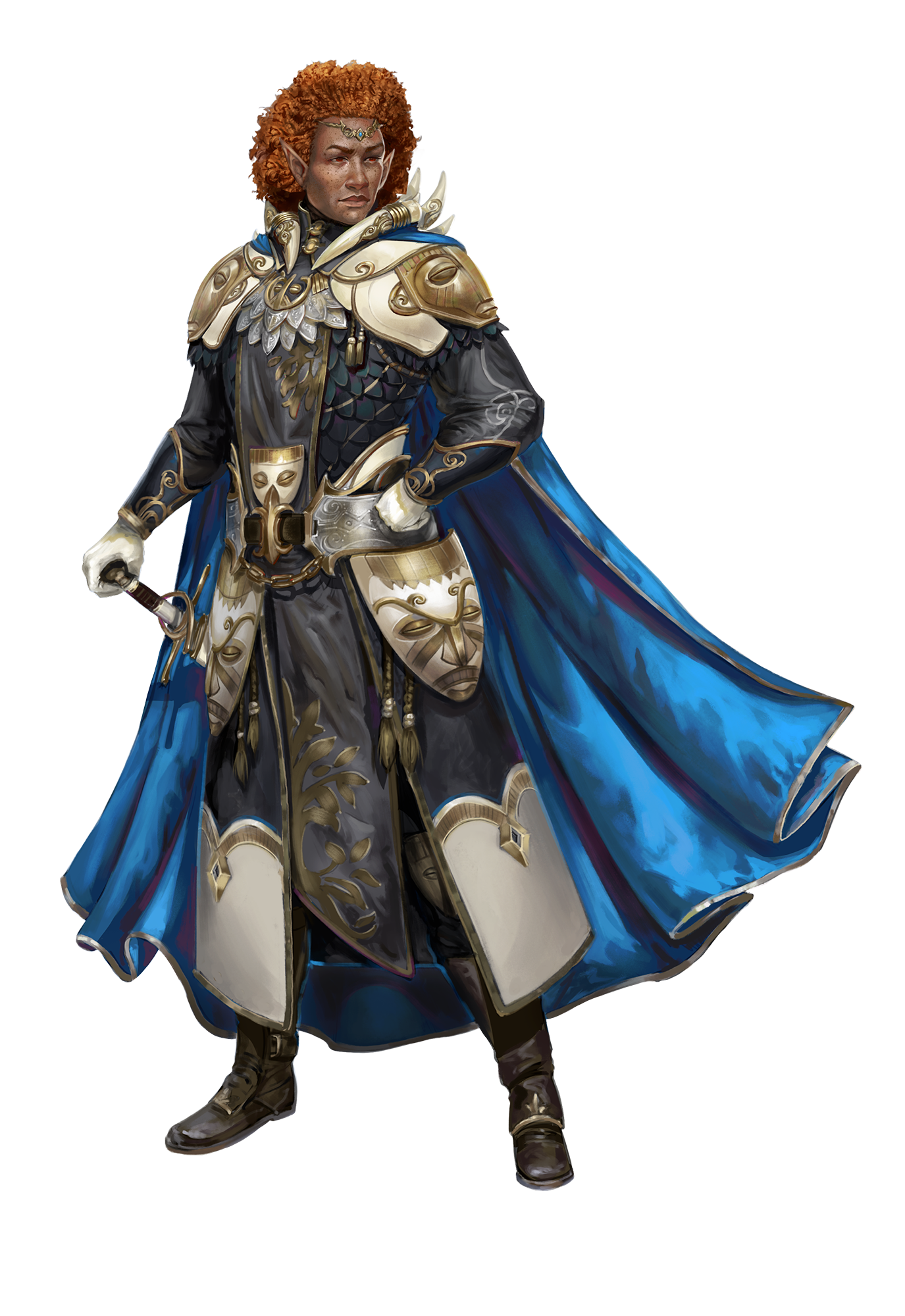
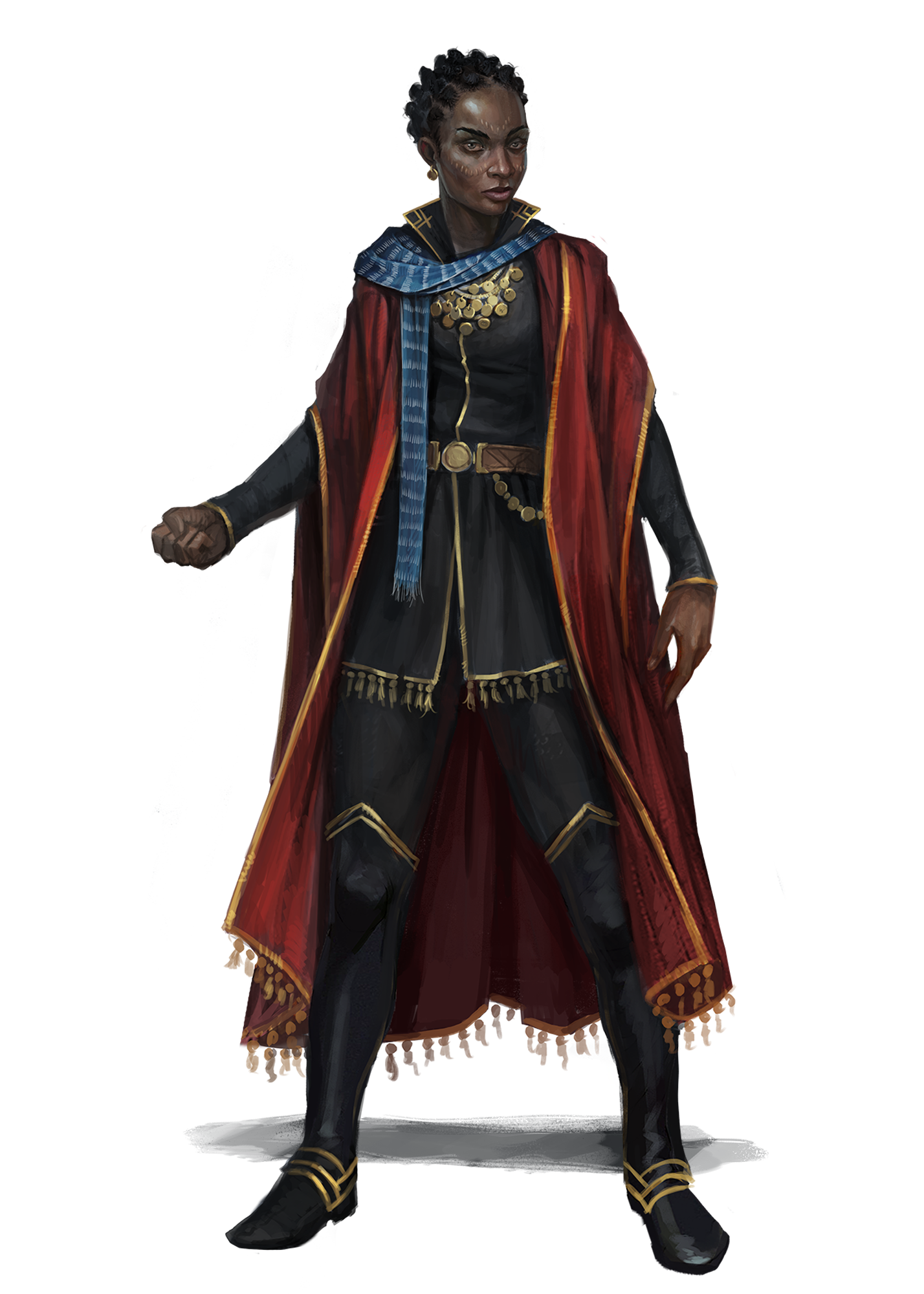
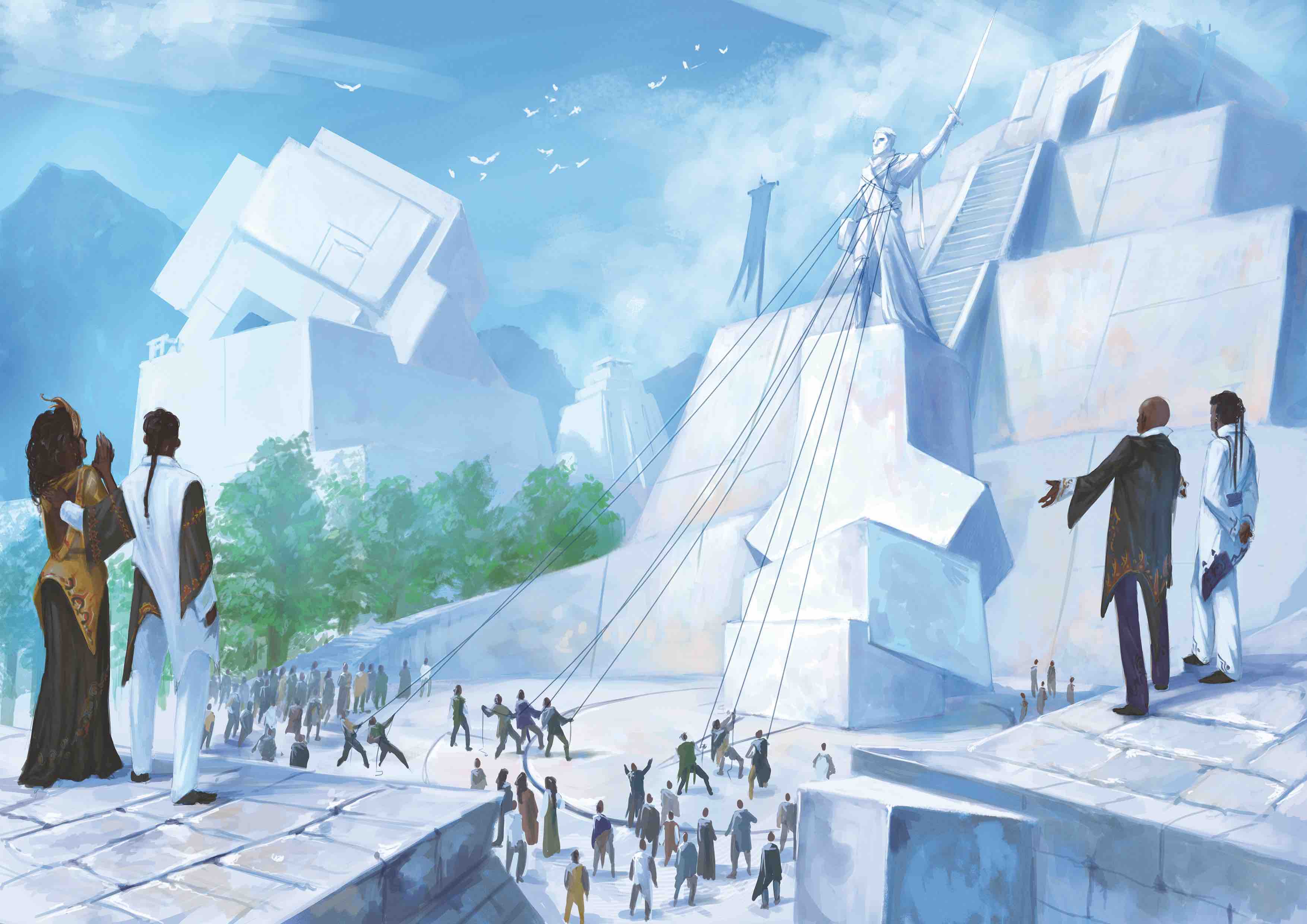
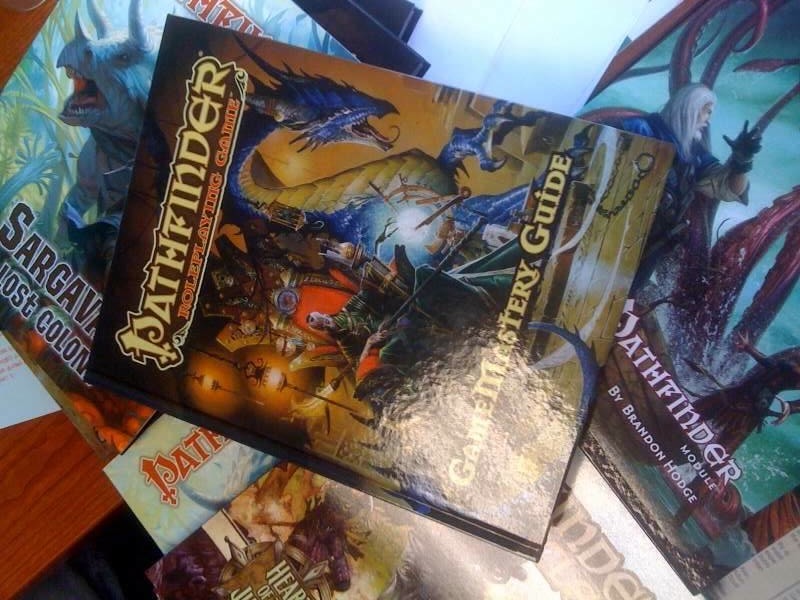
Forge a path into a limitless fantasy adventure with this epic collection of Pathfinder Second Edition products themed around the Mwangi Expanse meta-region of the Lost Omens setting, the Magaambya magic school, and the hit Strength of Thousands Adventure Path! Additionally, this bundle is filled with the books new players need to create heroes and set out on their journey in the legendary Pathfinder tabletop RPG universe, including the Core Rulebook, monster-filled Bestiary, maps, accessories, and ready-to-play adventures. Plus, you choose how much of your purchase supports ComicBooks For Kids! and ComicBooks For Troops!
A magic school like no other! The oldest and most prestigious magic academy in the world is the Magaambya, an ancient institution founded by the greatest wizard the world has ever known. This wizard vanished long ago, but sinister enemies plot against his school and those who attend it. Over their long academic career, the heroes rise from humble students to become teachers, ultimately holding the fate of the Magaambya magic academy in their hands. Graduates of the Magaambya are among the greatest wardens of the world, but if the heroes can’t marshal the strength of thousands who have come before them, the venerable Magaambya might fall!
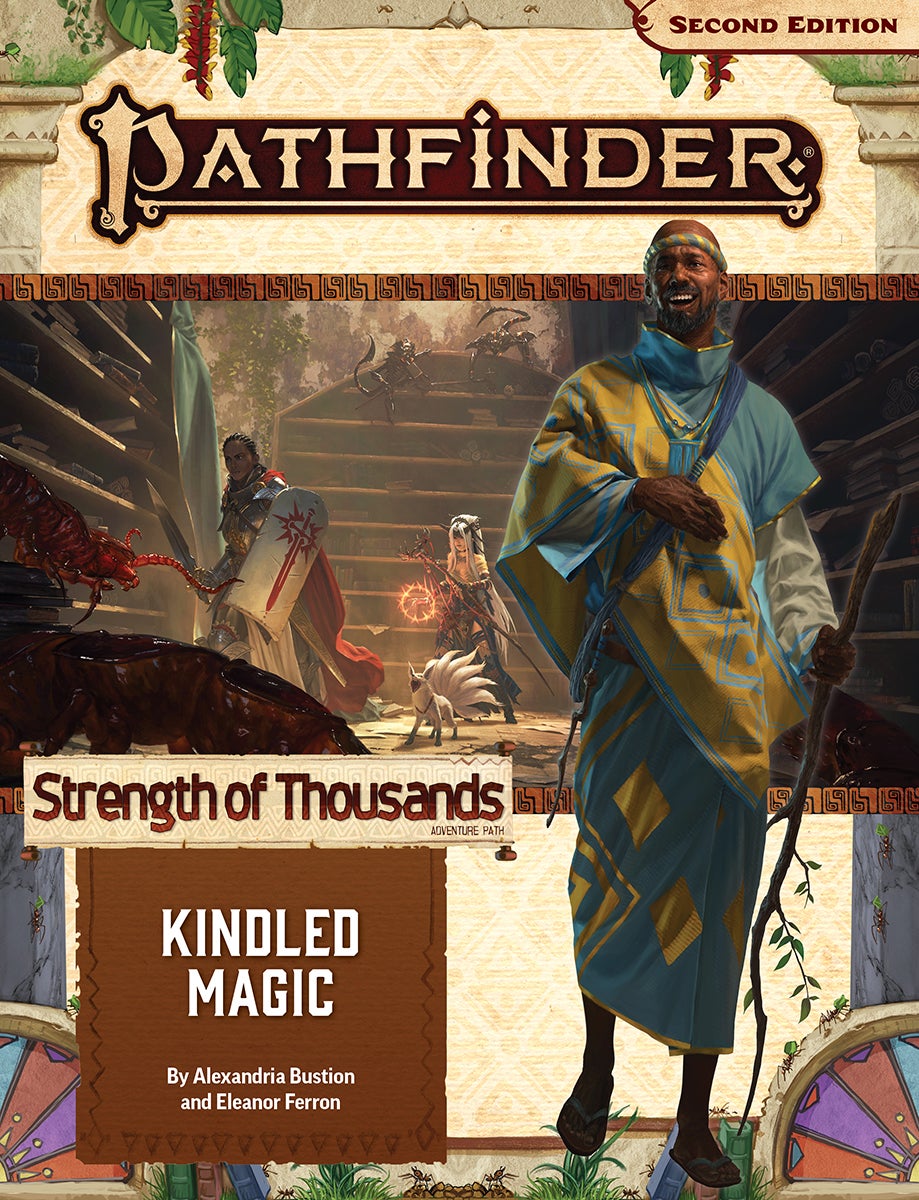
The $5 tier includes PDFs of Pathfinder Adventure Path #169: Kindled Magic (Strength of Thousands 1 of 6), Pathfinder Adventure Path #170: Spoken on the Song Wind (Strength of Thousands 2 of 6), Pathfinder Bounty #9: Fishing in Anthusis, Pathfinder Bounty #17: Sodden Stories, Pathfinder Flip-Mat: Docks, Pathfinder Flip-Mat: Jungle Multi-Pack, Pathfinder Second Edition GM Screen, and Pathfinder Character Sheet Pack.
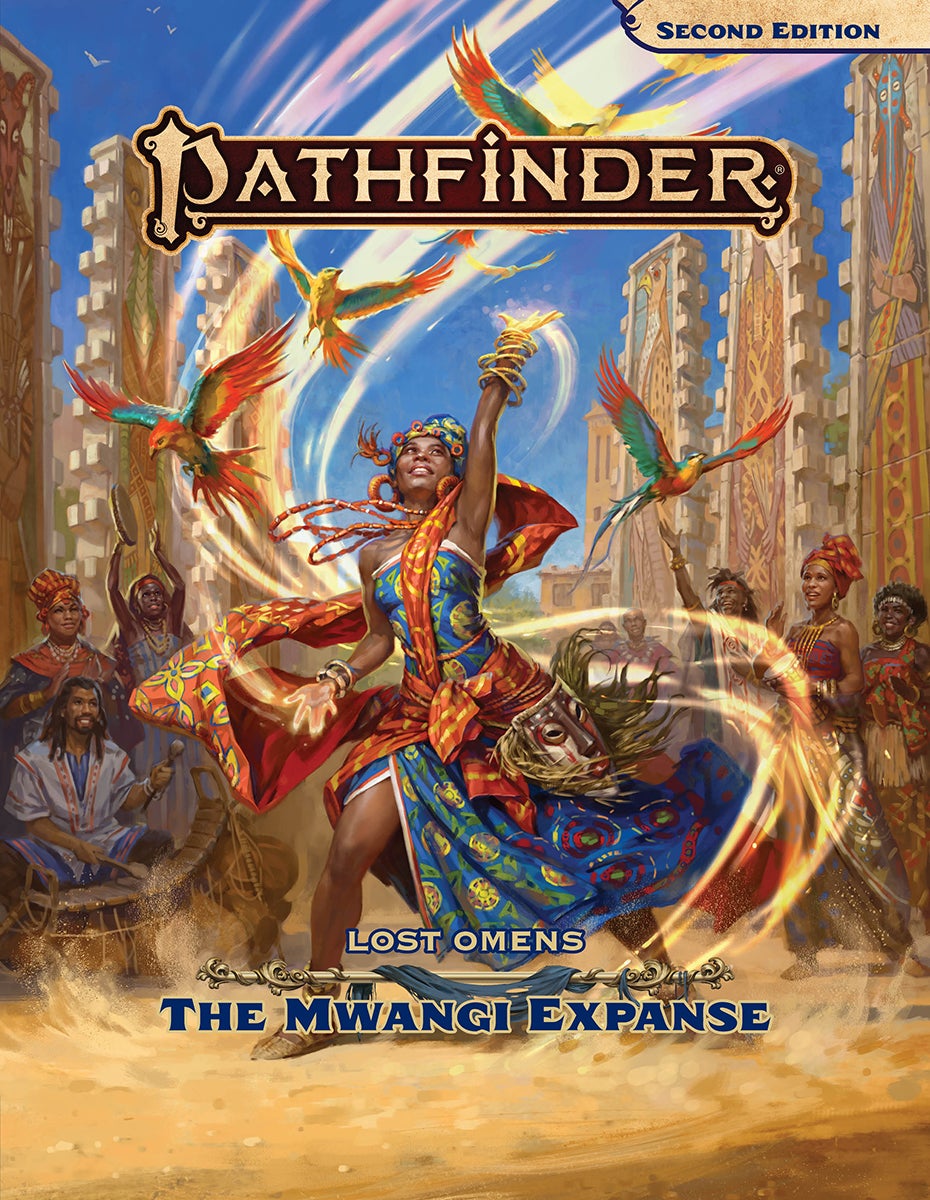
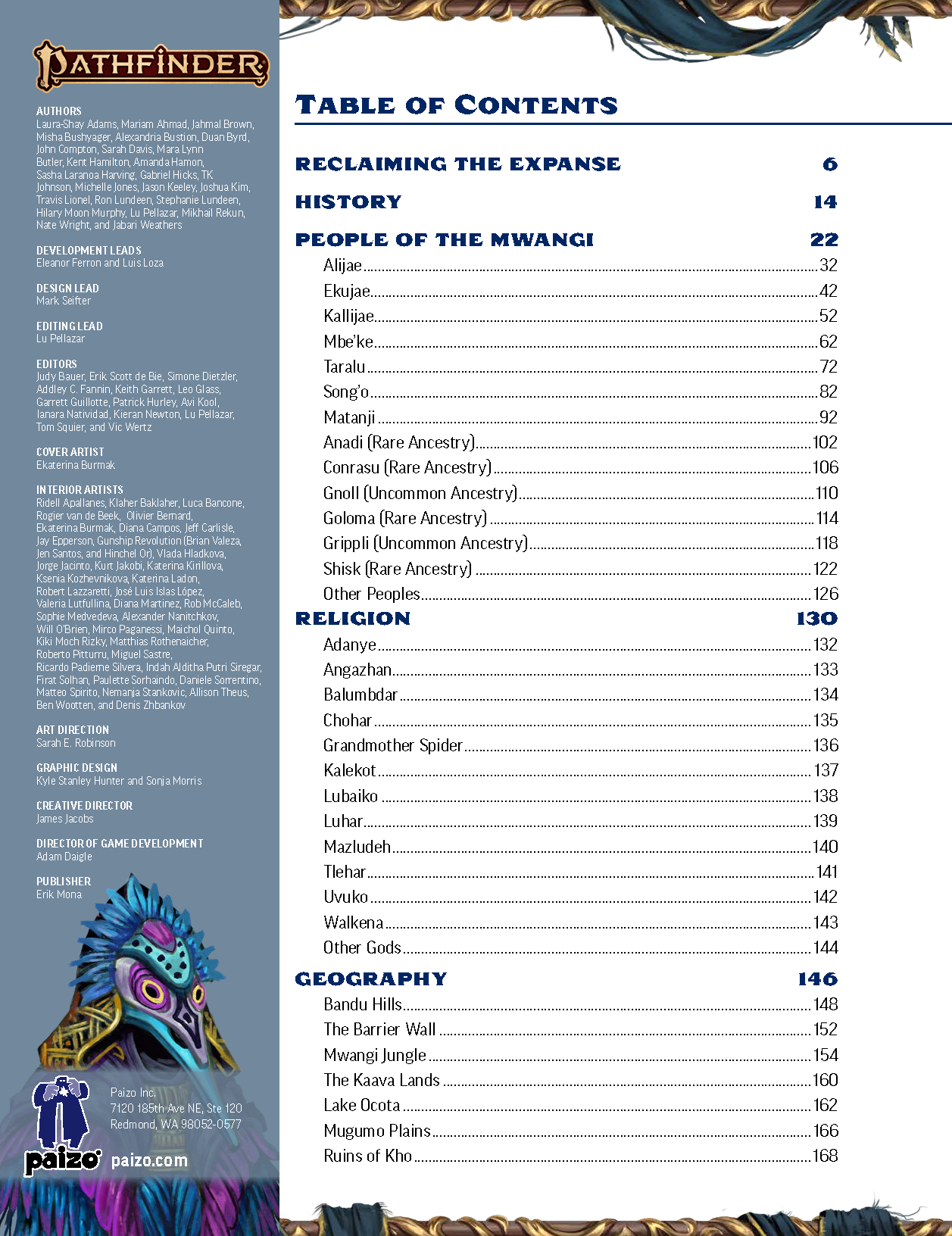
For $15, you’ll also get PDFs of Pathfinder Lost Omens The Mwangi Expanse, Pathfinder Adventure Path #171: Hurricane’s Howl (Strength of Thousands 3 of 6), Pathfinder Adventure Path #172: Secrets of the Temple-City (Strength of Thousands 4 of 6), Pathfinder Adventure Path #173: Doorway to the Red Star (Strength of Thousands 5 of 6), Pathfinder Adventure: The Slithering, Pathfinder Flip-Mat: The Slithering, Pathfinder Society Scenario #1-09: Star-Crossed Voyages, Pathfinder Society Scenario #1-20: The Lost Legend, Pathfinder Society Scenario #1-23: The Star-Crossed Court, Pathfinder Flip-Mat: Forest Multi-Pack, and the Pathfinder Flip-Mat: Ambush Sites Multi-Pack.
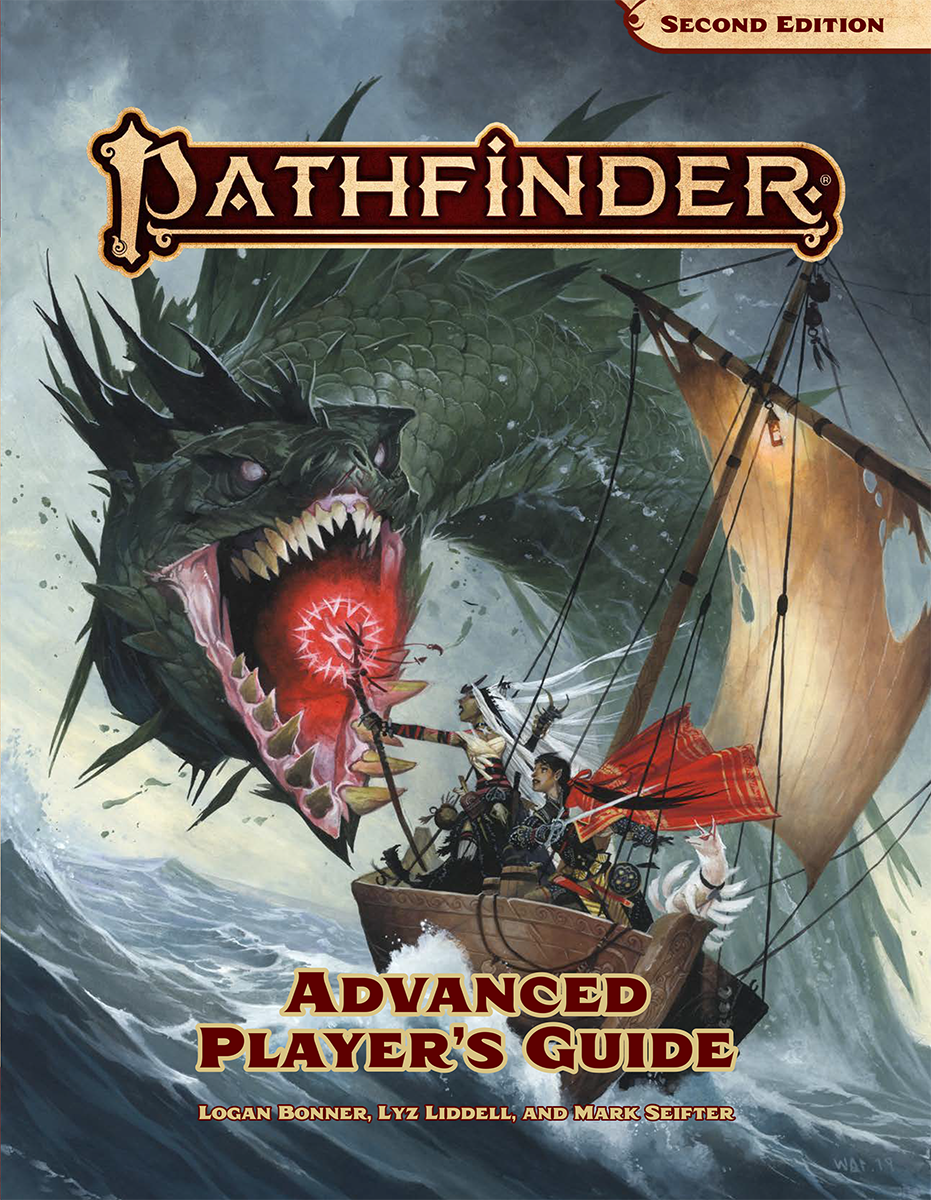
For only $25 you’ll get all of the above, plus PDFs of the Pathfinder Advanced Player’s Guide, Pathfinder Second Edition Core Rulebook, Pathfinder Second Edition Bestiary, Pathfinder Lost Omens World Guide, Pathfinder Lost Omens Character Guide, Pathfinder Adventure Path #174: Shadows of the Ancients (Strength of Thousands 6 of 6), Pathfinder Adventure: Threshold of Knowledge, Pathfinder Society Scenario #3-03: Echoes of Desperation, and Pathfinder Flip-Mat: Shipwrecks.
That’s a $400 value! Humble Bundles offer great deals and support great causes. Purchasers can decide how much of their donation goes to each participant at checkout. This Humble Bundle, unlike some of our past bundles, does not have a physical reward tier.
—The Paizo Team
About ComicBooks For Kids!
Our mission is to provide child friendly comic books to children in hospitals and cancer centers across the U.S. Where we can also help in Canada, we will as well. In almost every case, these will come as new comics from the many publishers who support us. On occasion, we will also provide unread, warehouse overstock. In all cases, we work within the medical facility's infectious disease policies.About ComicBooks For Troops!
Our mission is to provide comic books through our partner organizations to the real heroes—the men and women who serve our country proudly in all branches of the U.S. military!Support the Pathfinder Second Edition Strength of Thousands Bundle!
Support the Pathfinder Second Edition Strength of Thousands Bundle!
Thursday, August 18, 2022