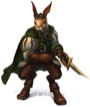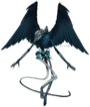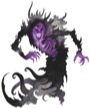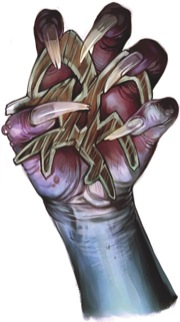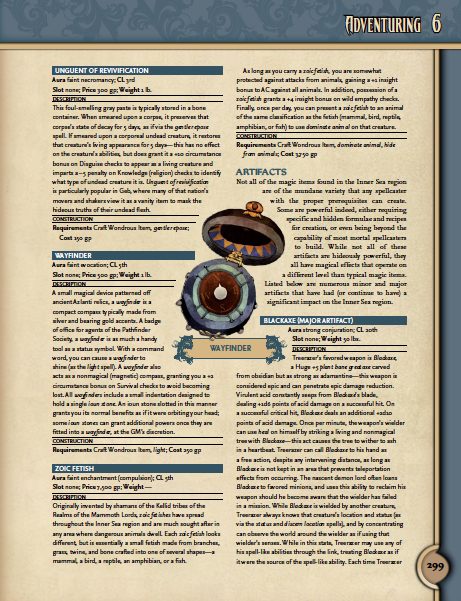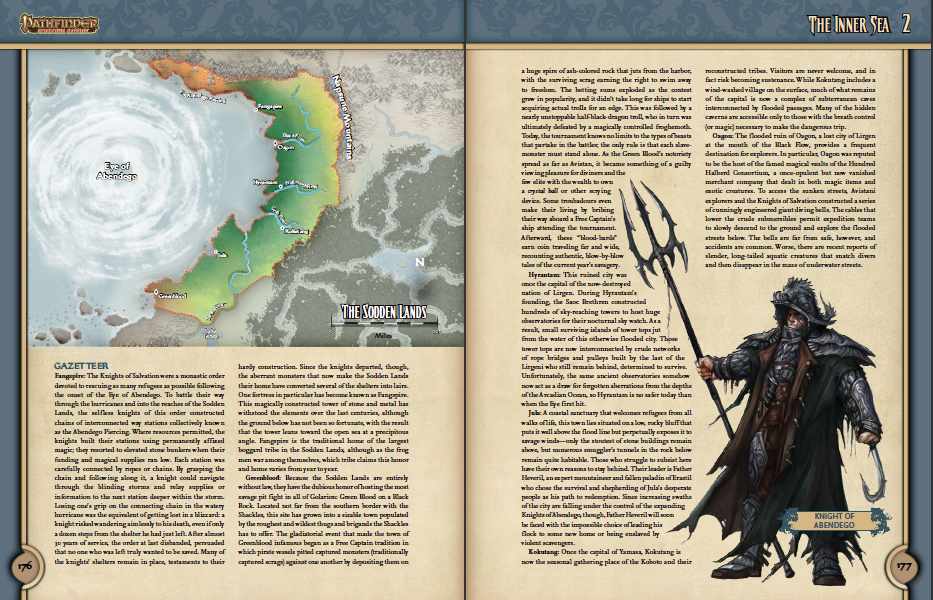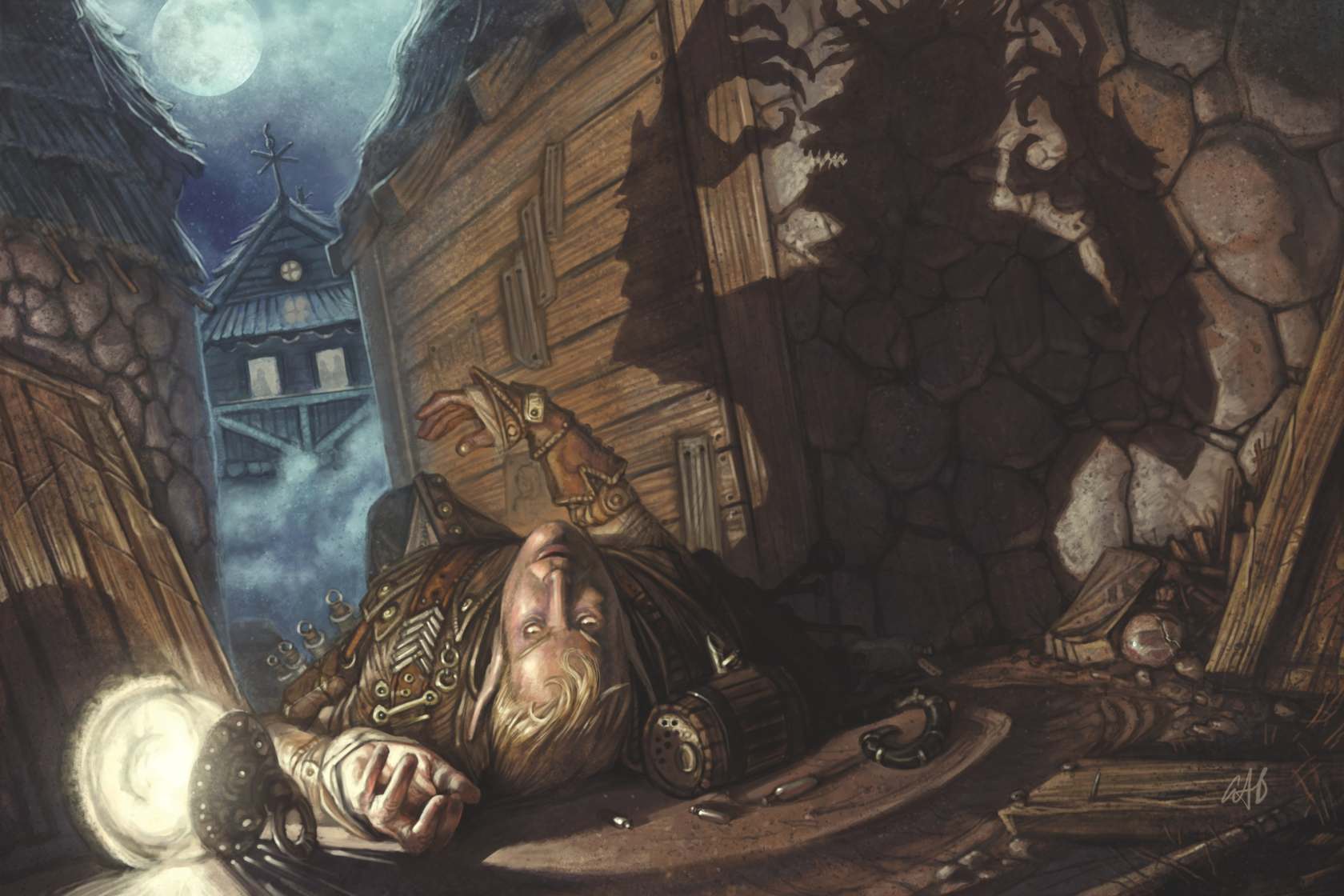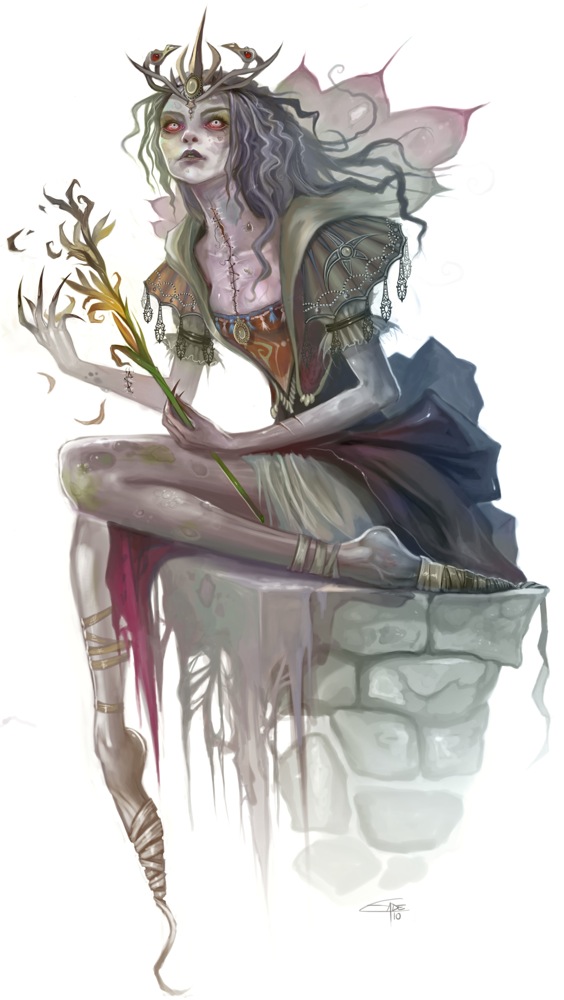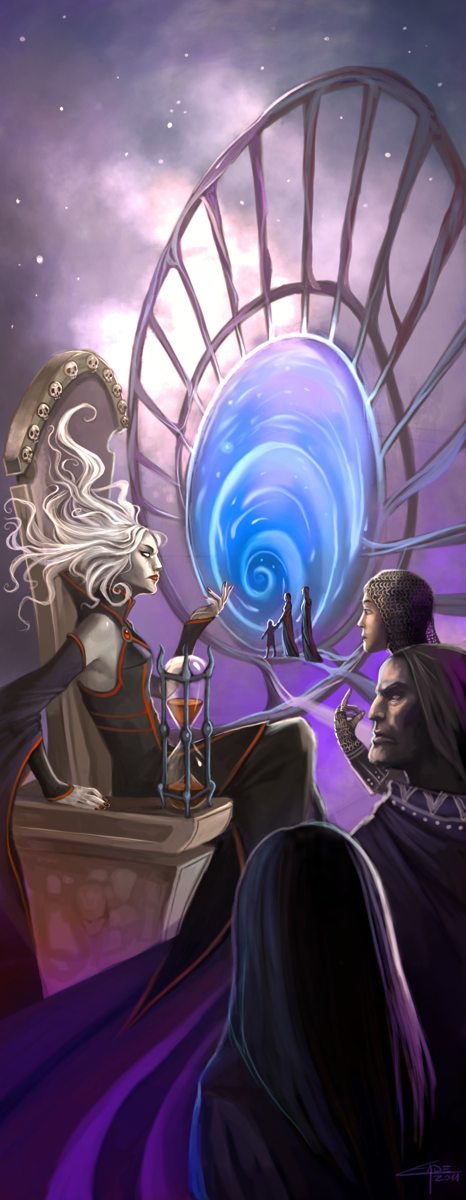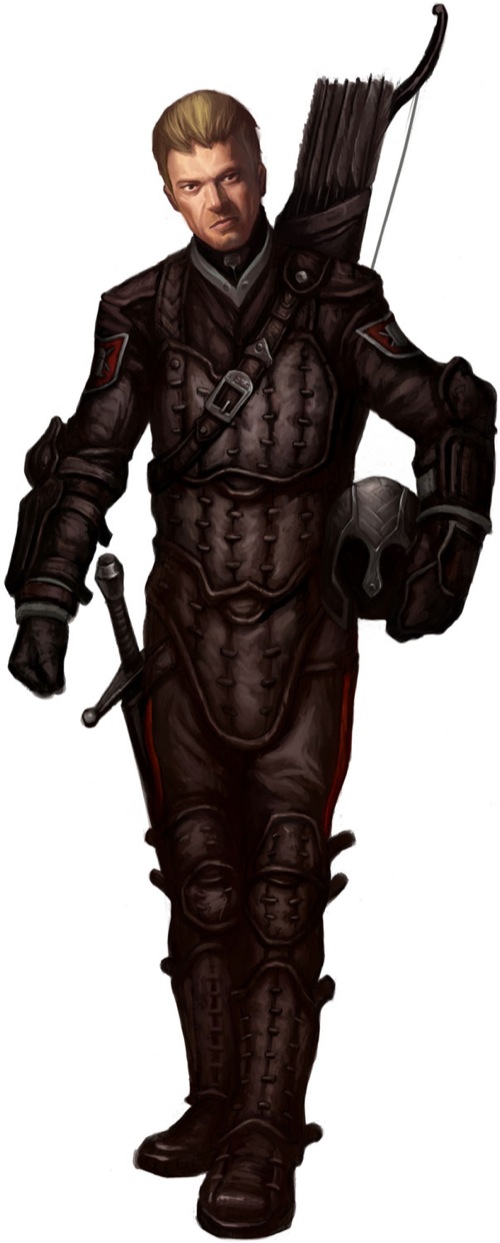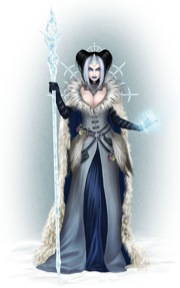
Well, because you asked for it, here's a preview of some elements taken from the upcoming Pathfinder Campaign Setting book, Inner Sea Magic. I'm including excerpts from two different sections of the book—one of the possible results for unleashing primal magic (as might occur if you try to cast spells in the Mana Wastes) and one new hex that the winter witch archetype grants access to (and yes they do gain a bonus on all cold spells they cast).
Excerpted from "Sample Primal Magic Effects": 75–78 Strange telekinetic forces rip through the area, attempting to trip all creatures in a CR x 10 foot radius. The event makes a trip combat maneuver check against all available targets, using a CMB of 10 + CR. Any creature tripped by the event has its equipment reorganized and tangled by the mischievous telekinesis. Until a creature takes a minute to reorganize its belongings, retrieving a stowed item is a full-round action.
Excerpted from "Spells": Frozen Caress (Su): Whenever the winter witch casts a touch spell, she can infuse the magic with cold as a swift action. This grants the spell the cold descriptor, and adds 1d4 points of cold damage to the spell's effect. If the touch spell allows a saving throw, a successful save negates this additional cold damage.
And here's one more preview—the names of all 39 spells that appear in the book, presented in alphabetical order:
Hungry Darkness
Hunter's Lore
Ice Spears
Impart Mind
Khain's Army
Kiss of the First World
Light of Iomedae
Martial Marionette
Martyr's Bargain
Music of the Spheres
Orchid's Drop
Pugwampi's Grace
Shadow Barbs
Shining Cord
Siphon Magic
Song of Kyonin
Spell Absorption
Spell Absorption, Greater
Spellscar
Suppress Primal Magic
Tattoo Potion
Transfer Tattoo
Vengeful Comets
Vex Giant
Weaponwand
Zone of Foul Flames
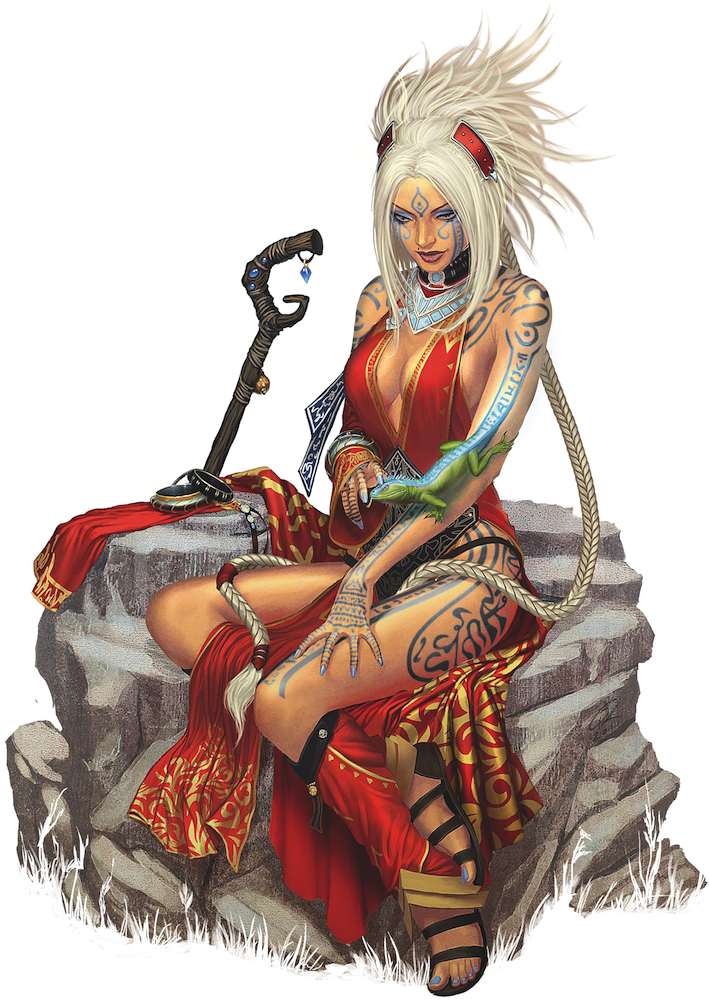
So, Inner Sea Magic has been off to the printer for a few weeks now, but this is really the first chance I've had to say much more about it. And since the editors are still scrambling with various convention-season-related projects, I'll keep this blog short and just show off some art that goes with the winter witch archetype and the tattooed sorcerer archetype. It should probably be pretty obvious which one goes with which. (And also—first ever illustration of Seoni's familiar!)
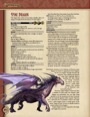
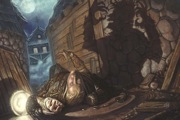
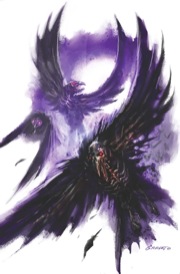
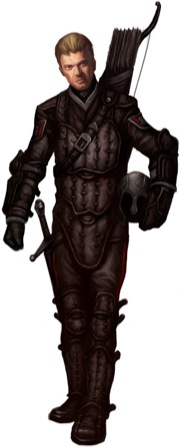
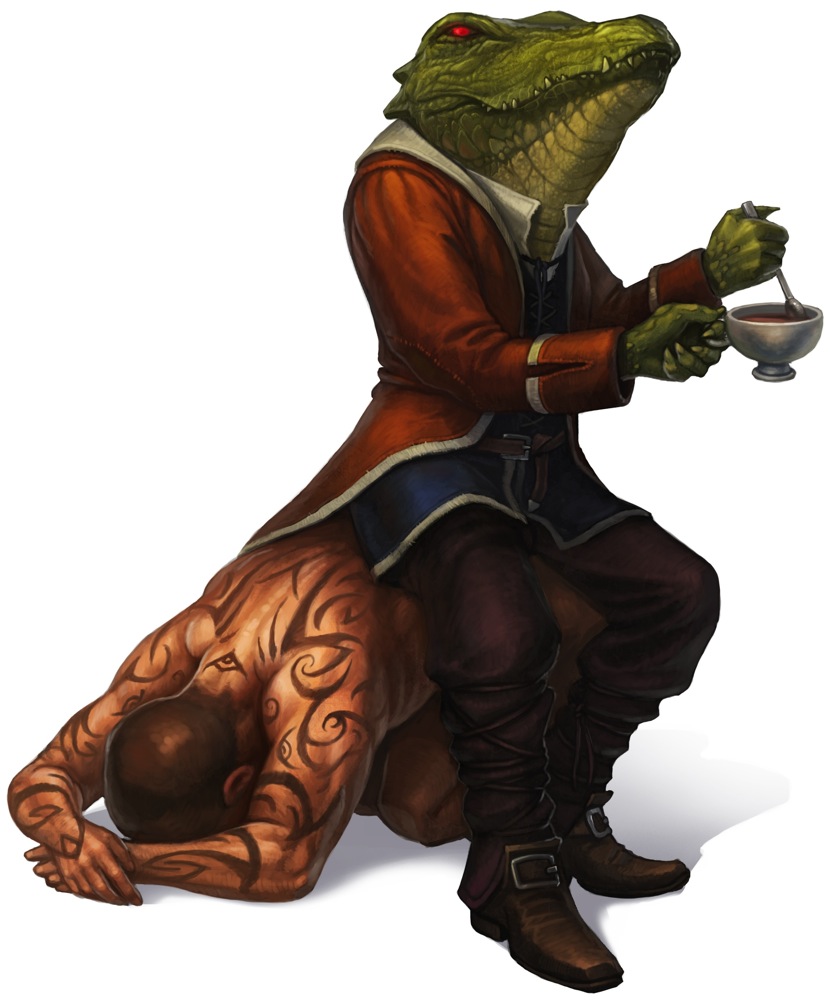
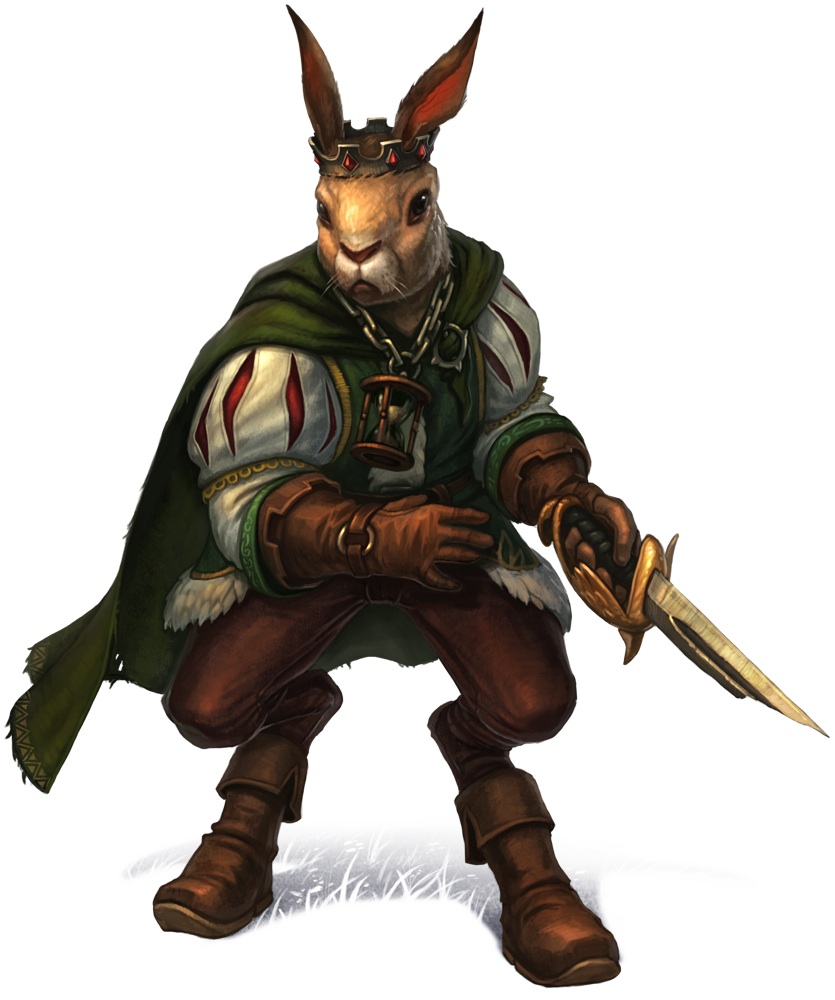
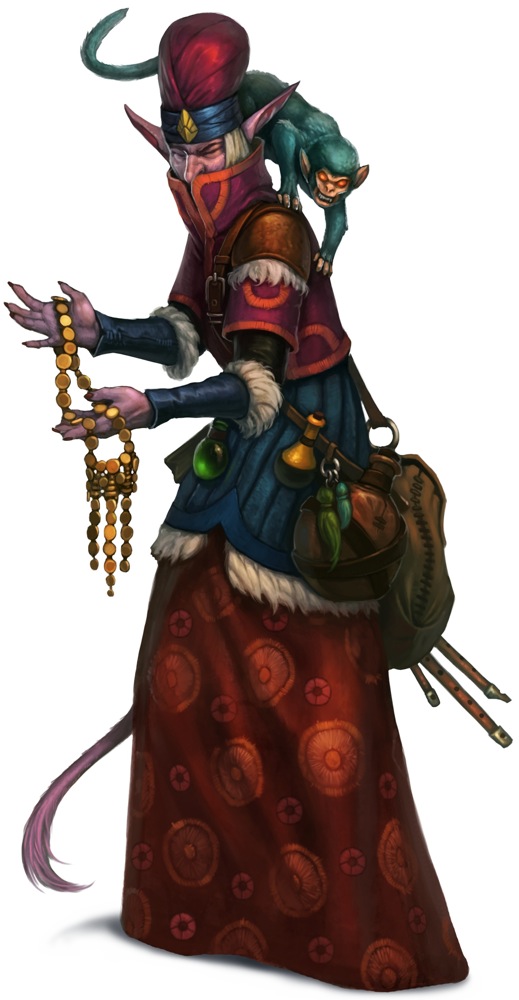
So, we just shipped The Harrowing off to the printer. An adventure where you get sucked into a magical deck of harrow cards and end up interacting with some of the strangest characters we've published yet! Check 'em out! (Those of you who are familiar with the Harrow Deck will probably recognize these three folks...)
Illustrations by Dmitry Burmak
Also, you can tell when I forget to write a blog post until we get to a point where I have only 20 minutes to do a blog before heading into a supersized meeting that'll take up the rest of the day, can't you? Cause there's not many words? Guess I should put up a third picture from The Harrowing to further distract you from the lack of words... hope it works!
In Bestiary 2 we introduced a new race of neutral outsiders, the aeons. But we weren't satisfied with only one race of neutral outsiders—especially since aeons don't fit perfectly into the Boneyard, Golarion's true neutral Outer Plane. With the article on Pharasma in the second volume of Carrion Crown, we revealed a second race of neutral outsiders—ones that specifically serve Pharasma and dwell in the Boneyard itself. The psychopomps.
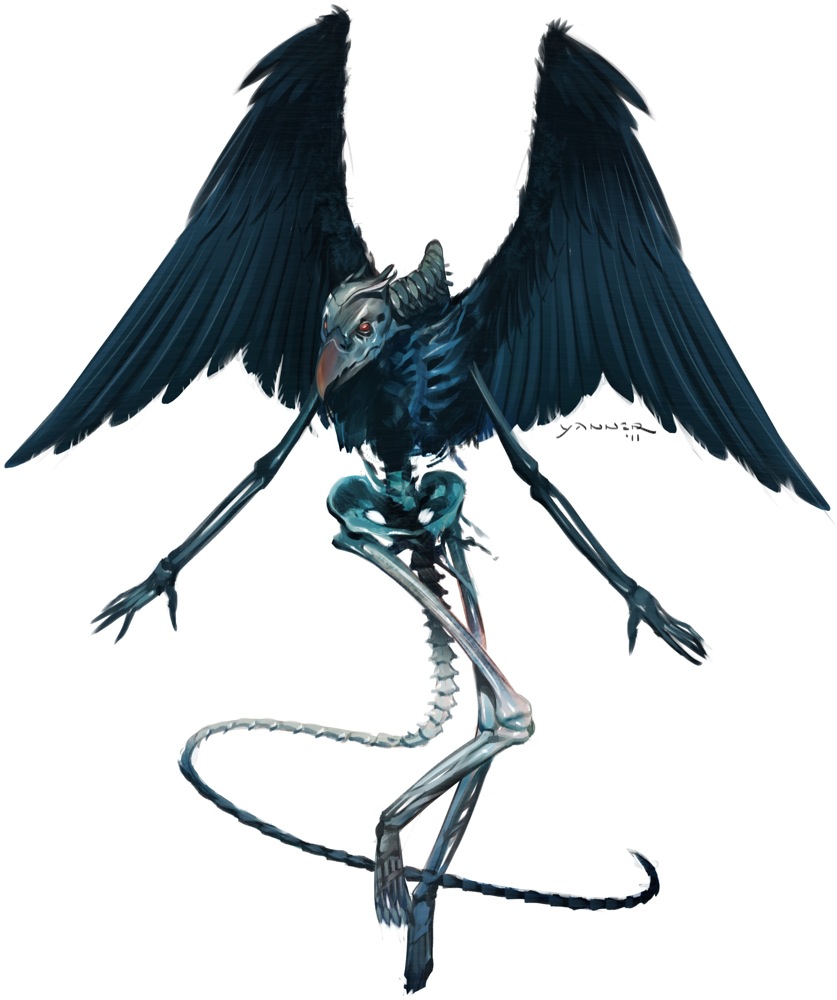
In Pathfinder Adventure Path #47, we'll present full stat blocks for two psychopomps—both of which are illustrated here in this blog post: the fearsome skeletal vanth and the cute little four-winged nosoi. We'll be presenting more of these creatures in the future, but I'm already quite pleased with how they're turning out. To the extent that I wouldn't mind having a nosoi pet. Those guys are so cute!
Illustration by Kieran Yanner
Illustration by Lake Hurwitz
Anyway, while I'm not quite ready to reveal any full stat blocks yet for psychopomps, I can do the next best thing—here are the rules for psychopomp traits!
Psychopomp Traits
The gears of the multiverse turn through the constant motion of mortal souls. Although Pharasma is the ultimate judge over the dead, a grand bureaucracy serves her and overflows with able record-keepers, prosecutors, investigators, and guardians. They are psychopomps, the right hand of death. Psychopomps, also known as reapers in some circles, are neutral outsiders who serve death and ensure the steady flow of souls into the cosmic cycle. Few care for the concept of balance so much as for duty and the rightful progression of life to death and beyond by any and all means necessary. As enforcers of mortality and the cosmic cycle, psychopomps universally loathe undead. Although they vary widely in appearance, all psychopomps bear an elaborate funerary mask as a mark of their place in the cycle of life and death.
Psychopomp Traits: A psychopomp possesses the following traits.
Darkvision 60 feet and low-light vision.
Immunity to death effects, disease, and poison.
Resistance to cold 10 and electricity 10
Except where otherwise noted, psychopomps speak Abyssal, Celestial, and Infernal.
A psychopomp's natural weapons, as well as any weapon it wields, are treated as though they had the ghost touch weapon special ability.
Spiritsense (Su) A psychopomp notices, locates, and can distinguish between living and undead creatures within 60 feet, just as if it possessed the blindsight ability.
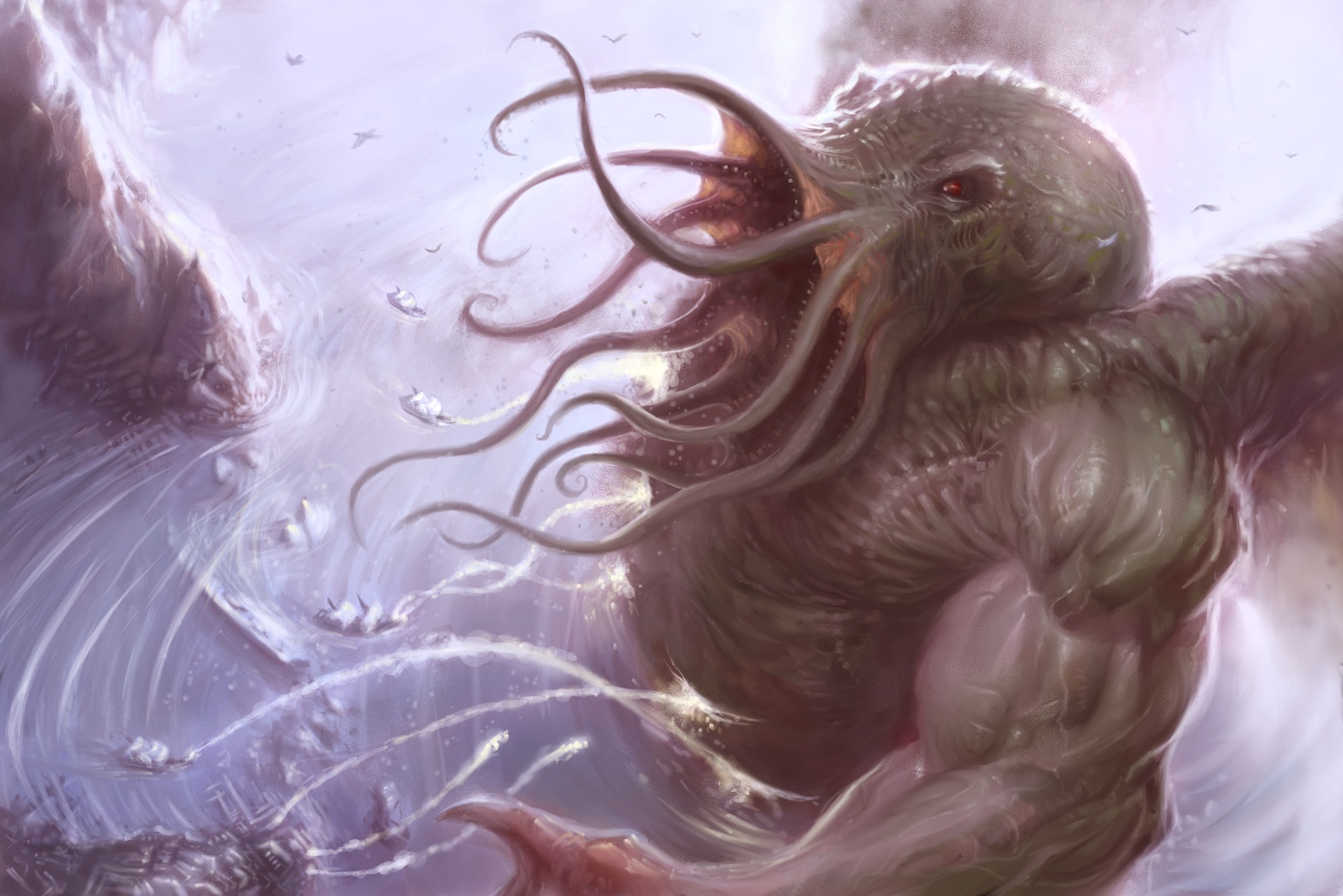
So, I was out sick yesterday, and as a result missed out seeing Pathfinder #46 get sent off to the printer. Which is pretty exciting, since that volume's got more Lovecraftian awesomeness in it than anything we've done to date? The proof is in these out-of-context illustrations by Scott Purdy that are sure to get everyone thinking that the Carrion Crown Adventure Path will be taking some pretty drastic and unexpected turns! (Fans of Carrion Crown's Ustalav locations can breathe easy, though, since these pictures are from the foreword and the bestiary of the book, and thus don't actually depict events that occur in this volume's adventure.)
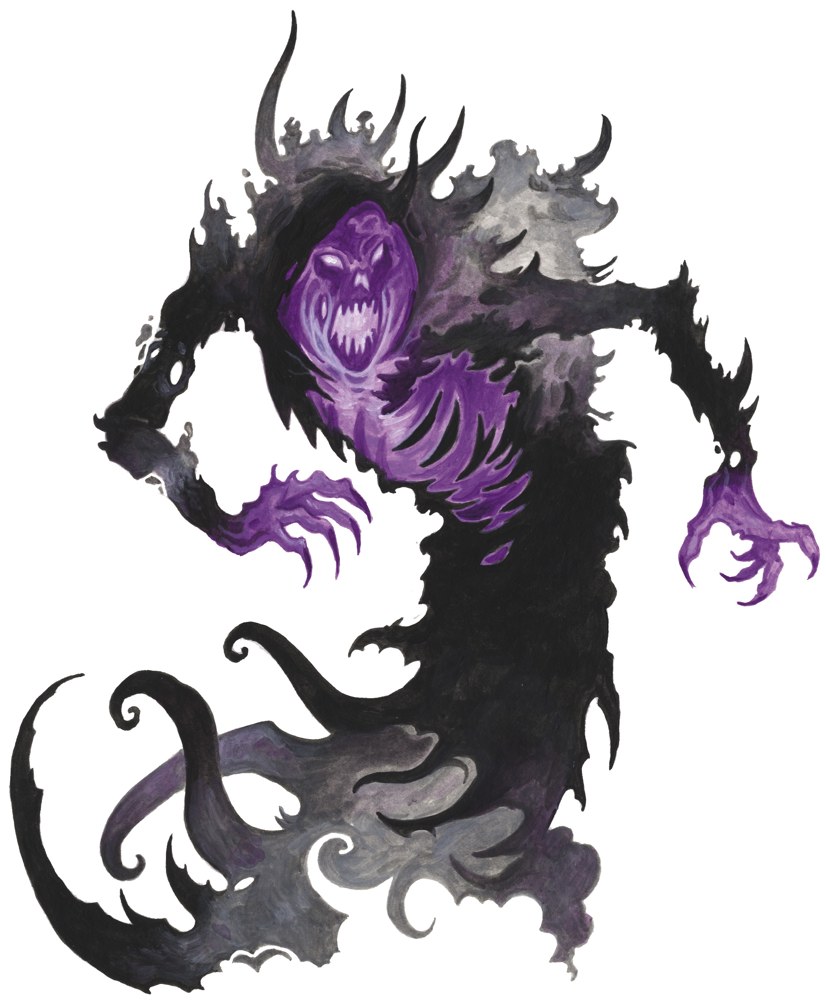
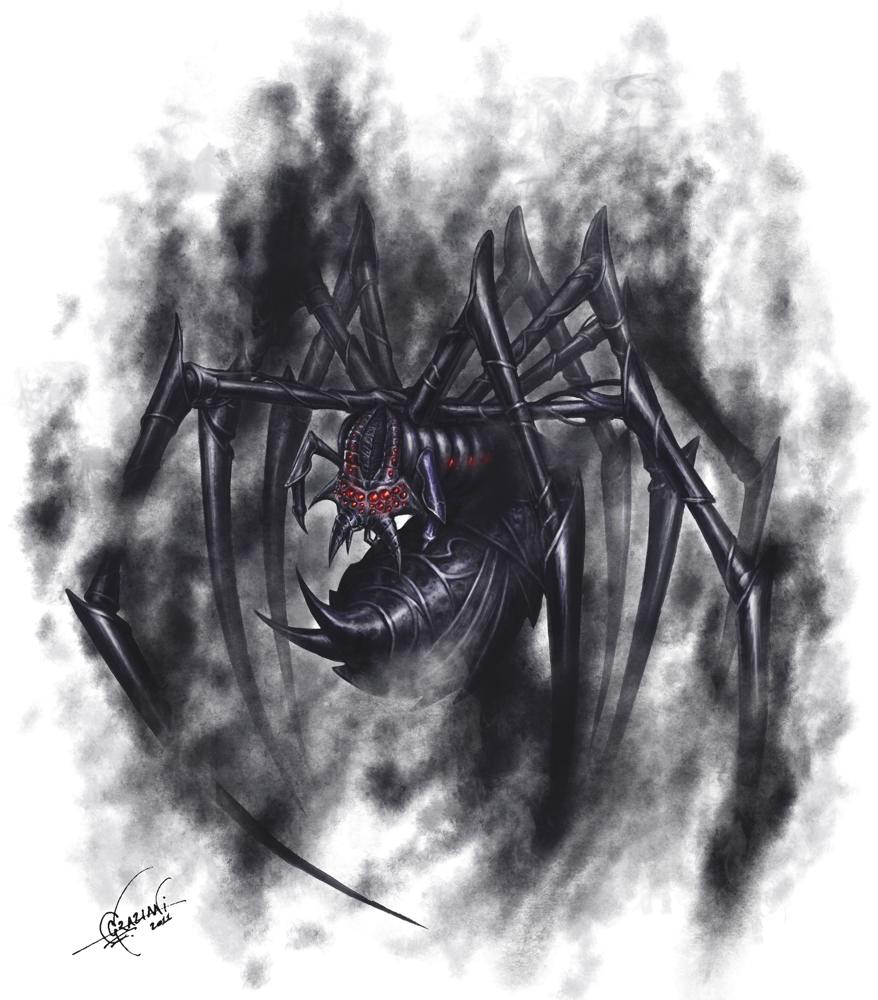
And just like that, Undead Revisited is shambling off to the printers! I previewed some of the art for this book a few weeks back, showing off how ten of the iconic heroes are doomed to meet grisly ends when this book hits store shelves. As with all books in the Revisited line, each chapter ends with a sample stat block—in the case of this book, a sample undead or new variant. Among those ten stat blocks we have a fallen Knight of Ozem and a fallen Hellknight, two undead dragons, a demonic mohrg and a daemonic devourer, a priestly lich and a kingly wight... and the following two critters from the entries on nightshades and the spectral dead—I'll let you all guess what exactly these are.
Illustration by Florian Stitz
Illustration by Francesco Graziani
All in all, ten fine and quite compelling reasons why those poor iconics are dropping like flies in this book! As for which of these ten undead got to Harsk... you'll just have to wait and see!
It's been quite a few weeks since my last report. I've learned a lot since then... too much to reveal to you all in a single report, but I wanted to make sure those idiot Thrunies weren't on to me. Looks like I'm safe, though. I've kept an eye out for Thrune agents since my last report, but haven't seen or heard anything. Which means it's safe for me to start sending regular reports!
One thing I noticed in the vaults below Egorian was a sizable collection of intelligence on numerous adventuring groups active throughout the Inner Sea region. At first I thought this was just the Thrunies keeping track of potential enemies, but after sifting through the stacks, I realized it was quite the opposite. They've been watching a lot of cults, mercenary groups, and other troublemakers who they hope to ally with, perhaps to use as agents to send against their enemies. And since the enemy of Thrune is my friend, I figured that letting my friends know about enemies they don't know about yet would be a good thing. If that makes any sense.
Anyway, my point is that Thrune's collected quite a bit of information about these potential rivals, and I snatched dossiers for ten of them. I've sent them on to the Pathfinders, and they've promised to publish the information when they get a chance. They're thinking of calling it something like "A Comprehensive Guide to Rivals," despite the fact that I think the shorter "Rival Guide" is more to the point and doesn't imply that these are the only rivals we'll ever face. Just ten groups of them.
Illustration by Eva Widermann
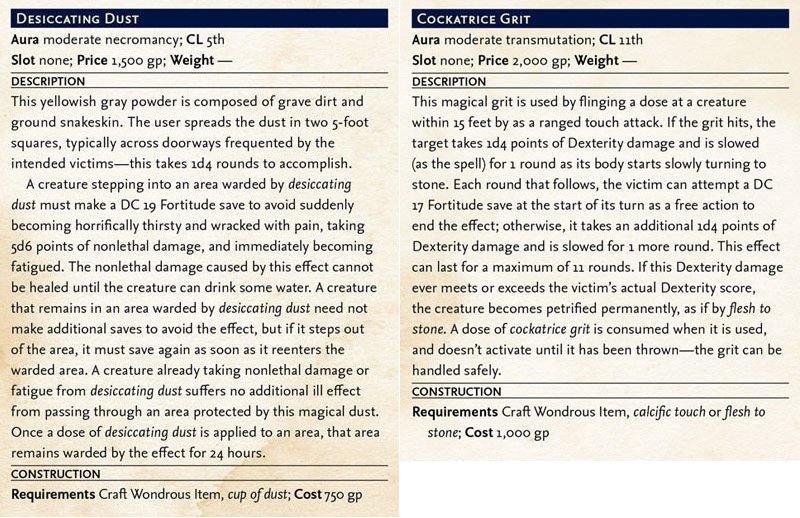
Of those ten groups, we've got a mercenary band from Brevoy more active these days in the River Kingdoms, a sadistic group of incredibly powerful adventurers, some elf-hating agents of the Aspis Consortium down Sargavawards, a bunch of crazy pirates led by some sort of haunted oracle, some foolhardy giant-hunters up in Varisia, a group of slavers led by a barbaric gnoll down around Katapesh, some freaky assassins or murderers up in Ustalav, and even the Queen's Hands—a group of relentless investigators who work for Queen Abrogail herself. (Fortunately, the Queen's Hands don't seem to get up to the north side here that often.) The Pathfinders were obviously most interested in some group based in Absalom—the Poisoned Lodge, or some such—a group of poisoners and drug dealers that have been annoying some of the Pathfinders of late. But to me, the most interesting group was probably the Dust Coven—a group of exiled drow worshipers of the demon lord Shax who have been cutting a murder-swath through the Inner Sea of late. Their leader is a witch (who seems to have been reincarnated from a drow into an annis hag, if the rumors are to be believed) who specializes in all sorts of magical dusts and powders—I'm including descriptions of two of these in this report. They'll be in the "Rival Guide" or whatever that book ends up being called, along with lots of other information about these groups and the specialized magic, spells, and tools they use. I'm also including an illustration of the Dust Coven's sign—the rune of Shak gripped in a creepy-looking hand. (Someone could do with a manicure.)
In any case, make sure to check the book out when you see it, but if you're reading it where the Thrunies might see you... take care. They'll probably get pretty angry once they see the book on store shelves.
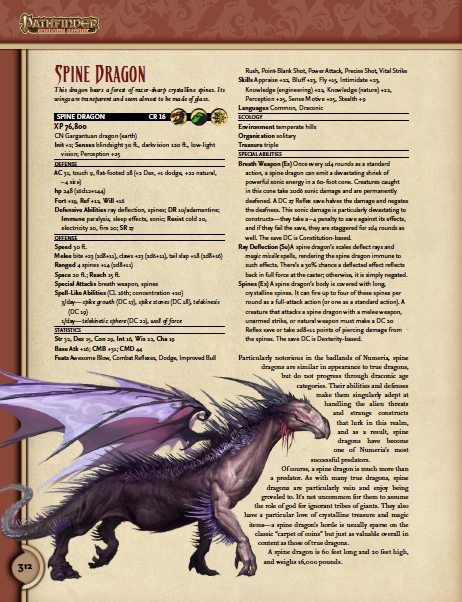
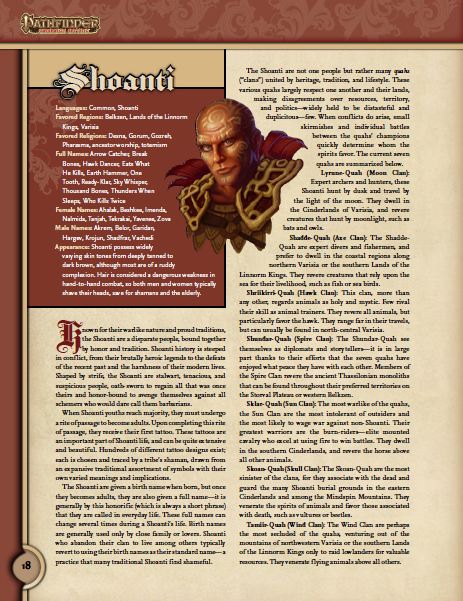
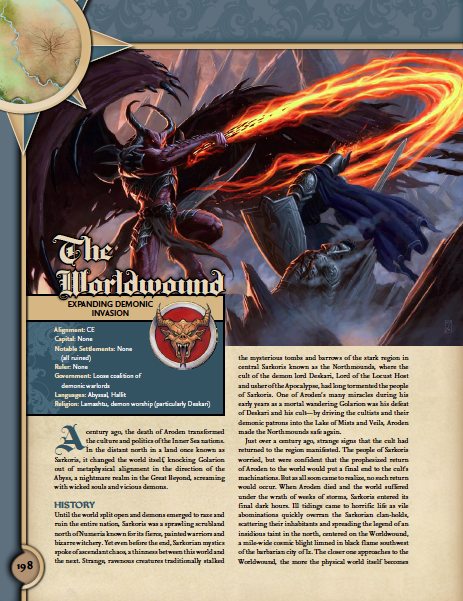
Seems like I've been working on this book for a year. Oh, wait. That's pretty much correct. Feels good that it's finally about to hit store shelves and reach subscribers. In the meantime... as proof that it exists... here are five screen shots I just took of five pages from the book, to whet appetites and let folks know just how awesome looking this book is going to be.
So we have this book coming out soon called Undead Revisited. A 64-page book that's sort of a spiritual sequel to Classic Horrors Revisited, I suppose, in that it's got ten six-page articles that explore all sorts of scary monsters. But whereas Classic Horrors Revisited focused on frights that come from myth and legend, Undead Revisited focuses more on undead who were mostly created whole cloth for the game. A few in here, like the wight, are certainly from mythology, but most of the undead in this book are things like bodaks, devourers, graveknights, nightshades, and raveners—creatures made up for the game and only very loosely (if at all) inspired by overall stories featuring undead and threats from beyond the grave.
Anyway, when I was ordering art for the book, I decided to have a little fun. Each chapter opens with a half-page illustration, so why not show these horrible undead doing what they were born to do—kill player characters? So for each chapter opener, you get to see some violent undead monster killing off one of our iconics—pictured here, the iconic alchemist Damiel meets his end at the shadowy hands of a shadow.
Of course, there's only ten chapters, and when you count the three most recent additions to the party (the samurai, the ninja, and the gunslinger), we've got over double that in iconics. That DOES mean that only ten of the iconics get offed in this book. So make sure to check out Undead Revisited when it comes out to discover if YOUR favorite iconic bit the dust!
The Advanced Player's Guide introduced a new concept for clerics—subdomains. It then went on to list subdomains available for the core 20 deities. Which is fine and good, if you happen to worship one of those deities. But what if you worship Besmara? Or Zura? Or the Lost Prince? Or Ymeri?
This post answers those questions. Listed below are the subdomains available for all of the other deities who are mentioned by name in the upcoming Inner Sea World Guide. Keen-eyed scholars of Golarion lore will note that there are even more deities beyond the ones I'm listing below, but in an attempt to keep this blog post from getting too huge, I'm limiting it to JUST the additional deities we mention in The Inner Sea World Guide. That way this post also serves as a sort of stealth preview for that book! If there's another deity from another book who you JUST HAVE to know the subdomains for, post a request in this blog's messageboard section below and I'll answer them as I get the chance.
*Although this subdomain would normally not be available to worshipers of this deity, in this case an exception is made due to the deity's close association with this theme.
Oh... hmm. Art. Yeah. Ummm... since this blog post is something of a preview of The Inner Sea World Guide, and since she was once a demigod herself (although not anymore; she lost that status when she died and got turned into a lich), here's Arazni, the Harlot Queen of Geb!
The Advanced Player's Guide introduced a new concept for clerics—subdomains. In the upcoming Inner Sea World Guide, we introduce two new domains unique to Golarion—the Scalykind domain and the Void domain. Alas, there was no space to present the four subdomains that went along with those two new domains. So I thought to myself, why not throw those four subdomains up as a Golarion Day post?
Illustration by Carolina Eade
But while I'm on the topic of domains and subdomains, there's something else I want to talk about—Pharasma. Turns out that nonevil goddesses of death sort of wreak havoc on the domain system—especially if they're as stringently anti-undead as Pharasma is. Because pro-undead spells always seem to sneak onto domain spell lists when you start talking about death and souls and stuff. It's easy enough to simply not prepare domain spells that create undead, but it still feels kind of disappointing to me that Pharasmins "miss out" on some domain spell options. For those of you who want a more Pharasma-friendly version of the Death domain and the Souls subdomain... behold!
Pharasma-Friendly Death Domain 3rd-level domain spell: Replace animate dead with speak with dead. 6th-level domain spell: Replace create undead with antilife shell. 8th-level domain spell: Replace create greater undead with symbol of death.
Pharasma-Friendly Souls Subdomain 3rd-level domain spell: Replace animate dead with speak with dead.
And that gives me an excuse to show off this cool picture of Pharasma doing her thing in the Boneyard—the art itself is from Pathfinder Adventure Path #44's article about Pharasma.
Now, that all taken care of, we can move along to the original purpose of this post—subdomains for the Scalykind and the Void domains. I'm not going to reprint those two domains here. You have to check out The Inner Sea World Guide for that. But as for the four subdomains associated with them, here you go!
Dark Tapestry Subdomain Associated Domain: Void Replacement Power: It Came From Beyond. Once per day when you cast a summoning spell, any one creature you summon is more powerful than normal. The creature gains the advanced creature simple template. If you summon more than one creature with a spell, only one of the summoned creatures gains the advanced creature simple template. A summoned creature that gains the advanced creature simple template in this manner looks unusually deformed or hideous. This ability only works on spells you cast as a cleric—it does not work on spellcasting ability gained from any other spellcasting classes you might have. This ability replaces the Guarded Mind ability of the Void domain. Replacement Domain Spells: 2nd—summon monster II, 5th—summon monster V, 7th—insanity.
Dragon Subdomain Associated Domain: Scalykind Replacement Power: Dragonbreath. At 4th level, you may use a breath weapon once per day as a standard action. When you gain this ability, choose acid, cold, fire, or electricity—this determines what kind of damage your breath weapon inflicts. Once you make this choice, you cannot change it later. Your breath weapon fills a 15-foot cone, and inflicts 3d6 points of damage—this damage increases by +1d6 every even number level you gain beyond 4th level. A creature hit by your dragonbreath attack can make a Reflex save (DC 10 + half your cleric level + your Constitution modifier) to take half damage. At 9th level, you can use this ability two times per day, and at 14th level you can use it 3 times a day. This ability replaces the serpent companion ability of the Scalykind domain. Replacement Domain Spells: 3rd—draconic reservoir (Advanced Player's Guide 217), 4th—dragon's breath (Advanced Player's Guide 217), 6th—form of the dragon I.
Stars Subdomain Associated Domain: Void Replacement Power: The Stars Are Right. If you prepare your cleric spells while the stars are visible to you, you may spontaneously cast any of your Stars subdomain domain spells by swapping out a spell of an equal spell level. Any Stars subdomain spells that you cast while the stars are visible to you heal you of damage equal to the spell's level as you cast the spell. This ability replaces the part the veil ability of the Void domain. Replacement Domain Spells: 2nd—hypnotic pattern, 7th—sunbeam, 9th—meteor swarm.
Saurian Subdomain Associated Domain: Scalykind Replacement Power: Dinosaur Companion. At 4th level, you gain the service of an animal companion. Your effective druid level for this animal companion is equal to your cleric level –2. You may choose any dinosaur as your companion. This ability replaces the serpent companion ability of the Scalykind domain. Replacement Domain Spells: 4th—summon nature's ally IV (deinonychus or pteranodon only), 5th—beast shape III, 7th—summon nature's ally VII (brachiosaurus or tyrannosaurus only).
Of course, there's still one other burning question about subdomains. The APG revealed what subdomains the core 20 deities granted, but said nothing about the subdomains the non-core deities grant access to! That, unfortunately, is a giant scary list and this blog post is already long enough—I'll see if I can't get that list ready for next Thursday, though! (As a free preview, though, and because it became a hot topic on one thread out there in the Paizo wilds: Besmara grants the following subdomains: Deception, Oceans, Protean, Tactics, Thievery, and Storms.
A few weeks ago, it was my honor to introduce Ed Greenwood and his Alkenstar story, talking about how one of the best parts of this job is getting to work with industry superstars who want to add their two cents to Golarion. At the risk of sounding repetitive, I'm going to have to do roughly the same thing this week. Because this week, we started a new story by none other than Mr. Monte Cook.
I'm going to go ahead and presume that Monte needs no introduction, but if the name sounds familiar and you're not sure why, go take a look at the gaming section of your bookshelf. Dark Matter? The d20 Call of Cthulhu book? The Book of Experimental Might? Arcana Unearthed? The third edition of Dungeons & Dragons? Yeah, that's him. As it turns out, in between (literally) game-changing RPG releases, he's also written a couple of novels and a bunch of short stories. And now he's come to show us what he can do for Pathfinder Tales, starting with this week's entry in the free Wednesday web fiction.
Illustration by Carlos Villa
He doesn't waste any time, either. "The Ghosts of Broken Blades" starts out with a bang as we meet Roubris, a somewhat shady character with the apparently unique gift of speaking to souls trapped within the blades of fallen warriors. (Before you ask: yes, we know how that works in game terms, and no, we're not ready to reveal the answer—yet.) For Roubris, it seems only natural to use his ability to make a few coins here and there, "saving" the souls in exchange for a modest fee. Yet something big is about to come into Roubris's life that could change his worldview forever...
Of course, I'd be remiss to launch us into a new story without putting the spotlight on a fabulous new artist who starts illustrating the web fiction this week. Carlos Villa has done an amazing job of bringing Roubris to life in all his shiftless glory, and if you think this is good, just wait until you see next week's cleric of Iomedae....
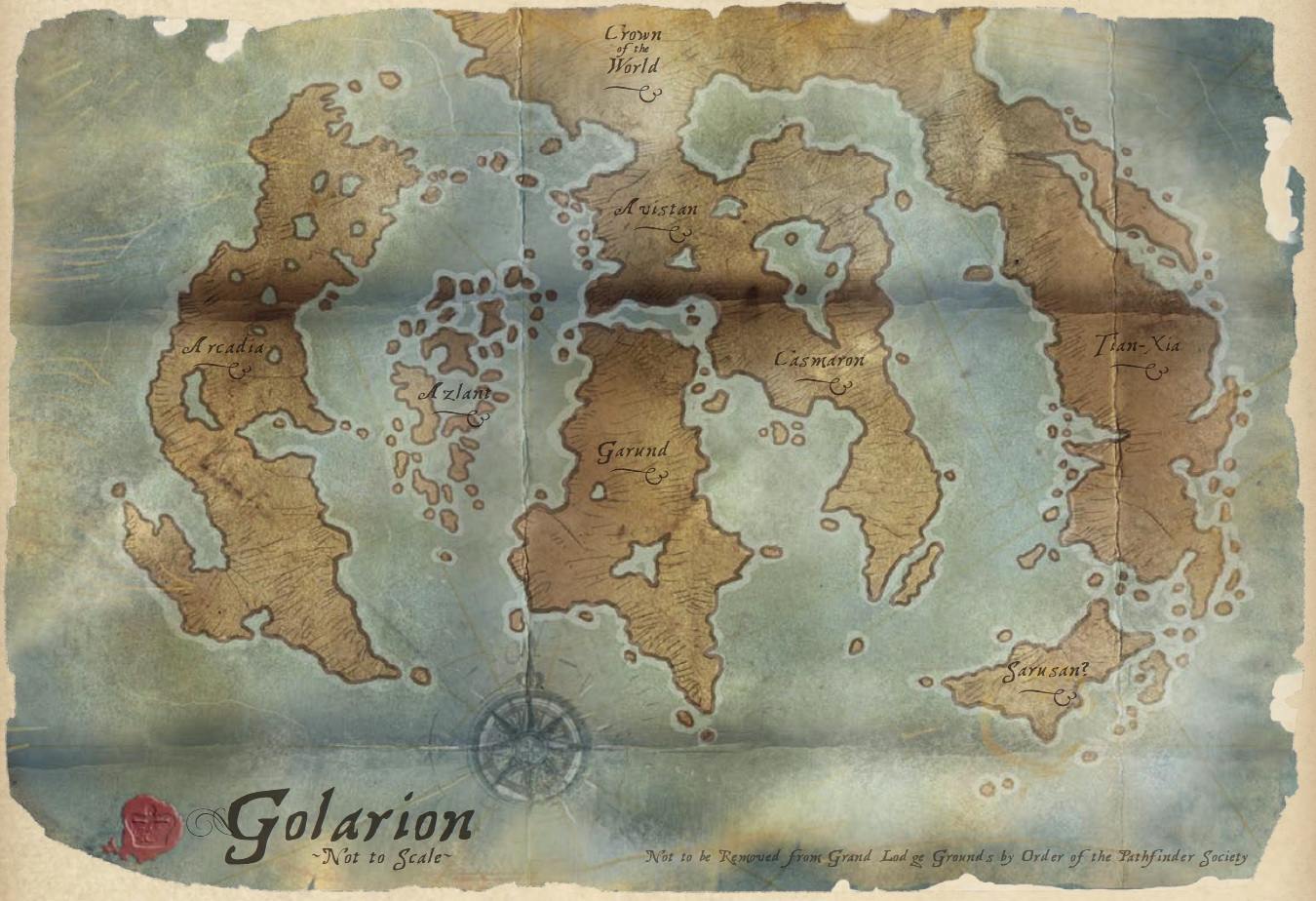
It's as I thought. When Abrogail's devil-bound lackeys seized the empire, they did not destroy all of the old documents and maps from pre-Thrune Cheliax as they claim. Many of these relics and artifacts, including countless rare maps and manuscripts stolen from the Pathfinder Society and the Aspis Consortium, now lie in deep and well-guarded vaults below Egorian's city streets. But not so well guarded that I wasn't able to slip in there a few days ago, unnoticed and unopposed!
There's a lot of stuff in those vaults I hope to someday liberate, but it was the enormous tapestry-map of the world that caught my eye on this first trip. Alas... that larger map was too huge for me to smuggle out. I did the next-best thing though, and snatched a smaller (although not as accurate) copy of the map. This one—though the oceans are way too small and I'm not sure Sarusan's in the right place and Casmaron might be a bit larger—should be a fine start toward expanding the lore of our world beyond what we think of as the Inner Sea region.
Anyway, I'm off for a rest back in Kintargo. I'll see if I can't sneak out some more secret stuff that Thrune doesn't want you to see soon enough—if you have any specific requests for things that Queen Abrogail suppressed, send me a request via the usual methods. And if you get caught by the Church of Asmodeus sending the request, I don't know you!
Last week, with the first installment of Golarion Day, I put out a call for everyone to start sending in ideas for future blog posts. Those requests are pouring in, but it's gonna take a few weeks for us to sort through them and match requests to the right content and all that. But keep the suggestions coming!
This week, though, I thought I'd show off a bit of my office Sandpoint campaign. This game's one of the largest I've ever run—the initial goal was to have it be a game that the entire editorial pit could take part in as a team-building exercise. But as we've hired more folks, and as friends of current players have joined, the size of the group has exploded into an intimidating group of nine players. The campaign itself is called The Shadow Under Sandpoint. You can check out the campaign journal over on our boards—it's generally only a few game sessions behind where we're at.
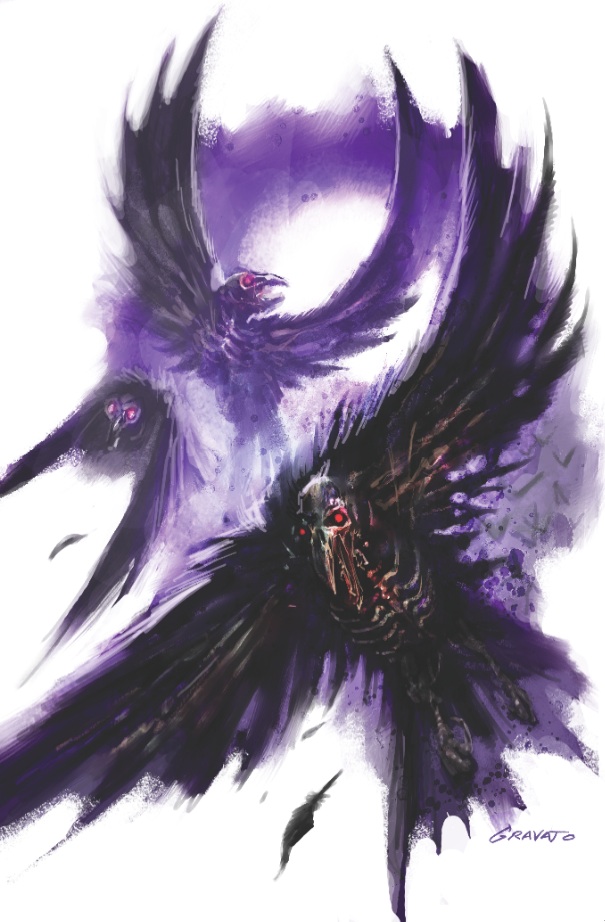
Illustration by John Gravato
One of the tricky things about such a large group, of course, is designing encounters that challenge the group. You can't just boost the CR of the bad guys and make them individually tougher, because that'll only mean that the bad guy will have a much better chance to kill a few PCs before he's defeated—you don't want to kill PCs in every fight, since that's a downward spiral. Instead, I've found that having one particularly tough boss monster surrounded by lots of less powerful minions works really well—gives everyone in the party someone to face off against, but also lets me have big key encounters with major bad guys.
Such was the case several months ago, when I knew the PCs were going up against the ghost of an infamous local murderer named Jervis Stoot. Old Stoot (known as Chopper back during the height of his murdering days) is part of Sandpoint's history, and those who've played in "Rise of the Runelords" have probably heard his name. He was never a villain in that Adventure Path, though, so that made him a perfect source for a logical foe for the PCs to face in this campaign.
So when I designed Stoot, I made him a ghost that would provide a challenge to the party (they were all about 4th or 5th level at the time), but who also had some built-in options to call upon allies. Giving him a new ghost ability that allows him to summon birds and command avians made sense (he was a Pazuzu cultist back in the day, after all!). The fight ended up playing out over two sessions—one atop the old light while Stoot had possessed the town sheriff, and then a second after they defeated the possessed sheriff and chased the ghost back to his island den to finish him off. In both cases, I threw in some bird swarms to help amp up the terror and mayhem, resulting in what normally would have been a CR 8 encounter, but when you have nine players, that's what you gotta do!
(And don't tell my players, but they've not seen the last of old Stoot's ghost yet! That's why I'm not listing the way in which you can permanently put Stoot to rest, after all...)
In any event, if any of you are playing a game set in Sandpoint, or if you're looking for a cool, flavorful ghost to use, I thought for today that I'd throw Stoot's stat block in for folks to check out. You'll note I did something a little weird with this ghost—he should normally only have two special ghost abilities, but I gave him three—corrupting touch, avian mastery, and malevolence. In order to balance things, I also gave him an additional weakness and nerfed his malevolence ability. In other words, feel free when you're making villains up for your home game to fiddle with the rules!
JERVAS STOOT CR 6 XP 2,400
Male human ghost rogue 5
CE Medium undead (incorporeal) Init +7; Senses darkvision 60 ft.; Perception +13
DEFENSE AC 19, touch 19, flat-footed 15 (+5 deflection, +3 Dex, +1 dodge) hp 61 (5d8+35) Fort +6, Ref +7, Will +2 Defensive Abilities channel resistance +4, evasion, incorporeal, rejuvenation, trapfinding, trap sense +1; Immune undead traits Weakness avians
OFFENSE Speed fly 30 ft. (perfect) Melee corrupting touch +6 (6d6; Fort. DC 17 half) Special Attacks avian mastery, malevolence 1/day (DC 17), sneak attack +3d6
STATISTICS Str —, Dex 16, Con —, Int 12, Wis 13, Cha 20 Base Atk +3; CMB +3; CMD 16 Feats Combat Reflexes, Dodge, Improved Initiative, Toughness Skills Bluff +11, Climb +8, Craft (woodcarving) +9, Craft (metalworking) +9, Escape Artist +11, Knowledge (local) +9, Knowledge (nature) +6, Perception +13, Sense Motive +9, Stealth +15 Languages Common, Thassilonian SQ fast stealth, surprise attack
SPECIAL ABILITIES Avian Mastery (Su) Stoot can command and influence all normal birds as if via dominate animal at will. He can control any number of birds within a 60-foot radius in this manner. Once per day, he may cast summon swarm as a spell-like ability to summon a swarm of crows (treat as a bat swarm sans the wounding ability). Weakness to Avians (Ex) Damage inflicted on Stoot from any avian's natural attacks is resolved as if he did not possess the incorporeal defensive ability. This includes creatures that have assumed the form of an avian.
James Jacobs
Creative Director
DISCLAIMER: I know how much fun some folks have checking our work on stat blocks, but since I'm more or less copy/pasting these stats directly from my campaign notes without going back to give them the same level of checking I'd give something going into print... there might be an error in there somewhere! (This is also an excuse for me to see how harrowing it is to format a stat block for a blog post... wish me luck!)
Howdy, everyone! So, hot on the heels of the announcement of "Design Tuesdays," I'm here to unveil the first installment of "Golarion Day!" Every Thursday, we'll try to do a post that expands the world of Golarion in some small way. Sometimes, this might be a tiny new rules element. Other times, it might be a bit of lore. It could be a brief look into an upcoming product or an interview with someone who's worked on the world of Golarion. Or, as in today's case, it could be a quick update of older rules to the current Pathfinder RPG system. Let me know what you think, and if you have any special requests for future Golarion Days, let me know that as well!
So, back in the day in the Guide to Korvosa, we told you about a group of rangers called the Sable Company. Exported from my homebrew game (where they were known as Skyriders), these highly trained city guards patrol the skies above Korvosa on hippogriffs that they've bonded with. In Guide to Korvosa, we handled this bit of fun flavor by simply introducing a new feat: "Sable Company Marine," which let rangers select hippogriffs as an animal companion. And for a few years, all was well and good.
Then we went and did something unthinkable. We changed games. And in the Pathfinder RPG Bestiary, we didn't even bother to keep the poor hippogriff around. The griffin was there, sure, but no sign of his less cultured kin.
I'll be honest. I was a bit surprised to see the hippogriff become the most-missed monster from the Bestiary. I would have assumed something bigger and badder, like missing titans or nightwalkers or inevitables would get folks riled up, but I was wrong. So when it came time to do Bestiary 2, it was obvious what monsters we needed to include—chief among them was the hippogriff.
But the job still wasn't finished, because we'd also changed the way rangers get animal companions, and we'd even changed the way animal companions work.
So, until we actually get around to revisiting Korvosa's Sable Company in print (which, I bet, we'll do some day in the future), check out the following rules for allowing rangers to gain hippogriffs as animal companions. Note that we've changed the way you gain a hippogriff from a mere feat to a ranger archetype—this is because hippogriffs are pretty powerful creatures as far as animal companions go, and not all rangers have the right stuff to serve in the Sable Company. It requires the sacrifice of some traditional ranger training in order to master a bond with a hippogriff, in addition to being a member of the Sable Company itself. It's up to your GM whether the Sable Company is hiring. (Basically, you need your GM's permission to select this archetype, and your GM may require your character to perform certain duties as befits your responsibilities in the Sable Company.) In fact, if your GM's cool with it, you can adjust the adjustments and flavor of the archetype so that other classes can get access to hippogriffs as riding companions—you can even use these rules as a sort of template to open up "animal companions" for similarly powered magical beasts. Because who wouldn't want to play a halfling ankheg rider?
Anyway, here you go: Pathfinder-compatible updates for the Sable Company of Korvosa!
Ranger Archetype: Sable Company Marine
Illustration by Florian Stitz
You graduated from the elite hippogriff-riding school of the Endrin Military Academy. Not only can you ride a hippogriff with great skill, you have also formed a close bond with a particular mount. A Sable Company Marine has the following class features:
Hippogriff Companion: You can gain a hippogriff as a companion. This ability works identically to hunter's bond when used to gain an animal companion, but can only be used to gain a hippogriff (see below for rules for hippogriff companions). You gain a +2 bonus on Ride checks made when riding your hippogriff companion, and whenever you are within 20 feet of your hippogriff, it gains a +2 morale bonus on all saving throws made against fear effects. This ability replaces favored terrain and hunter's bond.
Hippogriff Companions
Starting Statistics: Size Large; Speed 40 ft., fly 50 ft. (average); AC +2 natural armor; Attack bite 1d6; Ability Scores Str 15, Dex 15, Con 14, Int 2, Wis 12, Cha 9; Special Qualities darkvision 60 ft., low-light vision, scent.
4th-Level Advancement: Speed fly 100 ft. (average); Attack bite 1d6, 2 claws 1d4; Ability Scores Dex +2, Con +2.