Early last year a promise was made, a promise to those GMs who go beyond the call of duty. The promise was a special scenario, exclusive to 4-star Game Masters and Venture-Captains. Hints were dropped by Mark Moreland back in October that something special was coming, and now I can tell you that the special 4-star GM scenario will be released in January and enjoyed worldwide soon after.
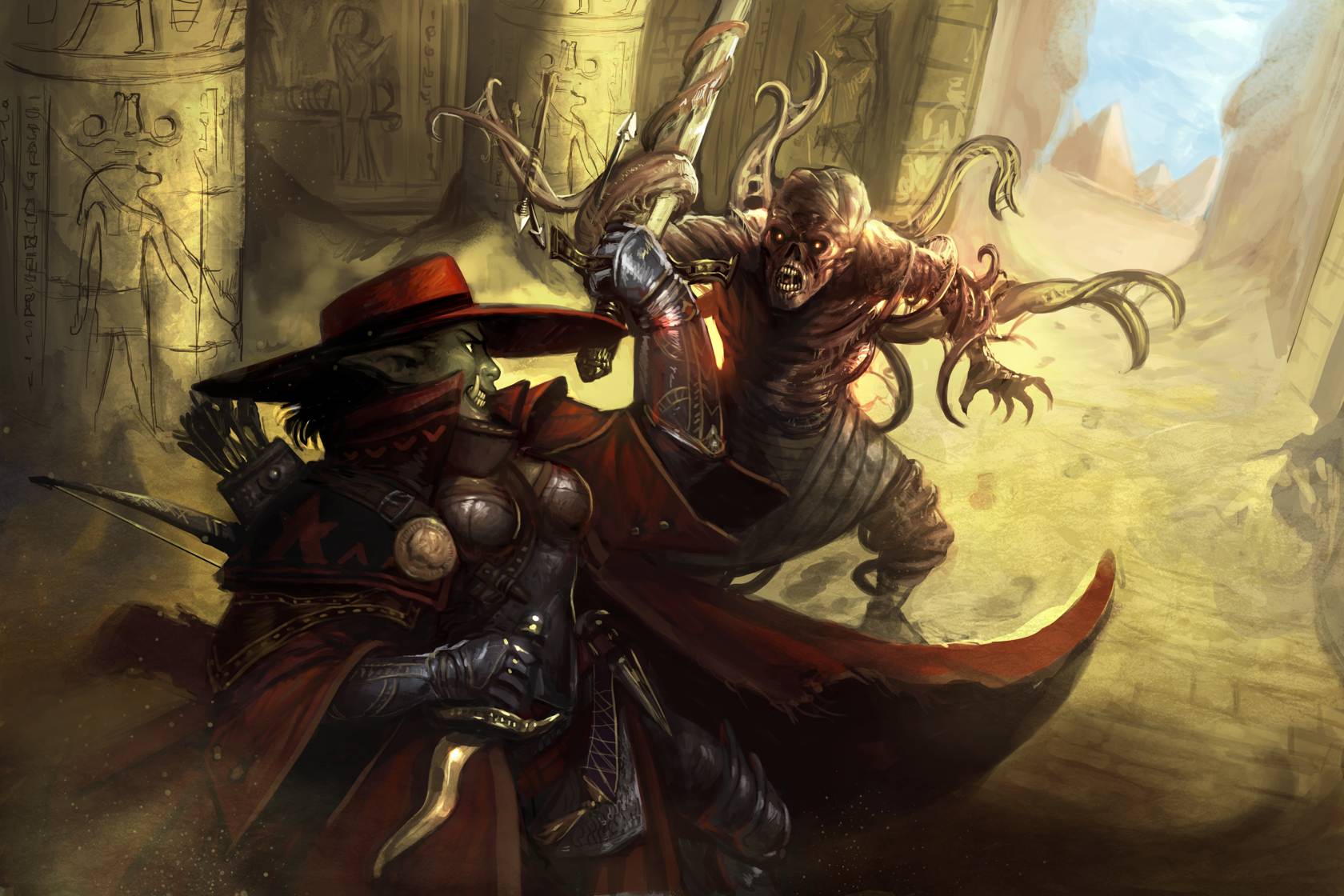
"The Midnight Mauler," a Tier 1–7 scenario written by the always amazing Crystal Frasier, sends members of the Pathfinder Society to the former crown jewel of Ustalav's royal courts, the decaying city of Ardis. Tasked by the Society to look into the fate of Absalom's former Master of Blades Vonran Vilk, what they find will lead to exploration, diplomacy, murder, haunted pasts, and tragic love. Can the PCs discover the identity of the Midnight Mauler before it kills again? Find out in 2011!
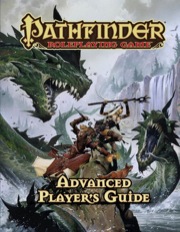
The start of Gen Con 2010 is four weeks away, which means in just one month, the Advanced Player's Guide will be hitting game stores and subscriber mailboxes. In anticipation of this mighty sourcebook, I am taking you on a guided tour, touching on some of the highlights each week until release. Last week we took at look at the races chapter and the new alternate favored class bonuses. This week we are diving into Chapter 2: Classes by looking at the six new base classes.
If you were not a part of the playtest of these classes, might I suggest that you grab the playtest document, which is still available here at paizo.com. Now go read up on the all of the new classes. Don't worry, I'll wait. All finished, good. I am going to walk through each of the classes and spend a bit of time talking about what changes you can expect to find in the book.
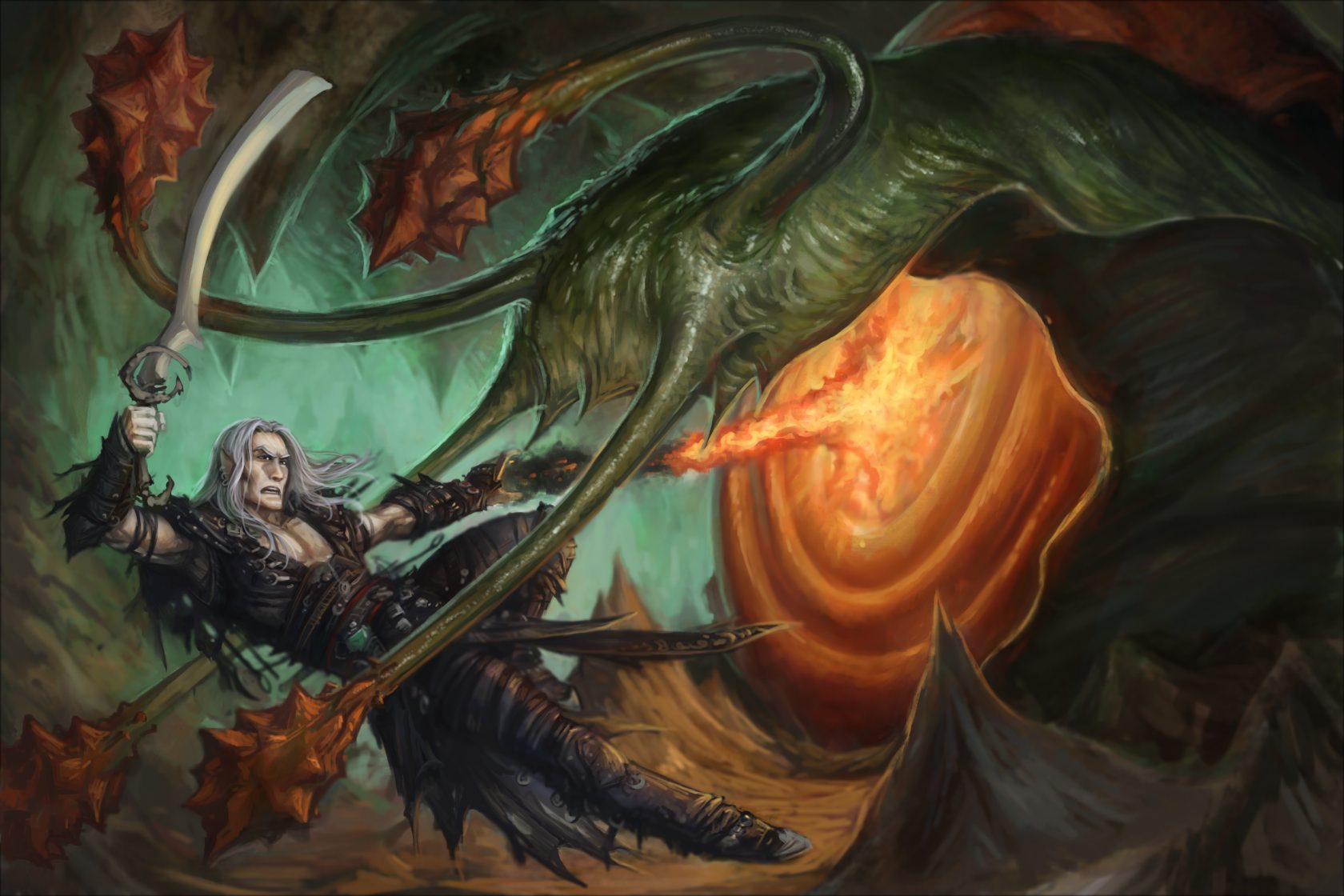
Illustration by Wayne Reynolds
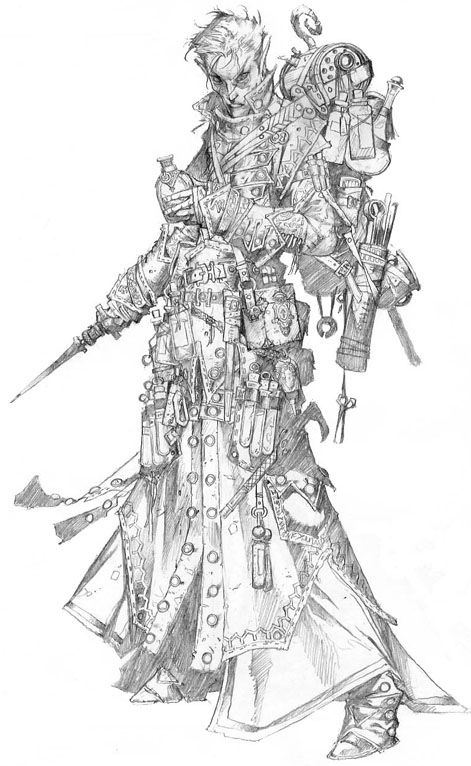
Alchemist: Using all sorts of alchemical formulas, bombs, and mutagens, this class is focused on using strange concoctions to enhance the alchemist and damage his foes. Most of the changes to this class center around new discoveries that were added. Discoveries allow the alchemist to enhance his bombs and mutagens, but we added discoveries that allow him to use his bombs to dispel magic or to work better with poison, such as this new discovery.
Concentrate Poison: The alchemist can combine two doses of the same poison to increase their effects. This requires two doses of the poison and 1 minute of concentration. When completed, the alchemist has one dose of poison. The poison's frequency is extended by 50% and the save DC increases by +2.
Cavalier: This mounted warrior is skilled at directing allies around the battlefield and granting bonuses to his teammates. Each is dedicated to a specific order that grants abilities specific to his focus. Most of the changes from the playtest version of the cavalier are relatively small or designed to clarify an existing ability. For example, we clarified how large the cavalier's banner must be and how it must be displayed to grant its bonus to the cavalier's allies.
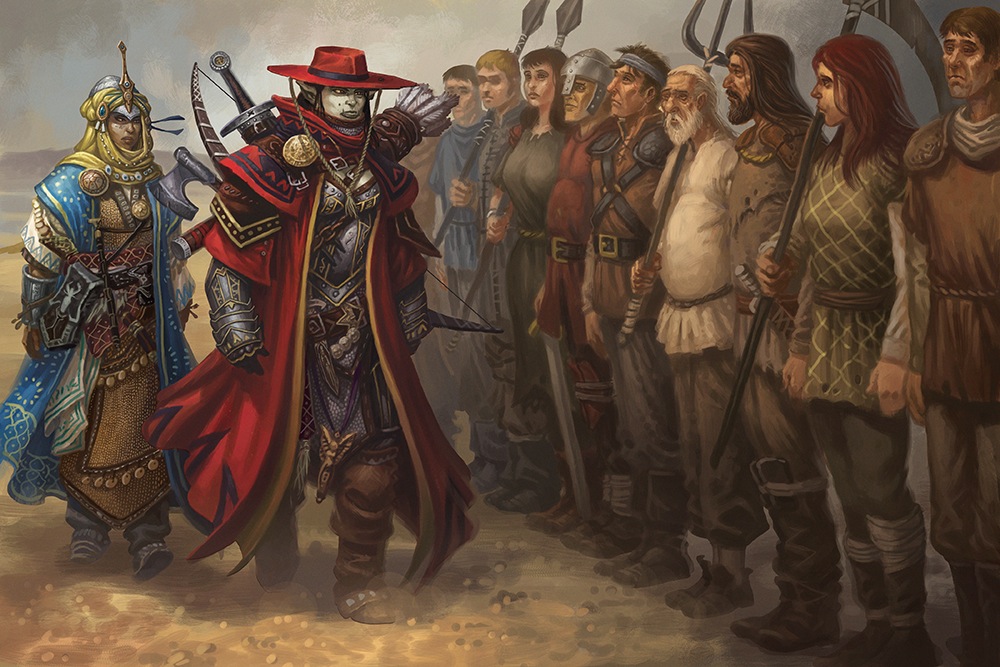
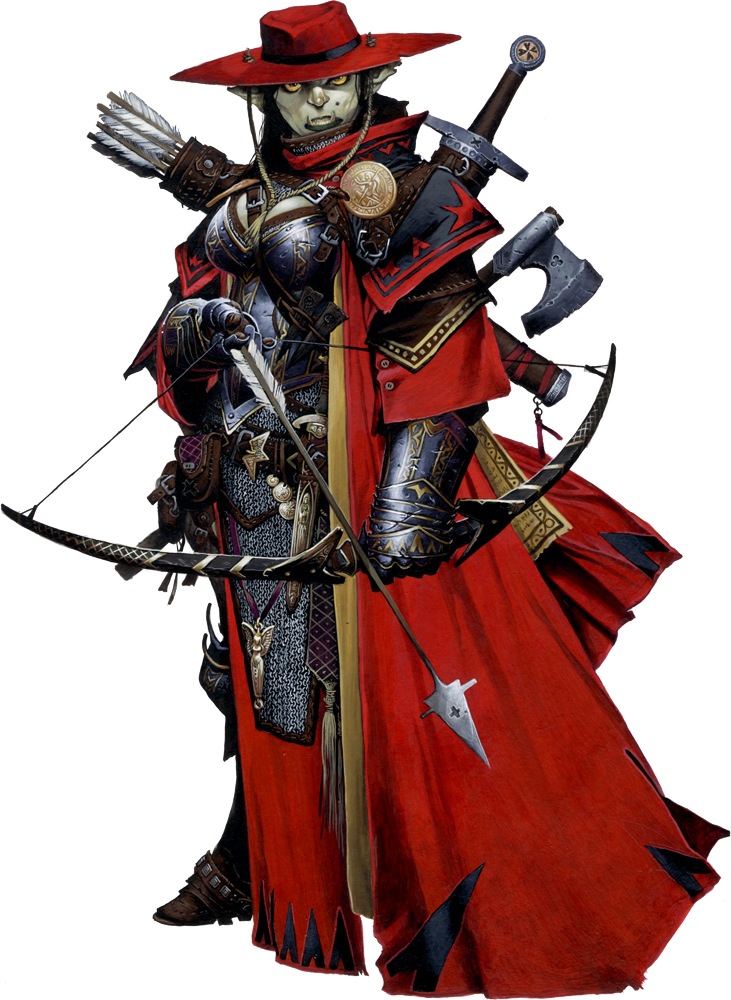
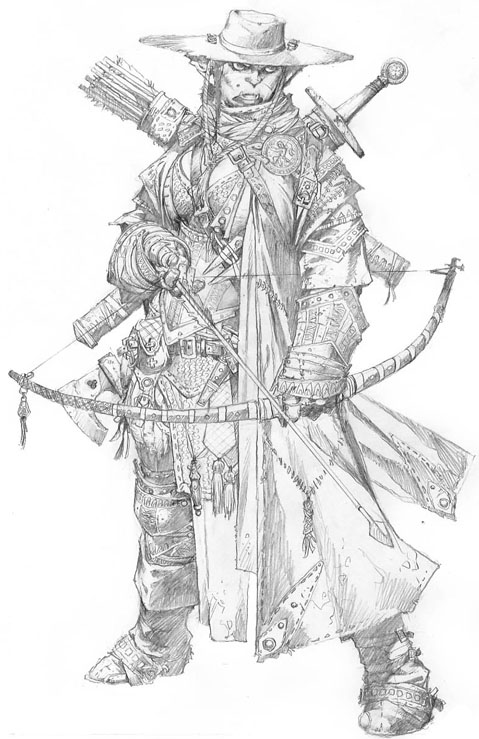
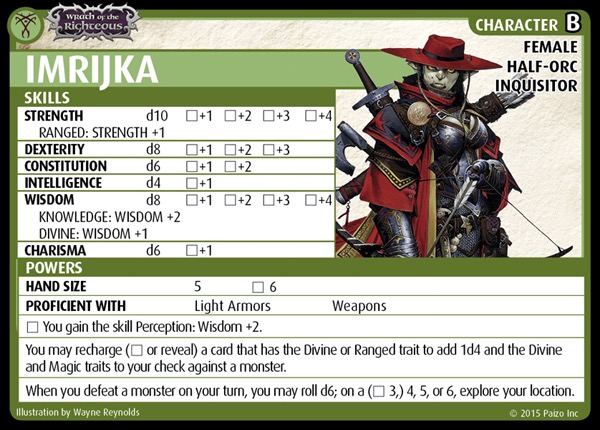
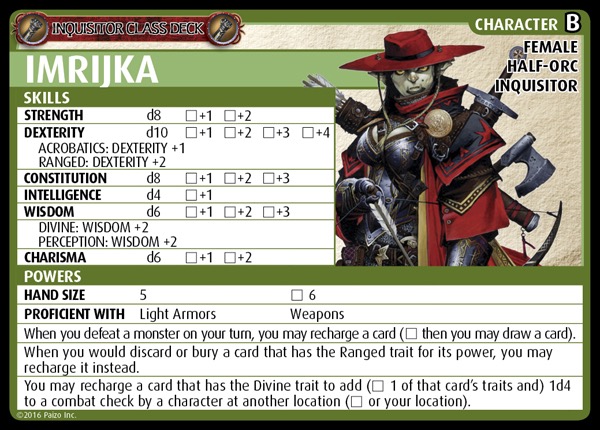
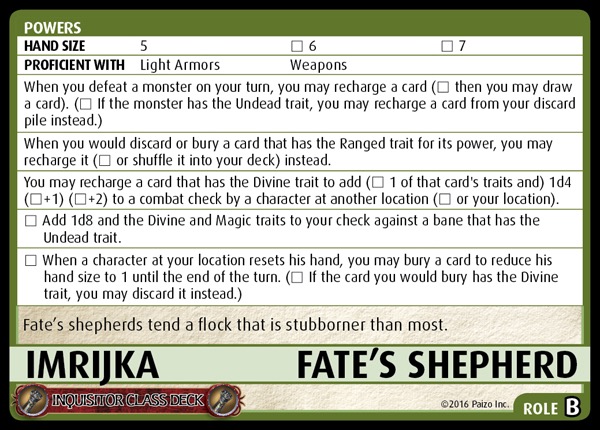
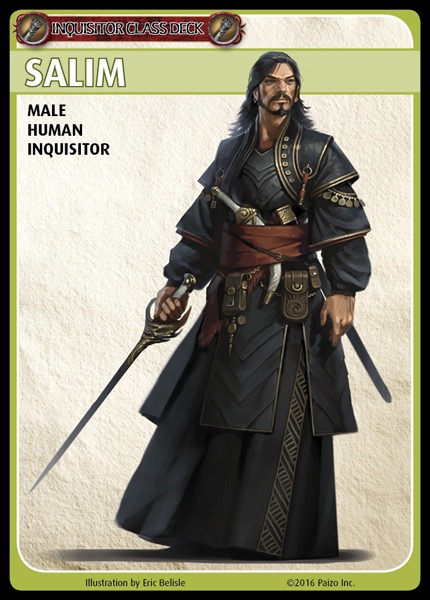
Inquisitor: Rooting out enemies of the faith, wherever they might hide, the inquisitor uses the powers of her faith to ruthlessly destroy her foes. One of her signature abilities is to declare judgment on one of her foes, granting her bonuses when fighting that enemy. The playtest version of this ability improved as the combat progressed. While this was a fun mechanic, it was ultimately rather unwieldy in play and was replaced with a simpler system. Now, whenever the inquisitor uses her judgment ability, she selects the type and gains a bonus based on her level. For example, take a look at this judgment of purity.
Purity: The inquisitor is protected from the vile taint of her foes, gaining a +1 sacred bonus on all saving throws. This bonus increases by +1 for every five inquisitor levels she possesses. At 10th level, the bonus is doubled against curses, diseases, and poisons.
Oracle: The oracle draws her power from the gods, but not one in particular. Her power is derived from her belief in a chosen mystery, which guides her and grants her additional powers. There were two big changes to the oracle from the playtest version. First, the bonus spells granted by the oracle's mystery are now granted a level sooner than before (the first arrives at 2nd level instead of 3rd). The second is the addition of the Life mystery, with powers like the following.
Enhanced Cures (Su): Whenever you cast a cure spell, the maximum number of hit points healed is based on your oracle level, not the limit based on the spell. For example, an 11th-level oracle of life with this revelation may cast cure light wounds to heal 1d8+11 hit points.
Summoner: The summoner is bonded to a special outsider, known as an eidolon, that gains powers and abilities as the summoner gains levels. His spells and class features all support this powerful, ever-changing ally. Most of the changes to this class were relatively small in nature, but the big one was a change to how often the summoner can call his eidolon. He can now summon the ally as often as he likes (provided it has not been banished due to damage recently), but he cannot use his summon monster ability at the same time. This allows him to keep the flexibility needed with the summoned creatures, but prevents him from overrunning the battlefield with too many creatures.
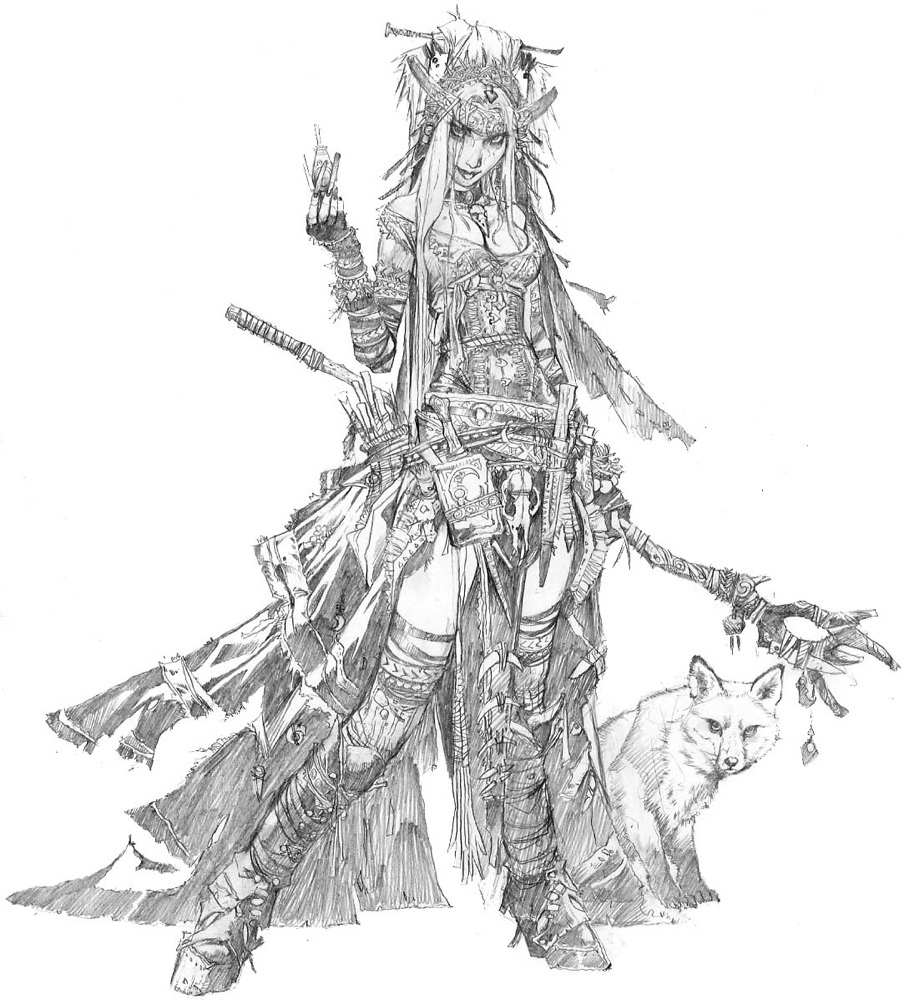
Illustration by Wayne Reynolds
Witch: The witch is an arcane spellcaster with an extensive spell list of spells drawn from both the wizard and cleric spell lists. She also gains powerful hexes that she can use to augment herself or harm her enemies. The biggest change made to the witch involves her familiar, the creature that helps her to understand magic and serves as an envoy of the witch's mysterious patron. Now the bonus spells granted by a witch's familiar are no longer tied to the type of familiar, giving the witch a lot more flexibility in concept and theme. We also made a number of changes to the witch's hexes, including making flight a basic hex that does not grant true flight until 5th level, and added a few others here and there to round out the witch concept. For example, what witch would be caught without a cauldron.
Cauldron: The witch receives Brew Potion as a bonus feat and a +4 insight bonus on Craft (alchemy) skill checks.
Well, that just about rounds up our look at the six new base classes in the Advanced Player's Guide. Next week, we will continue exploring the mighty classes chapter (which is about 1/3 of the book) by taking a closer look at all of the options available to the core classes from the Core Rulebook.
Every other Thursday evening, I run my "Shadow Under Sandpoint" campaign for the editorial folks. I started the game several months ago for three reasons—as a team-building exercise, as a way for we editors to get more familiar with the game we created, and because it sounded fun. Several of the PCs from this campaign appear in the recently released NPC Guide, in fact... but not all of them.
When Rob McCreary joined the Paizo editorial team, I invited him to join the game (which brought our total number of players up to a staggering total of nine!). After a false start with a half-orc (who soon left the party to seek fame and glory as our iconic inquisitor), Rob settled on a gnome summoner inspired by another of our new iconic characters. Yet unlike the iconic summoner, who has some sort of weird chicklizatrice type monster as an eidolon, Rob went for a different critter entirely.
His character is named Balazar, and his eidolon is named Rummy-Tum-Tugger (no relation to a certain similarly named feline superstar). When Rummy-Tum-Tugger first showed up, I asked Rob to describe him, but that didn't really help. It seems that every session, something new comes up and folks have to revise what they think Rummy-Tum-Tugger looks like. "Wait, his teeth shoot ice?" "Huh? He has six limbs?" "He's PURPLE?"
There's only one solution. A contest!
Break out your pencils, pens, paints, and Photoshops, because whoever draws Rob the best and most accurate depiction of Rummy-Tum-Tugger not only gets the satisfaction of helping my poor group of PCs visualize what their newest member actually looks like, but I'll sweeten the deal by sending that person a copy of the NPC Guide, signed by the entire Paizo editorial staff!
To enter, simply email your illustration to me at james.jacobs@paizo.com as a .jpg attachment by the end of the month—keep the file small (600 KB or less). Rob will then pick his favorite picture of them all and that'll be the winner, and we'll show it off in a blog post at the start of April.
And now, the details! Rummy-Tum-Tugger is a Medium-sized eidolon. He's got the quadruped base form, and looks vaguely like a purple badger with six legs, each leg tipped with scary sharp claws. His jaws are filled with BIG sharp teeth that are caked with even sharper razor-sharp ice. Oh, he also has a gore attack. Some sort of horns or spikes or something. Did I mention he's purple? He also wears an amulet of mighty fists. And he can talk. And he likes cheese, but since he's lactose intolerant poor Balazar has to constantly watch Rummy-Tum-Tugger's cheese intake.
Although the playtest of the six base classes set to appear in the Pathfinder RPG Advanced Player's Guide was scheduled to be over yesterday, we have decided to extend it by two weeks to give you a chance to review and playtest the changes from the previous three rounds. We took all of your feedback and ideas and implemented a number of changes to the classes, combining them into one handy reference PDF. You can find the PDF right here.
You have two weeks to playtest and comment on these revisions in the Final Playtest messageboard forum. Make sure to post your feedback on in the correct forum, because we might miss it if you place it in one of the older forums. On February 15th, all of the forums will be closed.
As with previous playtests, this process has been a huge benefit to the development of these classes. I hope that you have enjoyed participating in the process. Look for previews of the final book to start appearing in June, ramping up to the final release in August.
The playtest of the Pathfinder RPG Advanced Player's Guide is well underway, with the release of the final two classes slated to appear in the book, due out in August. In this round, we are looking at the alchemist and the inquisitor. The alchemist is all about using potions and arcane alchemy to increase your abilities. This works a bit like spellcasting, but offers some interesting advantages. In addition, the alchemist is quite skilled at lobbing bombs that burn, freeze, and electrify foes (among a host of other possibilities). The inquisitor works as a monster hunter for the faith, rooting out its enemies, no matter where they hide. The inquisitor is a master of adaptation, moving her abilities around to better fight her foes. This is your chance to take a look at these classes before they hit shelves in August. You can download the free PDF containing both of these classes here.
Over the past month, we have released the other four classes due to appear in the book, including the cavalier, the oracle, the summoner, and the witch. While we are focusing on the alchemist and the inquistor for the next two weeks, the playtest itself will remain open until the end of January 2010. Time permitting, we hope to release some updates to some of the classes in mid January.
As with the Core Rulebook playtest last year, there are a number of forums set up for playtest feedback and commentary. The first is a general forum, for discussing larger issues and announcements. Following this is a trio of forums for discussing each round of the playtest. Discussion on the alchemist and the inquisitor should go in the round 2 forum.
The playtest has been a huge success up to this point. I have been receiving a mountain of play reports and comments on the classes and I want to encourage folks to continue working with these classes. As with the previous rounds, actual play reports are more useful to the process than untested observations. So, give these last two classes a try. Make a whole party of characters using only these six classes or have the PCs face off against them as villains. When you are done, post up the results. I look forward to seeing them.
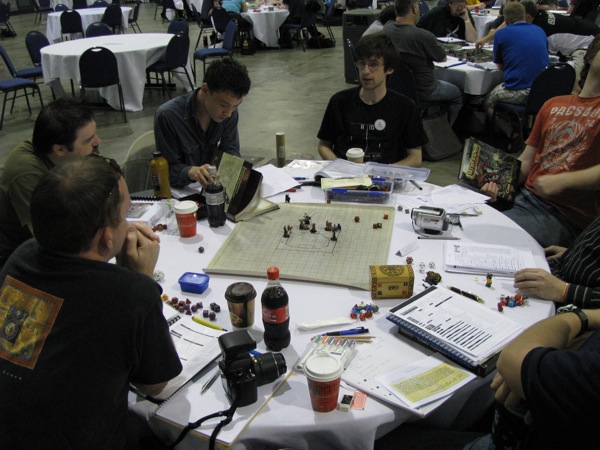
One of the big highlights of Gen Con Australia 2009 was the "What’s Next for Pathfinder?" seminar that took place Saturday afternoon. The Pathfinder players at the show were so excited for this seminar that they took a break from their Pathfinder Society games to attend. Not surprisingly, it was pretty packed.
Although much of what was covered during this seminar had already been announced, there were a few surprises in store, including the final two new base classes being planned for the Advanced Player’s Guide and a special surprise, a first look at one of the base classes from that book. At Gen Con Indy this year, we announced four of the six base classes slated to appear in the Advanced Player’s Guide: the alchemist, the cavalier, the oracle, and the summoner. During this seminar, the final two were revealed: the inquisitor and the witch.
The inquisitor class is going to look a lot like your Van Helsing-type character, dedicated to hunting down and killing monsters. This means that the class is going to have a fair number of skills and some limited divine spellcasting ability. In addition, the inquisitor is going to have the ability to designate a foe during combat, and the longer the combat progresses, the more damage he will deal to that foe in combat. Unlike a ranger, the inquisitor’s abilities are not based on monster type. Instead he has to carefully study his targets, learning how to more effectively deal with them as a combat progresses. Higher-level inquisitors will learn how to exploit monster weaknesses and possibly even add additional weaknesses to a monster using special attacks.
The witch class is going to be a class that fully embraces both the arcane and divine spell lists, taking select spells from each to make for one intriguing list. The big news for the witch is the focus on her familiar. This will function like a wizard’s familiar, but with additional powers and abilities, with maybe a few extra limitations thrown in to balance out the rules. You can also expect some new mechanics for witch curses, through some new spells and class features.
While the crowd was certainly excited to hear about these new classes, the room grew rather quiet as I handed out a sample oracle character for them to analyze. But rather than leave you out in the cold, here is that character, updated with the most recent version of the class.
Sample Oracle
This sample shows one of the first builds of the new oracle class. The relevant class abilities are summarized, but they do not include additional bonuses that Areanna would gain at higher levels. For example, at 9th level, Areanna’s form of flames ability improves, allowing her to assume the form of a Medium fire elemental.
Areanna
Female human oracle 7
CG Medium humanoid Init +6; Senses Perception –1 Defense AC 19, touch 14, flat-footed 16; (+5 armor, +1 deflection, +2 Dex, +1 dodge) hp 49 (7d8+14) Fort +4, Ref +5, Will +5 Offense Speed 40 ft. Melee+1 flaming shortspear +7 (1d6+2 plus 1d6 fire) Ranged dagger +7 (1d4+1/19–20) Special Attacks fire breath (2/day, 7d4 fire damage, DC 17), form of flame (Small fire elemental) Spells Known (CL 7th)
3rd (5/day)—cure serious wounds, dispel magic, fireball (DC 17)
2nd (7/day)—aid, augury, resist energy, summon monster II
1st (7/day)—bless, cure light wounds, divine favor, produce flame, remove fear, shield of faith
0 (At Will)—guidance, light, purify food and drink, read magic, resistance, stabilize, virtue Focus fire Statistics Str 12, Dex 14, Con 13, Int 10, Wis 8, Cha 18 Base Atk +5; CMB +6; CMD 18 Feats Combat Casting, Dodge, Eschew Materials, Improved Initiative, Mobility, Nimble Moves, Toughness Skills Acrobatics +12, Intimidate +14, Knowledge (religion) +10, Perform (dance) +14, Spellcraft +10 Languages Common, Ignan SQ oracle’s curse (speak in tongues), orisons, revelations (cinder dance, fire breath, form of flame) Combat Gearelemental gem (fire), elixir of fire breath, wand of cure light wounds; Other Gear+1 flaming shortspear, daggers (4), +2 studded leather armor, cloak of resistance +1, ring of protection +1 Special Abilities Cinder Dance (Ex): Areanna’s base speed increases by 10 feet. At 5th level, she receives Nimble Moves as a bonus feat. Fire Breath (Su): As a standard action, Areanna can unleash a 15-foot cone of flame from her mouth. This flame deals 1d4 points of fire damage per level, maximum 10d4. A Reflex save halves this damage. The save DC is equal to 10 + 1/2 her oracle level + her Charisma modifier. She can use this ability once per day, plus one additional time per day for every four oracle levels she possesses. Form of Flame (Su): As a standard action, Areanna can assume the form of a Small fire elemental, as elemental body I. She can use this ability once per day, but the duration is 1 hour/level. Speak in Tongues: In times of stress, Areanna speaks in tongues. Whenever she is in combat, she can only speak and understand Ignan. This does not interfere with spellcasting, but it does apply to spells that are language dependent. She gains Ignan as a bonus language.
As you can see, oracles are spontaneous divine spellcasters, working in a manner similar to sorcerers. Instead of bloodlines, each oracle has a focus (fire in Areanna’s case). At 1st level, 3rd level, and every four levels thereafter, oracles can select one revelation from their focus to learn. These revelations grant them special powers and abilities, such as the ability to breathe fire, turn into a fire elemental, or even call down a storm of fire (Areanna is not quite high enough level for that one). In addition, oracles must select a curse at 1st level. These curses are a mixed blessing, with each one limiting the oracle in one way, while granting special bonuses in other areas. Areanna’s curse is perhaps one of the easiest to deal with, which is why it grants one of the smallest bonuses.
Well, that about wraps up my summary of Gen Con Australia 2009. I want to thank Ian Houlihan, the convention director, for bringing me down to the show, Mark Rogerson, the events manager, for showing me a great time in Brisbane, and Peter Ball, the seminar manager, for setting up some great panels. I am hoping to make this show a regular in my convention schedule. Maybe next year, you will too.