... Into the Inner Sea? Wednesday, September 22, 2010Off to the printer goes Pathfinder Player Companion: Inner Sea Primer, our new guide to what's what and where's where for characters in the Pathfinder campaign setting. Aside from being filled with the baseline, what your character knows details of Avistan and Garund, it's also our new go-to book for traits from around the Inner Sea, with each column-length country write-up including two new options for natives of that region. As a bit of a...
Into the Inner Sea?
Wednesday, September 22, 2010
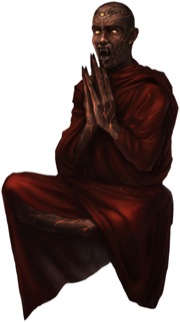
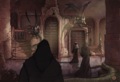
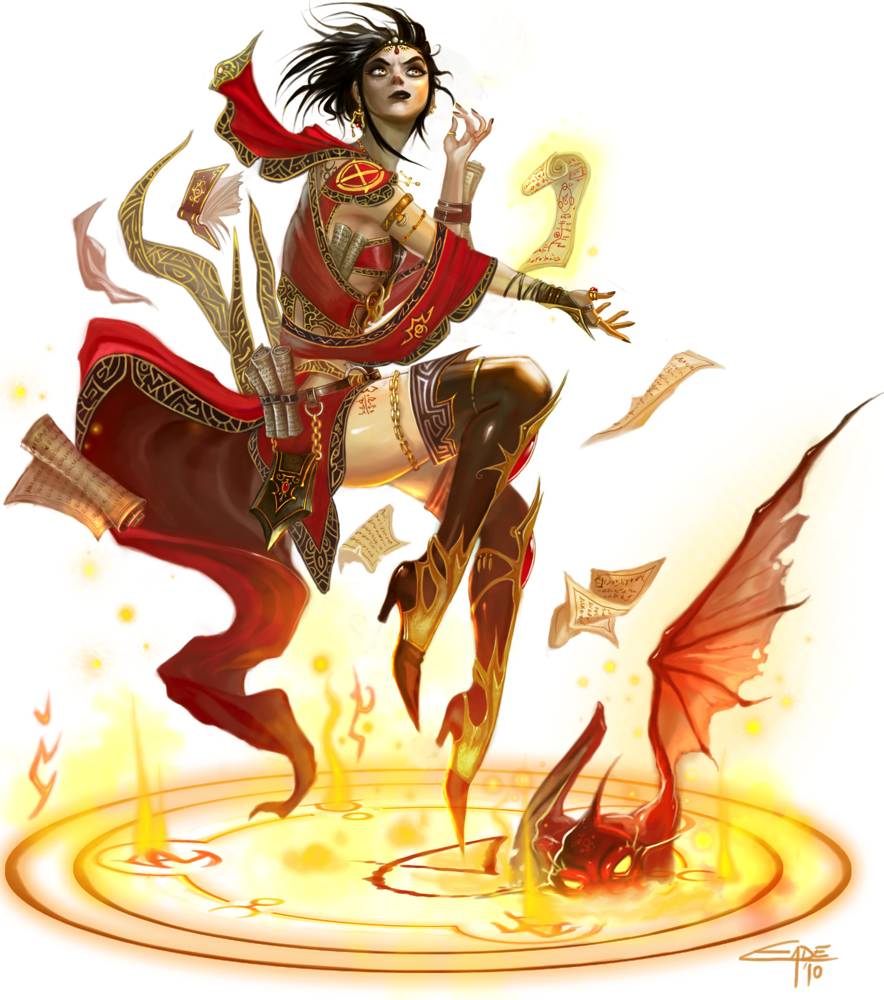
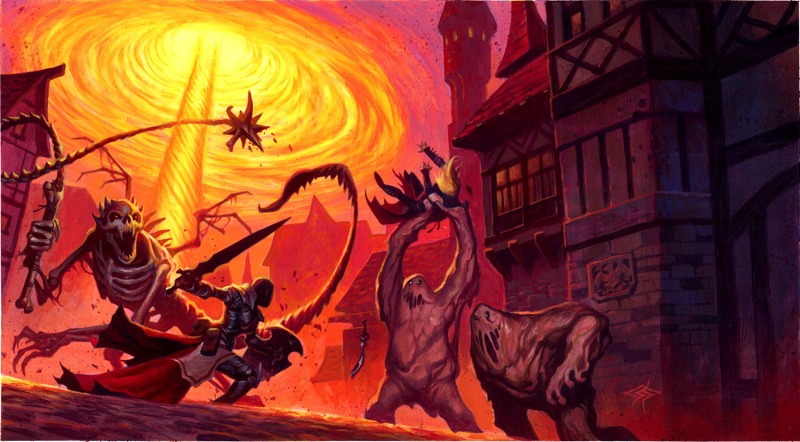
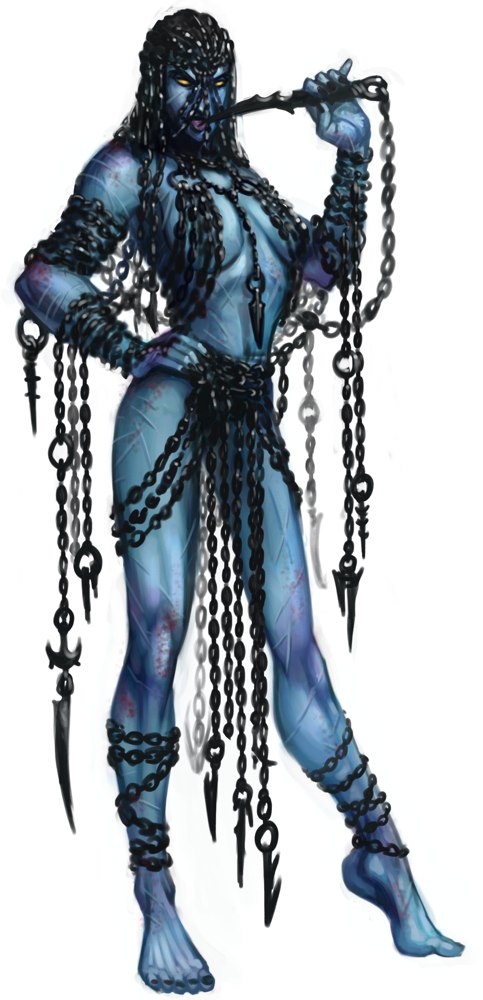
Off to the printer goes Pathfinder Player Companion: Inner Sea Primer, our new guide to what's what and where's where for characters in the Pathfinder campaign setting. Aside from being filled with the baseline, "what your character knows" details of Avistan and Garund, it's also our new go-to book for traits from around the Inner Sea, with each column-length country write-up including two new options for natives of that region. As a bit of a preview, here's a new trait for Sargava to help all you Serpent Skull players soon to be in need of replacement characters. (What can I say? The Mwangi's a killer.) Also, take a peek at more of Carolina Eade's incredible art: a Chelish infernal binder—just one of three new Golarion magic archetypes included in the guide. Enjoy!
Illustration by Carolina Eade
Jungle Guide (Regional): You've made your living outfitting and guiding expeditions deep into the Mwangi interior in search of ancient ruins and lost cities. You gain a +1 trait bonus on Handle Animal checks, and a +1 trait bonus on Survival checks in jungle terrain. One of these skills is a class skill for you.
... March of the Damned Friday, November 20, 2009Well, we're wrapping up the Council of Thieves Adventure Path here and along with it my series of new devils in each month's Bestiary draws to a close (on our end at least). At long last, let me reveal my ulterior motive. The new devils in Council of Thieves, when combined with those in Princes of Darkness: Book of the Damned Vol. 1, the Pathfinder RPG Bestiary, Pathfinder #12, and two stragglers from another project I'm still keeping mum...
March of the Damned
Friday, November 20, 2009
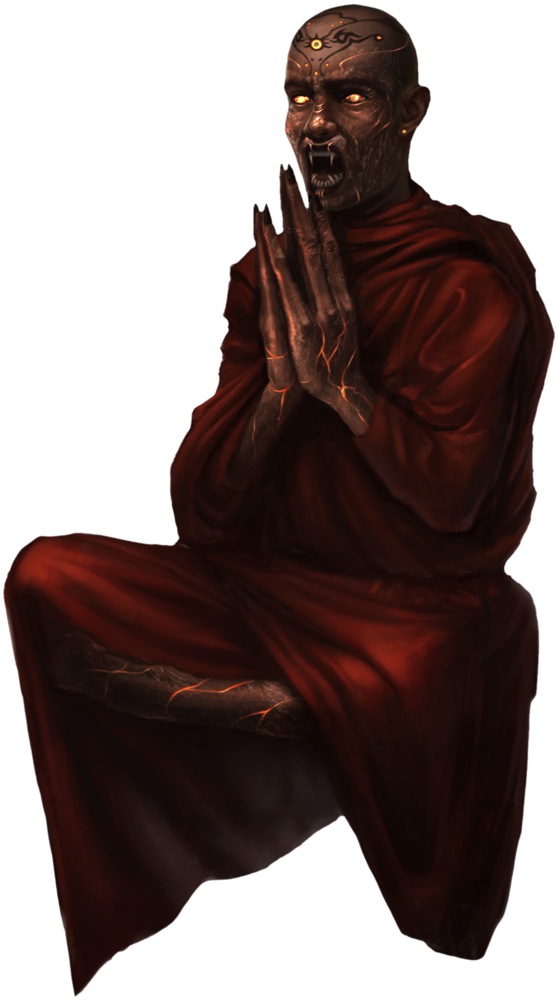
Well, we're wrapping up the Council of Thieves Adventure Path here and along with it my series of new devils in each month's Bestiary draws to a close (on our end at least). At long last, let me reveal my ulterior motive. The new devils in Council of Thieves, when combined with those in Princes of Darkness: Book of the Damned Vol. 1, the Pathfinder RPG Bestiary, Pathfinder #12, and two stragglers from another project I'm still keeping mum about, all sync up to give you more than enough diabolatry to fill out twenty levels of infernal adventure. Check it out!
Being told to "go to Hell" just became a much more daunting proposition, huh? I'll be sure to update this once those last two slowpokes come on across the finish line.
... Illustration by Jim Pavelec ... To Hell and Back Wednesday, October 21, 2009With Book of the Damned: Princes of Darkness showing up in stores shortly and the Council of Thieves Adventure Path well underway, the keen-eyed reader might be noticing a few crossovers. Indeed, Princes of Darkness was very much meant to be a companion to our infernal Adventure Path, while at the same time, we've drawn more than in a little bit of diabolism in from that damnable tome. So if you're reading through...
Illustration by Jim Pavelec
To Hell and Back
Wednesday, October 21, 2009
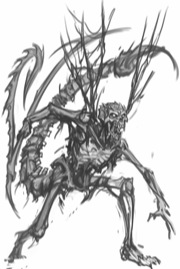
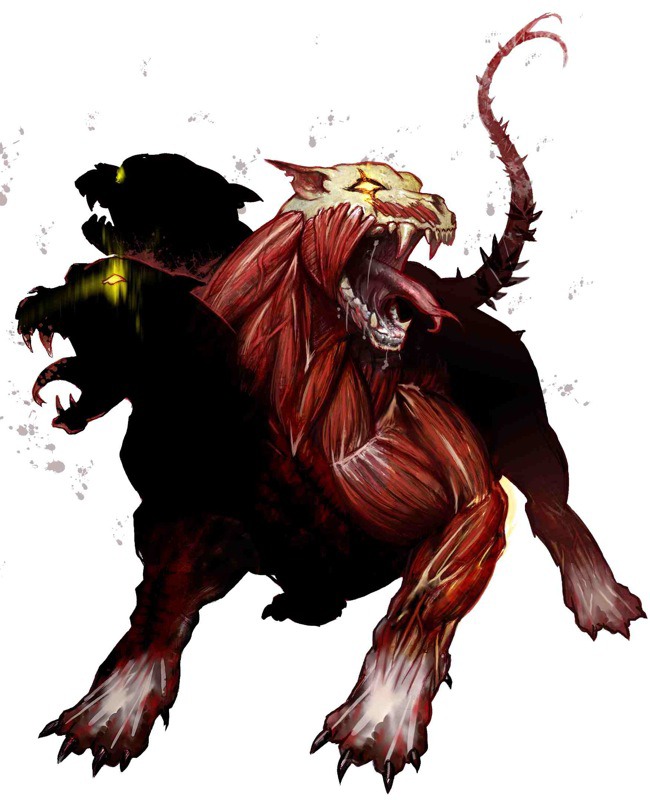
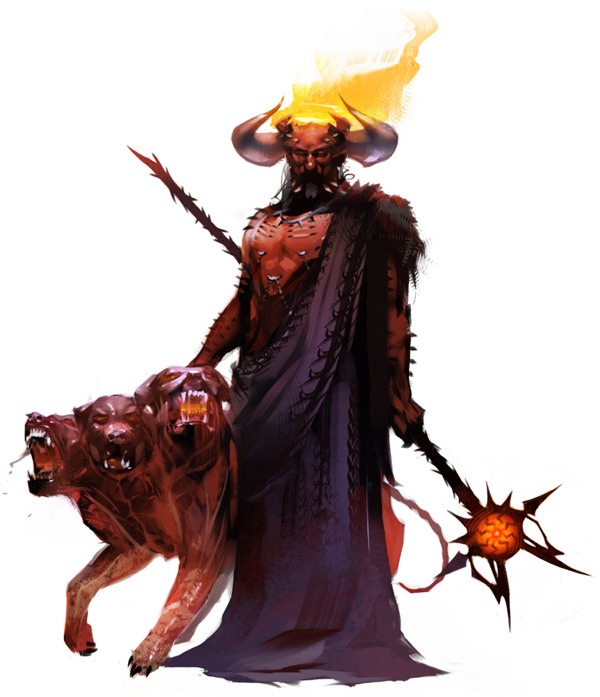
With Book of the Damned: Princes of Darkness showing up in stores shortly and the Council of Thieves Adventure Path well underway, the keen-eyed reader might be noticing a few crossovers. Indeed, Princes of Darkness was very much meant to be a companion to our infernal Adventure Path, while at the same time, we've drawn more than in a little bit of diabolism in from that damnable tome. So if you're reading through Book of the Damned and come across a creature or two that you're unfamiliar with, look no farther than Pathfinder Adventure Path for all the details we couldn't fit between two covers. Already the subtly mentioned ukobach (#25), stymphalian (#26), cerberi (#28), and a whole host of new devils have appeared, with even more infernal lore to come. So stay watchful all you infernal scholars out there! The secrets of devilkind reveal themselves fully to only to the most cunning diabolists.
... Illustration by Steve Prescott ... Countdown to Meltdown! Friday, October 9, 2009Well, as any devoted follower of our messageboards or weekly chat room meetings knows, things have been pretty frantic here at Paizo. As it turns out, releasing about 1,000 pages of rules (between the Pathfinder RPG Core Rulebook and the Pathfinder RPG Bestiary) and moving offices to Redmond, WA, all at the height of the convention season, is a really good way to knock product lines off schedule. We've been...
Illustration by Steve Prescott
Countdown to Meltdown!
Friday, October 9, 2009
Well, as any devoted follower of our messageboards or weekly chat room meetings knows, things have been pretty frantic here at Paizo. As it turns out, releasing about 1,000 pages of rules (between the Pathfinder RPG Core Rulebook and the Pathfinder RPG Bestiary) and moving offices to Redmond, WA, all at the height of the convention season, is a really good way to knock product lines off schedule. We've been scrambling to get things back on track, and I'm happy to report that we're making some really good progress there—in fact, Pathfinder Adventure Path volume #28 is just now heading off to the printer!
This volume's adventure was originally going to be a stand-alone adventure written by me for our Pathfinder Module line. When I kept not having the time to get it started, I realized that it'd make a perfect fit into Council of Thieves. Splitting the writing duty for it with RPG Superstar Clinton Boomer, we explore a "what if?" scenario in this adventure: What if a "nuclear reactor" used a powerful devil as its energy source instead of radioactive material? And what if that infernal reactor had a meltdown?"
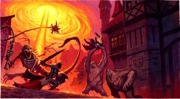
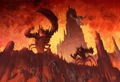
Presented is a hint of what's in store for Westcrown when things go bad—part of Steve Prescott's incredible cover for the volume. And that's just what's going on up topside—just wait until you find out what's happening down below in the Nessian Spiral itself!
... Behind the Scenes: The Six Trials of Larazod Friday, September 18, 2009 ... Illustration by Sara Otterstätter ... This month marks the debut of the The Six Trials of Larazod, the nefarious play that features prominently in Pathfinder Adventure Path #26: The Six-Fold Trial. As promised therein, presented here are the omitted history and details of that accursed play, including a more detailed dramatis personae and more incredible art from Sara Otterstätter. Enjoy! ... What Are the Six...
Behind the Scenes: The Six Trials of Larazod
Friday, September 18, 2009
Illustration by Sara Otterstätter
This month marks the debut of the The Six Trials of Larazod, the nefarious play that features prominently in Pathfinder Adventure Path #26: The Six-Fold Trial. As promised therein, presented here are the omitted history and details of that accursed play, including a more detailed dramatis personae and more incredible art from Sara Otterstätter. Enjoy!
What Are the Six Trials?
In modern times, The Six Trials of Larazod is best known as the fictional account of a Chelish tiefling named Larazod Rilsane. Larazod receives a vision from Asmodeus in which the dark god unveils a prominent Chelish magistrate—the sinister Paraduke Montigny Haanderthan—as a traitor to Cheliax, who has compacted with demonic powers and plans to bring the worship of Asmodeus to a sharp and brutal end. Burning with unholy justice and diabolical purpose, Larazod, along with his stalwart companions, sets out to expose the highly placed traitor Haanderthan. They are greatly overmatched, as Larazod is a minor scion of a piddling noble house whose influence lies tattered in the wake of Thrune's seizure of power in Cheliax. Undaunted, Larazod vows a smoldering blood oath to Asmodeus to see the traitor fall before Haanderthan's actions bring the dark glory of Cheliax low.
Larazod's actions swiftly bring him to the attention of the Paraduke, who has the young tiefling scooped up in the crushing grasp of the law and brought before his dark tribunal for questioning. There, a dire confrontation ensues wherein Larazod reveals his vision and heaps accusations upon Haanderthan in full view of a well-attended tribunal session. Outrage and scandal threaten to topple the order of things, and Larazod's enemies grow in number. Only one high-placed member of the tribunal takes his part—a beautiful daughter of House Sarini and rival of Haanderthan named Ilsandra. A sultry love affair between Ilsandra and Larazod develops as the pair seeks to topple the treacherous Haanderthan.
Haanderthan, using the awesome influence granted a man of his stature, forces Larazod to undergo six trials to prove the truth of his accusations, stating, "If Asmodeus truly granted you this vision, then his almighty black hand shall shield you from dismemberment and disembowelment in the trials we've planned. Surely your faith does not waver?" Larazod agrees to the trials, blasting the magistrate with unholy oaths to see his foolish plans undone.
The trials follow. Combat with foul beasts and grievous tortures leaves Larazod and his companions brutally maimed both in body and soul. At its climax, though, Larazod emerges unharmed and is vindicated as Asmodeus himself drags the nefarious magistrate to Hell.
Despite the spectacle and fame of this piece, perhaps the most interesting aspect of the play is that it is rarely performed to completion. The reality of these trials in their most lethal form—as the play's stage directions detail—prove so intense that nearly every performance ends in the gruesome onstage death of the actors playing Larazod and his companions, those who vow to join him in his darkest hour and face the trials alongside him.
Historical Notes on the Piece
The writer of The Six Trials of Larazod was a legendary playwright of House Sarini named Lokoris. Writing throughout the 4640s, Lokoris was a minor scion of his house who rose to prominence through his gifts of the quill, and who maintained a complete aloofness from political rhetoric or commentary in his many other successful black comedies and heart-breaking tragedies. A signature of his style was the combination of the comic and the serious, a hitherto unexplored mixture of human experience in Chelish drama. Lokoris was a devout follower of Asmodeus in his personal life, and yet his plays were known for their ability to present characters from all walks of life and even different faiths more vividly and realistically than his contemporaries.
The age old play known as Six Trials of Larazod was considered an outrageous piece, even more so after Lokoris’s revisions to the classic—wherein Larazod, a common man, defies the will of a corrupt magistrate. Rewriting this classic plot into both a violent celebration and sideways denouncement of the new Chelish regime, Lokoris transformed it into one of the most avant-garde and sadistic plays in the country’s history. In its time one performance caused widespread riots throughout the city of Westcrown. Lokoris was soon revealed as the playwright, not only ending his career but resulting in his disappearance. He was never found or heard from again, but common theory holds he was swept up by agents of House Thrune and his soul consigned to some bleak corner of Hell for all eternity—an ironic twist of life imitating art.
The play was banned for over 50 years then revived by a later troupe, whose playing of the piece in the outer regional theatres of Cheliax met with great success (though they went through actors quickly as the trials devoured a few each night). However, as the play began to pick up traction among larger and more respectable troupes, the play proved untenable once more. A production by a highly regarded troupe in Egorian resulted in the audience storming the stage and tearing apart the actors playing both Larazod and Haanderthan.
Since, the play is oft discussed in drama academies and among the well-read elite of Cheliax but has never received a serious staging. Until now.
The Three Larazods
There have been several restagings of Lokoris’s The Six Trials of Larazod in the last dozen years, but these have been from a much adapted and markedly less lethal text bearing more in common with the original, centuries old text. Finding a "Lokoris version” or a classic “Original Larazod” now is not easy, but texts arise from time to time. As such, audiences attending the play often don't know from which text the actors will be performing, with those expecting a night of theater instead finding themselves attending a bloodbath and visa versa.
In the modern readaption, as in the original, Tybain merely serves as comic relief (even most Lokoris versions cut many of his blasphemous musings on Aroden's power and what not). Additionally, the entire endgame of the plot is often reworked, and the character of Ilsandra much changed. In this revision, Ilsandra is a succubus who delivers a false vision onto Larazod to urge the youth to topple Montigny Haanderthan—in this version vindicated as a true patriot, falsely accused through abyssal treachery. Therein, Ilsandra is the real culprit, Larazod the flawed tragic hero, and Haanderthan a true believer in Asmodeus under false accusation. Obviously, this reading of the play is far more palatable to most nobles' sensibilities and on occasion receives patronage and stagings. The Lokoris version, while deadlier and far more of a spectacle, sees a tiefling triumphing over one of the rulers of the land and seems to encourage defiance against the aristocracy—features that, regardless of the villain's corruption, do not sit well with the noblesse.
Dramatis Personae
Being those to face damnation and torments most foul amid the Six-Fold Trial.
LARAZOD RILSANE: A tiefling at a time when being a tiefling isn't easy. To most Chelaxians, tieflings are considered a distasteful mixing of pure bloodlines and diabolic influences based not on thoughtful and potent compacts and bargains, but rather a crude relationship and mere carnal episode bearing rotten fruit. Larazod is a low-ranking scion of a lesser house and has no real influence. He achieved nominal acclaim as an officer in the Everwar but has never really been recognized as a hero. He is an odd choice for Asmodeus's messenger, but his faith in the Dark Lord is peerless and unquestioning. He is a simple and low-ranking member of society who is chosen nonetheless by Asmodeus to right a terrible wrong through faith alone.
DENTRIS MALAGRADA: An old, cantankerous wizard and a retainer in Larazod's family for as long as anyone can remember. He has forgotten more about magic than most wizards ever knew. While his magic is rusty, his mind is otherwise sharp, and his rapier wit cuts down most foes before violence is even an option in their mind. As snarly and grumpy as he is, he loves Larazod like a son, and though he tries to talk the zealous youth out of his dire course of action several times, he still marches steadfastly into death and dismemberment with his tiefling master once his sound advice is ignored. He is the character who most often moves audiences to tears, and his death during the trials often leaves no dry eye in the house.
TYBAIN OBEISAN: A paladin of Aroden who is drawn to close kinship with Larazod not by common religion, but rather by the mutual power of their faith in their own respective gods. The religious discourse between these two characters in the original manuscript illuminates just how close faiths can be, even when diametrically opposed. Tybain serves mostly as comic relief in this play, though theorists claim his original purpose was far more dramatically interesting, and meant to serve as insightful religious and political commentary. However, most of this was cut in staged adaptations for obvious reasons, and only the comic bits involving this character remain. The actor cast as Tybain traditionally dies first in the Trials and usually to audience applause.
ILSANDRA: The diabolic daughter of House Sarini who falls in torrid lust/love with Larazod. Whether or not Ilsandra really loves the young soldier turned tyrant-toppler is a topic of much heated debate among noteworthy drama critics. Many insist she is just using the boy to take down her rival. Either way, no one can deny her canny, Machiavellian mind and demure use of both her charms and wiles to come out on top in the play's conclusion (whether Larazod survives or not).
DROVALID VORCLUNE: Para Inquisitor of the Tribunal, a deeply pious giant of a man whose flesh is one long taut veneer of scar tissue. He is a self-flagellant whose zealous love of his duties as head torturer is matched only by his zealous belief in Asmodeus's will. Assigned to administer soul-rending tortures to Larazod, the giant is converted by the tiefling's unyielding devotion to his beliefs and decides to assist the unlikely prophet through the remainder of his trials.
MONTIGNY HAANDERTHAN: The sadistic, traitorous, and demon-corrupted paraduke of Cheliax who engineers and oversees Larazod's trials. Arrogant and self-serving, he uses his lofty station in an attempt to deflect Larazod's accusations and put an end to both his accuser and his political rivals. His fate is decided, though, as soon as he defies Asmodeus's chosen servant.
BAILFF: The left hand and herald of magistrate Haanderthan. This nameless servant of the court introduces the feared paraduke and speaks no more, though his ominous presence lingers throughout the trial.
THE PRINCE OF DARKNESS: The archfiend and lord of Hell himself, whose hand shields Larazod throughout his trials and who ultimately exacts his own judgment upon both the accused and the accuser.
Book of the Damned: Heresy Devil and Erinyes Queen on Labor Day
... Book of the Damned: Heresy Devil and Erinyes Queen on Labor Day Monday, September 7, 2009Ahh, Labor Day! A day to relax, share the company of friends, and enjoy one of the last summer weekends in the northern hemisphere. Of course, if you're this heresy devil from Princes of Darkness, Book of the Damned Volume I, you've probably never had an honest day of work in your life—just beers, bratwurst, and corrupting existing religions to evil. He's really let himself go, the guy probably...
Book of the Damned: Heresy Devil and Erinyes Queen on Labor Day
Monday, September 7, 2009
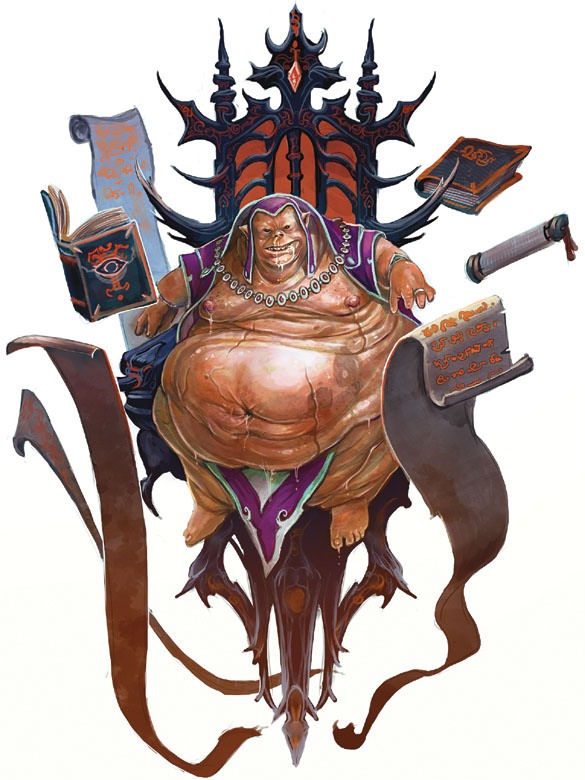
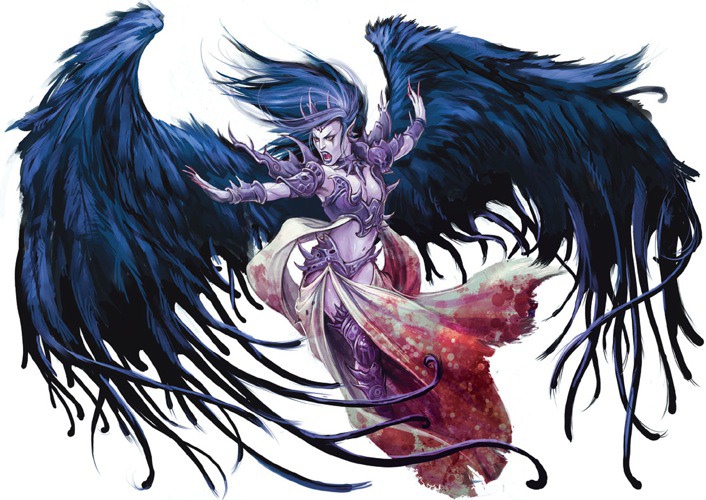
Ahh, Labor Day! A day to relax, share the company of friends, and enjoy one of the last summer weekends in the northern hemisphere. Of course, if you're this heresy devil from Princes of Darkness, Book of the Damned Volume I, you've probably never had an honest day of work in your life—just beers, bratwurst, and corrupting existing religions to evil. He's really let himself go, the guy probably weighs like 2,300 pounds! And here's his nagging girlfriend, one of the Erinyes Queens. "Why can't you get a job? All you do is loaf around with your stupid friends! My mother was right about you!" Feels like home, doesn't it?
... Illustration by Frances Tsai ... Book of the Damned: Moloch and Stygia Tuesday, August 25, 2009Now that we're back from the adventures, misadventures, and unexpected romances of Gen Con, it's again time to talk about one of our upcoming books, Princes of Darkness, Book of the Damned Volume I. I'll just quote Master Schneider's text. ... Illustration by Kieran Yanner ... Moloch: All who burn join the armies of Moloch. A being of seething wrath, the Lord of the Sixth embodies both absolute...
Illustration by Frances Tsai
Book of the Damned: Moloch and Stygia
Tuesday, August 25, 2009
Now that we're back from the adventures, misadventures, and unexpected romances of Gen Con, it's again time to talk about one of our upcoming books, Princes of Darkness, Book of the Damned Volume I. I'll just quote Master Schneider's text.
Illustration by Kieran Yanner
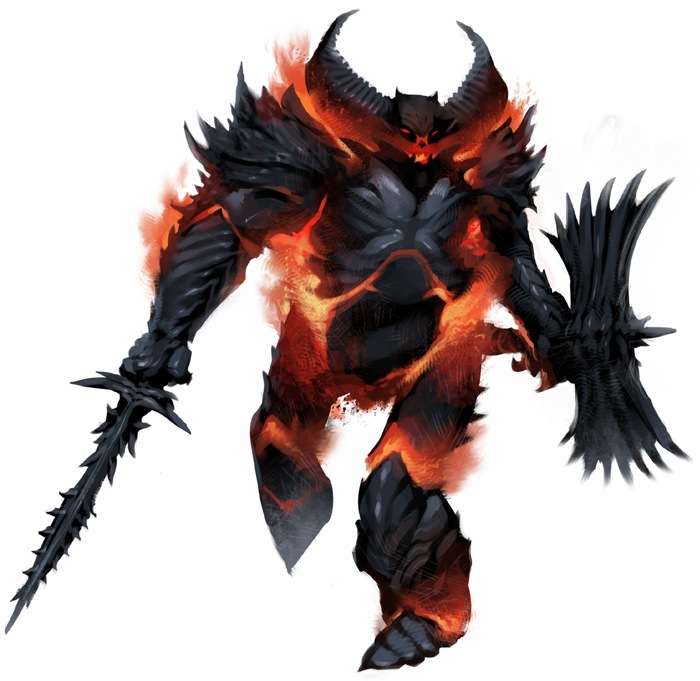
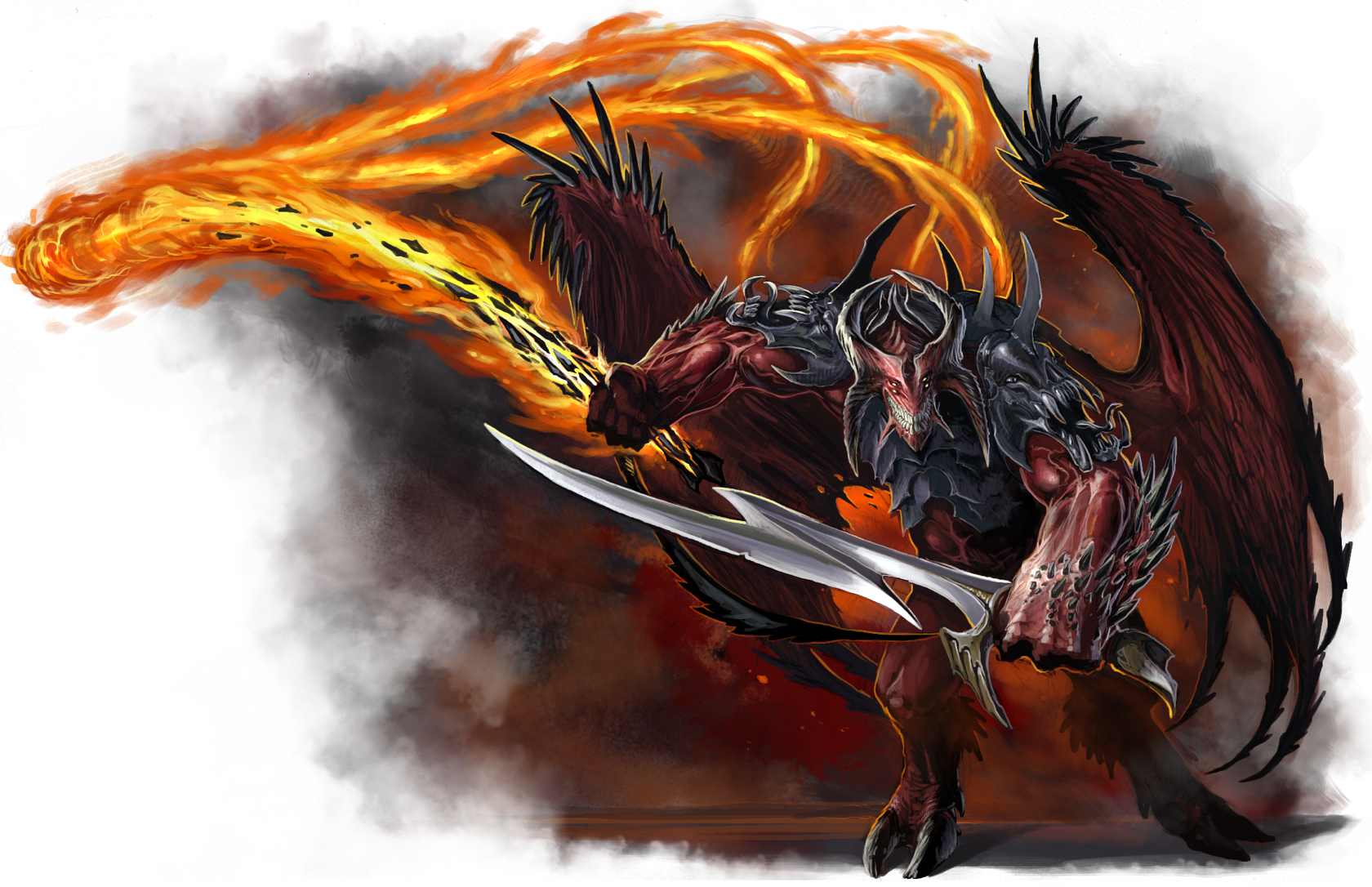
Moloch: All who burn join the armies of Moloch. A being of seething wrath, the Lord of the Sixth embodies both absolute discipline and directed destructive force. General of Hell's Armies, Moloch endlessly trains his infernal legions to be the greatest martial force in the multiverse.
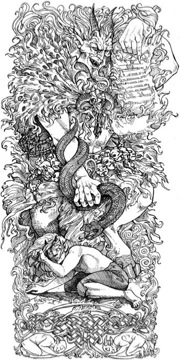
Whatever body Moloch might have once possessed was consumed in flame long ago. Now, the General of Hell is an embodiment of the most devastating, inhuman aspects of war, a creature of fearsome black metal and spiked armor encrusted with the blood of countless opponents. With his clawed gauntlets he exerts the strength of a titan to heft the blood-soaked sword Ramithaine and the horned battleaxe Goreletch. Even in his most tempered moods, flames leap from Moloch's eyes, flaring nostrils, and every other joint and chink of his scorched armor, this blaze growing more wild as the archfiend's ire rises. He never removes his armor, though on the rare occasions where it has become damaged in the heat of battle, nothing lies beneath but flames and the faint outline of withered, fire-charred bones.
Stygia: Every lie spoken throughout the planes condenses as a drop of poison to flood Stygia, the fifth layer of Hell. Amid the tangled swamps and fetid jungles rise moldy ruins, mired temples to false deities, and whole blasphemous cities. The waters of the Styx mix with the layer's venomous bogs, creating vast noxious moors before flowing into vast black seas. Dilapidated avenues paved with cracked stones—remnants of empires that never were—cut through these dense bogs, though they regularly succumb to unexpected floods of stagnant water. Travelers who brave the paths or manage to fight their way through the swamps for long enough inevitably discover examples of the layer's countless ruins, overgrown temples and cathedrals, disparate crumbling monuments, and fortresses upturned as if flung by gigantic and careless hands. Most of these decrepit structures—drawn in their entirety from innumerable mortal worlds—still bear artifacts and artistry from forgotten epochs, typically idols and icons of deities and divine forces unknown to even the longest-lived inhabitants of the multiverse.
In the mountainous scriptorium called the Library of Oaths, diabolical clerks record every mortal oath with a damning consequence. These records prove binding, and those who break their words are damned to eternity in Stygia for as long as their vows remain within the library vault.
... Illustration by Frances Tsai ... Princes of Darkness Monday, August 3, 2009 ... lllustration by Kieran Yanner ... Wes is a pretty creepy guy. He always wears black and red, never smiles, lights creepy candles at his desk, and his voice is a spine-chilling hiss.* What better person to write Book of the Damned, Vol. I, Princes of Darkness? This book is a seven-course feast of lore about Hell, devils, and Asmodeus. You get descriptions of all nine layers of Hell, each layer's archdevil ruler...
Illustration by Frances Tsai
Princes of Darkness
Monday, August 3, 2009
lllustration by Kieran Yanner
Wes is a pretty creepy guy. He always wears black and red, never smiles, lights creepy candles at his desk, and his voice is a spine-chilling hiss.* What better person to write Book of the Damned, Vol. I, Princes of Darkness?
This book is a seven-course feast of lore about Hell, devils, and Asmodeus. You get descriptions of all nine layers of Hell, each layer's archdevil ruler (such as Dispater, the Iron Lord of Dis), new hellish spells and magic items, a new diabolist prestige class (and her imp "animal companion"), information about the influence of true names and sigils on controlling devils, promotion and demotion among the ranks, five new kinds of devils (including the levaloch, soldiers of Malebolgia), and excerpts from an ancient book penned by an exiled angel about the nature of Hell and the origin of Asmodeus himself. The art is beautiful and evocative; art director Sarah Robinson has outdone herself yet again, producing a beautiful book about the ultimate place of evil.
Sean K Reynolds
Developer, Pathfinder Chronicles
*Wes is actually very nice, outgoing, and fun to work with. And I'm not just saying that because he's hissing. A lot.
... Snagged from the Vault: Pathfinder RPG Bestiary Monday, July 6, 2009As promised, we shall continue to astound and delight you with pictures pilfered from the pages of the infamous Pathfinder Bestiary. Featured here today are four mighty and terrible creatures from the Great Beyond. We leave it in our readers' capable hands to determine which type of fiend each illustration represents... ... Art by Tyler WalpoleArt by Tyler Walpole ... Art by Ben WoottenArt by Kevin YanVadid and Nahk ......
Snagged from the Vault: Pathfinder RPG Bestiary
Monday, July 6, 2009
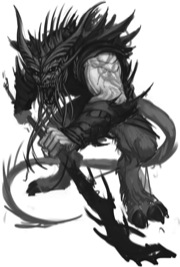
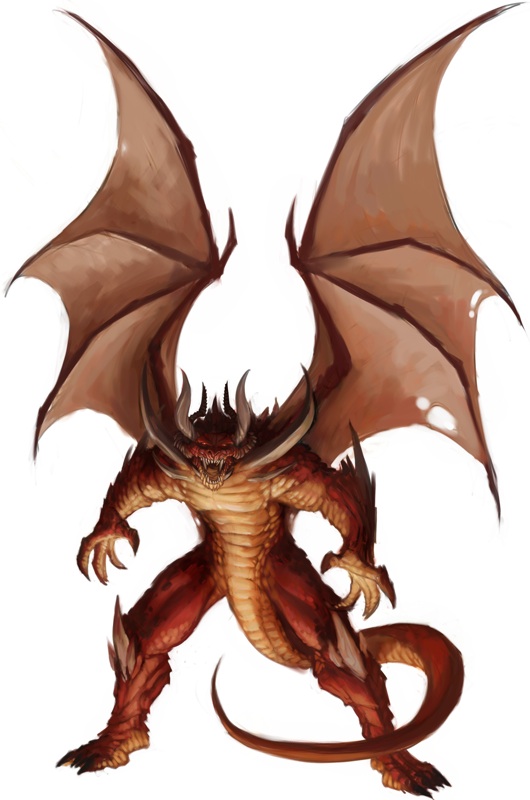
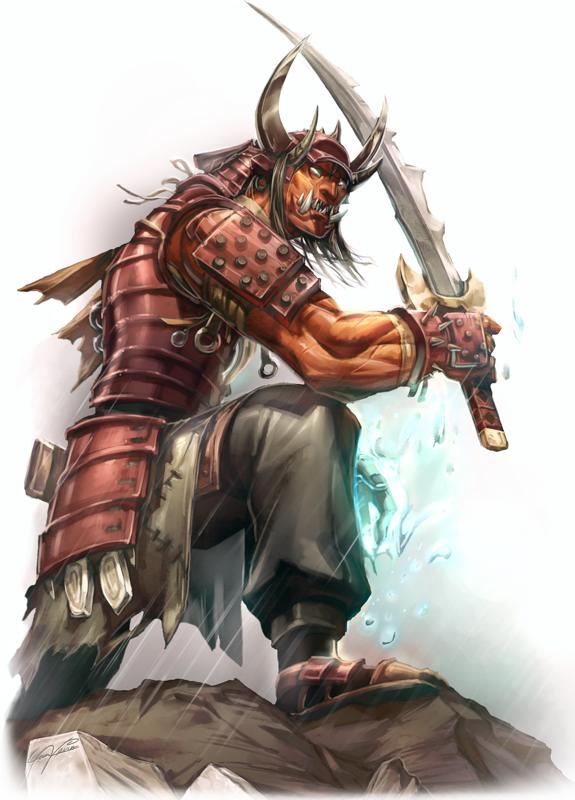
As promised, we shall continue to astound and delight you with pictures pilfered from the pages of the infamous Pathfinder Bestiary. Featured here today are four mighty and terrible creatures from the Great Beyond. We leave it in our readers' capable hands to determine which type of fiend each illustration represents...
... Illustration by Tylor Walpole ... Roots & Beginnings: Book of the Damned (Part 2) Friday, April 24, 2009As promised, here is part 2 of Roots & Beginnings: Book of the Damned: ... Wes: There are a lot of interesting stories about demons in Hebrew mysticism and collections of angelology. Sean K Reynolds lent me a fantastic book, the Dictionary of Angels: Including the Fallen Angels, by Gustav Davidson, which was a major source of inspiration. Another interesting source was accounts...
Illustration by Tylor Walpole
Roots & Beginnings: Book of the Damned (Part 2)
Friday, April 24, 2009
As promised, here is part 2 of "Roots & Beginnings: Book of the Damned":
Wes: "There are a lot of interesting stories about demons in Hebrew mysticism and collections of angelology. Sean K Reynolds lent me a fantastic book, the Dictionary of Angels: Including the Fallen Angels, by Gustav Davidson, which was a major source of inspiration. Another interesting source was accounts from the Book of Tobit, which features Asmodeus as the primary villain.
"There was also a lot of ancient Middle Eastern mythology that I tried to fit in. It's interesting how in ancient history, when a large religion such as Christianity gained prominence in an area, the old gods were demonized. Moloch and Beelzebub are good examples of this. Moloch was a relatively benevolent deity in the Fertile Crescent in ancient times. What's interesting is that the word 'Moloch' might refer to the either the deity itself or to the method with which worshipers sacrificed to it. Adherents possessed a kiln shaped like a bull, and put seven sacrifices into seven slots in the oven—one was an amount of flour, there were several animals, and the last was a human child. There was nothing inherently malevolent about this—nor particularly uncommon for the age—it was just the way they practiced their religion.
"1st Edition portrays Moloch basically as a scary devil with horns. Paizo's version of Moloch promotes him to the general of Hell's legions; he is a monstrous suit of armor with a bull-like helm, beneath which there is nothing but living fire. He's disciplined, severe, and merciless, but aside from commanding Hell's war machine, he's also very mercenary in his recruitment for his legions in that he's willing to provide services for those who honor him; if people sacrifice to him, he fixes their problems. Should one burn offerings to Moloch to stop a flood and save their village, he's probably more likely to step in and stop the flood than most deities. The caveat, of course, is that Moloch is an archdevil and whether one worships him as part of a militaristic cult, as part of the traditions of one's people, or just because his standing offer of aid is tempting, serving him damns a soul to his fortress realm in Malbolgia after death. But when faced with dying at the hands of a foe, infernal intervention for either benevolent or selfish reason might be worth the price of later damnation. There's a lot of this throughout the book, evil disguised as goodness or at least the right—or easy—choice for the moment. Sure, Asmodeus, the archdevils, and the armies of Hell could easily murderer mortals and claim their souls, but why when, with the proper nudging, most mortals will damn themselves.
Thanks for reading "Roots & Beginnings: Book of the Damned"!
... Illustration by Tylor Walpole ... Roots & Beginnings: Book of the Damned Tuesday, April 21, 2009The Pathfinder Chronicles Campaign Setting gave readers a glimpse of the tortuous layers of Hell and the diabolical machinations of the archdevils who rule them, and The Great Beyond, A Guide to the Multiverse, scheduled to be released in June, will further whet the appetites of those who crave to add a healthy dose of the infernal to their game. The definitive treatise on Hell, however, is...
Illustration by Tylor Walpole
Roots & Beginnings: Book of the Damned
Tuesday, April 21, 2009
The Pathfinder Chronicles Campaign Setting gave readers a glimpse of the tortuous layers of Hell and the diabolical machinations of the archdevils who rule them, and The Great Beyond, A Guide to the Multiverse, scheduled to be released in June, will further whet the appetites of those who crave to add a healthy dose of the infernal to their game. The definitive treatise on Hell, however, is being written by none other than Paizo's own F. Wesley Schneider: Princes of Darkness—Book of the Damned, Volume 1. I had the chance to speak to Wes recently about the sources he consulted when writing this daunting tome, and how he managed to reconcile the mythological roots of Hell with the lore of previous editions of the game.
Wes: "The two primary sources of inspiration are obvious: Milton’s Paradise Lost and Dante’s Inferno. Other influential real-world sources included the Lesser Key of Solomon—and the Dictionnaire Infernal.
"The problem is these sources have been used over and over in the game and in third-party supplements. The way the entries for individual demons are written in the Lesser Key, for example, they already sound as if they were appearing in RPG products. I tried to avoid using the entries that have been bandied about the game frequently, as they've had enough coverage already. I didn't want to use too many of the fiends from mythology that have already appeared in products like Necromancer's Tome of Horrors and Green Ronin's Book of Fiends, as they have lives and details of their own. The 1st Edition Monster Manual II has a list of names of demons—some are made up and so we can't use them, but the ones from obscure mythology were perfect.
"The problem with Hell, in my opinion, is that it is the red-headed step-child to the Abyss. Whereas the Abyss is infinitely large, full of an infinitely diverse number of cool monsters, Hell has been stereotyped as a place of boring rigidity ruled over by scary-looking dudes with whips and pitchforks and goatees. When I wrote The Book of the Damned, I wanted to get rid of these stereotypes, and to make the archdevils actually monsters, because that would be much cooler than just generic cackling overlords. I tried to draw on the mythology that was already established for them but make them more like monsters. A good example is Geryon—in the original game he was just a snake man with a spear. Classical Greek mythology, however, portrays him as a warrior possessing a human form from waist down, but with three torsos and six arms. For The Book of the Damned I mixed the both the mythological and game interpretations of Geryon into something at the same time evocative of past images, but still new and very cool.
"The biggest differences between the Pathfinder version of Hell and the classic interpretation in the game is that we play up the "law and order" aspect—it's more about tyrants and the hierarchy of Hell, in that while Hell is first and foremost a punishment, it also has a goal and intention, and the personalities there are ancient and have neat concepts behind them. Beyond just Asmodeus and the archdevils, there is a whole host of deity-like beings: infernal dukes (of whom there is unlimited room for further development and details), malebranche (powerful diabolical warlords sent out to conquer specific worlds), and a few other tiers I’ll save as surprises for the final book. The biggest thing is that there is a lot going on and it's interesting, and it sticks to both the lore of the game and the mythological roots; it also draws on interesting history of deities that have been subsumed by other religions."
Stay tuned for Part 2 of "Roots & Beginnings: Book of the Damned"!