Sign in to create or edit a product review. 
Pathfinder Battles—Reign of Winter: Monsters Encounter PackWizKids/NECAOur Price: $39.99 Add to CartStands with the best of the line Mairkurion {tm}
—
Mairkurion {tm}
—
Criticisms of the packaging and the spear both have their basis: the packaging takes care and effort to remove, and is not suitable for keeping or displaying. And it is annoying that the spear's plastic is so bendable that it won't stay straight. I will admit I don't really care about the first issue. However, the spear is not the deciding issue for me. There are larger considerations: the sculpt, painting, and conception of these two monsters is so strong that they are worthy to stand among the best miniatures of this size in the line. Not to mention, frankly, that we really needed a giant worm. For more pictures of these see here. 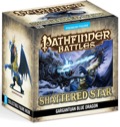
Pathfinder Battles—Shattered Star: Gargantuan Blue DragonWizKids/NECAOur Price: $39.99 Unavailable Rating the Mini itself.
Mairkurion {tm}
—
"Almost Perfect," captures my judgment of this miniature as well. The sculpt is very good and the paint job well done. This dragon has a lot of personality and fine details. I am impressed with how much closer this is to MacFarland dragons quality than gaming miniature dragons quality. I look forward to using and reusing this miniature in my gaming future. I sympathize with the complaints about packaging and broken dragons (mine arrived with a broken horn that I super-glued), but aside from these issues, this miniature is hard to beat, even if you are not a subscriber. Caution should be taken in assembling the wings and tail. The tail in particular caused me anxiety, but taking my time and applying careful force with support, all ended well. 
Pathfinder Tales: Queen of ThornsPaizo Inc.Print Edition Unavailable Add ePub/PDF $6.99 Non-Mint Unavailable King of Paths
Mairkurion {tm}
—
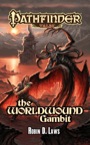
Pathfinder Tales: The Worldwound GambitPaizo Inc.Print Edition Unavailable Add PDF/ePub $6.99 Non-Mint Unavailable Too Much Hate for a Fun Read Mairkurion {tm}
—
Mairkurion {tm}
—
This is an enjoyable tale that just doesn't deserve the hate it's getting. I frankly am amazed that the non-traditional choice of tense (this is happening in other novels, people. Get out more often.) is alone to blame. To say that the characters are shallow is just misleading. Shallow compared to Henry James, sure, but not shallow for the genre at all. While I'm tempted to give it 5 stars just to undo some of the extreme (and in at least one case, clearly unfair) reviews, I will give it an honest four. Which, I hope I don't need to remind people, is a good rating. Give Laws' Gambit a chance, reader, and set off on a rompy heist that stays abyssal incursion. I'm amazed this mini still hasn't sold out. If you haven't gotten one yet, you're going to be really sorry you didn't when they're gone. Complete your black dragon collection! Buy a pre-painted Wotci mini from their golden days as we enter their twilight! It's a nice sculpt with a dramatic pose, and the paint job on this one is beter than the original paint job of the standard War of the Dragon Queen miniature. Design a slippery, long-term, recurring villain around the sorcerer figure and get lots of use out of it when it is not sitting on the bookshelf with your favorite minis. As for the price, I challenge anyone to beat it -- especially if you have a subscriber discount. 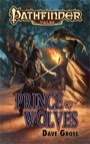
Pathfinder Tales: Prince of WolvesPaizo Inc.Print Edition Unavailable Add PDF/ePub $6.99 Non-Mint Unavailable BANG!
Mairkurion {tm}
—
That's how the Pathfinder Tales series has started out. I knew I liked the characters of Count Jeggare and Radovan, and I was looking forward to how Gross might develop them based on comments traded online, but he surpassed my hopes and his earlier stories. Prince of Wolves gripped me: it's well-written and is full of fun riffs on the genre that don't descend into the stale or the silly, as they so easily can. The friends and foes are painted darkly enough that in the case of most of them, one does not stop guessing which is which. Good uses of twists keep the reader on plot but off-balance. If you're shy of Gaming fiction, there is no need for you to be in this case. I read this after reading Hugh Cook and Fritz Leiber, and while reading Neal Stephenson. Gross (and the editors) more than hold up in good company. This deserves to be read by fans of Golarion and folks who can't tell Ustalav from Cheliax. Somebody rescue this book from not getting enough attention! Once again, Planet Stories has answered the call. I enjoyed the last Anthony offering from PS, Steppe, but this one is clearly superior. I burned through this book -- a very fun fast read, but also quite thought provoking. A twisty plot and engaging characters with more depth to them than one might have expected in a work this short with as much action as it contains makes for a very engaging read. Also, whether my suspicions about purposeful planning are confirmed or not, this book makes great inspirational reading to put alongside the current kingdom-building Adventure Path. Let Piers Anthony and Planet Stories rope you in to picking up this little gem: you won't regret it. 
Who Fears the Devil?—The Complete Silver John (Trade Paperback)Paizo Inc.Our Price: $15.99 Unavailable Can't believe this still doesn't have a review!
Mairkurion {tm}
—
I'll replace this with a full review soon, but for now, I feel the need to stump for it. I started out saying, Who put hicky Americana in my Planet Stories subscription? But from a position of disinterest, this author completely won me over with his superior storytelling and quality writing. Tone is just right. This is a must buy and must read. 
Evocative City Sites: Kavit M. Tor’s Emporium of Collectible Curiosities (PFRPG) PDFRite PublishingOur Price: $1.99 Add to CartHighly Recommended
Mairkurion {tm}
—
From the pages of dark fantasy, one of the most compelling pairings is the shop of items arcane and perhaps nefarious and its shopkeeper, who is undoubtedly so--though perhaps not at first glance. Paizo board regulars Wicht and Tarren Dei have been teamed by Rite Publishing to give us this classic pairing for some wonderfully atmospheric gaming. Among the work's good features, its real strength comes from the fully imagined character of the shopkeeper, Kavit Tor. He provides the explanation for the store's colorful and clever cursed merchandise, its planar nature, and its fruitful seeds for adventure. The product gives the GM plenty of material to drop Tor and his emporium directly into any game--another happy consequence of its planar nature. What makes it particularly appealing to me is that it gives interesting material that can be used right away, but moreover the material is presented with the right combination of detail and suggestion to spur one to build on the authors' material for further uses. The work begins with a narration that draws one into Tor's twisted curiosity shop. Good luck to players who wish to outlive what they take out of it or hope to avoid leaving something valuable of themselves behind as a surety of a far dearer price. Chances are they'll become repeat customers, if they can find their way back in. For folks who might draw certain conclusions from the stock art cover or the punning title: There is a richness to the contents that makes the price a steal. For many readers, the ten magical items and ten curses alone will make it a bargain, but for me, these are extras to the character of Tor and the atmosphere of his emporium. Other nice touches: the original map is also blown up so that it can be used with miniatures, and the inclusion on that map of a recurring item from the history of the game was a nod that warmed my grognardic cockles. My gamer daughter and I watched this together and laughed like maniacs. My wife looked on from a distance and continued to wonder what's wrong with us. The key phrase here is Shared Experiences. The old Dragon Warriors Role-Playing Game is brand new to me. If I ever saw the books, I know I mistook them for fantasy novels. Recently the game has been revised and republished by Mongoose in a single hardback. A group of fans put together an electronic fanzine for the setting called Ordo Draconis, last autumn. Are you still awake? Because now is where things get interesting. The second volume of Ordo Draconis adds Pathfinder Compatibility to the setting of Dragon Warriors. Now, obscure British role-players, you're talking turkey. Set in an alternative medieval Europe, Ordo Draconis' Lands of Legend comprise analogues of Northern Europe, seemingly concentrated on places that sound familiar and compelling to this anglophile: Corumbria, Albion, Thuland, Mercania—although Chaubrette strikes me as a nest of shifty rogues in fancy clothing. Comparing the free first issue to the preview pdf and preview web pages available online,* it is clear that the step from free fanzine to pay fanzine has been marked by a corresponding increase in size and quality. There is a strong feel of time and place: a low magic/high adventure evocation of the early middle ages in the British Isles with a good understanding of that society and culture supplying the sense of verisimilitude that makes for a strong setting. The magazine is well-stocked with maps of countryside and adventure locations are detailed and good-looking. What if I'm not looking to add another setting to my gaming table? The value of Ordo Draconis is that many of us home-brewers have lands that are similarly based on earthly locales, and Ordo Draconis provides material that could easily be ported. Further, the attention given to bringing the quiddity and quotidiana of early medieval life into the game setting will inform and model for the GM who wants to develop her or his own world. The accuracy and richness of detail given to the setting along with the quality maps recommend Ordo Draconis to the sophisticated gamer and Pathfinder fan. And I guess some people are always looking for new classes and monsters and such... *This review was based on Ordo Draconis 1 and the pages of the preview pdf and the additional material previewed on the Dragon Warriors Wiki of volume 2. 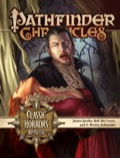
Pathfinder Chronicles: Classic Horrors Revisited (PFRPG)Paizo Inc.Print Edition Out of print Add PDF $15.99 Non-Mint Unavailable Classic Indeed
Mairkurion {tm}
—
I'm not in the mood to write a full-fledged review of this book, but for now, let me say that I do not love this book. I crazy-love it. It has a place of honor on my bedside table next to Carrion Hill. This is a deep resource, richly steeped in the source materials. It's beautifully illustrated. The only two imperfections I see in it are the Derro feats that weren't included (no problem--available here online for free) and the hag illustrations (funny, but not the direction I would have gone). Admission: this was the first time I ever read a Piers Anthony novel. I was pleasantly surprised--to be honest, I wasn't sure what to expect. It's based on ideas we've seen done many times since 1976, but done much better. It's divided into two parts that make it convenient for a two-sitting read. The action is exciting, the treatment of the concept not at all dated, and the story flies along, fast as a space-horse. There is also more character depth than is often present in such stories. The illustrator is also to be commended for the cover and interior--I was initially a little unhappy with the change of format in PS, but it lends itself very well to being illustrated. Note: This review covers only 3.5, Pf, and pan-system material. If you haven't treated yourself to the newest issue of the ENnie award-winning Kobold Quarterly (or better, yet, a subscription to the small magazine that has only gotten fiercer), now is a good time to do so. There's lots awaiting the fan of 3.5 and Pathfinder gaming in this issue. It's especially apropos for its October release: from the glowing orange charge of death knights that threaten from the cover to the lycanthrope and vampire articles. There's an interesting new take on dwarves that continues the Wick-ed reexamination of the core fantasy races. Wick takes seriously the development of a real coherence of racial culture that will stoke the imagination of those who value verisimilitude in world-building. The real problems of satisfactorily integrating lycanthrope PCs into the game are tackled with sensitivity by John Ling. The family Connors sinks their teeth into vampires in the ecology article, juicy with research into the historical mythos. The GM roundtable is cluttered with bits of wisdom, and when these fall from the lips of luminaries such as Monte Cook, Bulmahn, and Chief Jacobs, one will want to return to scuttle across the table more than once to search for precious crumbs. Cook returns with a further, empowering meditation on GMing that draws on his rich history with the game. A team of Paizo regulars put together a selection of weapons for monsters that add the kind of distinctiveness I value for making monsters stand out from a blur of abstract opponents. Further articles offer unusual treasure items, a demented city that would offer an unnerving urban setting for a non-drow Underdark adventure, and further fleshing out of the award-winning Zobeck setting. (Blast you Baur! I don't need another great setting. Well...maybe just one more.) So what was my favorite? It's really hard to choose between Hank Woon's torture article and Marc Radle's spell-less revision of the ranger, and I still don't think I can choose between these two gems. These were the two articles that made me want to play right away. If the ranger is one of your favorite classes, but like me, you've always wanted to tinker with it, and were never completely happy with the place of magic in the class, then this strong re-imagination of the Pathfinder class will call to you with a siren's power—hopefully you will have chosen your favored enemies and terrains wisely. (PDF Only Bonus: contains two addenda pages for your ranger character sheet.) And what GM hasn't experienced the frustration of no crunchy mechanical crackers to support the delicious flavor of PC torture that needs to be spread onto the game on special occasions? This is a case were flavor has been calling out for supporting crunch and Woon gives you what you need to make your players swoon. It's enough to make me forgive him for finding a paying job. These two articles really make #11 stand out as a special issue. Now to the small stuff: I find the ads and reviews great for keeping me informed about things I would otherwise miss, but the “small” thing that is fiercest for me is Baur's ongoing production of a publication that pulls together such a diverse visual style into a unique, attractive, somehow coherent, look. I love that he continues to bring in new art and old art, color and black-and-white art that feeds the eye, complements the text, and somehow feels right in spite of great diversity among the individual works. How does he bring such heterogeneity together in a way that doesn't disintegrate into hodge-podge? There's got to be a devious kobold secret here that should keep us all checking over our shoulders. I hope that this aspect is always a part of KQ. Happy gorging on this gaming treat-bag! Tuck in before the hungry ghosts! Spoiler:
Now you can keep up with KQ on Facebook. While this may not be the most inspiring mini ever made, I'm actually kind of excited about it. How many times do you need a mini of a hooded, cloaked figure? Or of Cultist #5? If you're like me and the answer is, "pretty regularly," this mini's got you covered. Like the aboleth, we had to wait a long time to get a remorhaz. Unlike the aboleth, this mini blows my socks off. I love the detail on this mini, and can't find anything to criticize. Sculpt...pose...paint. Wizards' mixed record on quality of minis unfortunately extends to the most iconic of all of their monsters, but for my money, this is one of the best. Clearly better than the elder green. I knew exactly what I was going to use this mini for when it was announced, and was thrilled to get one. Paint job is a little uninspiring, but a I like the sculpt. This is one of those monsters that we had to wait forever to get a mini for it...too bad 4e changed the size. Still, a decent mini, if a little bit like a mutant catfish. I'll definitely pick up another for use as younger aboleths. Goblins, like orcs, are something I have coming out of my ears. But in spite of that, there hasn't been a lot of variety among them. Nice to see a goblin mini that stands out from the ordinary. This mini would work great as someone's grunt, a burglar, goblin baggage train... When I first saw this mini online, I had a similar negative reaction to the face with the gaping smile and the severe underbite. Then I saw it in person and it looked not as bad...out of the packaging it looked better. I'd say his face looks more like a vicious malabranche who enjoyes his work...a lot. Now my main complaint about the sculpt are the little wings, but it's certainly a serviceable devil. We finally get a hippogriff, and it ends up blowing away every griffon mini that was previously made. Initially put off by the electric blue feather-ear-horns, this was the first Dangerous Delves mini I picked up and it sank its talons deep into me, demanding that I buy more. Great detail and great pose -- the picture does not do it justice. The blue things actually grew on me. The only thing that keeps this mini from pure perfection is the annoying lean, which I am consistently trying to work out of the plastic. It seems like WotC's packaging is encouraging a couple of the minis to acquire an annoying lean. Everything on the surface of The Anubis Murders demanded that I read it: a fantasy and mystery novel, set in an alternative Earth in the analogues of (personal favorites) ancient Egypt and medieval Britain, with a wizard for a protagonist, and written by Gary Gygax, one of the mentors of my youth – one of the most important mythopomps to lead me, as so many of us, here. But it was this latter fact that held me back. Having never read any of Gygax's novels, I harbored a fear that the master behind beloved adventure modules, and above all, the epochal Dungeon Master's Guide, would embarrass himself and discomfort me the admiring reader when he ventured beyond gaming prose into sustained fiction narrative. I need not have worried. The Anubis Murders did more than banish these specters—it put them to flight with an entertaining invocation of mystery and magic. If you know Gygax's writing from gaming materials, your stylistic expectations are met: descriptions of color, arresting scenes, interesting detail, choosing (or making) the right word. But beyond his taking his trademarks and putting them to use in a novel, Gygax pulls you on through plot while proving himself capable of surprising the reader with more than the appeal of the strange and arcane. I was not prepared for how much I enjoyed Gygax as a character writer. While I admit my prejudice for the wizard-priest* and his nubile bodyguard, Gygax takes the proven formula of the duo and uses it both to drive plot and to bring out the character of his protagonist with subtlety and verisimilitude. By story's end, one has been treated to a fleshing out of how Gygax imagined magic, an intelligent action story, a villain worthy of the protagonists and promising them challenging future careers. I'm tempted to say more about this villain, but it is too easy to be a spoiler. I will simply not that finding out more about the villain was particularly satisfying.** What might interfere with a reader's enjoyment of an otherwise fun yarn? If one is a constant mystery reader, one might figure out the plot rather too quickly. If one is an occasional reader of mystery, it might be best to read the book during a down mystery period, when one's plot detectors are a little flabby. If one's love of partner fiction leads one to desire or expect an equal partnership (Holmes and Watson, Farhrd and the Gray Mouser, Aubrey and Maturin), one will likely be disappointed. At this point in the arc at least, Setne is much more developed a character than Rachelle.*** Finally, certain kinds of students of history may well balk at the willful chronological naiveté of the tale. Gygax happily mashes Ancient Egypt and the matter of Britain (technically, it appears to just be pre-Arthurian), which is the low end of testing such tolerances – the reader should brace herself for the mention of the Bow Street runners! However, if one's predilections run as close to Gygax's as mine admittedly do, one is likely to wave such disjunctions away in the name of a good time. And with these caveats, that is exactly what The Anubis Murders will provide you. I have KaeYoss and Lisa Stevens to thank for the sale that helped me risk my fears, but I hope that reviews and word of mouth will help banish these from any minds where they might yet linger. If you missed the sale, consider this: the foreboding cover illustration by Andrew Hou is worth the price alone. Notes
Spoiler:
* Those who know the character from whom I derive my nom-de-net know will cry, “Of course he loves a wizard-priest protagonist!” ** And hence we come to Mr. Mona and his introduction. The esteemed editor has come in for a bit of pillory for his spoiling of the Gord the rogue plot in the reviews on this board. Personally, I'm not particularly troubled by his revelation – it is of a very broad nature and I'm not sure I'll ever get to the Gord the rogue novels with a vast sea of books and a finitude of lifetime before me. (Well, except for the Infernal Sorceress, of this same line.) Among the 4e dragon miniatures, this one is among the best looking.
|