Paizo Top Nav Branding
Welcome, guest! | Sign In | My Account | My Subscriptions | My Downloads | My Wishlists | Shopping Cart   Shopping Cart | Help/FAQ
About Paizo   Messageboards   News   Paizo Blog   Help/FAQ  
Pathfinder Roleplaying Game

Pathfinder Society

Pathfinder Roleplaying Game: Beginner Box

PaizoCon 2012!
Pathfinder Online Technology Demo by Goblinworks Inc. — Kickstarter
1,573
BACKERS
$98,875
PLEDGED
13
DAYS TO GO

Search
Links
Shop
   RSS New Blog Entries Facebook Twitter Email

See Also:

The Stuff of Legend

Tuesday, November 9, 2010

You've head the rumors. Now learn the truth from the journal of Howell, Tim Nightengale's character in James Jacobs's legendary Shadows Under Sandpoint campaign.

Entry from the travel journal of Howell B. Talbot III, Servant of Abadar
18 Pharast (late morning)

All praise the might and justice of Abadar!

A quick missive here, as we have met and vanquished the object of Styrian's obsession: the Sandpoint Devil!

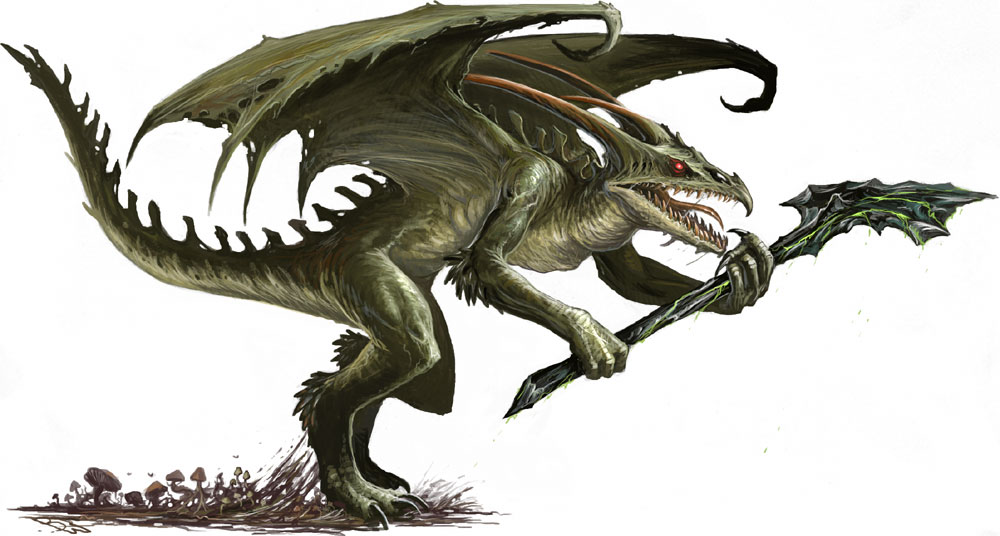
I must say that the pictures and descriptions that Styrian has shown me do not convey its sheer horror. The wolf-horse devil was summoned by one of the ghouls that waylaid us inside the back passages of Kanker's lair, by means of a large spiraled horn. The devil's approach was marked by such a scream that both Zandu and Rummy-Tum-Tugger fled in fear, and its arrival was punctuated by a flash and explosion that left Velmarius blinded. The horror flew in over the summoned pit, and proceeded to vomit a flame over Vorn that left him with horrible burns.

A hound archon summoned by Balazar seemed to occupy the devil, while Ostog, Melga (now, where did she come from, and where is Hazel?), and I moved up to attack. It was then that I called upon the Justice and Glory of the Gold-Fisted One, and finally, after many a failed attempt at smiting evils on this mission, I buried Thundergütter deeply in the chest of the Sandpoint Devil, causing it a truly grievous wound, and doubly-so as I wrenched the axe free. Ostog, as always, delivered the killing blow. Unfortunately, the beast's final act was to spray us with its infernal breath, leaving Ostog and myself, along with Vorn, charred and bleeding despite all healing. And yet, the Sandpoint Devil is no more, reduced to a cleaned skull in the hands of the scholar that has tirelessly pursued it. Styrian tells me it belongs in a museum....

Christopher Carey
Editor

More Paizo Blog. Link. List this entry. Tags: James Jacobs, Sandpoint Devil, Shadow Under Sandpoint
17 comments.
Facebook Twitter Email


Bestiary Breakdown

Tuesday, September 7, 2010

Greetings, fun-sized friend morsels! What's the scoop? Tom Rex here, bringing you the latest that's outrageous, from the present to the Cretaceous! (Tom wrote that himself. Tom took some poetry classes in college.) And today that means another blog picking up the slack from James Jacobs.

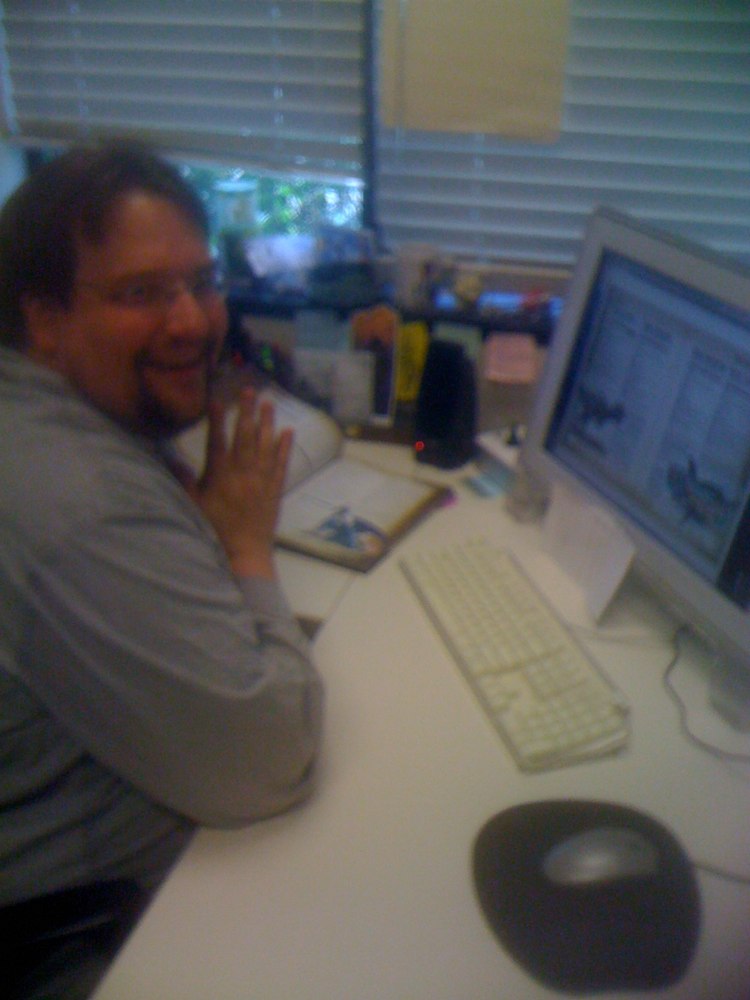
According to Boss Sutter, Jacobs was supposed to write a blog post titled "Bestiary Breakdown." Which is accurate because, thanks to the Bestiary 2, James Jacobs is indeed breaking down! Ha! If you don't believe Tom, just observe the attached exclusive photographs. (Tom apologizes for the blurriness. The cameraman was both rude and delicious, and Tom's hands are built for holding massive prey in place while it's thrashing, not operating tiny iPhone camera.)

As you can see, James Jacobs was not having a good day—at least not until he reached the dinosaur section. Then things got better. Tom does what Tom can to keep the little people happy. (Tom has read the philosophy behind Kobe beef.)

Until next time, that's the scoop on that!

Tom Rex
King of Reporters

More Paizo Blog. Link. List this entry. Tags: Dinosaurs, James Jacobs, Monsters, Paizo, Pathfinder Roleplaying Game, Tom Rex
14 comments.
Facebook Twitter Email


The Fabled Appendix – James Jacobs (Part 2)

Monday, March 16, 2009

Today we continue the series on Paizo's Appendix N with the second part of my interview with James Jacobs, the editor-in-chief of Pathfinder. We pick up where we left off, as James finishes discussing his most important literary influences and closes the interview with an explanation of his favorite horror films.

James: Stephen King's Dark Tower books were particularly influential, as they are as much magic and science fiction as they are horror. What's neat is that all of his stories are interconnected, like Lovecraft's. Names and locations reappear and become part of King's mythos—which also includes nods to the Cthulhu Mythos. I think King very successfully straddles the fine line between homage and pastiche, as it's easy enough to write in the style of Lovecraft and other classic horror authors, but much harder to use those themes while writing with your own voice. Stephen King does this admirably.

F. Paul Wilson, and particularly his character Repairman Jack, was another big influence. The series of stories featuring Repairman Jack are like modern-day X-Files, except that one of the primary themes is the idea that it's just one man versus cosmic horror.

Ramsey Campbell was another influence; he's a British author who began his career writing Lovecraftian horror fiction but later moved on to more psychological horror themes such as madness, ghosts, and deranged murderers.

The Descent, by Jeff Long, really captured my imagination. Without giving away too many details, the novel is essentially about a real-world Darklands. Humans live on the surface of the world, oblivious to the fact that "other" descendents from our common ancestors live beneath them; in the novel, Long explains that, over the course of human history, these creatures have served as the basis for humanity's shared myths of devils living beneath the earth.

David: That's quite an extensive list of fiction! But you're even bigger movie buff, correct? Tell us about the movies that most influenced you.

James: There's probably too many to name all of them; I have a wall of DVDs in my apartment. In terms of movies, my main interest is still horror. When I was a kid, my dad and I would watch Creature Features, a TV series that aired a new monster flick every Saturday night. So my love of horror movies began at an early age. My two all-time favorites are, without a doubt, Alien and John Carpenter's The Thing.

To rattle off other big influences, there's The Blair Witch Project, Godzilla (which asks the question "what if the atomic bomb was actually a creature?"; there is a scene in the movie where a bunch of kids are horribly burned and crying for their moms, not realized that they've been killed—it's super-grisly), Jaws, the Exorcist, Lord of the Rings, Schwarzenegger's Conan, Psycho, The 7th Voyage of Sinbad, Lilo & Stitch (Stitch served as a primary inspiration for Pathfinder goblins, both in terms of look and personality), and the classic 1950s horror film Tarantula.

Whenever I assign adventures to freelance authors, I like to point them to movies that will give them an idea of the tone we are shooting for—it's much faster for authors to find inspiration by watching a 2-hour movie than to read an entire book, although if they have time in the sometimes too-short deadlines we give them, books can remain a great source of inspiration. For instance, I told Richard Pett to check out the old Hammer Horror movies when he was writing "The Skinsaw Murders" and pointed Nick Logue at The Hills Have Eyes, Texas Chainsaw Massacre, and Deliverance for "The Hook Mountain Massacre."

Overall, I would have to say that my two biggest inspirations are H. P. Lovecraft for books, and John Carpenter for movies.


Thus concludes my interview with James Jacobs. Thanks for taking the time to discuss your biggest inspirations, James, and thanks for reading, Paizonians! Come back again as we continue to expand Paizo's own Appendix N!

David Eitelbach
Editorial Intern

More Paizo Blog. Link. List this entry. Tags: Appendix N, H. P. Lovecraft, Interns, Interviews, James Jacobs, John Carpenter, Stephen King
Sign in to start a discussion.
Facebook Twitter Email


The Fabled Appendix – James Jacobs (Part 1)

Monday, March 9, 2009

As part of the ongoing series about Paizo's own Appendix N, I had the opportunity to interview the editor-in-chief of Pathfinder Adventure Path, James Jacobs, about the books and movies that most inspire his own writing. He proved very generous with his time and gave me quite a detailed look into his plan of a "shared mythology" for Pathfinder and the sources that inspired its creation. Once again, the interview proved long enough that I have had to break it into two parts. In this first part, James discusses his literary influences.

David: Although I know you're a huge fan of movies, and horror films in particular, let's discuss books first. Which authors or works have stuck the longest in your mind?

James: H. P. Lovecraft was definitely the biggest inspiration. He's my favorite author, and not just mine: Stephen King, Robert Bloch, Gary Gygax, and others expanded on the themes that he created. Lovecraft didn't want to write about vampires or other classic creatures of horror, as these had become cliché at the time when he was writing, so he created his own pantheon of cosmically horrific, god-like beings. He was particularly successful because he encouraged other authors to use the names he had used. Robert Bloch, Fritz Leiber, Clark Ashton Smith, Robert E. Howard, and Henry Kuttner were all contemporaries of Lovecraft who communicated with him and were influenced by the Cthulhu Mythos that he created. He also pieced together another pantheon of creatures throughout the works of authors for whom he was a ghostwriter, which expanded the Mythos. So his influence is pretty far-reaching.

This is very much like what's going on with the OGL—here are the base concepts of D&D, and other writers or companies can build and share a single mythology. This is what happened with Lovecraft—his themes of cosmic horror influenced the likes of Stephen King; this was the horror of the ordinary, in which libraries and shacks in the woods could become places of terror. Horror is the main source of my inspiration, and why grisly things are going on in Pathfinder. I like to find authors who can carry on this vision—Nic Logue and Richard Pett being two great examples.

Clive Barker is another big inspiration. My grandma and grandpa introduced me to old horror novels and comics when I was young. I remember reading my grandpa's Vault of the Unknown, Tales of the Unexpected, House of Mysteries, and Beware! My grandma would shove Clive Barker or Stephen King into my hands and tell me, "Read this! You'll enjoy it!" Zon-Kuthon is the most obvious example of Barker's influence on Pathfinder, as he is basically a Cenobite from Hellraiser. As Barker's stories mellowed out and became less gory, they took on a more magical, fantastical tone. In fact, his novel Weaveworld served as a primary inspiration for the demiplane of Kakishon in Pathfinder Adventure Path volume #22, "The Edge of Eternity."

It appears that this post has already exceeded the length I was aiming for; the rest of the interview, it seems, must wait for later. In the second installment, James rounds out his discussion of his favorite authors, discusses the fine line between homage and pastiche, and talks about the movies that most influenced his style of game design.

"In space no one can hear you scream."

David Eitelbach
Editorial Intern

More Paizo Blog. Link. List this entry. Tags: Appendix N, Interns, Interviews, James Jacobs, Lovecraft
Sign in to start a discussion.
Facebook Twitter Email


Twenty Years in the Making!

Friday, November 28, 2008

Self-plagiarizing is just one of many skills I've had to hone and develop after joining Paizo several years ago. Now and then, when I was under a deadline crunch for freelance, I'd dip into something I'd created for my homebrew campaign over the past 20+ years and steal a name or a monster or a spell from those documents, update it to 3rd edition, and continue on. When we decided to build an entire new game world to support Pathfinder, I did this a lot. Most of Varisia, about half of the world's deities, the Red Mantis assassins, Sekamina and Orv, and countless other tidbits first saw the light of day in Baria, my homebrew world, one that I've been using to run adventures and campaigns for friends and family since fifth grade.

As you see here, sometimes the things I produced for Baria got a wee-bit elaborate for a kid building his own adventures with a brand new electric typewriter and a stack of colored pencils, but what can I say? Growing up in the Northern California wilderness left me with a lot of free time on my hands. Little could I know at the time that I was planting the seeds that would eventually grow into the Second Darkness Adventure Path and the elven nation of Kyonin.

The Secret of Deathstalk Tower was a pretty straightforward adventure. An evil demon named Treerazer, who'd corrupted the elven homeland into a monster-infested forest named Tanglebriar, lived in a tower that could transform into an immense golem. This was, of course, Deathstalk Tower (although we renamed it the Witchbole in Golarion to match its evolution into an enormous evil tree). In the adventure, the PCs had to fight their way through Tanglebriar and then climb up the twelve levels of Deathstalk Tower to confront Treerazer before he could use his giant golem to crush civilization.

When I decided to transport Tanglebriar and Treerazer directly into Golarion, I knew that eventually I wanted to abuse my position of power here to get Treerazer professionally illustrated. The results of that you can see here. Ben Wootten's a much better artist than me, but I'm still amused and quite pleased with how close the official Treerazer matches up to my early version of him—I didn't send this picture to Ben, only described the demon to him in the art order. Seeing a childhood creation transform into something like this is a pretty strange experience, though.

Although Treerazer himself doesn't make an appearance in Pathfinder #17's adventure, he does appear in the volume's bestiary in all his CR 26 glory. Oh, and one more thing. That drow woman getting ready to cast a lightning bolt on the cover of The Secret of Deathstalk Tower? That just happens to be the first version of Allevrah, the cover girl for Pathfinder #18—in the adventure, she's the high-priestess of Treerazer's cult. The orange demon's a unique minion of Treerazer's named Lukarazyl (he's now a shemhazian demon but still works for Treerazer—see Pathfinder #5, page 87). Only the goofy-looking armored guy hasn't made the transition from this old cover to Golarion yet—he was Grotulth, the general of Treerazer's armies. Maybe he'll show up someday in a future Pathfinder?

James Jacobs
Pathfinder Editor-in-Chief

More Paizo Blog. Link. List this entry. Tags: James Jacobs, Monsters, Second Darkness
Sign in to start a discussion.
Facebook Twitter Email


Attack of the Pod(cast) People!

Second Wave—James Jacobs

As promised yesterday, we continue our podcast blitzkrieg today with an interview with Pathfinder Editor-in-Chief James Jacobs! In this in-depth conversation with the host of The Tome, a D&D-focused radio-show, Jacobs discusses his long and distinguished history with D&D, the end of Paizo's Dungeon and Dragon licenses, and the shape of the new RPG world to come. Head over to The Tome's website here to give it a listen.

James Sutter
Assistant Editor, Pathfinder

More Paizo Blog. Link. List this entry. Tags: Community, Interviews, James Jacobs, Podcasts
Sign in to start a discussion.
Facebook Twitter Email


What's the Difference?

Tuesday, June 5, 2007

One question we've run into repeatedly as we introduce the new world in which both Pathfinder and the GameMastery Modules will be set is, "What makes your campaign setting different?" In order to answer that, we've asked each member of the editorial design team—collectively known as "The Pit"—what they think sets our world apart.

Erik Mona (Publisher)

"The GameMastery world will contain a wider mixture of influences that most available on the market, making it easier to find a home for the type of adventures you and your friends are interested in playing. The world doesn't come burdened with a single overarching plot or expectation of play style, but rather allows for a wide variety of campaigns. Do you feel like exploring a savage frontier? The Lands of the Linnorm Kings or the Hold of the Mammoth Lords provide perfect backdrops. Players who enjoy urban roleplaying and intrigue will be drawn to the political world of Absalom or the treacherous courts of devil-tainted Cheliax. Players interested in science fantasy will find plenty to like in the barbarian nation of Numeria, greatest of the River Kingdoms, where a powerful sovereign and his council of witches rule from the ancient ruins of a mighty vessel fallen from space. They might even get a chance to explore the green and red worlds in the heavens above. The code-phrase we've been using for development of the world beyond Varisia (and including it) is "Planet of Adventure," because it is a place meant to accommodate great campaigns. We're hoping one of them will be yours."

James Jacobs (Editor-in-Chief, Pathfinder)

"I think that the big thing for our campaign setting is the fact that, unlike most other settings, we aren't kicking things off with a line of setting books that detail regions, religions, cities, and histories of the world. We don't want to drown our readers in canon. Rather, we'll be developing our world primarily through adventures written by the best writers we can find. Each adventure in Pathfinder or the GameMastery line can serve double-duty, because once you've run the adventure, there'll remain parts in there that you can use to expand your own campaign world, be it details of a city, a new monster, a haunted forest, a new religion, or whatever. Sooner or later we'll certainly have enough material to cull from the adventures that we'll be able to produce a setting book or something like that, but it won't have been designed in a vacuum. Everything in our campaign world will evolve out of things that are already adventures, rather than evolve from ideas that then have to be turned into adventures.

"Oh, and demon lords and archdevils and celestial paragons and archangels can grant spells to their cultists. That's pretty cool too."

Jason Bulmahn (GameMastery Brand Manager)

"One of our primary goals is to give a campaign setting that uses all of the advantages of the modern rules set while still maintaining a sort of "classic" middle-fantasy feel. We want our world to be one that has a place for almost any sort of play style without flooding GMs and players with a bunch of assumed baselines that make some play-styles impossible or difficult to run. If you want to use our setting to run an Egyptian-styled adventure, you can certainly do that, but it doesn't preclude a swashbuckling game, a feudal knights adventure, a lich hunt, or an urban political game. The trick is balancing these themes and flavors that everyone is familiar with, while still giving it a fresh take that fires up the imagination and allows for GMs to give it their own personal flair. After all, we want this to be your campaign too.

"And, of course, we got ninjas."

James Sutter (Assistant Editor, Pathfinder)

"My biggest problem with most campaign settings is the canon. While as a writer I understand well the joy of having your ideas set in stone, of watching people take what you've written and hold it up as The Way It Is, with gaming I find that it's ultimately a decadent and self-indulgent pleasure, and a little goes a long, long way.

"When I first started working at Dungeon, canon and I went head-to-head on a daily basis. It seemed like every time I had an idea I thought was interesting, someone smiled sympathetically and said, "Yeah, but you can't do that because..." As a GM, who wants to be told "no" all the time?

"That's what makes our new setting so exciting to me. Sure, any new setting will have less baggage than one that's been around for years, but throughout the design process of this world, we've tried to always keep that "less is more" mentality in mind. This is our world, but it's also the players' world, and every time you tell a GM or player, "You can't do that," you've just killed a fun session. It's too easy for a setting to reach a point where, through years of development and source material, it's been detailed down to the last commoner, with no room left to invent, explore, and innovate. Either that, or the broad, sweeping changes you've made to distinguish your setting ("All elves in our setting are XXX!") end up alienating portions of your audience. The rallying cry at our development meetings has been, "Never say never." We've all put in a lot of work to make this setting as interesting as possible, and there will undoubtedly be official supplements someday to support the adventures which are the setting's driving force, but know that as we go along, we realize that this isn't just our sandbox—it's the sandbox of everyone who does us the honor of playing in it. And with that honor comes a certain responsibility."

Jeremy Walker (Assistant Editor, GameMastery)

"Often, a campaign setting is defined not so much by what elements it includes, but instead by what it precludes. Specific themes, elements, and quirks help players and GMs connect with the setting, but oftentimes the very things that first attract gamers become the things that drive them away, as, frustrated by the setting's inability to adapt, they move on to the next unique setting, only to repeat the process down the road when that setting's fresh ideas become stale.

"One might think, then, that the solution is to provide a setting as generic as possible, so that any story can be dropped in just about anywhere. And yet people are looking for more in a campaign setting than a blank sheet of canvas. They want a world in which to tell their own stories in their own way, but they also want a living world that seems real. In this way, a campaign setting is like a matte painting on a movie set. A richly detailed backdrop that, while it exists independently of the characters in the movie, gives their actions context and meaning beyond their individual stories. To create a purely generic world is like shooting a movie in front of a black and white painting—it is immediately, and obviously, unreal.

"So how to provide a rich and detailed world without running the risk of our conventions and ideas becoming stale? Our solution is to provide a campaign setting that includes many distinct areas, each containing their own themes, characters, stories, and ideas. Each area of our world is almost a mini-setting all to itself. Vibrant and lifelike, ready for any story you might wish to tell. And when you tire of a particular style of gaming, why there is always something new waiting over that mountain, up that river, or across that sea."

Mike McArtor (Associate Editor, GameMastery)

"1. Interaction: One of the things that sets Paizo apart is our willingness to listen to those who invest in our creation. Spend some time on the messageboards and I think you'll discover pretty quickly that we interact with our readers, and those interactions are never one-way. We're not going to create the setting through democracy, but when the masses speak, we tend to listen.

"2. Inclusiveness: The newest edition of The World's Most Popular Fantasy Roleplaying Game (TWMPFRPG for short) is all about showing you what you can do, not telling you what you can't. In that spirit, our setting is going to allow for whatever you want to include in your campaign. Everything does—or at least can—exist in our setting.

"3. Variety: It's the spice of life. It's also what happens when you put the seven of us in a room, add caffeine, and shake. Then open the floodgates to guys like Baur and Logue and man oh man, have you got something! If you like dinosaurs and Cthulhu, talk to Jacobs over there. If you like your games a little more whimsical, hey man, I've got your back. From the deepest pits of depravity to the most ludicrous non-sequiturs, you'll find it somewhere in this place.

"4. History: We have the advantage of looking back on three decades of what has come before to see what worked. (And of even greater importance: what didn't.) We're building off the initial groundwork of titans—Gygax, Kuntz, Greenwood, and Grubb, for starters. The seven of us are keenly aware of those who came before, and we want to ensure they (and more importantly, YOU) approve of our creation."

Wesley Schneider (Associate Editor, Pathfinder)

"We're only letting the coolest players and GMs use our world. Rabid, endlessly yodeling goblin warchanters will infest the homes of those found unworthy."

More Paizo Blog. Link. List this entry. Tags: Erik Mona, Golarion, Interviews, James Jacobs
Sign in to start a discussion.
Facebook Twitter Email


The Late Unpleasantness

Thursday, May 17, 2007

Though he's too busy statting up Orcus and Iggwilv for Dungeon 149 to make a post himself, Pathfinder Editor-in-Chief James Jacobs thought you might be interested in a bit of Sandpoint lore he's been working on for "Burnt Offerings":

When Jervis Stoot made clear his intentions to build a home on the island just north of the Old Light, locals paid him no mind. Jervis had already garnered something of a reputation as an eccentric for his one-man crusade to carve depictions of birds on every deserving building in town. Stoot never made a carving without securing permission, but his incredible skill made it a given that if Stoot picked your building as the site of his latest project, you seized the opportunity. Sporting a Stoot soon grew to be something of a bragging point, and Jervis eventually extended his talent to include ship figureheads and even carriages. Those who asked or tried to pay him for his skill were rebuffed, Stoot telling them, "There ain't no birds in that wood for me t'set free," and going on his way. Stoot often wandering the streets for days before noticing a hidden bird in a fencepost, lintel, steeple, or doorframe and securing permission to "release" it with his trusty carving knives.

Stoot's excuse for wanting to move to the isle seemed innocent enough—the place was a haven for local birdlife, and his claim of "Wantin' ta be with th' birds" seemed to make sense. So much, in fact, that the guild of Carpenters (with whom Stoot had maintained a friendly competition for several years) volunteered to build a staircase, free of charge, along the southern cliff face so that Stoot could come and go from his new home with ease. For fifteen years, Stoot lived on the island. His trips into town grew less and less frequent, making it something of an event when he chose a building to host a new Stoot.

Sandpoint was no stranger to crime, or even to murder. Once or twice a year, passions flared, robberies went bad, jealousy grew too much to bear, or one-too-many drinks were drunk, and someone would end up dead. But when body count suddenly began to mount, the town had no idea how to react. Sandpoint's sheriff at the time was a no-nonsense man named Casp Avertin, a retired city watch officer from Magnimar, yet even he was ill-prepared for the murderer who came to be known as Chopper. Over the course of one long winter month, every few days brought a new victim to light. Each was found in the same terrible state, bodies bearing deep cutting wounds to the neck and torso, with both hands and feet severed and stacked nearby and the eyes and tongue missing entirely, plucked crudely from the head.

Over the course of that terrible month, Chopper claimed 25 victims. His uncanny knack at eluding traps and pursuit quickly wore on the town guard, taking particular toll on Sheriff Avertin, who increasingly took to drinking. Many believe that he even took to beating his wife and daughter, and that, in its own way, may have been the genesis of the Sandpoint Fire. In any event, Sheriff Avertin himself became Chopper's last victim, slain when he finally caught the killer mutilating his latest victim in the side street that would come to be known as Chopper's Alley. Yet in the battle that followed, Avertin managed a telling blow against the murderer. When the town guard found the sheriff dead with another victim several minutes later, they were able to follow the bloody trail left by the killer.

A trail that led straight to the stairs of Stoot's Rock.

At first, the town guard refused to believe the implications, and feared that Chopper had come to claim poor Jervis Stoot as his 26th victim. Yet what the guards found in the modest home atop the isle, and in the larger complex of rooms that had been carved into the bedrock below, left no room for doubt. Jervis Stoot and Chopper were the same, and the eyes and tongues of all 25 victims were found in a horrific altar to a birdlike demon whose name none dared speak aloud. Stoot himself was found dead at the base of the altar, having plucked his own eyes and tongue loose for a final offering. The guards collapsed the entrance to the chambers, burned Stoot's house, tore down the stairs, and did their best to forget. Stoot himself was burned on the beach in a pyre, his ashes then blessed and then scattered in an attempt to stave off an unholy return of his evil spirit from beyond the grave. And in the months to follow, Sandpoint did its best to forget the terror, although even today, children who remember the dark times only six years ago sometimes wake with nightmare visions of Chopper hiding under their beds.

More Paizo Blog. Link. List this entry. Tags: James Jacobs, Rise of the Runelords, Sandpoint
Sign in to start a discussion.
Facebook Twitter Email


Messageboards

Paizo Blog: Pathfinder Battles Preview: Big Bads (Volume 2), by Berk the Black

Factions vs Alignment - Which would you prefer and why?, by Forencith

My opinion of it without saying much about it., by wraithstrike

Gunslinger: Mysterious Stranger & Pistolero, by Archaeik

A birthday present to my other half, by Zombieneighbours

Racial paragon classes, by toastwolf

Please Bring Back the FAQ Attack!, by wraithstrike

D&D next playtest info ( with video), by Slaunyeh

The Cost of Crime, by AvenaOats

DND Next Similar to 3.5, by Alexander Kilcoyne

Online Campaigns

Call of the Wardens Recruitment, by Ariella Moiraine

Eternal Horizons - Gameplay Thread 2, by Rosa Luminass

Will Cooper's Realm of the Fellnight Queen, by Surveen Walsh

Varisian Chronicler's Skinsaw Murders, by Rhianni Verdani

S&S Discussion Thread, by Octavia Selene

Aardvark's "Take what you can, give nothing back!" S&S Discussion, by Aardvark DM

Kingdom Building for Beginners Game, by Vivian Deberth

Dunebugg's Kingmaker Campaign - Discussion Thread, by Grendolynn

Aardvark's "To What Depths Would You Go For Freedom?" S&S Campaign, by Aardvark DM

Flesh and Bone-A Zombiepocalypse Story, by Saxton Quinn

Paizo Blog

Pathfinder Battles Preview: Big Bads (Volume 2),

Advanced Race Guide Art Preview,

City of the Fallen Sky Sample Chapter—Chapter Five,

Advanced Race Guide Preview: Of Dreams and Nightmares—Dreamweaver (Witch),

A Preview of the Grand Convocation,

Open Game License

Store Blog

Out From the Deep!,

Cities in Dust!,

Burning Down This Town!,

Never Forget a Modifier Again!,

As Black as the Whispering Tyrant's Heart!,

Sign up for our weekly store newsletter

News

Jim Zubkavich brings Paizo's "Pathfinder" to Dynamite,

Goblinworks Announces the Pathfinder Online Technology Demo Kickstarter Project,

Giochi Uniti to Publish Pathfinder in Italian,

Mike Welham Named RPG Superstar 2012!,

RPG Superstar Top 4 Pathfinder Module Proposals Now Open for Public Vote,


©2002–2012 Paizo Publishing, LLC®. Need help? Email customer.service@paizo.com or call 425-250-0800 Monday–Friday, 10 AM–5 PM Pacific Time. View our privacy policy. Paizo Publishing, LLC, Paizo, the Paizo golem logo, Pathfinder, the Pathfinder logo, Pathfinder Society, GameMastery, and Planet Stories are registered trademarks of Paizo Publishing, LLC, and Pathfinder Roleplaying Game, Pathfinder Campaign Setting, Pathfinder Adventure Path, Pathfinder Player Companion, Pathfinder Modules, Pathfinder Tales, Pathfinder Battles, Pathfinder Online,PaizoCon, RPG Superstar, The Golem's Got It, Titanic Games, the Titanic logo, and the Planet Stories planet logo are trademarks of Paizo Publishing, LLC. Dungeons & Dragons, Dragon, Dungeon, and Polyhedron are registered trademarks of Wizards of the Coast, Inc., a subsidiary of Hasbro, Inc., and have been used by Paizo Publishing under license. Most product names are trademarks owned or used under license by the companies that publish those products; use of such names without mention of trademark status should not be construed as a challenge to such status.