Pathfinder Adventure Card Game Strategy #5—Moving to New Locations
Tuesday, January 3, 2017
This is the fifth installment of our strategy blog written by game historian Shannon Appelcline. You can read all the installments here.
There is a tendency to go to a location and then to grind through it until you've closed the location. Don't give in to this! If there are reasons to move, then move. You're not stuck at a location just because you went there. (Unless it's the Shimmerglens, the Cell, or a similar location. Then you might be stuck!)
Move to a Location Based on Your Hand
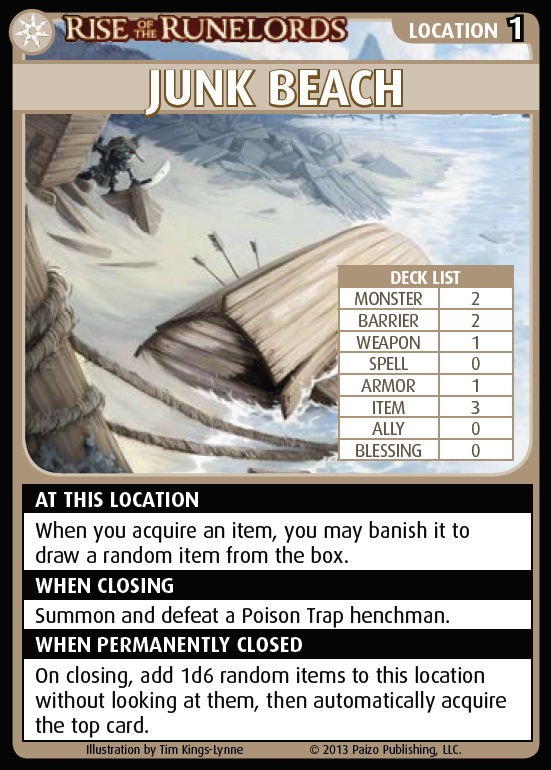
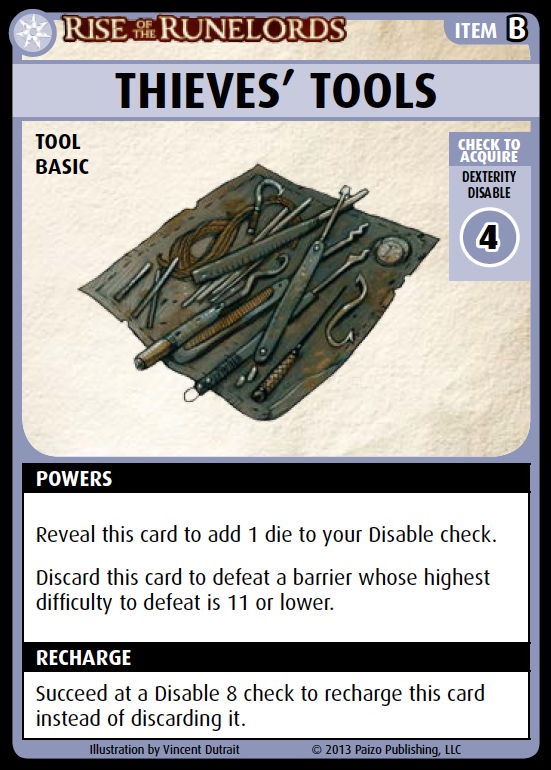
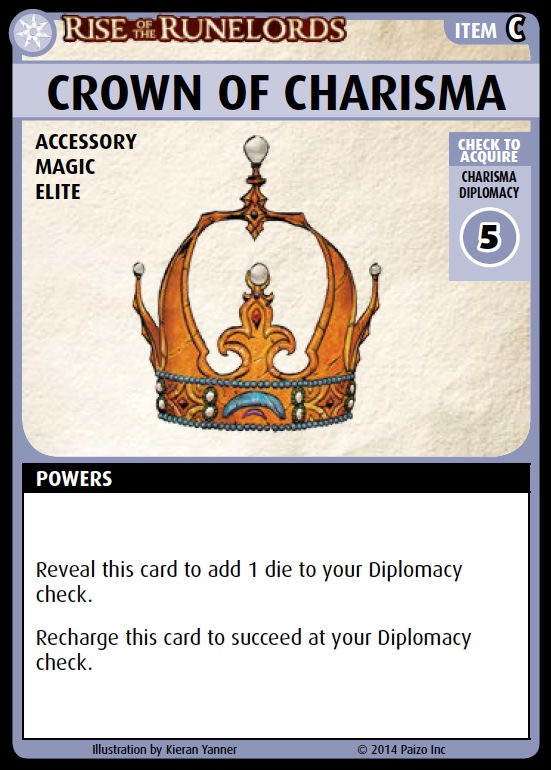
You might move to another location based on what's in your hand—and specifically based on your desire to rapidly cycle your hand. If Valeros has a handful of weapons or Kyra has a handful of attack spells, then it makes sense for them to move to locations with more monsters to kill, while a character with Thieves' Tools should move somewhere with barriers (or to Junk Beach), while a character with a Crown of Charisma would do well to move somewhere with allies (or to the Prison).
In short: If your hand clogs, see if there are locations that would help unclog it.

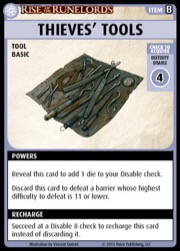
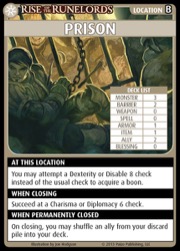
If you can't find the right tool for the job, find the right job for the tool.Move to a Location Based on the Deck's Top Card
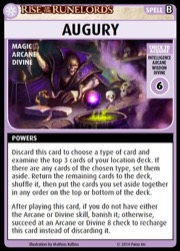
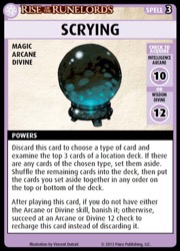
Sometimes you might get to see the top card of a deck, thanks to Harsk or Alahazra or courtesy of boons like Augury, Scrying, or even the humble Spyglass. If this reveals a difficult bane or a valuable boon, and a specific character can make quick work of it, send them there to face just that card.
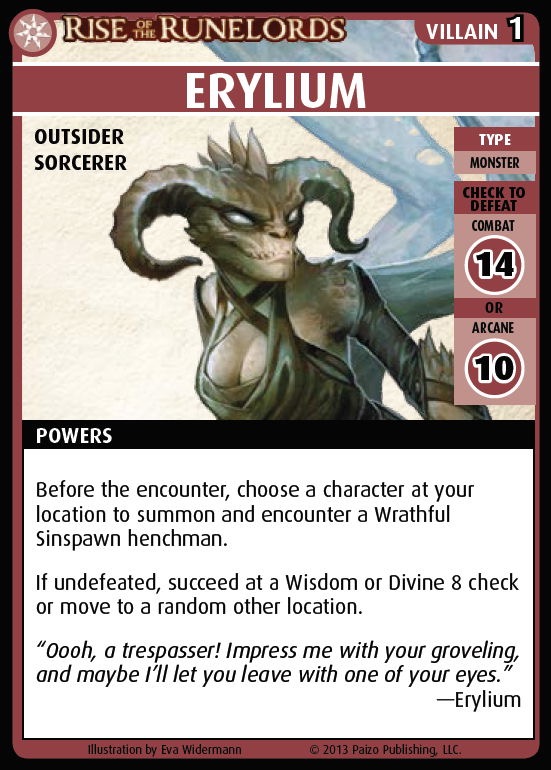
Corollary #1: Move to help with a check on the top card. You might move just to help someone else with the top card of a deck—either to take one of the checks on a two-check bane, or to provide support against one of the wackier villains like Erylium or Justice Ironbriar (who summon a monster that someone must face) or the Skinsaw Man (who gets tougher if you face him all alone). Or you could be a character like Valeros or Lem who can offer support with character powers.
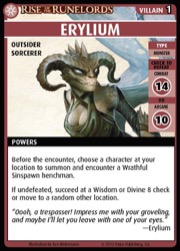
Two swords are better than one.Move to a Location Based on the Deck's Undefeated Banes
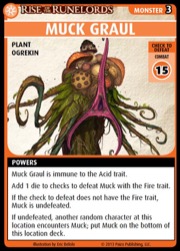
Precognition isn't the only way to learn what's in a deck. Sometimes you fight a bane that you just don't have the right cards or attributes to defeat. This calls for an emergency intervention from another party member. Sure, that newcomer will probably have to grind through the deck to find the bane in question again, but it's still worth sending Seoni to burn up the Troll or Lem to disable the traps, lest you have to keep facing those banes again and again.
Corollary #1: Move to a location to sort the deck if the undefeated banes are undefeatable. Sometimes you'll get really unlucky and face a bane that no one can deal with. This is a problem for smaller parties that don't have every skill represented, but it also is sometimes an issue when a flammable monster shows up and you don't have any fiery spells or weapons. To solve this problem, send a character to the location to sort the deck. The Augury and Scrying spells do this best, though there are also a number of less efficient methods to get cards to the bottom of the deck, or at least reshuffle them.
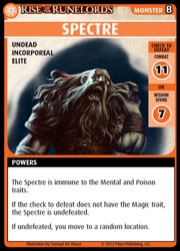
Sometimes the way to win is not to fight.Move to a Location Based on the Number of Cards Left
Abandoning locations leaves decks with fewer cards in them. That's fine when you're bouncing around early on, but later in the game it can become a missed opportunity. If you're at a point in the game where permanently closing a location with just a few cards in it would allow you to temporarily close all of the locations next time you find the villain—or if you think a villain is in one of two decks, or something similar—then it's worth moving to the smaller deck. A deck that has 9 cards gives you an 11% chance of hitting the villain or henchman with each exploration, while a deck with 5 cards ups that chance to 20%!
Move to a Location Based on the Characters That Are There
Irrespective of what's in a deck, you might move to a location because of who else is there.
Most obviously, you might need to heal someone. Since the discard/heal cycle is a perfectly viable method to keep your deck moving, healers should always be thinking about where they can go to help other people out. This means that they should move early and often.
Alternatively, you might move to give a player a boon. This might be something you just picked up that can serve them better—but this is of limited importance, because you can usually give them the card at the end of the game. But sometimes you might be able to give them a boon that they really need right now. Perhaps they don't have a weapon and you have extras. Perhaps they could use Father Zantus more than you in this scenario. Perhaps they need Thieves' Tools because they'll be exploring a barrier-heavy deck. There's a little bit of reluctance in PACG to give up a card from your deck because it defines your character… but as long as you remember to get it back at the end of the game, all should be well.
Corollary #1: Beware of moving to a character if the location is ill-fitting. When you move to help out a character, you don't want to waste your turn—you also want to explore the location if you can. This means that you shouldn't go to a location if your character is a terrible fit for it. If you're unable to close the location or if you're going to interact badly with a location's special power, you don't want to go there. So the Mountain Peak (where you can lose a card) or the Cell (where you can get stuck) are often right out. (There's some wiggle room here. If you're bad—but not terrible—at closing a location, and it's still got a lot of cards in its deck, then you might give it a shot: You're unlikely to get to close the location in a single turn, and if you do get the opportunity, maybe you can deal with it.)
Move to a Location Because You Have a Bonus Move
Amiri gets a bonus move at the end of her turn. Items like the Boots of Teleportation, allies like the Celestial Unicorn, and spells like Teleport can duplicate this ability. This should encourage a player to move for even the smallest reasons—to reduce the number of characters at a location, to get away from a start-of-the-turn effect, or to temporarily support another character.
If a character or boon can move other characters too, then they should be even more willing to move—not just if it would benefit them or the state of the game board, but also if it would benefit the other character, for any of the reasons described herein.
Move to a Location Because of Where the Villain Is
Of course, another reason to move is to find the villain—or to get away from the villain. More on that next time.
Shannon Appelcline
Game Historian





We have updated our Privacy Policy.
Paizo.com uses cookies. You can block paizo.com from using cookies within your browser settings, but doing so will hinder site functionality.
More information can be found in our Privacy Policy.