Pathfinding to Starfinding
Thursday, August 10, 2017
Since the announcement of the Starfinder Society Roleplaying Guild, us members of the Organized Play team have been getting a lot of questions about the differences between Starfinder Society and Pathfinder Society. So, we agreed that it was probably a good idea to do a blog on some of the major changes. And awaaaaaaaay, we go!
Starship Combat
Let's start with something big. Spoiler Alert: Starfinder has starships. In fact, starship combat is a major part of the Starfinder Core Rulebook, and it's something that the Organized Play team was keen on incorporating into Starfinder Society play. We're aiming to keep starship combat a fairly relevant part of the campaign and look to include such encounters at about a "one out of every four scenarios" ratio. In fact, three of our five Gen Con release events include starship combat.
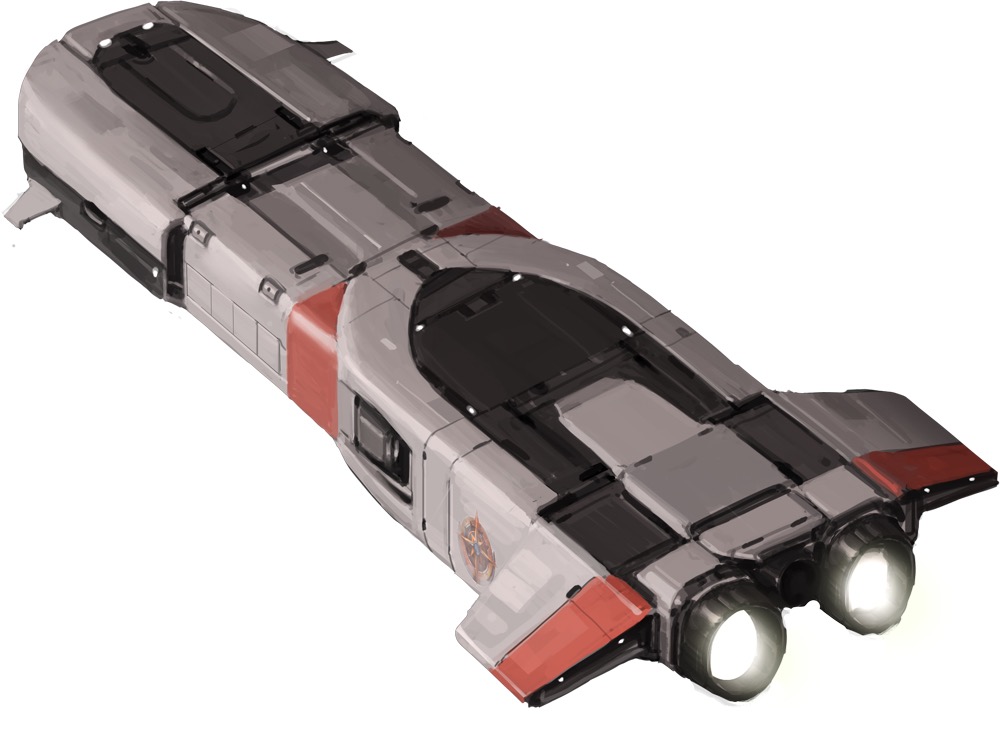
While Starfinder has robust rules for creating and customizing starships, those rules don't necessarily translate well into an organized play environment. It can sometimes take a lot of time to introduce yourself and your character, let alone spending time customizing a completely new starship for every scenario you play! To alleviate some of this stress, the Starfinder Society Roleplaying Guild employs a duo of robust starship frames that players can select during the course of play: the Drake and the Pegasus. In a scenario involving starship combat, the PCs select one of these two starship frames at the same time they would slot their boons. Once selected, the PCs can further modify the Drake and Pegasus with additional modifications via the starship boon slot.
The Pegasus is a ship in line with Starfinder ideals, as it includes expansion bays that house a science lab and a tech workshop for out-of-combat assistance. It's also a faster ship, capable of quick speeds and easy turning during starship combat. The Drake is a different breed of starship, capable of filling the stars with missiles. We wanted to give players two distinct options: a lighter faster ship with some added expansions, and another ship that was all about taking a beating and retorting with overwhelming firepower. Given that missiles have a limited firing capability, you might want to consider taking a look at the Abundant Ammunition boon we previewed in an earlier blog.
The Organized Play team is excited to see how starship combat turns out in the campaign. John and I have both run playtest games to test out the system, and it really proved to be quick to pick up for our players, but also had a lot of intricacies for players to really dig into. And for those of you who are on the hunt for super unique boons... suffice it to say, I don't think the Drake and Pegasus will be only the available starships in the campaign for very long.
Alignment & Infamy
Alright, let's just get it out of the way right away—you can't play an evil character in the Starfinder Society Roleplaying Guild.
The Organized Play team knows that many players want to dance around the darker ends of the alignment spectrum, but we also know that it can be a real detriment to the enjoyment of other players at the table. One thing Starfinder Society let us experiment with is the idea of letting PCs make ignoble decisions. To that end, the Starfinder Society Roleplaying Guild tracks alignment infractions into a new system that we refer to as Infamy.
A PC can have anywhere from 0 to 3 Infamy. A character starts with 0 Infamy, but that score rises it if the PC partakes in any evil actions. Wanton acts of destruction, murder, and even unsanctioned thievery are all potential sources of Infamy. Since Starfinder lacks an atonement spell, Infamy acts as a means of tracking a character's progression towards evil. Each point takes the PC a step closer to becoming irredeemable and ineligible for future missions within the Starfinder Society Roleplaying Guild. Luckily, Infamy is not permanent, and can be bought off using Fame. The cost for such expenditures is fairly steep (about two scenarios worth of Fame), but some faction boons help assuage the cost. If a PC (NOT player) has 3 Infamy at the end of a scenario, she's barred from participating in the Starfinder Society Roleplaying Guild unless she spends Fame to reduce her Infamy score at the end of the session. If that character can't afford to pay off the Infamy, then that character is permanently retired from play.
Some of you folks out there might be thinking of ways to maximize this system, and you might be thinking "So I can accrue Infamy up to 2 and then just buy off whenever I decide to be a jerk after that?" While this is certainly an option, there is one last part of Infamy that's going to keep the wise PC away from accruing it. Infamy directly impacts PC purchasing power; the more Infamy a PC has, the lower her effective level is for the purpose of acquiring gear. A PC touting 2 Infamy will find that she can only purchase equipment listed on a Chronicle sheet at a reasonable level, while ordinarily available gear suddenly becomes nearly impossible to find!
Like all of our new systems, the Organized Play team is excited to see Infamy in action. Personally, I've been enjoying seeding in some Infamy situations into scenarios, and I think it's entirely possible that we'll end up with NPCs and boons that change based on how much Infamy a PC has collected.
Lightning Round!
Finally, I wanted to give some quick overviews of other pertinent changes between the Pathfinder Society Roleplaying Guild and the Starfinder Society Roleplaying Guild.
Scenario Tags: Each scenario now has a tag, located on the table of contents page, that details some key rules associated with the scenario. This is where you'll be able to tell if a scenario includes starship combat, is repeatable, if it has a faction mission, and several other options!
Registering Characters: The Starfinder Society Roleplaying Guild will use the same player numbers as Pathfinder. The only difference is that your character number will start with in the 700's, such as -701, -702, et cetera.
Adventure Path Play: Since Starfinder Adventure Paths are shorter than their Pathfinder counterparts, the entirety of the Starfinder Adventure Path adventures are sanctioned for Organized Play. Our first sanctioned adventure is Starfinder Adventure Path #1: Incident at Absalom Station, which should be ready in time for Gen Con!
Purchasing: As hinted at above, purchasing works a bit different in Starfinder. Since most equipment is based on item level, PCs will have access to equipment based on their relative level compared to the item. Items found on Chronicle sheets will be accessible sooner than items from the Starfinder Core Rulebook or alternate sources.
That's it for our first Gen Con release previews. We'll be posting a few more in the coming days, so stay tuned!
Thurston Hillman
Starfinder Society Developer


We have updated our Privacy Policy.
Paizo.com uses cookies. You can block paizo.com from using cookies within your browser settings, but doing so will hinder site functionality.
More information can be found in our Privacy Policy.