Illustration by Mary Jane Pajaron
Illustration by Valeria LutfullinaOne of the strengths of the games set in the Age of Lost Omens is the diversity of setting. From classic staples like dragonslaying and piracy to outlandish adventures fighting robot scorpions in a rugged wasteland, no matter what genre of game you want to play, you can likely find a spot on Golarion to suit your interest. With that diversity of setting comes a diversity of people. Every nation has its own vibrant cultures, traditions, and ethnicities—not just among humanity, but among all of the ancestries found within the Inner Sea region. In Golarion, the home of the shattered clans of the Five Kings Mountains, the tunnel-dwelling Kulnett of Geb, the dragon-worshiping Mwangi tribes of the Mbe'ke and the Taralu, and the completely subterranean grondaksen, there's no such thing as playing "just" a dwarf.
Illustration by Valeria LutfullinaAt least, that's always been the theory. In practice, many of these disparate cultures haven't gotten the setting support they deserved. That's why when we set out to decide on the topic for the second of our new World Guides, Luis Loza quickly suggested a book that outlined the people of Golarion, especially those not well-covered in the Core Rulebook. In the Lost Omens Character Guide, we provide the information and mechanics to allow our players to create character concepts from all over the world. Just as importantly, we also sought to provide a more focused vision of what these people looked like!
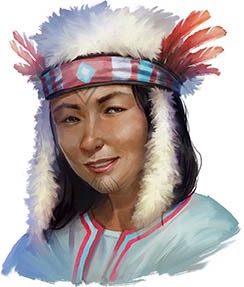
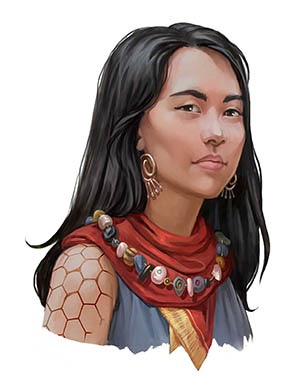
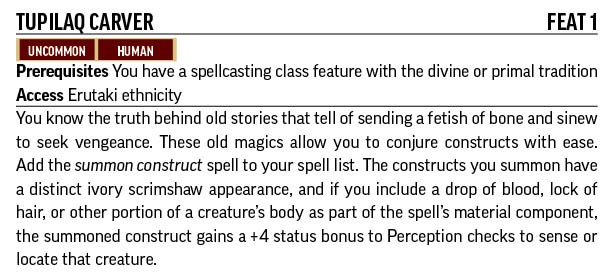
The Lost Omens Character Guide makes heavy use of a rules concept introduced to the Rarity system in the Lost Omens World Guide: Access. Many of the ancestry feats in this book have a specific basis in the distinct traditions of various cultures and ethnicities, and as such, are listed as Uncommon rules options. The Access entry on these feats lists the criteria that allow a character to gain automatic access to a rules element. For example, the Erutaki people have a tradition of creating magical scrimshaw constructs; an Erutaki PC that meets the prerequisites can gain immediate access to the feat that represents that ability below, while another PC would have to learn the skill from an Erutaki carver or otherwise gain GM permission to take the feat.
That's not to say there aren't a few ancestry feats that are entirely dependent on heritage. For example, those of Nidalese ancestry can find the blessings of Zon-Kuthon manifesting as they grow stronger, granting the ability to see in darkness and other shadowy powers. Since these feats come as a direct result of Zon-Kuthon's pact with the people of Nidal, only Nidalese characters can take them—while a PC could try to gain access to such feats by seeking out Zon-Kuthon himself, as the three Kellid horselords that founded Nidal once did, such a bargain would likely have far more dramatic results than a few extra human ancestry feats.
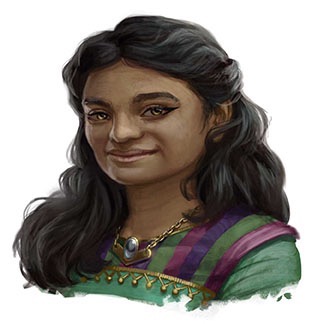
Illustrations by Katerina Kirillova
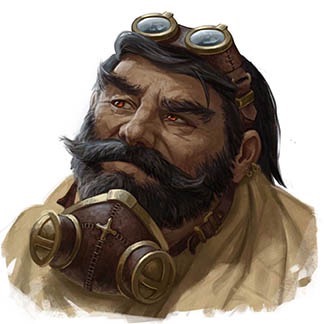
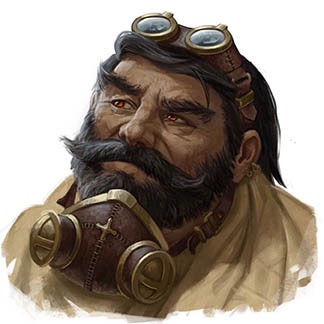
Inside the Lost Omens Character Guide, you'll find more heritages and ancestry feats for each of the Core ancestries that help to support a variety of ethnicities, both new and old. For instance, we've mentioned the mountain-dwelling Mbe'ke tribe of dwarves that live in the Mwangi Expanse in passing—we've now provided a new dwarven heritage to grant those dwarves an affinity with the dragons that they worship, but can also be used to represent dwarves with a connection to azers, the fiery god Angradd, or other elemental forces!
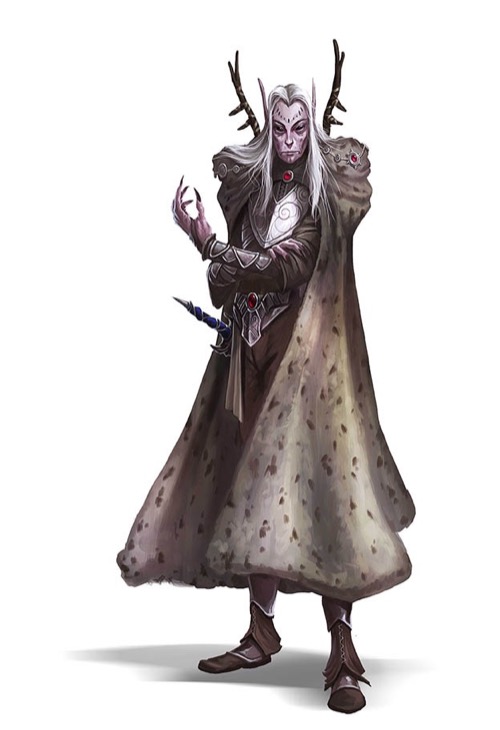
Illustration by Rogier van de Beek
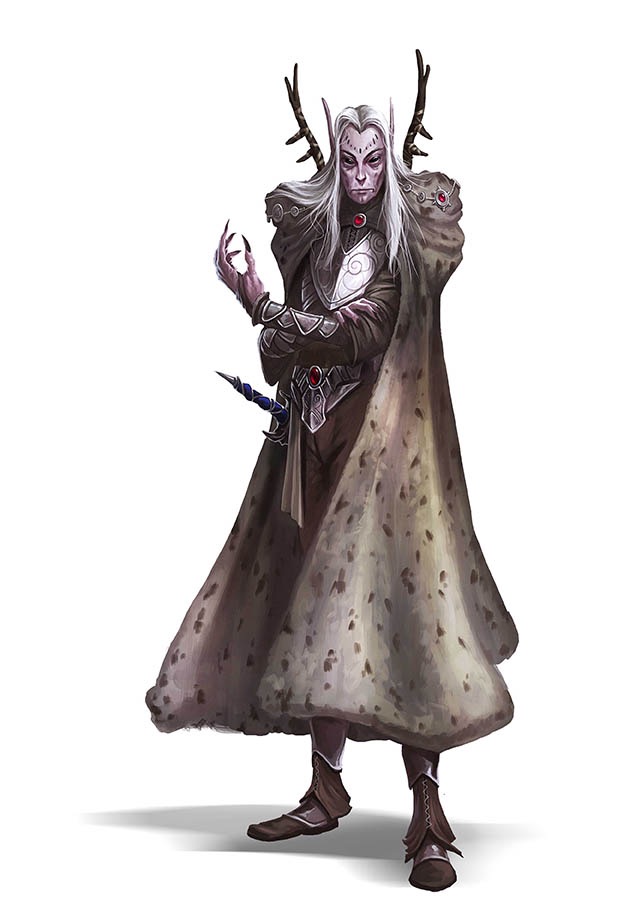
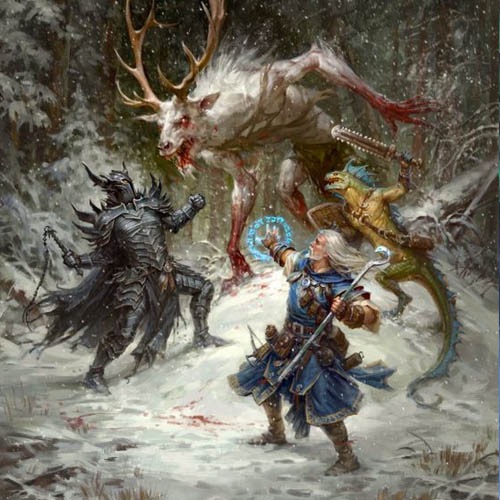
In addition to new ethnicities, the Lost Omens Character Guide offers a more detailed look at some familiar cultures within the setting. For instance, inside this book lies the true name of the Snowcaster elves, as well as a number of secrets about their true origins. Of course, this knowledge only raises more questions, such as whether the events that created the modern-day culture of the Snowcasters are also connected to a peculiar oddity of the elven goddess Findeladlara. As an aside, the Snowcasters have always had a distinct look, but when ordering art for the Lost Omens Character Guide, I asked for a specific addition to their silhouette—a pair of antler-like blades that the elves can quickly combine with other gear to transform into skis or a sled. These allow the Snowcasters to move rapidly over snow and ice, and also makes them somewhat intimidating at a distance, which might explain why many outsiders claim Snowcaster elves are demon-worshipping cannibals.
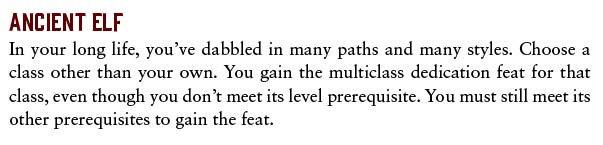
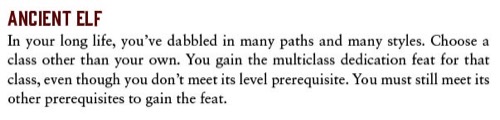
To those of you who love multiclassing, there is also a new elven heritage available to any elf of a certain age that might be of interest:
But wait, there's more!
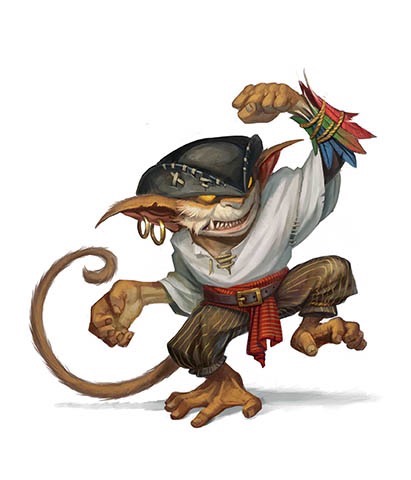
Illustration by Klaher Baklaher
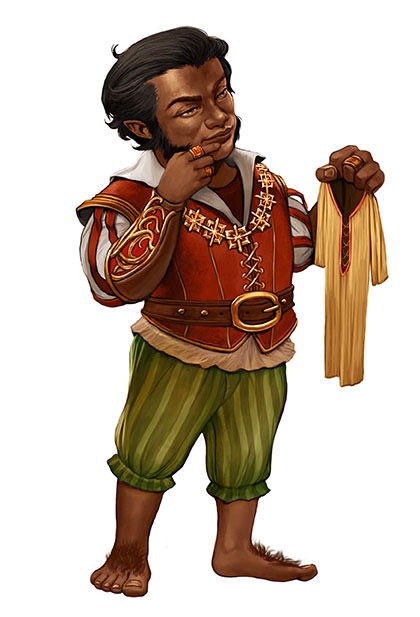
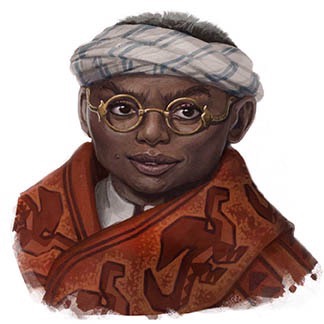
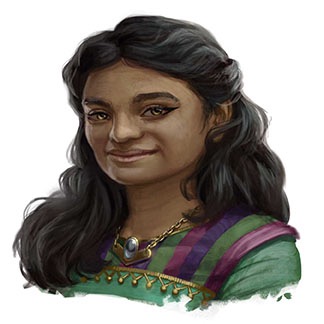
With gnomes, we're taking the opportunity to emphasize that not all ancestries view ethnicity in the same way as humans do. Gnomes especially tend to possess a riot of unusual hair, eye, and skin colors that can often seem disconnected from genetics entirely. When gnomes speak of their ethnicities, they are usually referring to a natural affinity toward different kinds of magic that a gnome might possess—due to their souls' abrupt disconnect from their ancestral home in the First World, gnomes are more affected by nearby sources of magic when they are growing up. For example, gnomes who grow up near sources of divine power have more affinity with magic that changes reality or creates figments, while the unsettling fell gnomes have a stronger connection to occult magic or dark fey.
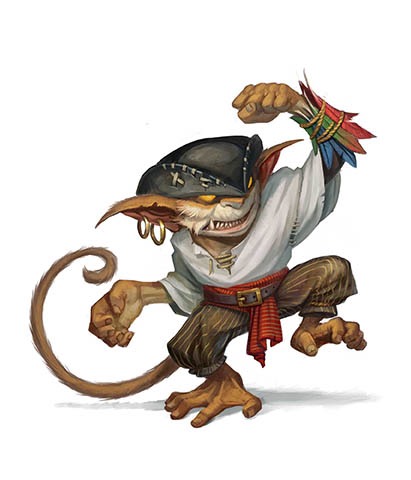
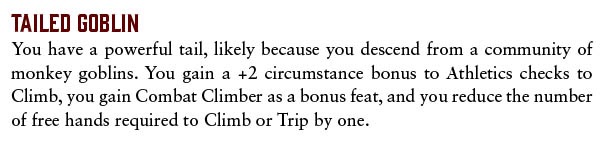
While goblins often receive little distinction from adventurers beyond what color splatter they leave behind, the recent slowing of humanoid/goblin aggressions has allowed the differences between goblin cultures to become better understood. The forest goblins of the Chitterwood lived through the Goblinblood Wars (more accurately, many of them did not live), which has given them a different approach to life when compared to the wilder goblins of Varisia. A relatively quick goblin lifespan and a traditional worship of Lamashtu means that goblins can also adapt to new environments very quickly, leading to some startling physiological differences between certain goblin ethnicities. The frost goblins of the north have blue skin and occasionally blue fur, but the most striking ethnicity of goblin is likely the monkey goblin, which possesses a long tail! A heritage for monkey goblins is provided for those who wish to play these unusual offshoots:
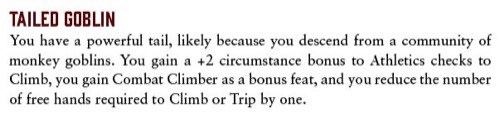
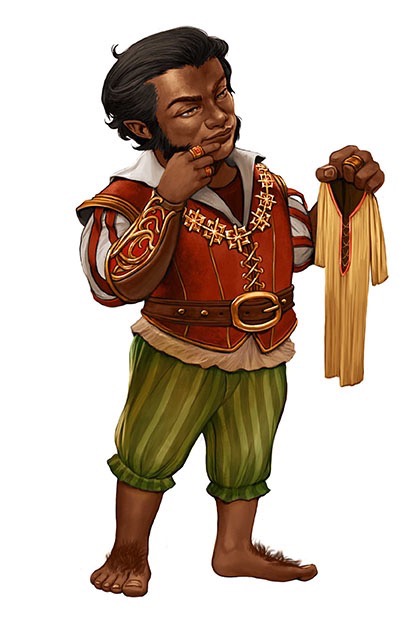
Illustration by Emile Denis
Finally, we have halfling ethnicities, including a number of new cultural groups that don't simply copy the traditions of the taller humans around them. I'll leave most of them for those who pick up the book, but I'd be remiss not to mention Luis Loza's favorite of the bunch: the Othoban halflings, who he fondly refers to as "Time Halflings." What are time halflings? The answer involves the city of Xin-Edasseril and the events of the Return of the Runelords adventure path—after all, you didn't think there were only humans in that city, did you?
Tune in next week when we'll be here to talk about some of the new ancestries that will be appearing in the Lost Omens Character Guide!
Eleanor Ferron
Developer
Such a Lovely Place, Such a Lovely Face
Friday, August 16, 2019

![ELEMENTAL HEART DWARF
Whether through a connection to Torag's forge, the azers of the Plane of Fire, or another source, you can exude a burst of energy. Mbe'ke and Taralu dwarves of the Mwangi Expanse believe this heritage is a gift from dragons or elemental spirits. Choose one of the following damage types: acid, cold, electricity, or fire. Once chosen, this can't be changed. You gain the Energy Emanation activity.
ENERGY EMANATION [two-actions]
Evocation, Primal
Frequency once per day
Energy bursts forth from your body. You deal 1d6 damage of your chosen type to all adjacent creatures (basic Reflex save using your class DC or spell DC, whichever is higher). At 3rd level, and every 2 levels thereafter, this damage increases by 1d6.](https://cdn.paizo.com/image/content/Blog/20190816-elemental_heart_dwarf.jpg)