Homebrew Special: Some Cubes to Die For
Thursday, September 13, 2018
In this installment of Homebrew Special, we're graced by Darren Rigby, who might be the best calligrapher and font creator I've ever met. It doesn't surprise me that in his gaming life, his meticulous and creative spirit shines through. In the spirit of his home country's Canada geese, take a gander.—Mike
I brought the Pathfinder Adventure Card Game to a puzzle convention that Mike, Chad, Tanis, and Gaby were attending. I timidly showed them one of the upgrades I've made for the game, and they said I ought to write something for the homebrew blog. The thing is, they didn't see just how crazy obsessive I've become about improving my game experience.
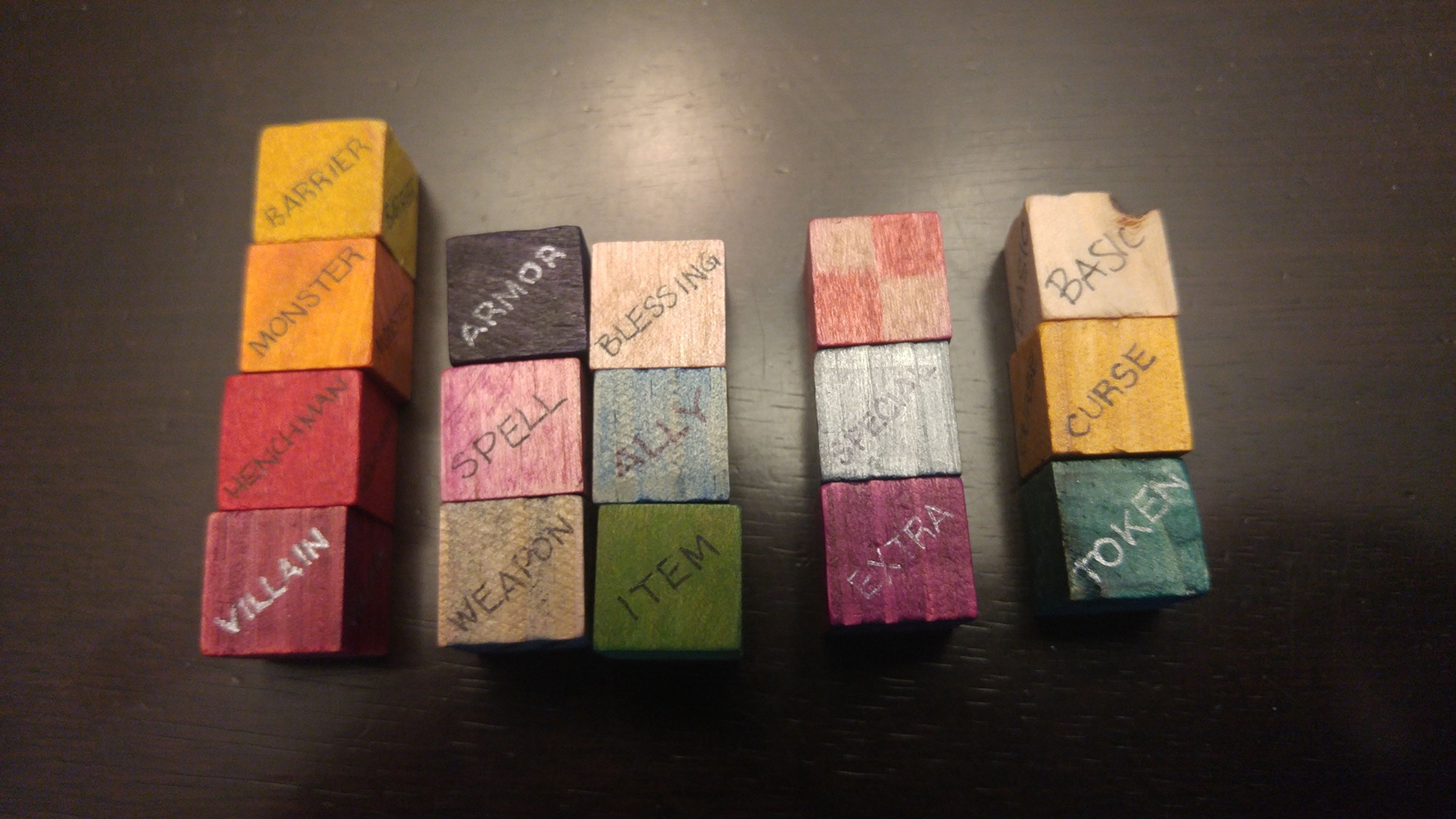
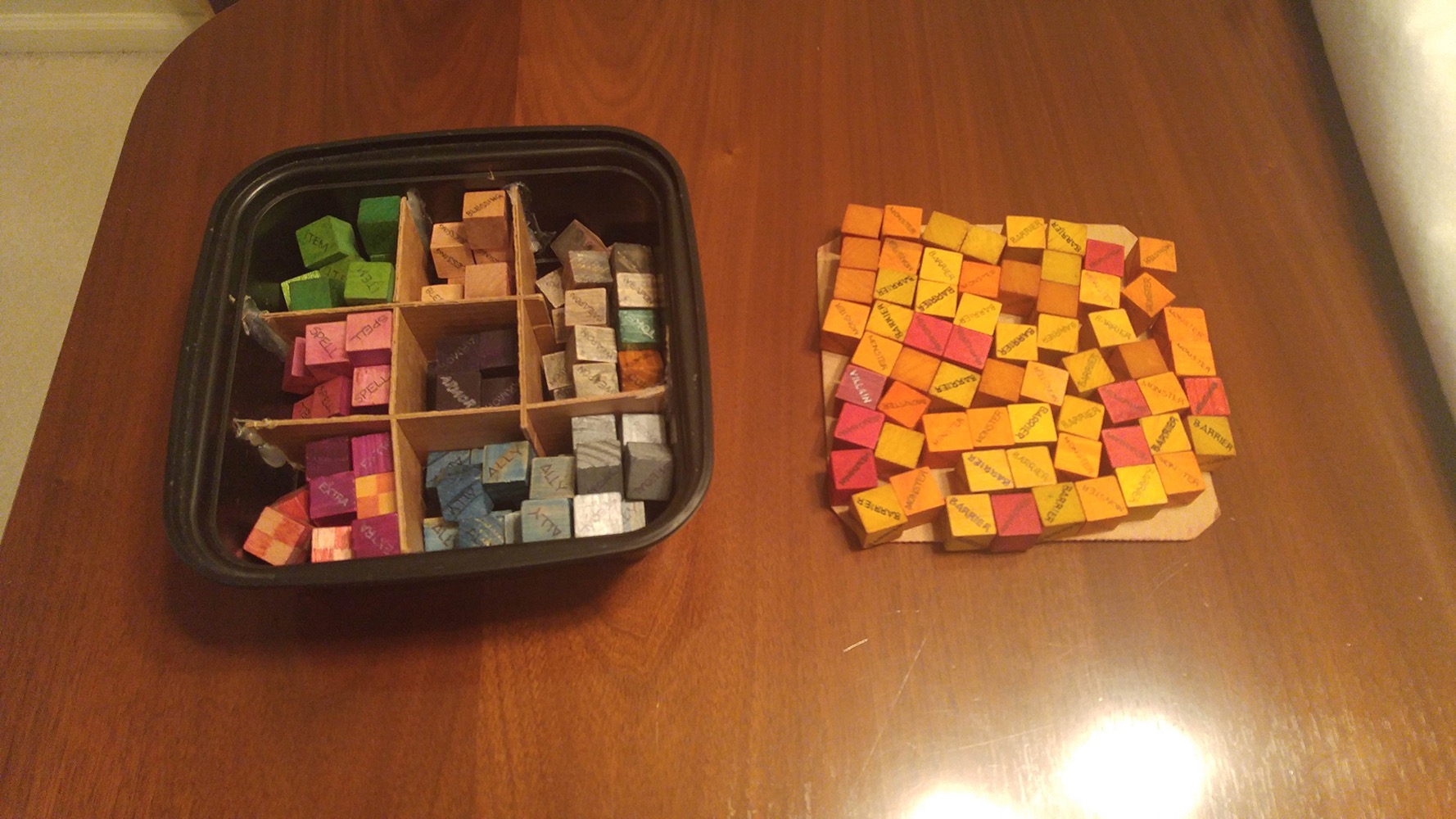
First, the thing I showed off was pretty simple. I got some craft store wooden cubes, colored them with markers (Name a brand of markers. Yes, that one.) and labelled them with card types. We use these cubes during play to track what's left in each location. Since the number of each card type in a location is usually no secret, we place the appropriate number of cubes by each location deck. We separate banes and boons so we can see at a glance how bad a location is. Every time we remove a card from the deck, the corresponding cube goes with it.
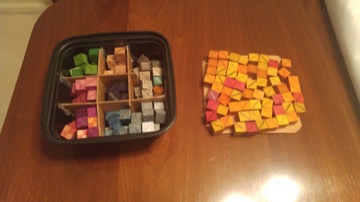
This all seems perfectly sane. So far.Some compromises had to be made on color. The brand of markers doesn't have a whole lot of choices for grey, so armors are darkened to black, and items are green. There are light blues, but if you use them on wood, they come out green again, so blessings become beige. I have a lot of cubes, but if we ever run out of one type, then the purple Extra cubes come into play, and if there are particular cards to track, they're made silver Special cubes.
Until we know which location has the villain, all those unknown bad guys round to henchman red. If the villain escapes, incoming cards are accompanied by those dark red/beige checkered cubes until we know whether they're a blessing or the villain.
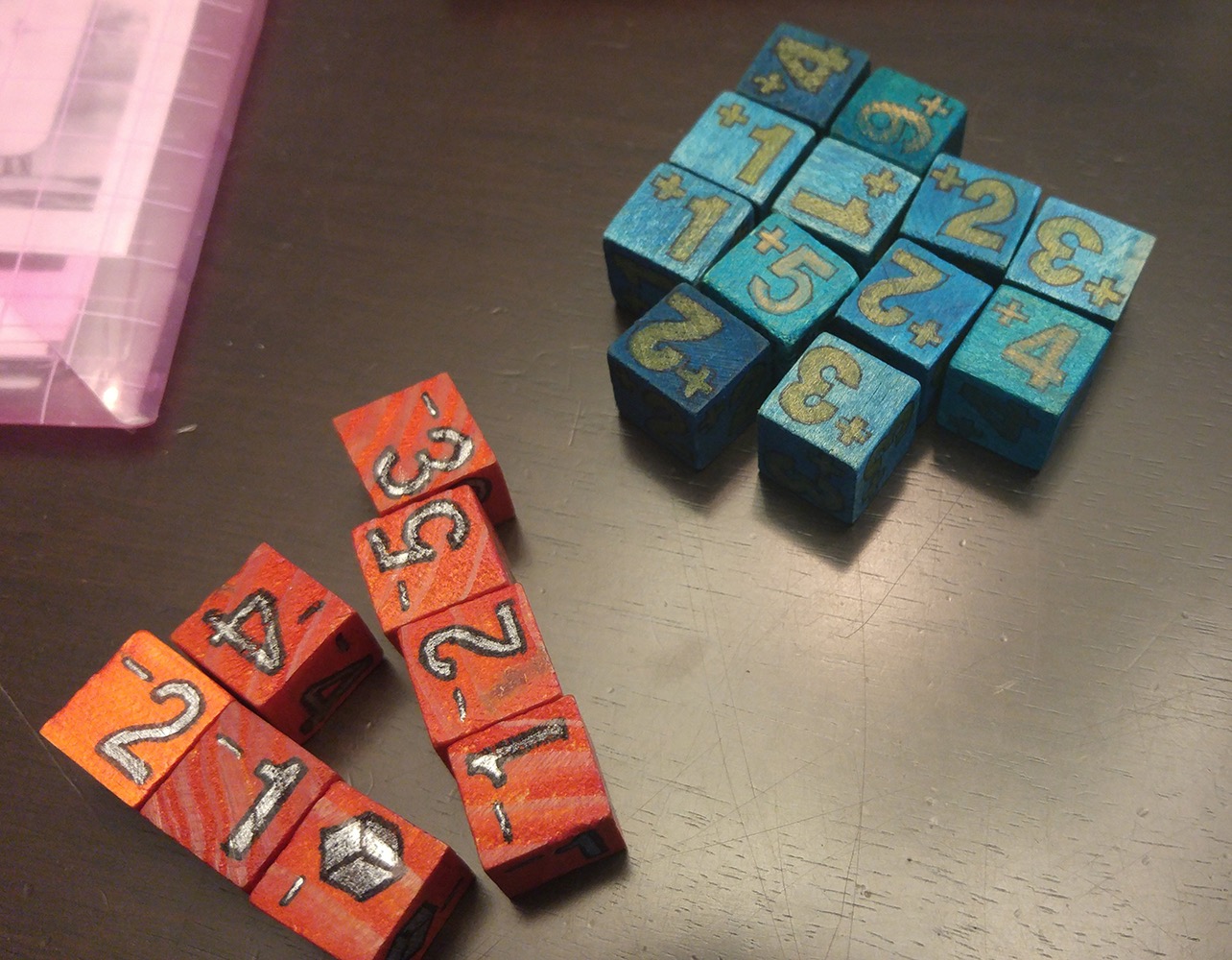
This is all pretty normal—after all, the electronic Pathfinder Adventures game does the same thing. The idea of using cubes to track things, though, seemed like a good one, and could be used to solve another problem. On a check that has a number of blessings and powers and effects modifying the result, it can be hard to remember them all. The answer? Moar cubes!
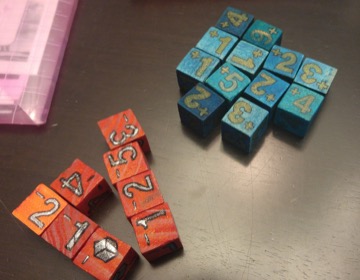
The good, the bad, and the pretty numbers.Blue buff cubes add to the result, and red debuff cubes are evidence of the check getting harder. The "- hexagon" red cube subtracts one from the check for every die used.
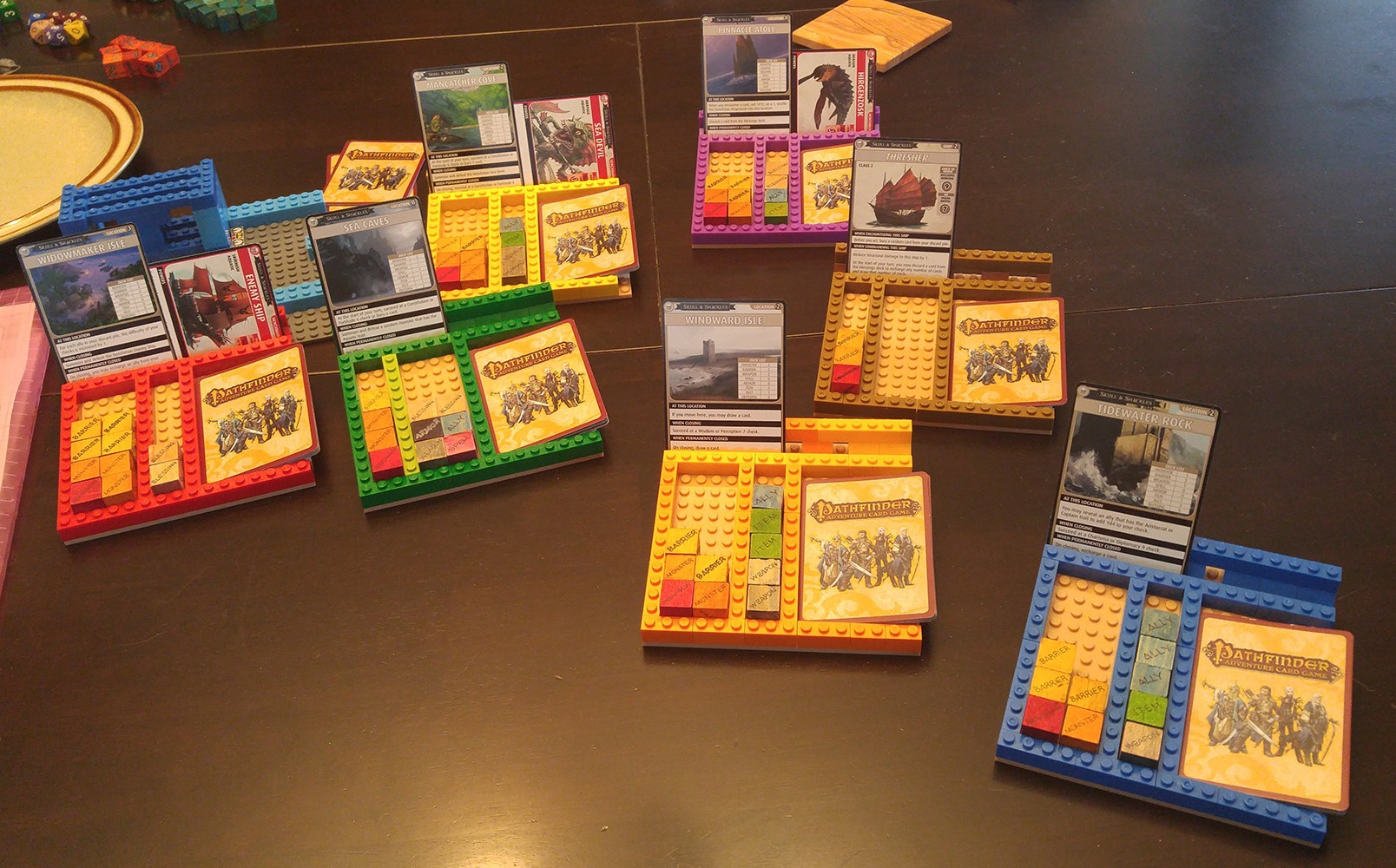
These work great, but having a little pile of cubes next to a location can be difficult to work with, especially if you move the locations around to be closer to the player whose character is exploring them. Guess I better make LEGO trays to hold everything!
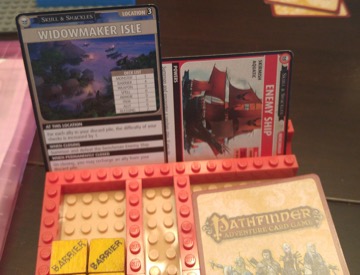
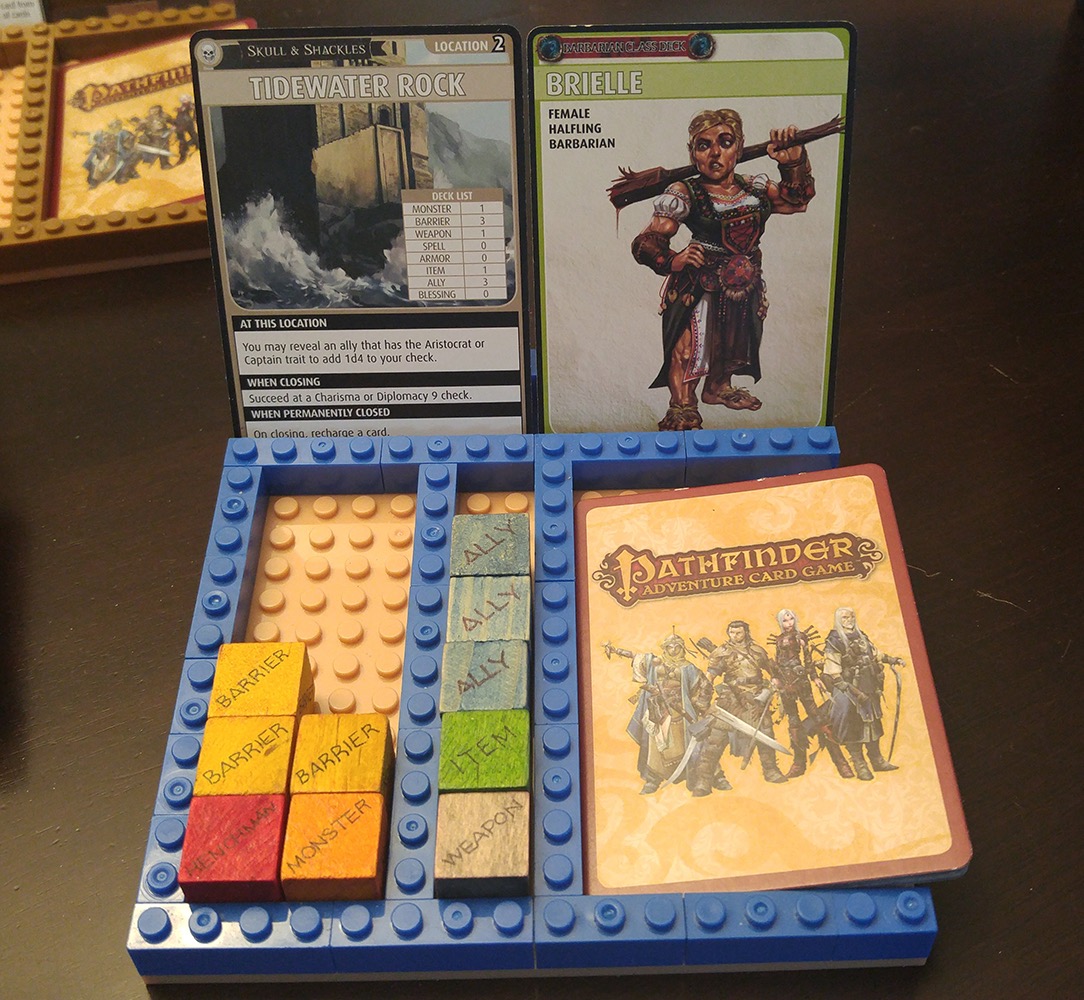
What else are you going to do with your cubes?There's a rack on the back to hold the location card, token cards for any characters at that location, and if the check to close involves facing a henchman, we can keep it there as well. The cubes happen to be the same size as a 2x2 brick, so creating slots for them was easy, and there's a brick keeping the location deck tipped up to assist in drawing a card.
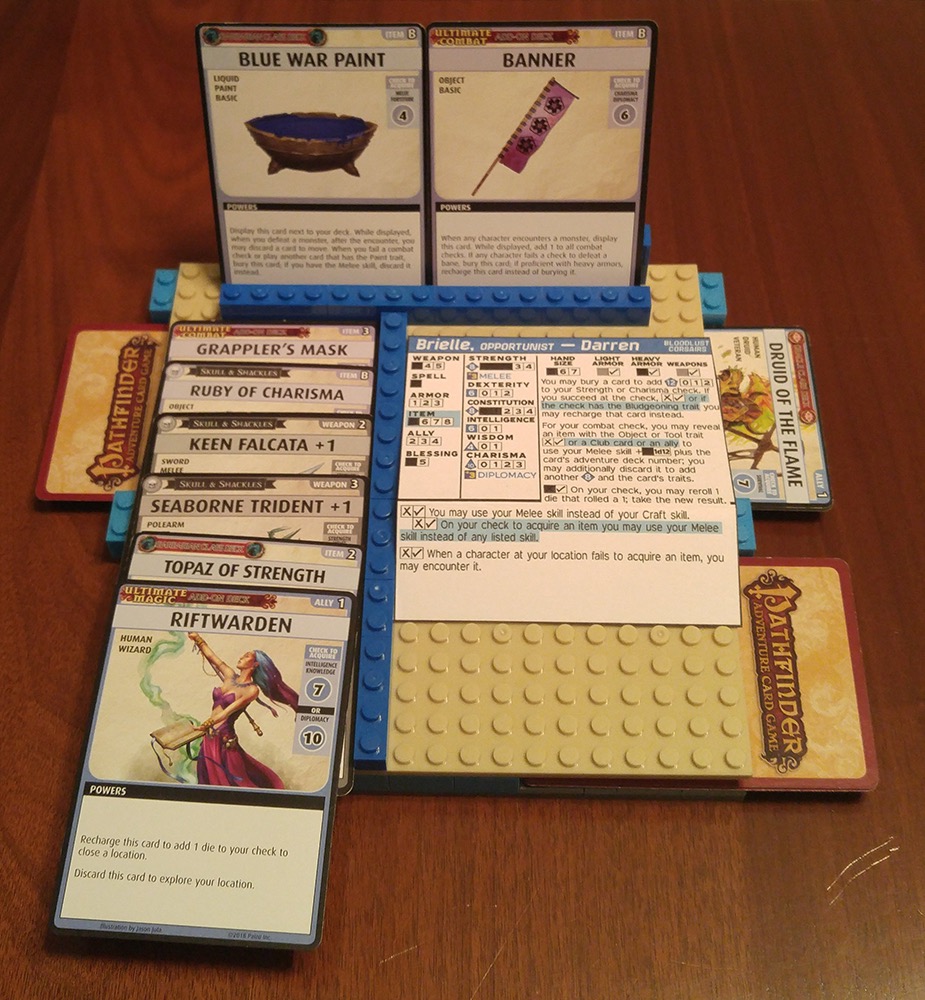
From there I started looking at solutions for keeping my character's hand and dice contained, since there's only so much table space to go around. That's why I made a rack for my cards, and a dice holder.
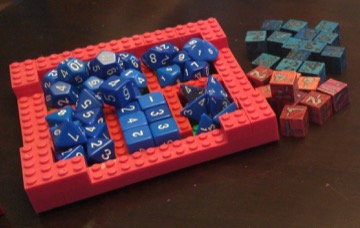
Sliding farther down from 'healthy interest' to 'back away slowly'.The rack is a baseplate sandwich, with my character deck on the lower right, discards on the upper right, buried cards on the left, and a bonus space on the lower left in case my cards ever need to do some weird thing Lone Shark thinks of. Displayed cards can stand up at the back. In that first photo you can see the character card I made so you can check things off. And the dice holder… holds dice. (By type!)
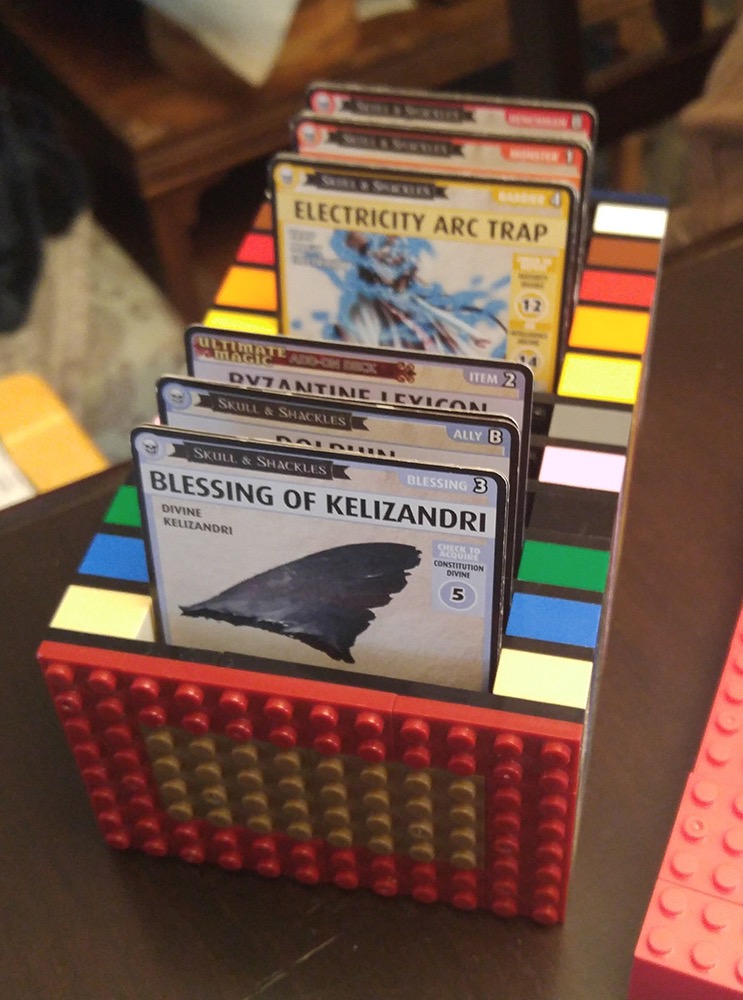
The one thing that I've made that I'm the most proud of is this rack for organizing cards that we've dealt with during play so I can quickly reset the box after the session.
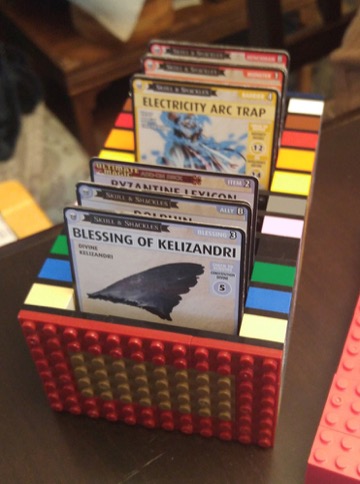
Note the red and gold design on the front.The same color changes that affected the cubes go into the rack. Location cards go into the brown slot in the back for end-of-scenario clean-up, and the white slot is for any Basics or Elites that are about to leave the game.
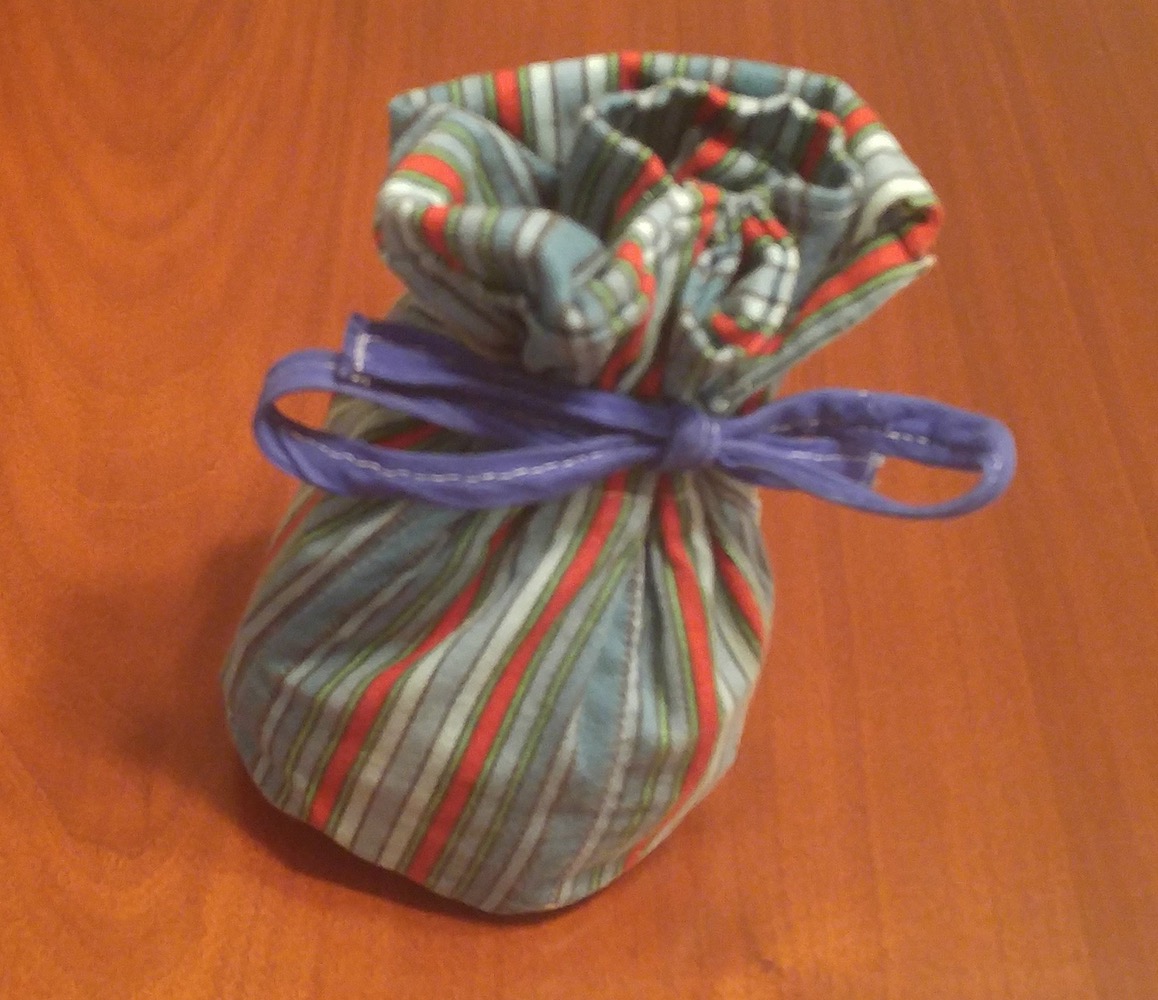
Finally, the one thing I have to support the game that I treasure the most isn't for playing but for storage, and it was created by my husband.
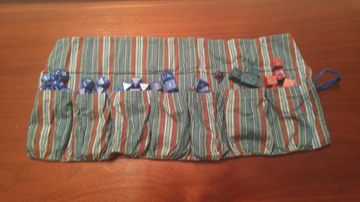
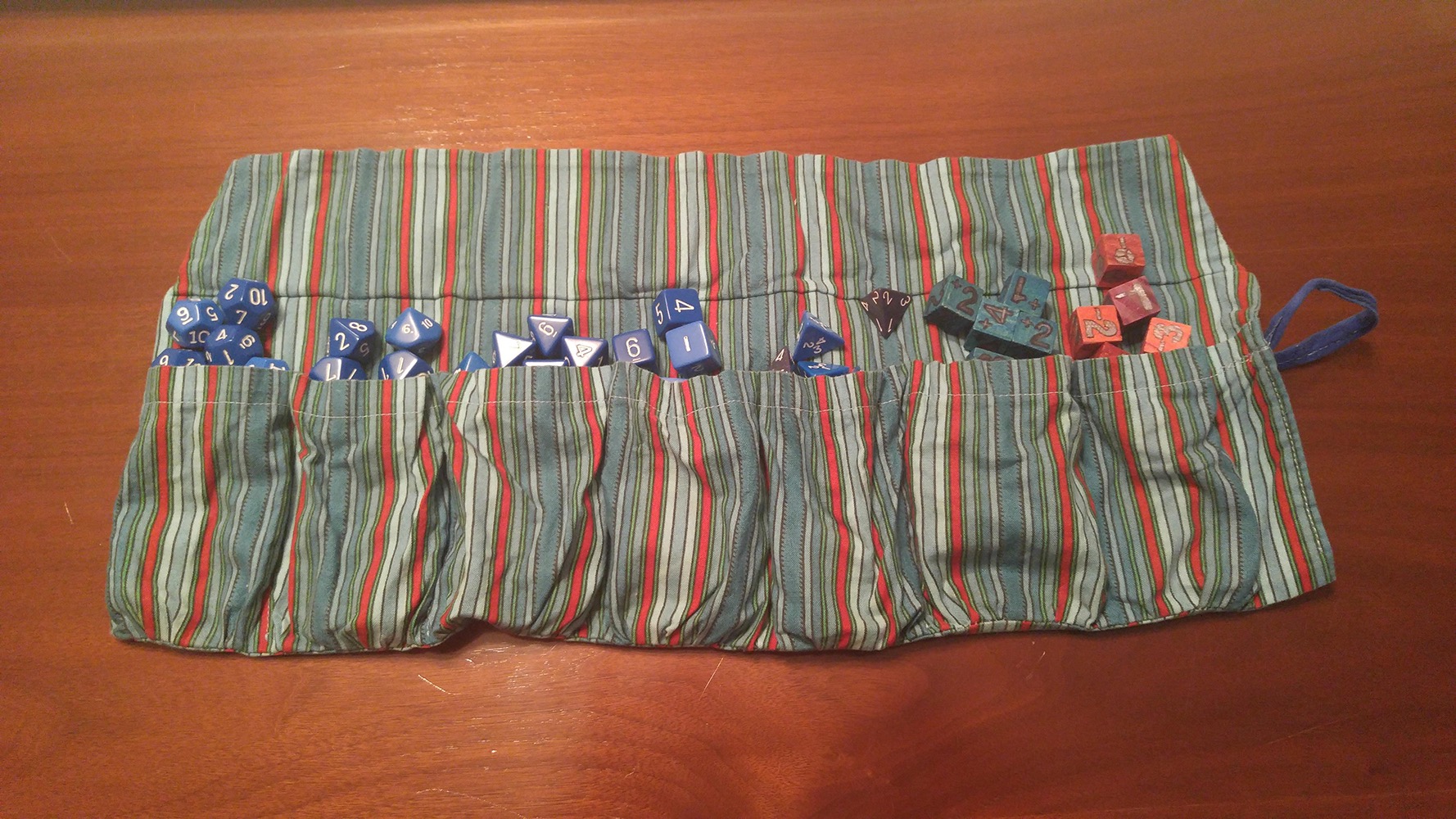
Isn't a roll like this the way everyone carries their tools?Each type of die gets its own pocket, and so do the buff and debuff cubes. The flap at the top folds down over the openings to the pockets, and the tie holds everything inside. It puts the finishing touch on packing all this gear together into a couple of neat containers so it can all be carried or put away with a minimum of fuss.
I'm still looking for ways to improve or add to what I have. I hope some of this inspires you to trick out your game.
Darren Rigby



We have updated our Privacy Policy.
Paizo.com uses cookies. You can block paizo.com from using cookies within your browser settings, but doing so will hinder site functionality.
More information can be found in our Privacy Policy.